

 Download PDF
ABSTRACT
The present study was undertaken to examine the contribution of the Jammu and Kashmir Cricket Association (JKCA) in the promotion and development of cricket in Jammu and Kashmir. The study focused particularly on the role of JKCA in providing playing facilities, sports equipment, financial incentives, and other forms of support to players and cricket stakeholders. Data and information were collected from primary and secondary sources. Primary information was obtained through visits to JKCA-related training and practice centres, examination of official records and pictorial documents, and administration of an opinion-rating questionnaire. The respondents included players, coaches, trainers, umpires and other persons associated with cricket. Secondary information was obtained from published books, articles, newspapers, sports magazines and internet sources. The collected data were analyzed using descriptive statistics, percentages and graphical representations. The findings indicated that JKCA has made a significant contribution to the promotion of cricket in Jammu and Kashmir by providing essential playing facilities, including cricket fields, indoor gymnasium facilities, gymnastics facilities and net-practice areas. The findings further indicated that important cricket equipment, including pitches, bats, balls, stumps, wickets and bails, was made available to support players' training and performance. Financial support and incentives, including assistance related to players, coaches and managers, were also identified as important components of JKCA's contribution. Overall, the study suggests that JKCA has played an important institutional role in strengthening the cricketing environment of Jammu and Kashmir through infrastructure, equipment, competitive support and player development opportunities. The findings may be useful for sports administrators, policymakers and researchers concerned with the development of cricket and other sports in the region.
Keywords: Jammu & Kashmir Cricket Association; Cricket Promotion; Cricket Development; Playing Facilities; Sports Equipment; Financial Incentives; Jammu and Kashmir
INTRODUCTION
Cricket occupies a unique position in India, evolving from a colonial-era game into a major cultural, social, and economic phenomenon. Its growth has been supported by organized institutions, domestic competitions, talent-identification systems, and structured pathways linking grassroots participation to elite performance. Sports organizations play a key role in infrastructure development, coaching, talent identification, and competitive exposure, all of which are essential for sustainable sports development [1,2].
In Jammu and Kashmir (J&K), cricket has become one of the most popular sports, with its development closely linked to the Jammu and Kashmir Cricket Association (JKCA). Established in 1957 and affiliated with the Board of Control for Cricket in India (BCCI) in 1959, JKCA enabled J&K’s participation in the Ranji Trophy, providing local players with opportunities to compete at the national level (Jammu & Kashmir Cricket Association [JKCA], n.d.-a).
JKCA contributes to cricket development through organizing competitions, improving infrastructure, conducting age-group programmes, identifying talent, and providing coaching and training opportunities. Research highlights that effective athlete development requires not only talent identification but also access to quality facilities, coaching, and competitive pathways [1].
A major contribution of JKCA has been facilitating p articipation in BCCI-organized tournaments, including the Ranji Trophy since 1959. Such competitions have provided valuable exposure to players from the region and enhanced the visibility of cricket in J&K (JKCA, n.d.-a). Infrastructure development has also been significant, with support from JKCA and the Jammu and Kashmir Sports Council (JKSC) for turf wickets, grounds, and training facilities. Government initiatives, including the renovation of Maulana Azad Stadium, have further strengthened cricket infrastructure in the region (Jammu & Kashmir Sports Council [JKSC], 2018; Ministry of Youth Affairs and Sports, 2024).
At the grassroots level, JKCA conducts trials, talent-hunt programmes, selection camps, and competitions across age categories such as Under-14, Under-16, Under-19, Under-23, senior men’s, and women’s cricket. These initiatives help create structured pathways for players to progress from local participation to higher levels of competition (JKCA, n.d.-b).
The emergence of cricketers such as Parvez Rasool, the first player from J&K to represent India internationally, along with Umran Malik, Abdul Samad, Rasikh Salam, Yudhvir Singh Charak, and Shubham Khajuria, reflects the region’s growing cricketing potential and the effectiveness of developmental pathways established in the state (Jammu & Kashmir Sports Council, n.d.; JKCA, n.d.-c). JKCA has also expanded opportunities for women’s cricket through selection camps, fitness programmes, and age-group competitions, promoting greater female participation in the sport (JKCA, n.d.-b, n.d.-c).
Beyond producing elite players, cricket contributes to youth engagement, social participation, and community development. However, challenges such as uneven infrastructure, coaching quality, governance issues, and unequal access to opportunities continue to affect sports development in India [1].
Cricket in India
Cricket is a national sport that connects the people of India in a unique way. Cricket is not only the most popular sport among the commonwealth countries but also all over the world. Today is the modern competitive Cricket era. The performance of Cricketers is enhancing day by day, the old records are being broken and new records are being set, scores are reaching new heights. It is only due to high intensity training of the players which help them to perform well.
Cricket is basically a bat and ball game played between two teams of eleven players. It is one of the oldest sports in the world which originated in England during the 16th century. Today Cricket seems to be a virtual lifeline of many Commonwealth nations. Cricket is played in many forms such as Test, One Day International, First class, Twenty 20, Super Six, Eight-a-side, Indoor Cricket, Max Cricket, Double wicket and Single wicket. Cricket is played in more than 105 countries around the globe. Now a day’s Cricket competitions have become fundamental mode of human expressions as they are one of the very important events by which national and international recognition and prestige is gained [3].
Women and Cricket in Jammu & Kashmir
In Jammu and Kashmir (J&K), the development of women's cricket has gradually gained institutional recognition and visibility. The Jammu and Kashmir Cricket Association (JKCA), affiliated with the Board of Control for Cricket in India (BCCI), has an important role in providing competitive opportunities and establishing pathways for female cricketers in the Union Territory. The association has developed women's teams and competitions across different age categories, including Under-15, Under-19, Under-23 and senior women's cricket. The JKCA's official records demonstrate the existence of Women's Under-19, Women's Senior One-Day, Women's Senior T20, Women's Under-15 and Under-23 competitions, indicating that women's cricket has become an established part of the association's competitive structure (Jammu & Kashmir Cricket Association [JKCA], n.d.-a).
The development of women’s cricket in J&K is particularly significant because opportunities for female participation in sport can contribute to individual development, confidence, social interaction, physical fitness, and greater visibility of women in traditionally male-dominated sporting environments. The participation of women in competitive sport can also challenge gender stereotypes and create opportunities for young girls to pursue sport as a serious educational, professional, and personal aspiration. In this context, the development of organized cricket for women in J&K can be understood not only as a sporting initiative but also as part of the broader process of expanding opportunities for women and girls in competitive sport [4].
JKCA has increasingly adopted systematic mechanisms for identifying and developing women cricketers. Its talent-hunt programmes provide an important entry point for young female players from different parts of Jammu and Kashmir. For example, JKCA organized a Women’s Talent Hunt for the 2025–26 season, covering different age categories, including Under-15 girls, Under-19 girls, Under-23 women and senior women. Trials were conducted in both the Kashmir and Jammu regions, thereby providing opportunities for players from different geographical areas to participate in the selection process (Jammu & Kashmir Cricket Association [JKCA], 2025; Kashmir Sports Watch, 2025). Such initiatives are important for widening the talent pool and creating a systematic pathway through which promising female cricketers can progress from local participation to higher levels of competitive cricket [5].
The continuation of talent identification and development programmes demonstrates the growing institutional emphasis on women's cricket in the region. In 2026, JKCA again announced a Talent Hunt for women cricketers with the objective of identifying promising female players for the 2026–27 domestic season. The programme included junior and senior categories and provided opportunities for players from both the Jammu and Kashmir regions to participate in trials (Kashmir Sports Watch, 2026). The implementation of such programmes is significant because talent development requires regular identification, assessment, training and competitive exposure rather than relying exclusively on individual players' access to informal cricketing opportunities.
Competitive exposure is another important component of women's cricket development in Jammu and Kashmir. JKCA has participated in BCCI-organized women's competitions and has maintained teams at different age levels. The existence of senior women's One-Day and T20 teams, together with Under-19 and Under-23 teams, provides a progression structure for players as they move through different stages of their sporting careers (JKCA, n.d.-a). For instance, JKCA announced an Under-23 women's T20 team for the BCCI's national competition in 2023, with players selected through the association's senior women's selection structure. The team was supported by a head coach, bowling coach, trainer, video analyst and physiotherapist, demonstrating the increasing professionalization of women's cricket within the regional system (Rising Kashmir, 2023).
The history of women's cricket in J&K also includes individual players who have achieved recognition beyond the region. Jasia Akhter is one prominent example. According to the Jammu & Kashmir Sports Council, she participated in competitions through JKCA, represented J&K at different levels, was selected for the North Zone team, and subsequently achieved success in women's cricket competitions outside the region. She also represented Rupali Bank Women's Cricket in the Dhaka Premier Division Women's Cricket League and was selected for an India camp in 2016 (Jammu & Kashmir Sports Council, n.d.). Such achievements demonstrate that players from J&K have the potential to progress beyond regional cricket when provided with appropriate opportunities, exposure and competitive platforms.
The contemporary structure of women's cricket in J&K further indicates an expanding pool of female players. JKCA's official records list numerous players in its senior women's teams, including Mahika Singh Rana, Shambhavi Rajput, Sarla Devi, Kayinat Bakshi and other emerging cricketers. The 2026 senior women's records similarly include players such as Sandhya, Rubia Syed, Shivanti Gupta, Iqra Rasool, Zeenat Ramzan, Rudrakshi Chib, Ananaya Sharma and others (JKCA, n.d.-b). The increasing number of players appearing in organized competitions suggests that women's cricket in the region is developing beyond a small number of individual performers toward a broader competitive structure.
Another important development is the increasing participation of women not only as players but also in coaching and cricket administration. The appointment of women to cricket-related roles can contribute to the creation of more inclusive sporting environments and provide young female athletes with visible role models. Recent developments in J&K include the emergence of women with coaching and administrative experience within the cricket structure. For example, Abida Nazir Khan, a former J&K cricketer and BCCI Level-A coach, was appointed to the JKCA Cricket Advisory Committee in 2026, representing an important development in women's participation in cricket administration and technical development [6].
Despite these developments, women's cricket in Jammu and Kashmir requires continued attention in areas such as infrastructure, coaching, competitive exposure, talent identification, sports facilities, participation opportunities and institutional support. Geographical differences between the Jammu and Kashmir regions, access to appropriate cricket grounds and training facilities, and the need for sustained competitive opportunities may influence the development of women cricketers. Therefore, the study of women's cricket should extend beyond counting participation or examining team performance and should consider the institutional mechanisms through which women are encouraged, selected, trained and supported [7-10].
In this context, the development of women's cricket in Jammu and Kashmir represents an important area of sports research. The initiatives of JKCA in talent identification, age-group cricket, senior women's competitions, coaching and competitive exposure provide an institutional framework for examining the growth of women's cricket in the region. At the same time, the achievements of individual players demonstrate the potential of women cricketers from J&K to compete at higher levels. Therefore, an examination of women and cricket in Jammu and Kashmir can provide valuable insight into the development of women's participation, institutional support, opportunities, achievements and challenges in the region. Such research may contribute to a better understanding of how cricket administration can strengthen women's participation and create sustainable pathways for the development of female cricket talent in Jammu and Kashmir.
Jammu & Kashmir Cricket Association
Jammu & Kashmir Cricket Association and the Development of Cricket
The Jammu & Kashmir Cricket Association (JKCA) is the principal institutional body responsible for the administration and development of cricket in Jammu and Kashmir. The history of organized cricket in the region can be traced to the early development of local clubs and college cricket. The JKCA was formally registered in 1957 and became affiliated with the Board of Control for Cricket in India (BCCI) in 1959. In the same year, Jammu and Kashmir participated in the Ranji Trophy for the first time, marking an important stage in the integration of J&K cricket into the national domestic cricket structure. Since then, the association has been responsible for organizing and facilitating competitive cricket and supporting the development of players at different levels (Jammu & Kashmir Cricket Association [JKCA], n.d.-a) [11-15].
In its contemporary form, JKCA operates through a structured administrative and cricketing system that includes different committees and specialized selection structures. The association maintains separate senior and junior selection committees for men and women, in addition to other committees dealing with cricket affairs, discipline, fixtures, finance, and cricket advisory matters. The presence of dedicated Women’s Senior Selection Committee and Women’s Junior Selection Committee demonstrates the institutional recognition of women's cricket within the association. This organizational structure is important because systematic selection and administration are essential for creating a continuous pathway through which female players can progress from junior to senior-level cricket (JKCA, n.d.-b).
The present activities of JKCA indicate that women's cricket has become an integral part of its development programme. The association organizes and participates in women's competitions across several age groups, including Under-15, Under-19, Under-23 and senior women's cricket. Its official records include Women's Under-15 One-Day competitions, Under-19 One-Day and T20 competitions, Under-23 T20 and One-Day competitions, and Senior Women's One-Day and T20 competitions (JKCA, n.d.-c). The availability of competitions across age categories is particularly significant because it provides young girls with a structured progression from junior cricket toward senior-level competition.
JKCA has also expanded its emphasis on talent identification and player development. Its recent programmes include talent-hunt trials, preparatory camps, deep-selection matches, fitness and fielding camps, and specialized batting and bowling clinics for women players. In 2026, the association's official notices included programmes for Under-15 girls, Under-19 women, Under-23 women and senior women, including batting and bowling clinics and selection camps (JKCA, 2026). Such initiatives are important because the development of cricketing talent requires more than the organization of matches; players need systematic assessment, technical training, physical conditioning, coaching, and regular competitive exposure [16-20].
The association's development structure also demonstrates an increasing emphasis on the professional preparation of women's teams. The official JKCA records show the organization of preparatory camps and interstate practice matches for women's teams. For example, the association has conducted programmes involving Under-23 and senior women's players and has arranged practice opportunities against other state cricket associations. Such activities provide female cricketers with opportunities to test their skills against stronger opposition and to prepare for BCCI domestic competitions (JKCA, 2026). The 2025–26 domestic schedule also included a Senior Women's T20 competition, illustrating the integration of women's cricket into the national domestic calendar (Board of Control for Cricket in India [BCCI], 2025) [21-25].
Another important aspect of JKCA's present development is the increasing visibility of women cricketers from the region. The association's current senior women's records identify players such as Jasia Akhter, Rudrakshi Chib, Sanjana, Chitra Singh Jamwal, Sandhya Sayal and Rubia Syed, among others. The inclusion of these players in the official senior women's structure reflects the expanding pool of women participating in organized cricket in J&K (JKCA, n.d.-d). The presence of established and emerging players provides younger girls with role models and may contribute to the normalization of women's cricket as a serious competitive sporting pathway [26,27].
The current development of JKCA also needs to be understood in the context of institutional reforms. The association underwent a period of administrative restructuring following judicial intervention, with the BCCI being directed to oversee the affairs of JKCA until the election of a new body. The BCCI-approved constitution was subsequently upheld by the Supreme Court, with the process intended to establish an updated governance framework consistent with the recommendations of the Lodha Committee (JKCA, 2025). The JKCA website currently reports that a new elected body took charge on 22 May 2026, representing an important stage in the association's institutional development (JKCA, 2026).
Thus, the present JKCA represents more than an administrative organization for conducting cricket matches. It functions as an institutional mechanism for talent identification, player selection, coaching, fitness development, age-group competitions, senior cricket and participation in BCCI domestic tournaments. In particular, its growing emphasis on women's age-group cricket, specialist training camps and women's selection structures indicates that female cricket is increasingly being incorporated into the mainstream development framework of cricket in Jammu and Kashmir. However, the effectiveness of these initiatives should be assessed in terms of their actual impact on women's participation, access to facilities, player development, competitive performance, progression to higher levels of cricket, and the experiences of women cricketers themselves. These dimensions provide an important basis for examining the role and contribution of JKCA to the development of women's cricket in Jammu and Kashmir [28-30].
METHODOLOGY
Data/Information for this investigation was derived from the primary and secondary sources.
Primary Sources
- Official Records: To get the first-hand information investigator visited JKCA where players are practiced and trained. The investigator physically verified the records at these places [31].
- Pictorial Records: Various pictorial records of JKCA were investigated. Some of the photographs relevant to different occasions were chosen as documents for this study and inserted in the text body.
- Published Material: Published material such as books, articles, newspapers, sports magazines, internet articles etc. were also studied and information retained as documents for this study.
Secondary Sources
- Interview
- Survey
Survey technique was also used to obtain responses from colleagues, players, coaches, trainers, physic’s umpires etc. In most of the cases the investigator personally visited the subjects after prior appointment and obtained the information on opinion rating scale. Opinion rating Questionnaire on Contribution of JKCA in the promotion of cricket in J & K was constructed by the investigator with the help of the experts. To estimate the strength of feeling, degree scale was used such as Strongly Agree, Sufficient, un-sufficient, Disagree, Strongly Disagree [32,33].
Analysis and Interpretation of Data
Data/Information collected through primary and secondary sources were analyzed qualitatively which was facilitated through the use of external and internal criticism. Quantitative analysis was employed to the data collected by using opinion rating questionnaire for statistical inferences.
The obtained data was analyzed by applying descriptive statistics and graphical representation. The quantitative approach was employed for the data collected through the questionnaire. The discussion and findings against each response of the questionnaire marked by the selected subjects [34,35].
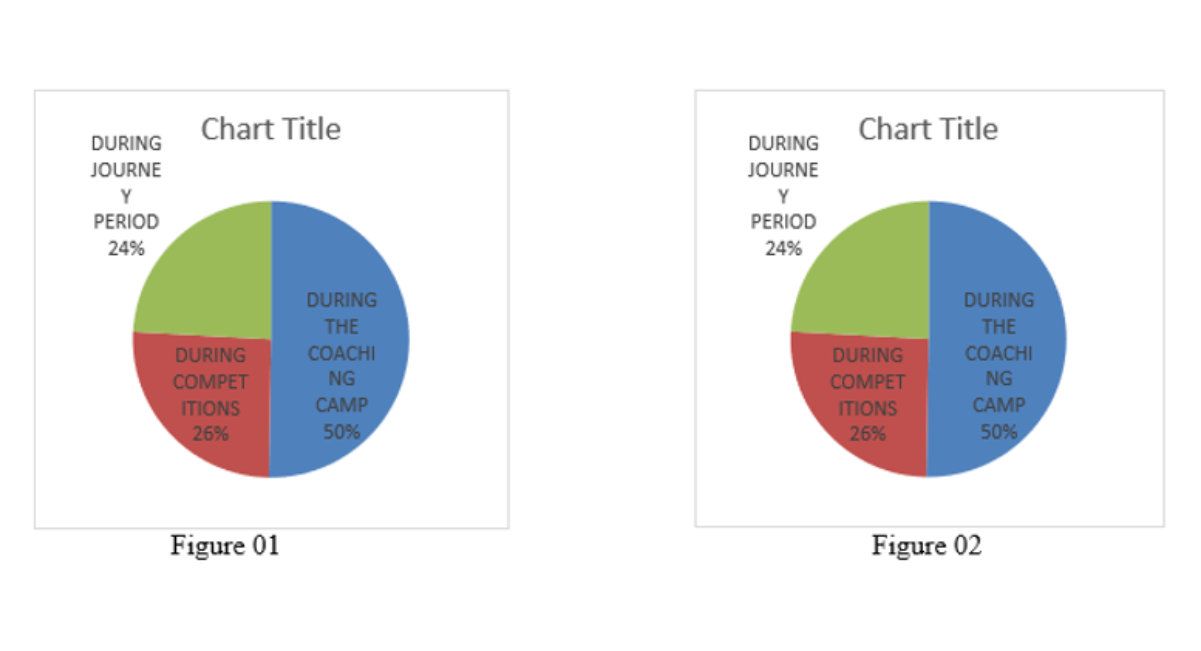
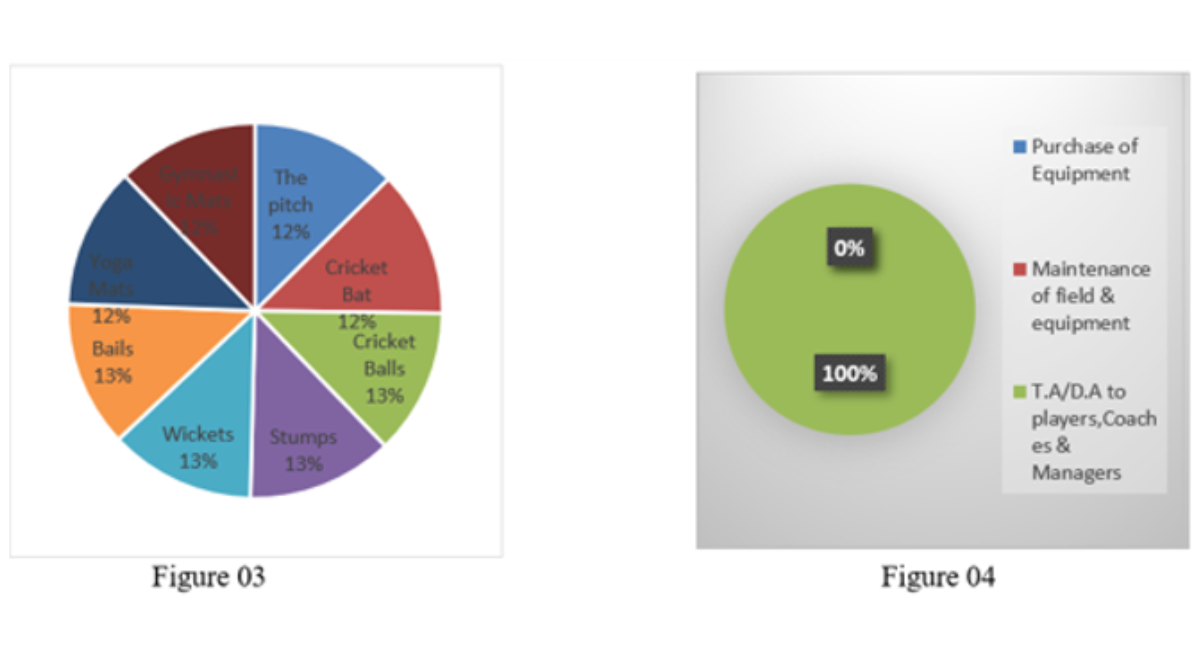
Figures 1-4: Pie Chart Diagram on the Selected Statements of the Questionnaire
DISCUSSION
The findings of the present investigation indicate that the Jammu and Kashmir Cricket Association (JKCA) has made an important contribution to the promotion of cricket in Jammu and Kashmir. The study was designed to examine the contribution of JKCA through information collected from different sources and through an opinion-rating questionnaire administered to individuals associated with cricket. The data were analyzed using descriptive statistics and percentage analysis and were presented through pie charts and column diagrams [36-40]. The overall findings suggest that JKCA's contribution is multidimensional, particularly in relation to playing facilities, cricket equipment, financial assistance and the creation of opportunities for player development. JKCA has made a significant contribution to the promotion of cricket in Jammu and Kashmir through infrastructure development, provision of equipment, financial assistance, coaching support, and opportunities for player development. Based on data collected through questionnaires, observations, and documentary sources, the findings indicate that JKCA’s contribution is multidimensional and plays an important role in supporting cricket participation and development in the region.
One of the major findings relates to the provision of playing facilities. Respondents reported satisfactory availability of cricket fields, a 400-metre track, an indoor gymnasium, a gymnastics hall, and net-practice facilities. These facilities provide a supportive environment for training, fitness development, and skill enhancement. The availability of quality infrastructure is widely recognized as a key factor in athlete development and progression to higher levels of sport [1].
The study also highlights JKCA’s role in providing essential cricket equipment, including bats, balls, stumps, wickets, bails, and training-related equipment such as yoga and gymnastic mats. Access to appropriate equipment facilitates regular practice and organized competition and helps players develop cricket-specific skills more effectively. This finding suggests that JKCA’s contribution extends beyond administration to the provision of material resources necessary for participation and training.
Financial and logistical support emerged as another important area of contribution. Respondents indicated that assistance related to coaching camps, competitions, travel, and incentives helped players, coaches, and managers participate more consistently in cricket activities. Such support can reduce financial barriers and encourage sustained involvement in the sport.
The findings further suggest that coaching camps and competitive opportunities are central to JKCA’s efforts to promote cricket. By supporting coaching programmes and organized competitions, JKCA provides players with opportunities to improve their skills and gain valuable match experience. Research emphasizes that talent identification is most effective when combined with systematic coaching, training facilities, and competitive exposure [1,41].
The study’s results are consistent with JKCA’s broader institutional role in developing cricket in Jammu and Kashmir. Through age-group and senior-level structures, the association has created pathways linking grassroots participation with higher levels of competition. These pathways are essential for sustainable sports development because they enable talented players to progress through structured stages of training and competition.
The findings also have relevance for women’s cricket. JKCA has established women’s competitions and selection programmes across junior and senior categories, indicating a growing commitment to female participation. The provision of facilities, equipment, coaching, and competitive opportunities can contribute to stronger and more sustainable pathways for girls and women in cricket.
Overall, the study indicates that JKCA has promoted cricket in Jammu and Kashmir through an integrated approach involving infrastructure, equipment, financial assistance, coaching activities, and competitive opportunities. The strongest evidence relates to the provision of playing facilities and cricket equipment, while financial and logistical support also contributes to player development. These findings support the view that effective sports development depends on the combined functioning of infrastructure, human resources, financial support, training, and competition systems [1,2].
However, the findings should be interpreted within the study’s methodological limitations. The research relied primarily on respondents’ opinions, observations, and documentary sources, while the quantitative analysis was limited to descriptive statistics and percentage analysis. Therefore, the findings reflect perceived and observed contributions of JKCA rather than establishing a direct causal relationship between JKCA initiatives and improvements in player performance. Future research could strengthen the evidence by examining participation and performance trends over time, comparing different regions of Jammu and Kashmir, and separately analyzing the experiences of male and female cricketers. Such studies would provide a more comprehensive understanding of JKCA’s long-term impact on cricket development in the region [42,43,44].
CONCLUSION
The present study concludes that the Jammu and Kashmir Cricket Association (JKCA) has made a substantial institutional contribution to the promotion and development of cricket in Jammu and Kashmir. The findings indicate that its contribution extends across multiple dimensions, including the provision of playing facilities, cricket equipment, financial and logistical assistance, coaching camps, competitive opportunities, and support for player development. The availability of cricket grounds, practice facilities, gymnasium and gymnastics facilities, together with essential equipment such as bats, balls, stumps, wickets and bails, has provided an important foundation for regular training and participation. Financial assistance and travel-related support further facilitate the participation of players, coaches and managers in camps and competitions.
The study also highlights the importance of JKCA's organized competitive structure and talent-development activities. Age-group competitions, selection trials, coaching programmes, fitness and fielding camps, and opportunities to participate in higher-level domestic cricket provide pathways through which players can progress from emerging talent to competitive cricket. The development of women's cricket is another important aspect of JKCA's contribution, with organized competitions, selection structures, talent-hunt programmes, training camps and competitive exposure being extended across different age categories. These initiatives indicate an expanding institutional framework for the participation and development of women cricketers in Jammu and Kashmir.
Overall, the findings suggest that cricket development in Jammu and Kashmir is supported by an integrated combination of infrastructure, equipment, financial assistance, coaching, talent identification and competitive exposure. JKCA therefore represents an important institutional stakeholder in creating opportunities for cricket participation and player development in the region. However, the findings should be interpreted within the methodological limitations of the study, as the investigation primarily relied on descriptive and percentage analysis, respondents' opinions, and documentary and observational evidence. Thus, the present study demonstrates the perceived and observed contribution of JKCA but does not establish a direct causal relationship between JKCA initiatives and improvements in player performance. Future research should examine longitudinal performance outcomes, regional differences, accessibility of facilities, gender-specific experiences, and the progression of players from grassroots cricket to higher levels of competition to provide a more comprehensive assessment of the long-term contribution of JKCA to cricket development in Jammu and Kashmir.
REFERENCES
- Kruthika NS, Sood S. The uneven development of sport policy in India: Need for a coordinated governance structure. In: Gopal M, Prakash P, editors. Sports studies in India: Expanding the field. New Delhi: Oxford University Press; 2021. [Crossref] [Google Scholar]
- Lunawat V. Sport and development in India. London: Routledge; 2021. [Crossref] [Google Scholar]
- Bhatt SK, Bhatt BS. Vyayam vignyan kosh. Rajpipla: Gujarat Vyayam Pracharak Mandal; 1979. [Google Scholar]
- Das SC, Singh S, Chakraborty S. Chronotype and athletic performance in different time of day. ShodhKosh: Journal of Visual and Performing Arts. 2024;5(6):463-467. [Crossref] [Google Scholar]
- Dheer S, Kamal R. Organisation and administration of physical education. Delhi: Friends Publications; 1991. [Google Scholar]
- Gadyal News Kashmir. First woman from Kashmir becomes JKCA Cricket Advisory Committee member. 2026.
- Gangopadhyay SR. Physical education today and tomorrow. Delhi: Friends Publications; 1992. [Google Scholar]
- Gohil KR. Sharirik shikshan maa paddhatiyo ane ayojan. Gujarat State Textbook Association; 1997. [Google Scholar]
- Jabeen SS, Shah MM, Singh S. A phenomenon which make me able to manipulate and gain control over the movements is my motor abilities. Int J Yoga Physiother Phys Educ. 2023;8(6):16-17. [Google Scholar]
- Jammu & Kashmir Cricket Association. History of JKCA. Accessed 2026.
- Jammu & Kashmir Cricket Association. Constitution of Jammu and Kashmir Cricket Association approved by the Supreme Court of India. 2025.
- Jammu & Kashmir Cricket Association. Instructions for deep selection camp of senior women's (U-23 & senior). May 5, 2025.
- Jammu & Kashmir Cricket Association. Official notices and press releases. 2026.
- Jammu & Kashmir Cricket Association. Women's cricket competitions and teams. Accessed 2026.
- Jammu & Kashmir Cricket Association. Press releases and notices. Accessed 2026.
- Jammu & Kashmir Cricket Association. Women's senior one-day team. Accessed 2026.
- Jammu & Kashmir Cricket Association. Centurions and outstanding bowlers: Hall of Fame. Accessed 2026.
- Jammu & Kashmir Sports Council. JKCA, Sports Council set to bat together to take J&K cricket forward. May 14, 2018.
- Jammu & Kashmir Sports Council. Jasia, first woman cricketer from Kashmir selected for India camp. Accessed 2026.
- Jammu & Kashmir Sports Council. Parvez Rasool. Accessed 2026.
- Kalkal AK, Singh S. Effect of slow stretch and hold, ballistic, and proprioceptive neuromuscular facilitation method on hamstring flexibility. Int J Behav Soc Mov Sci. 2015;4(1):16-25. [Google Scholar]
- Kamlesh ML. Methodology of research in physical education and sport. New Delhi: Metropolitan Book Co.; 1994. [Google Scholar]
- Kamlesh ML. Foundations of physical education. New Delhi: Metropolitan Book Co.; 1997. [Google Scholar]
- Kaur B, Singh SP, Kaur R. Structural profile and fat patterning between two endogamous groups of Punjabi females. Anthropologist. 2001;3(4):247-250. [Crossref] [Google Scholar]
- Kaur M, Singh S. A comparative study of anthropometrical variables among the children of Model Senior Secondary Schools and Kendriya Vidyalaya of Punjab. Int Res J Commer Arts Sci. 2018;9(6):76-84. [Crossref] [Google Scholar]
- Kaur M, Singh S. Health-related fitness among the children of government and private schools of Punjab. Int Res J Manag Sociol Humanit. 2020;11(3). [Google Scholar]
- Kaur MG, Singh SP. Effect of selected massage and yogic exercise on the recovery pattern of blood lactate after an endurance workout. Int J Physiol Nutr Phys Educ. 2019;4(1):2047-2049. [Google Scholar]
- Kaur N, Singh SP. Perceptive consequences of the respiratory parameters of middle and long distance runners in track and field athletes. Sports Sci Perform. 2021;1:8. [Google Scholar]
- Laxmisha YS, Manilal KP. Writing thesis format style for physical education and sport science. 2003. [Google Scholar]
- Mayor JD. Personality: A systematic approach. Boston: Allyn & Bacon; 2007. [Google Scholar]
- Ministry of Youth Affairs and Sports. Annual report 2023–24. New Delhi: Government of India; 2024. [Google Scholar]
- Modern Language Association of America. MLA handbook for writers of research papers. 7th ed. New York: Modern Language Association; 2008. [Google Scholar]
- Nunn P. Principles of education. Delhi: Discovery Publishing House; 1994. [Google Scholar]
- Shah CP. Vyayam vigyan kosh–04. Rajpipla: Gujarat Vyayam Pracharak Mandal; 1981. [Google Scholar]
- Sharma A. Dimensions of physical education. Delhi: Khel Sahitya Kendra; 2012. [Google Scholar]
- Singh R, Singh SP. An analysis among physiological and physical fitness of middle distance and long distance runners. Int J Adv Comput Res. 2014;4(4):979-984. [Google Scholar]
- Singh S. Kinematic factors influencing hang style jumping technique in track and field. SSRN. July 15, 2025. [Crossref] [Google Scholar]
- Singh S. Empowering women through sports. J Sport Sci Human Perform. 2026;1(1):1-6. [Google Scholar]
- Singh S, Kaur L. Effect of different time of day on the coordinative ability of inter-university level female football players. Int J Phys Educ Sports. 2017;2(1):16-19. [Google Scholar]
- Singh S, Kumar P. Physiological differences between athletes of selected events in track and field: A comparative study. Int J Behav Soc Mov Sci. 2013;2(1):235-241. [Google Scholar]
- Singh SP, Singh R. Menstruation cycle and aerobic capacity of female athletes: An analysis. Int J Phys Educ Sports Manag Yogic Sci. 2015;5(1):20-24. [Google Scholar]
- Srivastava GNP. Advanced research methodology. New Delhi: Radha Publications; 1994. [Google Scholar]
- Uppal AK, Gautam GP. Physical education and health. Delhi: Friends Publication; 2004. [Google Scholar]
- Wuest DA, Butcher CA. Foundations of physical education and sport. 11th ed. New Delhi: B.I. Publications; 1992. [Google Scholar]