





About the Journal

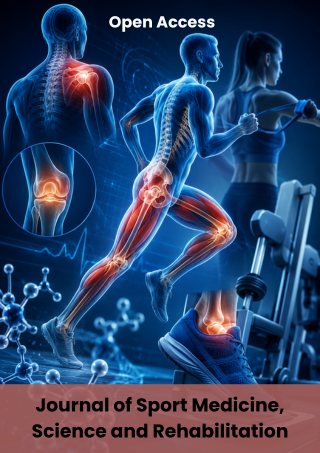
The Journal of Sport Medicine, Science and Rehabilitation (JSMR) is an international, peer-reviewed, open-access journal dedicated to advancing knowledge in sports medicine, exercise science, rehabilitation, and human performance. The journal provides a multidisciplinary platform for researchers, clinicians, sports physicians, physiotherapists, athletic trainers, exercise physiologists, rehabilitation specialists, and health professionals to publish high-quality research that promotes the prevention, diagnosis, treatment, and rehabilitation of sports-related injuries while enhancing athletic performance and overall physical well-being.

Committed to bridging scientific research with clinical and practical applications, the Journal of Sport Medicine, Science and Rehabilitation publishes original research articles, systematic reviews, meta-analyses, clinical studies, case reports, short communications, opinion articles, and evidence-based practice papers across a broad range of topics. These include sports medicine, musculoskeletal rehabilitation, physiotherapy, exercise physiology, biomechanics, sports nutrition, strength and conditioning, athletic training, injury prevention, sports psychology, kinesiology, physical activity and public health, regenerative therapies, rehabilitation technologies, wearable health devices, performance analytics, and emerging innovations in sports science and rehabilitation. The journal encourages interdisciplinary collaboration that integrates medicine, engineering, data science, and health sciences to improve patient care and athletic outcomes.

Every submission undergoes a rigorous single-blind peer-review process to ensure scientific quality, methodological rigor, ethical publishing standards, and constructive feedback. As an open-access journal, all published articles are freely available to readers worldwide, supporting the unrestricted dissemination of knowledge and encouraging collaboration among researchers, healthcare professionals, sports organizations, and policymakers. The journal is committed to publishing research that translates scientific discoveries into practical strategies for improving physical performance, reducing injury risk, accelerating recovery, and promoting lifelong health through exercise and rehabilitation.

Beyond conventional research articles, the journal welcomes clinical perspectives, rehabilitation protocols, technical innovations, consensus statements, educational reviews, and interdisciplinary commentaries that address current challenges and future directions in sport and rehabilitation sciences. With a strong emphasis on innovation, evidence-based practice, and global health, the journal serves as a valuable resource for advancing sports medicine and rehabilitation research across diverse populations, from elite athletes to recreational participants and individuals recovering from injury or chronic conditions.

By fostering international collaboration and supporting contributions from both emerging researchers and established experts, the Journal of Sport Medicine, Science and Rehabilitation promotes academic excellence, scientific integrity, and inclusive scholarly communication. Through a transparent editorial process, efficient publication workflow, and a growing global digital presence, the journal aims to become a trusted platform for disseminating impactful research that shapes clinical practice, informs policy, advances rehabilitation science, and contributes to healthier, more active communities worldwide.

Aim and Scope

Journal of Sport Medicine, Science and Rehabilitation (JSMR) publishes original research articles, review articles, systematic reviews, meta-analyses, case reports, short communications, clinical studies, technical notes, and perspective articles that advance knowledge in sports medicine, exercise science, rehabilitation, and human performance. We welcome submissions across a broad range of thematic areas, including (but not limited to):

Sports Medicine & Clinical Practice

  • Prevention, diagnosis, and management of sports-related injuries
  • Musculoskeletal disorders affecting athletes and physically active individuals
  • Sports traumatology, orthopedic sports medicine, and emergency sports care
  • Return-to-play assessment and evidence-based clinical decision-making
  • Medical management of acute and chronic sports injuries

Exercise Physiology & Human Performance

  • Cardiovascular, respiratory, metabolic, and neuromuscular adaptations to exercise
  • Exercise testing, physiological assessment, and performance evaluation
  • Training methodologies for endurance, strength, speed, and power development
  • Fatigue, recovery, overtraining syndrome, and exercise adaptation
  • Environmental physiology, altitude training, and thermoregulation

Rehabilitation & Physiotherapy

  • Musculoskeletal, neurological, and cardiopulmonary rehabilitation
  • Post-operative rehabilitation and functional recovery
  • Therapeutic exercise, manual therapy, and movement rehabilitation
  • Rehabilitation protocols for sports injuries and chronic conditions
  • Functional assessment, mobility restoration, and pain management

Biomechanics & Movement Science

  • Human movement analysis and functional biomechanics
  • Sports biomechanics and performance optimization
  • Gait analysis, posture, balance, and motor control
  • Joint mechanics, muscle function, and injury mechanisms
  • Motion capture technologies and biomechanical modeling

Sports Nutrition & Performance Enhancement

  • Nutritional strategies for athletic performance and recovery
  • Hydration, energy metabolism, and dietary interventions
  • Body composition assessment and weight management
  • Micronutrients, supplementation, and ergogenic aids
  • Nutrition across different sports and athletic populations

Strength & Conditioning

  • Resistance training, functional training, and conditioning programs
  • Athletic performance development across different sports
  • Youth athlete development and long-term athletic progression
  • Performance monitoring and athlete workload management
  • Injury prevention through conditioning and movement optimization

Sports Psychology & Athlete Well-being

  • Mental performance, motivation, and resilience in athletes
  • Performance anxiety, stress management, and psychological readiness
  • Athlete mental health, burnout, and emotional well-being
  • Leadership, team dynamics, and coaching psychology
  • Psychological interventions for rehabilitation and return to competition

Physical Activity, Public Health & Preventive Medicine

  • Physical activity promotion across diverse populations
  • Exercise as medicine for chronic disease prevention and management
  • Community health, active lifestyles, and health promotion
  • Physical activity guidelines and preventive healthcare strategies
  • Aging, healthy living, and functional independence through exercise

Sports Technology & Digital Health

  • Wearable sensors and athlete monitoring systems
  • Artificial intelligence and machine learning in sports medicine
  • Tele-rehabilitation and digital rehabilitation platforms
  • Smart technologies for injury prediction and performance analytics
  • Virtual reality, augmented reality, and digital innovations in rehabilitation

Pediatric, Geriatric & Adaptive Sports Medicine

  • Pediatric sports medicine and youth athlete health
  • Exercise interventions for older adults and healthy aging
  • Adaptive sports, disability rehabilitation, and para-sports medicine
  • Inclusive physical activity and rehabilitation strategies
  • Exercise prescription for special populations and chronic diseases

Regenerative Medicine & Emerging Therapies

  • Regenerative rehabilitation and tissue healing
  • Platelet-rich plasma (PRP), stem cell applications, and biologic therapies
  • Novel therapeutic modalities for musculoskeletal recovery
  • Precision medicine in sports injury management
  • Emerging clinical technologies and personalized rehabilitation approaches

Interdisciplinary & Translational Sports Science

  • Integration of medicine, rehabilitation, biomechanics, engineering, and data science
  • Evidence-based practice and clinical guideline development
  • Epidemiology of sports injuries and physical activity
  • Sports healthcare policy, ethics, and athlete safety
  • Innovations shaping the future of sports medicine, rehabilitation, and exercise science

Editorial and Peer-Review Policy

Journal of Sport Medicine, Science and Rehabilitation employs a single-blind peer-review process to maintain fairness, scientific integrity, and the quality of published work.

Key Features:

  • Each manuscript is reviewed by independent experts in the relevant field, along with oversight from an academic editor.
  • Reviewers can see author details, but the identities of the reviewers remain hidden from the authors.
  • The review criteria focus on originality, technical strength, methodological accuracy, ethical compliance, clarity, and relevance to the field of Journal of Sport Medicine, Science and Rehabilitation.
  • All submissions go through plagiarism checks and ethical evaluations before the peer-review process.
  • Final decisions on publication are made by the handling editor, based on the reviewers' evaluations and the overall quality of the manuscript.

Publication Frequency & Format

This journal comes out Annual (One issue per year). Once articles are accepted, they're quickly made available online in both HTML and PDF formats, ensuring fast and easy access to research findings.

Open Access Policy

Journal of Sport Medicine, Science and Rehabilitation embraces a gold open access model, meaning all published articles are freely accessible to everyone. Authors retain the copyright to their work, shared under a suitable open-access license to promote transparency, collaboration, and global knowledge-sharing.

Indexing & Archiving

The journal aims to be included in well-known scientific indexing and abstracting databases. All content is preserved through trusted archiving systems to ensure long-term accessibility and discoverability.

For Manuscript Submission

Authors can submit their manuscripts through the journal's Online Submission System (Submit Manuscript).

Submitted manuscripts must adhere to the Journal of Sport Medicine, Science and Rehabilitation Author Guidelines, which cover structure, formatting, ethical approvals, and conflict-of-interest disclosures.

Publication Ethics & Integrity

Journal of Sport Medicine, Science and Rehabilitation is committed to maintaining the highest publication ethics standards in accordance with COPE principles. Authors must ensure proper ethical approvals for studies involving humans, animals, or sensitive materials, and follow informed consent and confidentiality practices. They must also disclose conflicts of interest and funding support, report data accurately, and acknowledge contributor roles.

All submissions undergo plagiarism checks, and the journal has a strict policy for corrections, retractions, and post-publication updates.

Journal Benefits

  • International Peer-Reviewed Scholarly Journal
  • Open Access Publishing for Global Knowledge Dissemination
  • Crossref DOI Assignment for Every Published Article
  • Rigorous Single-Blind Peer Review Process
  • International Editorial and Reviewer Network
  • Ethical Publishing Practices Aligned with International Standards
  • Research Integrity, Transparency, and Academic Excellence
  • Immediate Online Publication upon Acceptance and Production Completion
  • Permanent Article Accessibility and Digital Preservation
  • Broad Multidisciplinary and Interdisciplinary Research Coverage
  • Author-Centered Editorial Support Throughout the Publication Process
  • Global Visibility Through Scholarly Indexing and Abstracting Services
  • Compliance with International Publication Ethics and Best Practices
  • Continuous Publication of High-Quality Scientific Research
  • Dedicated Special Issues and Thematic Research Collections
  • Promotion of Open Science, Research Reproducibility, and Scholarly Collaboration

JOURNAL PARTICULARS

Title Journal of Sport Medicine, Science and Rehabilitation
Frequency Annual (One issue per year)
ISSN Coming Soon
Publisher Name Confmeets Publishing
Publisher Address Radha Residency, 4th Floor, Sai Priya Gardens,Madhurawada,Visakhapatnam, 530041, Andhra Pradesh, India
Starting Year 2026
Subject Medical Sciences
Language English
Publication Format Online
Email ID support@confmeets.com
Mobile No. (+91) 9177731784

Current Issue Highlights

No articles found

Journals Indexed In

ResearchBib Google Scholar Sindexs OAJI CrossRef issn doi SemanticScholar
×

Contact Emails

A PHP Error was encountered

Severity: Warning

Message: Undefined array key "email"

Filename: blocks/left_side_menu.php

Line Number: 38

Backtrace:

File: /var/www/confmeets/application/modules/journals/views/blocks/left_side_menu.php
Line: 38
Function: _error_handler

File: /var/www/confmeets/application/third_party/MX/Loader.php
Line: 364
Function: include

File: /var/www/confmeets/application/third_party/MX/Loader.php
Line: 306
Function: _ci_load

File: /var/www/confmeets/application/modules/journals/views/index/index.php
Line: 568
Function: view

File: /var/www/confmeets/application/third_party/MX/Loader.php
Line: 364
Function: include

File: /var/www/confmeets/application/third_party/MX/Loader.php
Line: 306
Function: _ci_load

File: /var/www/confmeets/application/core/MY_Loader.php
Line: 173
Function: view

File: /var/www/confmeets/application/modules/journals/controllers/Home.php
Line: 36
Function: jou_template1

File: /var/www/confmeets/index.php
Line: 326
Function: require_once

support@confmeets.com
finance@confmeets.com
editorial@confmeets.com

Article Processing Timeline

2-5 Days Initial Quality & Plagiarism Check
25-35
Days
Peer Review Feedback
45-60 Days Total article processing time

Journal Highlights

No journal highlights found