


Journal of Plant Science and Biotechnology
ISSN:
3139-6437 (Online)
DOI Prefix (Crossref): 10.67238
 Download PDF
ABSTRACT
Early blight ( Alternaria solani) is one of the most common and devastating diseases of potato caused by the fungus. The purpose of this study was to evaluate the efficacy of six selective chemical fungicides against early blight disease of potato. The experimental design was a Randomized Complete Block Design (RCBD) with three replications. The six chemical fungicides, such as Mancozeb 80 WP (Mancozeb), Rovral 50WP (Iprodione), Sazid 70 WP (Mancozeb + Metalaxyl 7%), Win 77 WP (Copper Hydroxide), Pipertax 50 WP (Copper Oxychloride), and Tilt 25 EC (Propiconazole) were used in BARI Potato-7 to conduct this experiment. The application of Mancozeb 80 WP resulted in maximum reduction of plant infection (86.95%), leaf infection (86.83%), and disease severity (86.70%) at 80 days after planting. Additionally, the maximum yield increased by 121.18% when the potato was treated with Mancozeb 80 WP. Rovral 50 WP (Iprodione) also gave better control of the disease. Thus, application of fungicides, viz. Mancozeb 80 WP (Mancozeb) has shown a considerable effect for the treatment of early blight disease in potatoes under field conditions, as revealed in the present study.
Keywords: Potato; Early Blight; Fungicide; Disease Severity; Yield
INTRODUCTION
Potato ( Solanum tuberosum L.) is one of the main food crops in Bangladesh after rice and wheat. Within Asia, Bangladesh is the fourth largest potato producing country while ranked top 15 among all over the world. It ranks second in terms of production after rice, at the same time holds the third position considering cultivated land areas after both rice and wheat. Therefore, potato has a great potential to improve the socioeconomic situation of Bangladesh [1]. In Bangladesh, potato ranks as the third most important food and cash crop within the family Solanaceae, and globally it is the fourth most important crop after rice, wheat, and maize [2]. Potato production and area coverage were 10.14 million tons and 0.46 million ha, respectively, during the 2022-23 year, reflecting growing farmer interest in potato as a cash crop [3]. Potatoes, consumed by more than a billion people and cultivated on approximately 175.8 lakh hectares, are categorized as highly disease susceptible, ranking among the most vulnerable major food crops [4]. Beyond its economic value, potato supports year-round vegetable and nutritional security, especially among low-income populations. It is a notable source of phenolic compounds and vitamin C. These antioxidants neutralize reactive oxygen species and mitigate oxidative stress, thereby supporting immune function and lowering the risk of cardiovascular disease, cancer, cataract, diabetes, and premature aging [5,6]. Nonetheless, potato productivity in Bangladesh is constrained by pests and diseases, limited disease-free seed, inadequate cold storage, and unstable market prices. Diseases represent a particularly significant constraint, with 54 biotic and abiotic diseases of potato documented nationally [7]. Among these, early blight is caused by the fungus Alternaria solani (family Ascomycetes), a dominant potato pathogen [8,9], with its incidence reportedly increasing in recent years [10]. Early blight induces premature defoliation and consequent yield reduction, with losses of 20-50% commonly attributed to foliar damage, depending on location, season, cultivar, and crop stage. The pathogen initially forms small, darkened lesions that enlarge into black necrotic spots with concentric rings, producing a characteristic "target spot" symptom, typically first observed on older, senescing foliage [11]. Alternaria solani, the pathogen, can survive in the form of mycelium and conidia in the soil and dry and warm weather, 25-30 0C temperature required for growth of the pathogen persists between seasons as mycelium or conidia in plant debris, soil, infected tubers, and alternative solanaceous hosts [12]. Current disease management relies chiefly on cultural measures, including resistant cultivars, foliar fungicides, crop rotation, tillage, debris removal and burning, and weed-host eradication to reduce inoculum. Chemical control remains the preferred approach owing to its rapid action, broad-spectrum efficacy, and accessibility. Fungicides such as Dithane M 45, Tilt 25 EC, Win 77 WP, Rovral 50 WP, Pipertax 50 WP, and Mancozeb 80 WP have demonstrated effectiveness against A. solani and A. alternata [13,14], and comparable fungicides have successfully controlled Alternaria blights in mustard, cabbage, tomato, and cauliflower [15,16,17,18]. However, despite extensive evidence from other crops and regions, information on fungicidal control of potato early blight specific to Bangladesh remains scarce [19], and no comprehensive, locally validated assessment of candidate fungicides against A. solani under Bangladeshi field conditions has yet to be conducted. To address this gap, the present study was conducted to isolate and identify Alternaria solani, the causal organism of early blight of potato, and to evaluate the efficacy of six selective fungicides in controlling early blight of potato under field conditions.
MATERIALS AND METHODS
Description of the Experimental Site
The field experiment was conducted at the farm field of Sher-e-Bangla Agricultural University, and the laboratory experiment was conducted in the laboratory of the Department of Plant Pathology, Sher-e-Bangla Agricultural University, Dhaka-1207.
Climatic Condition
The experimental area was under the sub-tropical climate which, characterized by the comparatively low rainfall, low humidity, low temperature, relatively short-day during November to May, and high rainfall, high humidity, high temperature, and long-day period during April to September.
The annual precipitation and potential evapotranspiration of the site were 2152 mm and 1297 mm, respectively. The average maximum and minimum temperature was 30.34 0C and 21.21 0C, respectively, with a mean temperature of 25.17 0C. Temperature during the cropping period ranged from 12.2 0C to 31.2 0C. The humidity varied from 73.52% to 81.2%. The day length ranged from 10.5 to 11.0 hours only, and there was no rainfall during the experimental period. Temperature fluctuation plays a vital role in disease development.
Soil Type and Fertility status of the soil
The experimental site belonged to the Agro-EcologicalRegion of “Madhupur Tract” (AEZ No. 28). It was Deep Red Brown Terrace soil and belongs to “Nodda” cultivated series. The topsoil is slightly clay loam in texture. Organic matter content was very low (0.82%) and soil pH varied from 5.5-6The soil of experimental site was analyzed in Soil Resource Development Institute (SRDI), Dhaka and found as loamy soil which contains total Nitrogen 0.061(%), Phosphorus 35022 microgram per gram of soil, Sulphur 22.60 microgram per gram of soil, Potassium 0.030 miliequivalent per 100 gram soil and Calcium 2.67 miliequivalent per 100 gram soil.
Design Of The Experiment
The experimental plots were arranged in a Randomized Complete Block Design (RCBD) with three (3) replications. The total experimental area was 209m2 (19m×11m) and divided into three blocks, each comprising seven plots corresponding to seven treatments. The total number of plots was twenty-one. Each plot measured 2m × 3m (6m2) and planted thirty-six plants. The treatments were randomly assigned to plots within every block, with every treatment replicated once per block.
Collection Of Fungicides
Six fungicides, namely Win 77 WP, Tilt 25 EC, Rovral 50 WP, Pipertax 50 WP, Mancozeb 80 WP, and Sazid 70 WP were collected from the local market.
Preparation of Fungicidal Suspension
Recommended doses of fungicidal solution were prepared by mixing thoroughly with the required quantity of fungicide and water. Win77 WP (1gm/L), Tilt 25 EC (1gm/L), Rovral 50 WP (1gm/L), Pipertax 50 WP (2gm/L), Mancozeb 80 WP (2gm/L), and Rovral 50 WP (1gm/L) for preparation of solution for recommended concentration.
Treatments With Doses
|
SL. No. |
Trade Name |
Active Ingredient |
Dose |
|
1. |
Sazid 70 WP |
Mancozeb + Metalaxyl 7% |
@ 0.2% |
|
2. |
Tilt 25 EC |
Propiconazole |
@ 0.2% |
|
3. |
Win 77 WP |
Copper hydroxide |
@ 0.1% |
|
4. |
Rovral 50 WP |
Iprodion |
@ 0.1% |
|
5. |
Pipertax 50 WP |
Copper oxychloride |
@ 0.2% |
|
6. |
Mancozeb 80 WP |
Mancozeb |
@ 0.2% |
|
7. |
Control |
Table 1: The Following Fungicidal Treatments Were Used For Spraying of Potato Seedlings
Application Of Fungicides
At recommended doses, suspensions/solutions of fungicides were prepared by mixing thoroughly with the requisite quantity of normal plain water. Spraying was started one month after transplanting. A total of 3 sprays were done with 15-day intervals with a hand sprayer. A control treatment was maintained in each block where spraying was done with plain water.
Laboratory Experiment
Collection of Diseased Samples
Diseased sample of BARI Potato-7 (Solanum tuberosum) and its leaves were collected from the Farm field of Sher-e-Bangla Agricultural University, Dhaka- 1207. Collected samples were put in polyethylene bags immediately after collection to protect from drying, as presented in Figure 1.
Isolation And Identification of the Pathogen of Early Blight of Potato
Diseased leaf samples were brought to the laboratory and washed thoroughly to clean different parts and cut into small pieces, by keeping infected and healthy tissues and sterilized by dipping in 0.1 % NaOCl solution for 30 seconds and rinsed three times with sterile water. Leaf samples were placed on moist blotter paper on Petri dish (Fig. 2), which was incubated at 20±2 0C for 2 days in 12 hours with alternate light and darkness. potato leaves were incubated for 20 days at 20±2 0C in the normal lab conditions. After incubation, when the whitish mycelium had grown a bit of mycelium was taken with the help of a sterilized needle and transferred onto sterile solid PDA plates and kept in an incubator at 25±1 0C for growth. Temporary slides were prepared for identification under a compound microscope. No molecular characterization was conducted; only the morphological features of Alternaria Solani were observed in the experiment.
Calculation of Disease Incidence and Disease Severity of Different Treatments
Disease incidence is the proportion of plant units diseased in relation to the total number of units examined. Plant units mean the leaves, stems, fruits, tubers, rhizomes, and bulbs, etc. that show any symptoms. In some cases, the plant unit represents the plant as a whole. Disease severity is the proportion of plant tissues infected in relation to the total amount of tissue examined. Ten plants per plot were randomly selected and marked with a red color tape for calculating the percentage Disease Incidence. In the case of percentage, the disease Severity from the selected plant’s leaf area was measured. The same selected plants were evaluated on each observation. One observer estimated the data.
Percent disease incidence and severity were calculated by using the following formula:
Disease Severity (%)
Disease Severity (%) = Area of tissues infected Total area of tissues inspected × 100
Disease Incidence (%)
Disease Incidence (%) = Number of plant units diseased Total number of plant units examined × 100
Leaf Area Diseased (LAD)/plant in different treatments
Leaf area diseased of the ten selected plants in each plot against each treatment was measured and recorded by eye estimation. The mean percentage of leaf area diseased was calculated by dividing the total number of observations.
The data of disease severity was assessed in a randomized complete block design with three replications by using the modified 0-5 disease rating scale of [20] for leaves, where-
- 0=No symptoms on leaves
- 1= 0-5% infection on leaves
- 2= 6-20% infection on leaves
- 3= 21-40% infection on leaves
- 4= 41-70% infection on leaves
- 5= >71% infection on leaves
The disease index (PDI) was expressed by using the formula suggested by [21]
PDI (%) = ∑ Disease Ratings ( Total Number of Observations × Maximum Disease Rating ) × 100
Statistical Analysis
The recorded data were compiled, tabulated, and subject to statistical analysis. Analysis of variance was done with the help of the computer package program MSTAT-C with 5% level of significance. This experiment was two factorial designs. The mean differences were adjudged by Duncan’s New Multiple Range Test (DMRT) [22].
RESULTS
The yield of potato highly affected by Alternaria solani, which is responsible for early blight of potatoes. The incidence was recorded as a percentage of the infected plants and leaves in each treatment, and the severity of the diseases were noted as the percentage of leaf area infected by the pathogen. The percentage of yield increased by the application of fungicides is discussed in this session.
Symptoms of Early Blight of Potato Caused by Alternaria Solani
Spots appeared as small, dark, dry, papery flecks, which grew to become brown-black, circular to oval areas with concentric rings. The spots were often bordered by veins that made them angular.
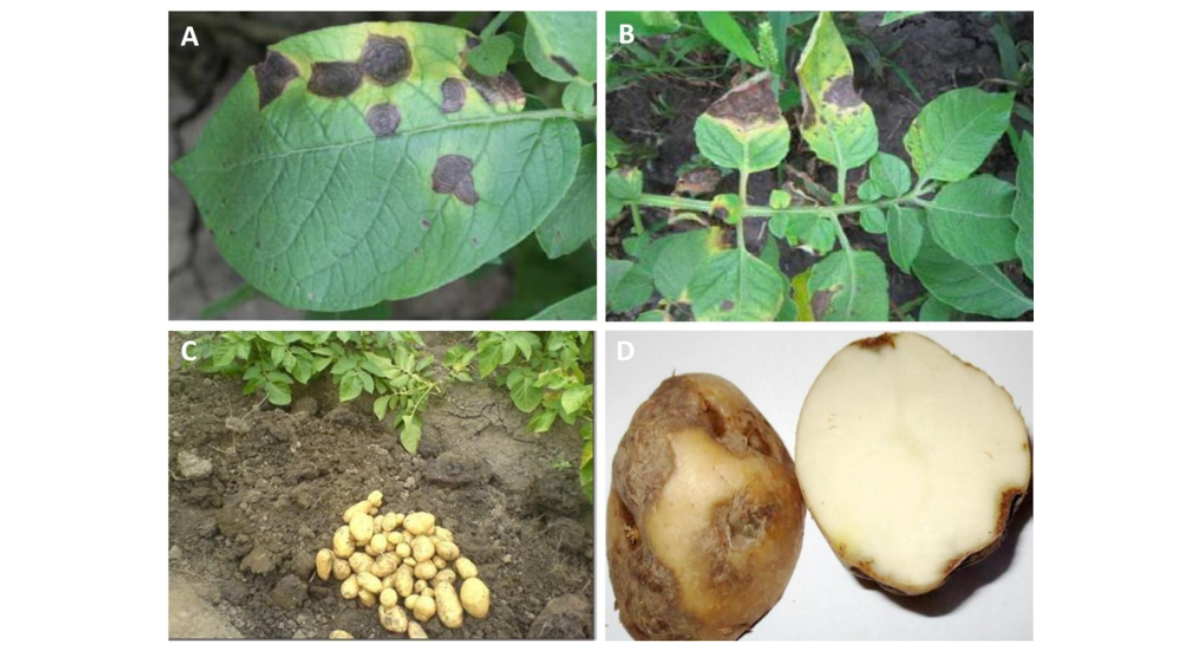
Figure 1: A. Symptoms of early blight of potato showing blighted leaves, B. Symptoms of early blight of potato showing blighting of leaves with brownish color, C. Harvested potato, D. Infected potato
Identification of the Causal Organism of Early Blight Of Potato
Several temporary and semi-permanent slides were prepared to observe the microorganisms under the microscope. Infected leaves were collected from the field, then preserved for laboratory testing. Figure 2 shows the laboratory observations results. Observations of the fungus were recorded by adopting a slide culture. The fungus produced profuse mycelial growth on PDA. Initially, the mycelium was hyaline, which turned to grey-brownish. Fungus colonies were dark to grey-black, and conidiophores arising singly or in small groups produced spores in a chain. Conidia were large with longitudinal and transverse septa and a short beak, typical for Alternaria solani under the microscope.
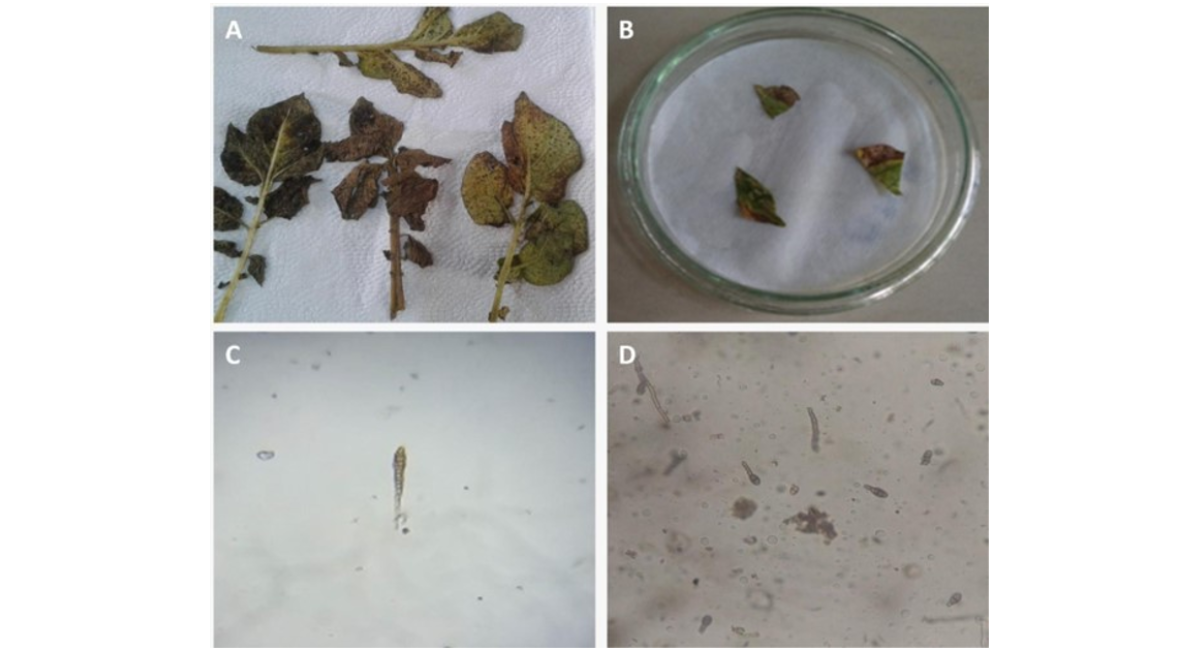
Figure 2: B. Collected diseased leaf samples from the field, B. Placing of infected potato leaves on a petridish after surface sterilization, C. Conidia of Alternaria solani, D. Conidia of Alternaria solani showing short beak and long beak under compound microscope (10X)
|
Disease Incidence (% Plant Infection) |
(%) Reduction of disease incidence at 80 DAP |
|||
|
Treatments |
60 DAP |
70 DAP |
80 DAP |
|
|
Sazid 70 WP |
20.42 |
18.32 |
16.13 |
83.87ab |
|
Tilt 25 EC |
23.20 |
21.45 |
18.87 |
81.13b |
|
Win 77 WP |
21.54 |
20.05 |
17.95 |
82.05b |
|
Rovral 50 WP |
18.70 |
14.75 |
14.55 |
85.45a |
|
Pipertax 50WP |
22.05 |
21.95 |
18.28 |
81.72b |
|
Mancozeb 80 WP |
17.65 |
14.32 |
13.05 |
86.95a |
|
Control |
83.75 |
85.52 |
100 |
|
|
LSD (0.05) |
3.430 |
3.204 |
4.063 |
|
|
CV (%) |
4.13 |
3.83 |
3.67 |
|
|
Significance |
** |
** |
** |
|
Table 2: Efficacy of Different Fungicides on the Management of Plant Infection of Potato Against Early Blight Under Field Conditions
Effects of Different Treatments on the Plant Infection Caused by Alternaria Solani
The treatments showed promising performance in reducing the disease incidence (plant infection) at different Days after planting (DAP). The application of different selected fungicides was observed and evaluated at regular intervals, at 60, 70, and 80 days after planting of potato tubers. At 60 DAP, the effect of different treatments was found to differ significantly in respect of plant infection. Among the fungicides, the lowest plant infection (17.65%) was recorded in the case of Mancozeb 80WP, followed by Rovral 50WP (18.70%). The highest plant infection (83.75%) was recorded in the control presented in Table 2. At 70 DAP, the highest plant infection (85.52%) was recorded in the control, and the lowest plant infection (14.32%) was recorded in the case of Mancozeb 80 WP, followed by Rovral 50 WP (14.75%). At 80 DAP, the lowest plant infection was also recorded in the case of Mancozeb 80 WP (13.05%) followed by Rovral 50 WP (14.55%). The application of different treatments was calculated based on the plant infection recorded at 80 DAP. Reduction of disease incidence at 80 DAP, 86.95% (plant infection) was recorded in the plot that was applied with Mancozeb 80WP. According to Table 1, at 60, 70, and 80 DAP, the treatments applied showed a similar trend of results in reducing the leaf infection. At 80 DAP, the lowest leaf infection was also recorded in the case of Mancozeb 80 WP (13.17%) followed by Rovral 50 WP (15.28%).
|
Disease Incidence (% Leaf Infection ) |
% Reduction of disease incidence at 80 DAP (Days after Planting) |
|||
|
Treatments |
60 DAP |
70 DAP |
80 DAP |
|
|
Sazid 70 WP |
20.56 |
18.56 |
16.22 |
83.78ab |
|
Tilt 25 EC |
23.07 |
22.35 |
18.76 |
81.24b |
|
Win 77 WP |
21.34 |
20.24 |
17.93 |
82.07ab |
|
Rovral 50 WP |
18.20 |
15.74 |
15.28 |
84.72a |
|
Pipertax 50 WP |
22.55 |
21.87 |
18.23 |
81.77b |
|
Mancozeb 80 WP |
17.67 |
14.46 |
13.17 |
86.83a |
|
Control |
82.73 |
85.73 |
100 |
|
|
LSD (0.05) |
2.129 |
2.566 |
3.374 |
|
|
CV (%) |
3.97 |
4.42 |
3.76 |
|
|
Significance |
** |
** |
** |
|
Table 3: Efficacy of Different Fungicides on the Management of Leaf Infection of Potato Against Early Blight Under Field Conditions
Effects of Different Treatments on the Leaf Infection Caused by Alternaria Solani
According to data in Table 3, at 60 DAP, among the fungicides, the lowest leaf infection (17.67%) was recorded in the case of Mancozeb 80WP, followed by Rovral 50WP (18.20%). At 70 DAP, the highest leaf infection (85.75%) was recorded in the control, and the lowest leaf infection (14.46%) was recorded in the case of Mancozeb 80 WP, followed by Rovral 50 WP (15.74%). At 80 DAP, the lowest leaf infection was also recorded in the case of Mancozeb 80 WP (13.17%) followed by Rovral 50 WP (15.28%). Reduction of disease incidence at 80 DAP 86.83% (leaf infection) was recorded I then which plot that was treated with Mancozeb 80 WP.
|
Percent Disease Index |
% Reduction of disease severity at 80 DAP |
|||
|
Treatments |
60 DAP |
70 DAP |
80 DAP |
|
|
Sazid 70 WP |
17.57 |
16.32 |
15.28 |
84.72ab |
|
Tilt 25 EC |
21.52 |
20.07 |
18.76 |
81.24bc |
|
Win 77 WP |
21.07 |
19.05 |
17.93 |
82.07b |
|
Rovral 50 WP |
16.23 |
15.37 |
14.08 |
85.92a |
|
Pipertax 50 WP |
20.55 |
19.53 |
18.23 |
81.77bc |
|
Mancozeb 80 WP |
15.57 |
14.82 |
13.30 |
86.70a |
|
Control |
63.57 |
76.63 |
86.92 |
|
|
LSD (0.05) |
3.324 |
1.984 |
2.720 |
|
|
CV (%) |
6.95 |
5.83 |
4.27 |
|
|
Significance |
** |
** |
** |
|
Table 4: Efficacy of Different Fungicides on the Management tf The Percent Disease Index (PDI) Of Potato Against Early Blight Under Field Conditions
Effects of Different Treatments on the Percent Disease Index (PDI) Caused by Alternaria Solani
The performances of the treatments on different days after planting (DAP), viz. 60 DAP, 70 DAP, and 80 DAP in reducing disease severity, showed a similar trend irrespective of different DAP. As per the last recording data at 80 DAP, the Mancozeb 80 WP showed the highest performance (86.70%) in the reduction of disease severity. The second highest reduction of disease severity was recorded in of Rovral 50 WP (85.92%) followed by Sazid 70 WP (84.72%), presented in Table 4.
|
Treatments |
Yield (ton/ha) |
Increase of yield (%) |
|
Sazid 70 WP |
25.11 |
99.92b |
|
Tilt 25 EC |
22.77 |
81.29cd |
|
Win 77WP |
24.67 |
96.42bc |
|
Rovral 50 WP |
26.58 |
111.63ab |
|
Pipertax 50 WP |
23.86 |
89.97c |
|
Mancozeb 80 WP |
27.78 |
121.18a |
|
Control |
12.56 |
|
|
CV (%) |
6.56 |
|
|
LSD (0.05) |
2.502 |
|
|
Significance |
** |
Table 5: Efficacy Of Different Fungicides on the Yield of Potato Against Early Blight Under Field Conditions
Effects Of Different Treatments on the Yield of Potato Caused by Alternaria Solani
The highest tuber yield (27.78 t ha-1) of potato was observed from the plot treated by Mancozeb 80WP, whereas a significantly similar yield (26.58 t ha-1) was harvested from the plot applied by Rovral 50 WP. The yields of potato 25.11 t ha-1, 22.77 t ha-1, 24.67 t ha-1, and 23.86 tha-1 were found from the plots treated with Sazid 70 WP, Tilt 25 EC, Win 77 WP, and Pipertax 50 WP, respectively. These results are shown in Table 4. At that time, the tuber yield (12.56 t ha- 1) of potato was observed from the control plot. The chemical fungicides also increased the yield considerably compared to the control. The highest increase in the percentage of yield was 121.18% when the field was applied by Mancozeb 80 WP.
DISCUSSION
Potato cultivation is affected in a cyclic order year after year by the severe disease named early blight caused by Alternaria solani consequence lower yield production in Bangladesh. Because of this, an experiment was conducted for the management of early blight of potato in field conditions by using very effective and commonly known six different fungicides as foliar spray. Altogether there were six treatments, viz. Mancozeb 80 WP @ 0.2%, Rovral 50 WP @ 0.1%, Win 77 WP @ 0.1%, Sazid 70 WP @ 0.2%, Pipertax 50 WP @ 0.2% and Tilt 25 EC @ 0.2% and a control. Alternaria solani was isolated from infected leaves of potato, having typical symptoms (dark brown spot) of early blight of potato. [23] Scientists reported that, maintaining the proper date of sowing can reduce the incidence of diseases of okra yellow vein mosaic virus [24]. Previous study reported that the first symptoms of early blight are small, dark, blighted lesions that usually appear on the older leaves and gradually spread upward as the plant becomes older. As lesions enlarge, they form concentric rings, and they are often surrounded by a yellowing border. Conidia of Alternaria solani have solitary, golden brown and beaked, nine to eleven transverse and a few or no longitudinal septa [25]. The highest reduction percentage of plant infection (86.95%) and leaf infection (86.83%) was recorded from the plots applied by Mancozeb 80 WP (Mancozeb). Other treatments also gave better results compared to the control [26]. The application of foliar fungicides was the most effective method to control early blight in the field [27,28]. Several studies have reported that leaves were more susceptible to disease in control treatments compared to fungicide treatments [29]. The highest plant infection (86.95%) and leaf infection (86.83%) were recorded from the plots applied by Mancozeb 80 WP. In case of reduction of disease severity, the highest performance (86.70%) was recorded from the plots applied by Mancozeb 80 WP, whereas maximum PDI was calculated from the control (86.92%), and similar results were found in previous research [12,30]. An experiment was conducted to evaluate the effect of bioagents ( Trichoderma harzianum and Pseudomonas fluorescens) and fungicides (mancozeb) against early blight of potato caused by Alternaria solani. Observation for the percent disease index was recorded at 60 and 80 days after sowing (DAS). The lowest disease intensity was recorded in Mancozeb (15.57% and 13.30%, respectively) as compared to the control, which recorded the highest disease intensity (63.57% and 86.92%, respectively). The chemical fungicides also increased the yield more than the control. The highest tuber yield (27.78 t ha -1) of potato was observed from the plot treated with Mancozeb 80 WP, whereas the tuber yield (12.56 t ha -1) of potato was found from the experiment. The highest increase in the percentage of yield was (121.18%) when the field was treated with Mancozeb 80 WP compared to the control. These results are supported by the previous studies [31,32]. An experiment was conducted where eight fungicides, namely Pipertax 50 WP (Copper Oxychloride), Mancothane 80 WP (Mancozeb), Meena 80 WP (Mancozeb), Sazid 70 WP (Mancozeb + Metalaxyal 7%), Media 80 WP (Mancozeb), Win 77 WP (Copper Hydroxide), Mancozeb 80 WP (Mancozeb) and Rovral 50 WP (Iprodion) were tested for their effectiveness against early blight ( Alternaria solani) of tomato ( Lycopersicon esculentum). All the fungicides significantly reduced disease severity and increased fruit yield and yield components compared to the control. Among the fungicides tested the highest disease reduction with maximum fruit yield and yield components were obtained with Mancozeb, which was similar to Rovral as a standard check. Reduction of disease severity and increase of fruit yield in different farms by Mancozeb ranged (58-70%) and (27-49%), respectively, over the control. A previous study reported the effectiveness of fungicides like Azoxystrobin and Pyraclostrobin in suppressing early blight of potato caused by Alternaria solani and improving potato tuber yield over control [33]. The inappropriate use of fungicides is increasing production costs, promoting resistance in the pathogen, contributing to pollution, and exposing farmers to toxic chemicals [34]. Mancozeb 80 WP (wettable powder) is a broad- spectrum, protective contact fungicide containing 80% active mancozeb ingredient. It stops fungal spore germination, treats blights, and provides essential zinc and manganese nutrients to crops. Mancozeb 80% WP is widely available across Bangladesh through local agro-market and the price is very low. Farmers can easily get Mancozeb 80 WP in the local market and use it effectively. Maintaining a period of 7 to 14 days between the last application and crop harvest can reduce toxicity to the environment. Mancozeb 80% WP is a broad-spectrum contact fungicide with low acute mammalian toxicity.
CONCLUSION
Early blight of potato is the great cause responsible for the reduction of potato production in the country. Management of early blight of potato caused by Alternaria solani is needed to maintain the quality and quantity of the potato product. This study focused on the efficacy of six fungicides in controlling early blight of potato and their impact on the yield of potato. On the basis of the present findings, the potato growers may be suggested to use Mancozeb 80 WP as a chemical fungicide in in vivo conditions for the management of early blight of potato.
ACKNOWLEDGEMENT
The authors acknowledge the Department of Plant Pathology, Sher-e-Bangla Agricultural University, Dhaka, Bangladesh, for providing financial support to run this experiment.
REFERENCES
- Rahim MA, Sultana N, Mannan AM, Ahmed N. Potato production in Bangladesh. InPotato Production Worldwide 2023 (pp. 397-407). Academic Press. [Crossref] [Google Scholar]
- Spooner DM, Bamberg JB. Potato genetic resources: sources of resistance and systematics. American Potato Journal. 1994;71(5):325-37. [Crossref] [Google Scholar]
- Yearbook of Agricultural Statistics of Bangladesh. Bureau of Statistics, Statistical Division, Ministry of Planning, Government of the People’s Republic of Bangladesh, Dhaka. 2023.
- Chen B, Rafiq MU, Usman M, Arshad SF, Hameed A, Abbas M. Smart nanosystems for disease-resistant potatoes: a new Frontier in nanobiotechnology. RSC advances. 2026;16(16):14728-50. [Crossref] [Google Scholar] [PubMed]
- Brown CR. Antioxidants in potato. American journal of potato research. 2005;82(2):163-72. [Crossref] [Google Scholar]
- Kaur C, George B, Deepa N, Singh B, Kapoor HC. Antioxidant status of fresh and processed tomato-A review. Journal of Food Science and Technology-Mysore. 2004;41(5):479-86. [Google Scholar]
- Ali Major diseases of different crops in Bangladesh. BARC, Farmgate, Dhaka. 1994;78-82.
- Schmey T, Tominello‐Ramirez CS, Brune C, Stam R. Alternaria diseases on potato and tomato. Molecular plant pathology. 2024;25(3):e13435. [Crossref] [Google Scholar] [PubMed]
- Van der Waals JE, Korsten L, Aveling TA. A review of early blight of potato. African plant protection. 2001;7(2):91-102. [Google Scholar]
- Vloutoglou I, Kalogerakis SN. Effects of inoculum concentration, wetness duration and plant age on development of early blight (Alternaria solani) and on shedding of leaves in tomato plants. Plant pathology. 2000;49(3):339-45. [Crossref] [Google Scholar]
- Van der Waals JE, Korsten L, Aveling TA. A review of early blight of potato. African plant protection. 2001;7(2):91-102. [Google Scholar]
- Dhaval P, Shete PP, Faraaz M, Dholu D. Early blight (Alternaria solani) etiology, morphology, epidemiology and management of tomato. Pharma Innovation. 2021;10(5):1423-8. [Google Scholar]
- Mane MM, Lal AA, Zghair QN, Sobita Simon SS. Efficacy of certain bio agents and fungicides against early blight of potato (Solanum tuberosum L.). [Crossref] [Google Scholar]
- Ganie SA, Ghani MY, Nissar Q, Jabeen N, Anjum Q, Ahanger FA, Ayaz A. Status and symptomatology of early blight (Alternaria solani) of potato (Solanum tuberosum L.) in Kashmir valley. African Journal of Agricultural Research. 2013;8(41):5104-15. [Google Scholar]
- Hossain MS, Mian IH. Effect of foliar fungicides on the control of Alternaria blight of cabbage seed crop. [Google Scholar]
- Khoda SK, Hosna Kohinoor HK, Mian IH, Khan MA. Application of foliar fungicides to control Alternaria blight of cauliflower seed crop. [Google Scholar]
- Rahman H. Studies on the integrated management of Alternaria blight of mustard (Doctoral dissertation, Ph. D. Thesis, Dept of Plant Pathology, Bangladesh Agricultural University, Mymensingh, Bangladesh). [Google Scholar]
- Hosna Kohinoor HK, Khoda SK, Mian IH. Foliar spray of fungicides and botanicals to control Alternaria blight of cauliflower seed crop. [Google Scholar]
- Gulya TJ, Mathew F, Harveson R, Markell S, Block C. Diseases of sunflower. Handbook of Florists' crops diseases, handbook of plant disease management. Springer International Publishing, Cham. 2016:1-20. [Crossref] [Google Scholar]
- Mayee CV, Datar VV. Phytometry. Technical bulletin-1. Marathwada Agricultural University. Parbhani. 1986:46. [Google Scholar]
- Wheeler BE. An introduction to plant diseases. [Google Scholar]
- Gomez KA, Gomez AA. Statistical procedures for agricultural research. John wiley & sons; 1984. [Crossref] [Google Scholar]
- Jitu S, Akter S, Hossain MB, Akter S. Effect of time sowing on incidence of okra yellow vein mosaic virus (OYVMV). Asian Journal of crop. Soil Sci Plant Nutr. 2021;5(02):206-12. [Google Scholar]
- Sherf AF, MacNab AA. Vegetable diseases and their control. [Crossref] [Google Scholar]
- Ellis JB, Martin GB. Macrosporium solani E&M. American Naturalist. 1882;16:1003. [Google Scholar]
- Prasad Y, Naik MK. Evaluation of genotypes, fungicides and plant extracts against early blight of tomato caused by Alternaria solani. [Google Scholar]
- Wheeler BE. An introduction to plant diseases. [Google Scholar]
- Horsfield A, Wicks T, Davies K, Wilson D, Paton S. Effect of fungicide use strategies on the control of early blight (Alternaria solani) and potato yield. Australasian Plant Pathology. 2010;39(4):368-75. [Crossref] [Google Scholar]
- Sharma V, Kaur A, Kumar A. Early blight disease management of potato. Potato Research. 2025;68(2):1869-92. [Crossref] [Google Scholar]
- Jalal AS, Sumayli M, Alshaharni MO, Al‑Gheffari HK, Bukhari G, Alqahtani AN, Mosa WF, Ashry NM, El-Zehery HR, Abdelnaby AS, Taha TF. Trichoderma viride AT85 as a sustainable biocontrol strategy for early blight in potato: influences on morphological, physicochemical, molecular, and quality traits. Journal of Plant Pathology. 2026;108(1):469-84. [Crossref] [Google Scholar]
- Yellareddygari SK, Taylor RJ, Pasche JS, Gudmestad NC. Quantifying control efficacy of fungicides commonly applied for potato early blight management. Plant disease. 2019;103(11):2821-4. [Crossref] [Google Scholar] [PubMed]
- Ghazanfar MU, Raza W, Ahmed KS, Qamar J, Haider N, Rasheed MH. Evaluation of different fungicides against Alternaria solani (Ellis & Martin) Sorauer cause of early blight of tomato under laboratory conditions. International Journal of Zoology Studies. 2016;1(5):08-12. [Google Scholar]
- Hatem A, Karpova N, Yaderets V, Glagoleva E, Petrova K, Shibaeva A, Ovchinnikov A, Dzhavakhiya V. Inhibition of the growth and development of potato early blight pathogen (Alternaria solani) by combining Penicillium chrysogenum VKM F-4876D with some strobilurin-, triazole-, and phenylpyrrole-based fungicides. Agriculture. 2022;12(9):1488. [Crossref] [Google Scholar]
- Hasan MH, Shahi M, Khan I, Hasan MM, Ahmed E, Jun Z, Bonnave M, Serneels F, Islam MR. CARAH Early Warning System in Controlling Potato Late Blight (PLB): A Bangladesh Perspective. Potato Research. 2026;69(4):102. [Crossref] [Google Scholar]

Article Processing Timeline
| 2-5 Days | Initial Quality & Plagiarism Check |
| 25-35 Days |
Peer Review Feedback |
| 45-60 Days | Total article processing time |
EDITORIAL & PUBLICATION INFORMATION
| English | Publication Language |
| Single-Blind | Peer-Review Model |
| 17% | Acceptance Rate |
| <18% | Similarity Screening Guideline |
| Open Access | Access Model |
All manuscripts undergo editorial assessment and originality screening as part of the journal's evaluation process. The acceptance rate shown is based on journal-level editorial data and may change over time. Similarity reports are assessed editorially and are not interpreted solely on the basis of a numerical similarity score.
Why Publish with us?
Ethics & Policies
Editorial & Management
Useful Links
Journal Highlights
Open Access Journals
Journal Flyer