










Editorial Board

Dr Ruvishika S Jayawardena

Dr Ruvishika S Jayawardena (PhD)

Lecturer

School of Science, Mae Fah Luang University

Thailand

Dr Susmita Sahoo

Dr Susmita Sahoo (PhD)

Assistant Professor

Department of Biological and Environmental Sciences, Vallabh Vidyanagar, Anand - Constituent college of CVM University

India

Dr Krishan K Verma

Dr Krishan K Verma (PhD)

Principal Scientist

Department of Botany, Sugarcane Research Institute, Guangxi Academy of Agricultural Sciences

China

(Editor-in-Chief)
Tshifhiwa Constance Nangammbi
Tshifhiwa Constance Nangammbi (PhD)

Associate Professor

Department of Nature Conservation, Tshwane University of Technology

South Africa

(Editor-Member)
Dr Nokwazi Carol Mbili
Dr Nokwazi Carol Mbili (PhD)

Senior Lecturer Academic Coordinator

Department of Plant Pathology, University of KwaZulu-Natal

South Africa

(Editor-Member)
Dr Nimmi Seoraj Pillai
Dr Nimmi Seoraj Pillai (PhD)

Head of Department

Department of Nature Conservation, Tshwane University of Technology (TUT)

South Africa

(Editor-Member)
Dr Dipan Adhikari
Dr Dipan Adhikari (PhD)

Associate Professor

Department of Botany, Maulana Azad College Affiliated to the University of Calcutta

India

(Editor-Member)
Dr Brajeshwar Singh
Dr Brajeshwar Singh (Ph.D)

Professor

Department of Basic Sciences, Sher-e-Kashmir University of Agricultural Sciences & Technology of Jammu

India

(Editor-Member)

Submit Manuscript

Submit manuscript at Online Submission System or send as an e-mail attachment to the Editorial Office at
support@confmeets.com

About the Journal

Journal of Plant Science and Biotechnology is a peer-reviewed, international, open-access journal dedicated to publishing pioneering research and innovative applications in the dynamic fields of plant biology, crop science, and biotechnology. With the integration of classical plant science, cutting-edge molecular biology, and sustainable agricultural innovations, the Journal of Plant Science and Biotechnology provides a global forum for researchers, agronomists, biotechnologists, breeders, and industry experts to collaborate, share discoveries, and accelerate the development of solutions that enhance crop productivity, resilience, and sustainability.

Journal of Plant Science and Biotechnology welcomes high-quality original research articles, systematic reviews, case studies, technical advancements, and short communications across a broad spectrum of topics, including plant physiology, molecular genetics, genomics and transcriptomics, plant–microbe interactions, plant breeding, genetic engineering, crop improvement, functional genomics, metabolic engineering, plant tissue culture, molecular markers, bioinformatics, and innovations in agricultural biotechnology. The journal also highlights interdisciplinary research integrating nanotechnology, bioinformatics, genome editing tools (e.g., CRISPR/Cas9), synthetic biology, and advanced imaging approaches to advance both fundamental plant research and real-world agricultural applications.

All submitted manuscripts undergo a rigorous single-blind peer-review process to maintain the highest standards of scientific integrity, reproducibility, and global relevance for academic, industrial, and policy-making communities. The open-access publishing model ensures immediate and unrestricted visibility, fostering worldwide knowledge exchange and equitable dissemination of research outcomes particularly vital for researchers and institutions in developing regions. By emphasizing translational research, sustainable agriculture, and climate-smart innovations, the Journal of Plant Science and Biotechnology actively supports advancements in food security, crop resilience, renewable resources, and green biotechnology. In an era defined by rapid population growth, environmental challenges, and technological breakthroughs, the Journal of Plant Science and Biotechnology serves as a trusted platform to transform scientific progress into practical innovations that shape the future of agriculture, industry, and human well-being.

Aim and Scope

The Journal of Plant Science and Biotechnology publishes original research articles, reviews, short communications, case studies, and technical notes covering all major areas of plant science and modern biotechnology. We welcome submissions across the following thematic domains (but not limited to):

Plant Biology & Fundamental Plant Science

  • Plant anatomy, morphology, and structural organization
  • Plant development, growth regulation, and signaling pathways
  • Plant life cycles, reproduction, pollination, and germination
  • Plant diversity, classification, and evolutionary biology
  • Photosynthesis, respiration, and metabolic regulation
  • Plant–microbe interactions, symbiosis, immunity, and defense pathways

Plant Physiology

  • Water relations, transpiration, and physiological regulation
  • Nutrient uptake, transport, and mineral nutrition
  • Hormonal signaling and physiological responses
  • Environmental influences on plant growth and function

Genetics, Genomics & Molecular Biology

  • Gene expression, epigenetics, regulatory networks
  • Genome sequencing, comparative genomics, transcriptomics, proteomics, metabolomics
  • Functional genomics, molecular markers, QTL mapping, population genetics
  • Gene editing (CRISPR/Cas), gene silencing, cloning, and synthetic biology

Plant Biotechnology & Applied Biosciences

  • Genetically modified crops and trait improvement
  • Stress tolerance engineering (drought, salinity, heat, pests)
  • Crop quality, nutritional enhancement, and yield improvement
  • Plant-based bioproducts, biopolymers, and industrial biotechnology
  • Bioenergy crops, biomaterials, and bioengineering applications

Plant Tissue Culture & Regeneration

  • In vitro culture, micropropagation, somatic embryogenesis
  • Callus induction, organogenesis, and regeneration pathways
  • Tissue culture applications in transformation and conservation

Agronomy, Crop Science & Sustainable Agriculture

  • Crop physiology, breeding, and agronomic management
  • Precision agriculture, remote sensing, and digital agriculture
  • Soil–plant interactions, nutrient dynamics, and irrigation management
  • Climate-smart agriculture and sustainable crop production

Plant Molecular Biology

  • Molecular signaling pathways and gene regulatory networks
  • RNA biology, protein interactions, and cellular transport
  • Molecular responses to environmental cues

Plant Pathology & Pest Management

  • Plant diseases, pathogen identification, and epidemiology
  • Host–pathogen interactions and molecular plant pathology
  • Disease resistance breeding
  • Integrated pest management (IPM) and biological control strategies

Plant Microbiology

  • Plant-associated bacteria, fungi, viruses, and endophytes
  • Rhizosphere and phyllosphere microbial interactions
  • Microbial solutions for plant growth and protection

Plant Ecology, Environment & Sustainability

  • Plant adaptation to ecosystems and environmental gradients
  • Plant ecology, biodiversity, and ecosystem functioning
  • Conservation biology, restoration ecology, and sustainability
  • Responses to pollutants, extreme environments, and climate change
  • Phytoremediation and environmental stress biology

Plant Biochemistry

  • Metabolic pathways, enzymology, and biochemical regulation
  • Secondary metabolite biosynthesis and phytochemistry
  • Bioactive compounds, nutraceuticals, and natural product chemistry

Plant Development & Morphogenesis

  • Organogenesis, tissue patterning, and structural formation
  • Cell differentiation and developmental gene regulation

Plant Metabolism

  • Primary and secondary metabolism
  • Carbon, nitrogen, and energy metabolic pathways
  • Metabolic engineering for improved traits

Plant Stress Biology (Abiotic & Biotic)

  • Drought, salinity, temperature, and nutrient stress responses
  • Defense responses to pathogens, pests, and environmental threats
  • Molecular, biochemical, and physiological mechanisms of stress tolerance

Crop Improvement & Breeding

  • Conventional, molecular, and advanced breeding techniques
  • Hybrid development, trait introgression, and genetic enhancement
  • Breeding for yield, resilience, and nutritional quality

Functional Genomics, Proteomics & Metabolomics

  • Genome-wide functional studies and gene characterization
  • Proteomic mapping and protein interaction networks
  • Integrative omics for trait discovery and plant improvement

Emerging & Interdisciplinary Technologies in Plant Research

  • CRISPR/Cas genome editing, synthetic biology, and nanobiotechnology
  • High-throughput phenotyping, digital agriculture, and smart farming
  • AI/ML-based plant trait prediction and breeding technologies
  • Plant-based pharmaceuticals, nutraceuticals, and functional foods
  • Policy, regulation, biosafety, and ethical aspects of plant biotechnology

Editorial and Peer-Review Policy

Journal of Plant Science and Biotechnology employs a single-blind peer-review process to maintain fairness, scientific integrity, and the quality of published work.

Key Features:

  • Every manuscript is assessed by at least two independent subject experts, along with editorial oversight.
  • Reviewers can see author details, but the identities of the authors remain hidden from them.
  • The review criteria focus on originality, technical strength, methodological accuracy, ethical compliance, clarity, and relevance to the field of Journal of Plant Science and Biotechnology.
  • All submissions go through plagiarism checks and ethical evaluations before the peer-review process.
  • Final decisions on publication are made by the handling editor, based on the reviewers' evaluations and the overall quality of the manuscript.

Publication Frequency & Format

This journal comes out Bi-Annual (Two issues per year). Once articles are accepted, they're quickly made available online in both HTML and PDF formats, ensuring fast and easy access to research findings.

Open Access Policy

Journal of Plant Science and Biotechnology embraces a gold open access model, meaning all published articles are freely accessible to everyone. Authors retain the copyright to their work, shared under a suitable open-access license to promote transparency, collaboration, and global knowledge-sharing.

Indexing & Archiving

The journal aims to be included in well-known scientific indexing and abstracting databases. All content is preserved through trusted archiving systems to ensure long-term accessibility and discoverability.

For Manuscript Submission

Authors can submit their manuscripts through the journal's Online Submission System (Submit Manuscript) or by emailing the Editorial Office at support@confmeets.com.

Submitted manuscripts must adhere to the Journal of Plant Science and Biotechnology Author Guidelines, which cover structure, formatting, ethical approvals, and conflict-of-interest disclosures.

Publication Ethics & Integrity

Journal of Plant Science and Biotechnology is committed to maintaining the highest publication ethics standards in accordance with COPE principles. Authors must ensure proper ethical approvals for studies involving humans, animals, or sensitive materials, and follow informed consent and confidentiality practices. They must also disclose conflicts of interest and funding support, report data accurately, and acknowledge contributor roles.

All submissions undergo plagiarism checks, and the journal has a strict policy for corrections, retractions, and post-publication updates.

JOURNAL PARTICULARS

Title Journal of Plant Science and Biotechnology
Frequency Bi-Annual (Two issues per year)
ISSN Coming Soon
Publisher Name Confmeets Publishing
Publisher Address Radha Residency, 4th Floor, Sai Priya Gardens,Madhurawada,Visakhapatnam, 530041, Andhra Pradesh, India
Starting Year 2025
Subject Biotechnology
Language English
Publication Format Online
Email ID support@confmeets.com
Mobile No. (+91) 9177731784

Journals Indexed In

ResearchBib Google Scholar Sindexs OAJI

Media Partners

×

Contact Emails

plantscience@confmeets.net
support@confmeets.com
finance@confmeets.com

Article Processing Timeline

2-5 Days Initial Quality & Plagiarism Check
15
Days
Peer Review Feedback
85% Acceptance Rate (after peer review)
30-45 Days Total article processing time

Indexed In

Google Scholar
ResearchBib
Sindexs
OAJI
DOAJ
CrossRef
PubMed
MEDLINE
EBSCO A-Z / Host
OCLC - WorldCat

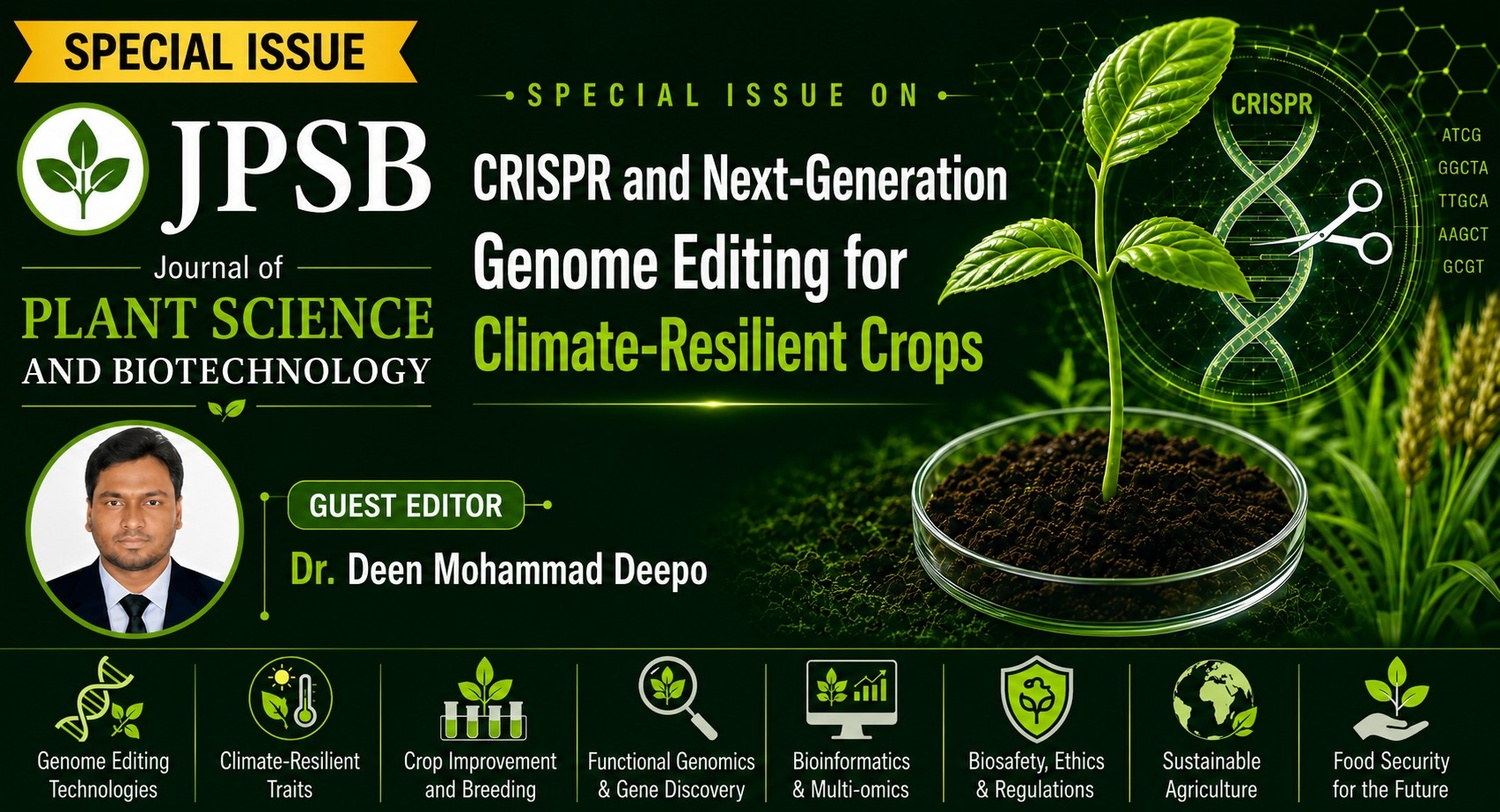
Journal Flyer

Flyer Image