
At Confmeets Journals, the Editorial Board serves as the cornerstone of academic integrity and excellence. Comprising distinguished scholars and professionals across various disciplines, the board ensures that each manuscript undergoes a rigorous peer-review process aligned with the journal's mission.
Our board members are committed to upholding the integrity, quality, and ethical standards of scholarly publishing. They collaborate closely with authors, reviewers, and the Confmeets editorial team to uphold ethical practices, promotes transparency, and guarantee that every published article contributes meaningfully to the advancement of knowledge in its field.
Department: Department of Mechanical Engineering
Affiliation: Mechanical Engineering, University of Engineering and Technology, Lima
Designation: Professor
Email: mwdkim@utec.edu.peCountry: Peru
Dr. Wangdo Kim is a biomechanics researcher and professor with a long career in mechanical engineering and human movement science. He currently serves as Professor in Biomechanics at UTEC in Lima, Peru. His background spans multiple countries-including the USA, Korea, Portugal, and Singapore-holding academic and research roles in universities such as Seoul National University, Nanyang Technological University, Portland State University, and the Technical University of Lisbon. His expertise includes orthopaedic biomechanics, knee-joint function, human movement coordination, and computational modeling.
Department: Department of Computer Science
Affiliation: Computer Science, Leeds Trinity University, Leeds
Designation: Professor
Email: x.lu@leedstrinity.ac.ukCountry: United Kingdom
Dr. Xin Lu is an Associate Professor of Computer Science at Leeds Trinity University, specializing in big data analytics, deep learning, cybersecurity for IoT, and intelligent systems. He holds a PhD in Computer Science from Loughborough University, supported by earlier master’s and bachelor’s degrees from the UK and China. With over a decade of international research experience across multiple UK universities including Coventry University, Bournemouth University, and South Wales—Dr. Lu has contributed extensively to intelligent manufacturing, digital healthcare, Smart City applications, and human–robot collaboration. He leads the Human–Robot Collaboration & Intelligent IoT Lab and serves in strategic university research leadership roles, including Research Director and Deputy Chair of the Faculty Ethics Committee. His current work explores digital twins, embedded machine learning (TinyML), data-driven system optimization, and the role of Generative AI in higher education. Dr. Lu has secured significant EU, UK OfS, ACU, and institutional funding, published 60+ scientific works, and served as Guest Editor and reviewer for multiple international journals.
Department: Computer Engineering
Affiliation: Department of Computer Engineering, Gachon University, Seongnam 13120, Republic of Korea
Designation: Professor
Email: inam@gachon.ac.krCountry: Korea (South)
Inam Ullah (Member, IEEE) received the Ph.D. degree in Information and Communication Engineering from the College of Internet of Things (IoT) Engineering, Hohai University (HHU), Changzhou Campus, 213022, China, in 2022. He completed his postdoc with Brain Korea 2021 (BK21) at the Chungbuk Information Technology Education and Research Center, Chungbuk National University, Cheongju 28644, South Korea, in March 2023. He is currently an Assistant Professor at the Department of Computer Engineering, Gachon University, South Korea. He has published 170+ research articles in top journals and 5 books. His research interests include Robotics, Internet of Things (IoT), Internet of Vehicles (IoV), ITS, Wireless Sensor Networks (WSNs), Underwater Communication and Localization, Artificial Intelligence (AI), Machine Learning, etc.
He is a TPC member of ACM RACS 2023, Poland, August 2023, and IEEE ICC'24-SAC-10, Denver, CO, USA), 2024, IIoTBDSC 2024), Wuhan, China & Birmingham, UK, ICTIST 2024. He serve as an Editor-in-Chief for IECE Transactions on Emerging Trends in Network Systems, as an Associate Editor of IECE Transactions on Intelligent Systematics, International Journal of Biomedical & Bioinformatics Technology, IECE Transactions on Data Augmentation, IECE Transactions on Emerging Topics in Artificial Intelligence, and Guest Editor for various journals such as Computers in Human Behavior, Sensors, Electronics, Journal of Marine Science and Engineering, Frontiers in Sensors, Artificial Intelligence and Applications, etc. Moreover, he serve as a Editorial board member for Computers, Materials & Continua (CMC) , World Journal of Artificial Intelligence and Robotics Research, Computing and Artificial Intelligence, Journal of Artificial Intelligence and Robotics, Frontiers in Medical Engineering, Journal of Computer and Creative Technology, and so on. He is the reviewer of many prominent journals, including IEEE Transactions on Industrial Informatics KSII Transactions on Internet & Information Systems, IEEE Transactions on Vehicular Technology, IEEE Transactions on Intelligent Transportation Systems, Transactions on Sustainable Computing, IEEE ACCESS, Sustainable Energy Technologies and Assessments, Future Generation Computer Systems (FGCS), Computers and Electrical Engineering (Elsevier), Internet of Things (IoT) Journal, Digital Communications & Networks (Elsevier), Springer Nature, Wireless Communication & Mobile Computing (WCMC), Alexandria Engineering Journal Sensors, Electronics, Remote Sensing, Applied Sciences, Computational Intelligence and Neurosciences, etc.
His awards and honors include the Best Student Award from the University of Science and Technology Bannu (USTB), KPK, Pakistan, in 2015 and the Prime Minister Laptop Scheme Award from the University of Science and Technology Bannu (USTB), KPK, Pakistan, in April 2015. Top-10 students award of the College of Internet of Things (IoT) Engineering, Hohai University, China in June 2019, Top-100 students award of Hohai University (HHU), China in June 2019, Jiangsu Province Distinguish International Students award (30,000 RMB) in 2019-2020, Certificate of Recognition from Hohai University (HHU), China in 2021 & 2022 both, Top-100 students award of Hohai University (HHU), China in May 2022, Top-10 Outstanding Students Award, Hohai University (HHU), China in June 2022, and Distinguished Alumni Award from University of Science and Technology Bannu (USTB), KPK, Pakistan in Oct. 2022, ranked in Top-2% World Influential Scientists Worldwide in 2023 by Stanford University & Elsevier, featured in the 2024 list, and so on.
Affiliation: Department of Mechanical Engineering, National Chin Yi University of Technology
Department: Department of Mechanical Engineering
Designation: Professor
Email: skyang@ncut.edu.twCountry: Taiwan
Shang-Kuo Yang was born in Taiwan. He received the B.S. in 1982 and the M.S. in 1985 in Automatic Control Engineering from Feng Chia University, Taiwan. From 1985 to 1991, he was an assistant researcher and an instrumentation system engineer of the Flight Test Group, Aeronautic Research Laboratory, Zhong Shan Institute of Science and Technology, Taiwan. From 1991 to 2006, he was with the Department of Mechanical Engineering at National Chin Yi University of Technology, Taiwan. He received the Ph.D. in 1999 in Mechanical Engineering from National Chiao Tung University, Taiwan. Since 2006/08, he has been with the department of Mechanical Engineering of the university, where he is a full professor. He is a member of the American Society of Mechanical Engineers (ASME), and his biographical profile is embodied in the Marquis Who’s Who in the World. His administration experiences in the university are 2001/08–2003/12 Director of the business incubator; 2003/08–2004/07 Director of the library; 2004/08–2006/01 Chairman of the Department of Mechanical Engineering; and 2006/02–2007/01 Dean of student affairs. His research interests are in reliability engineering, data acquisition systems, biomedical engineering (cardiac pacemakers, patient nursing monitoring, ear stone restoration, and drunk-driving prevention), and automation.
Affiliation: Department of Robotics
Department: School of Information Science and Electrical EngineeringSchool of Artificial Intelligence
Designation: The head of the Department of Robotics
Email: zhaofeng@sdjtu.edu.cnCountry: China
I received the Ph.D. degree from Shandong University, Jinan, China, in 2016. I am currently a Professor in the School of Information Science and Electrical Engineering(School of Artificial Intelligence), Shandong Jiaotong University. I am the head of the Department of Robotics at Shandong Jiaotong University, and my research field is intelligent robots.
Affiliation: Mechanical Engineering, GITAM University, Bengaluru
Department: Department of Mechanical Engineering
Designation: Professor
Email: plingamp@gitam.eduCountry: India
Dr. Pavan Kalyan Lingampally holds a Ph.D. in Robotics and Automation Engineering, with significant expertise in wearable exoskeletons, biomechanical modelling, human–robot interaction, and intelligent assistive systems. His academic and research experience spans robotics, mechatronics, and advanced manufacturing. He is currently an Assistant Professor in the Department of Mechanical Engineering at GITAM (Deemed to be University), Bengaluru Campus, where he is involved in research supervision, laboratory development, and teaching in Robotics, Automation, and AI. He has previously served at VIT University, HITS University, and SASTRA University, contributing to curriculum development, research guidance, and research infrastructure establishment.
Affiliation: Industrial Electrical Engineering, Technical University of Kosice, Kosice
Department: Department of Industrial Electrical Engineering
Designation: Professor
Email: milan.guzan@tuke.skCountry: Slovakia
Assoc. prof. Ing. Milan Guzan, PhD., serves at the Technical University of Košice in the Department of Theoretical and Industrial Electrical Engineering. He holds a Ph.D. in Electrotechnics and has been active in research involving chaos-generating systems, nonlinear circuits, boundary surfaces, metrology, sensors, and particulate matter measurement. He has contributed significantly to scientific research, teaching, and conference activities.
Affiliation: Computer Science, Moulay Ismail University, Meknes
Department: Department of Computer Science
Designation: Professor
Email: y.farhaoui@fste.umi.ac.maCountry: Morocco
Professor Yousef Farhaoui is a faculty member in the Department of Computer Science at the Faculty of Sciences and Techniques of Errachidia, Moulay Ismail University, Morocco. He is the Director of the IMIA Research Laboratory and is internationally recognized among the top 2% most influential researchers worldwide according to the Stanford & Elsevier rankings for 2023–2025. His work spans machine learning, big data, artificial intelligence, cybersecurity, and decision support systems. He has supervised several PhD theses, coordinated major academic programs, and played leading roles in many international conferences and scientific events.
Affiliation: Mechatronics Engineering, SASTRA Deemed University, Thanjavur
Department: Department of Mechatronics Engineering
Designation: Professor
Email: kuppanchetty@mech.sastra.eduCountry: India
Dr. R. M. Kuppan Chetty is a Professor in the School of Mechanical Engineering at SASTRA Deemed University, India. He holds a Ph.D. in Robotics (Multi-Robot Systems) from IIT Madras and has extensive experience in robotics, mechatronics, and intelligent systems across academia, research, and industry. He has previously served in leadership and faculty roles at Hindustan Institute of Technology and Science (HITS), Monash University (Malaysia), VIT, and as Managing Partner of RACE Robotics, Chennai. He has executed several national and international funded research projects, collaborated with global universities, and holds multiple Indian patents in assistive devices, rehabilitation robotics, quadruped robots, and wearable supportive systems. He is a Fellow and Chartered Engineer of The Institution of Engineers (India), Senior Member of IEEE, Member of IET, and serves as Review Editor for Frontiers in Robotics & AI.
Affiliation: Mechanical, Materials and Manufacturing Engineering, University of Nottingham, Nottingham
Department: Department of Mechanical, Materials and Manufacturing Engineering
Designation: Professor
Email: mojtaba.ahmadiehkhanesar@nottingham.ac.ukCountry: United Kingdom
Dr. Mojtaba Ahmadieh Khanesar is a Senior Member of IEEE and a Research Fellow at the University of Nottingham, UK. He holds B.Sc., M.Sc., and Ph.D. degrees in Control Engineering from K. N. Toosi University of Technology, Tehran, Iran. He has held academic and research positions in Iran, Denmark, Turkey, and the United Kingdom. His research contributions span optical metrology, robotics, machine learning, AI, and control systems. He has authored or co-authored more than 130 scientific publications, including journal papers, conference papers, and two books. He has supervised PhD and MSc students, taught both undergraduate and postgraduate courses, and served in several editorial roles for international journals.
Affiliation: University of Engineering and Technology, Lahore , Pakistan
Department: Mechanical Engineering
Designation: Design Engineer
Email: 2019msmed09@student.uet.edu.pkCountry: Pakistan
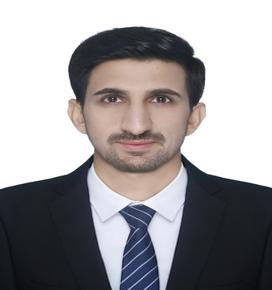
I am Muhammad Mubashir, a researcher and engineer specialization in computational mechanics, finite element analysis (FEA), and advanced material modeling. My research focuses on the structural performance of composite and cellular materials, nonlinear buckling behavior of aerospace structures, impact and damage mechanisms under dynamic loading conditions. I have an extensive experience of using numerical simulation tools such as ANSYS, Abaqus, and LS-DYNA for solving complex engineering problems, including composite pressure vessels, corrugated fuselage structures, honeycomb cellular systems, and bird-strike impact modeling. I recently, contributed to various multidisciplinary research projects in aerospace and mechanical engineering, with publications and ongoing work covering numerical modeling, optimization, and experimental validation of advanced structures. His expertise extends to quasi-static and dynamic simulation methods, material characterization, fatigue and creep analysis, fluid-structure interaction, and design of experiments (DOE) for structural optimization. I also serves as a reviewer for scientific journals and international conferences in mechanical, aerospace, and materials engineering. My strong academic background and hands-on analytical, simulation and research can help in peer-review process, ensuring high standards of scientific quality and clarity in published works.
| 2-5 Days | Initial Quality & Plagiarism Check |
| 15 Days |
Peer Review Feedback |
| 85% | Acceptance Rate (after peer review) |
| 30-45 Days | Total article processing time |