












Editorial Board

Andrey Nikolaevych Belousov

Andrey Nikolaevych Belousov (Doctor of Medicine)

Professor

Department of Applied Nanotechnology, Kharkiv National Medical University

Ukraine

Indra Neel Pulidindi

Indra Neel Pulidindi (PhD)

Professor

Department of Chemistry, Saveetha Institute of Medical and Technical Sciences (SIMTS)

India

(Editor-in-Chief)
Dr S Rajeshkumar

Dr S Rajeshkumar (PhD)

Professor

Department of Nanobiomedicine Lab and Product Development Unit, Saveetha Institute of Medical and Technical Sciences (SIMATS)

India

Paulo Cesar de Morais
Paulo Cesar de Morais (PhD)

Professor

Department of Physics, Catholic University

Brazil

(Editor-Member)
Prof Dr Osman Adiguzel
Prof Dr Osman Adiguzel (PhD)

Professor

Department of Physics, Fırat University

Turkey

(Editor-Member)
Dr Meital Shviro
Dr Meital Shviro (PhD)

Scientist

Department of Chemistry and Nanoscience, Chemistry and Nanoscience Center

USA

(Editor-Member)
Delia Teresa Sponza
Delia Teresa Sponza (PhD)

Professor

Department of Environmental Engineering, Dokuz Eylul University

Turkey

(Editor-Member)
Bhawna Yadav Lamba
Bhawna Yadav Lamba (PhD)

Professor

Department of Polymer Technology, University of Petroleum and Energy Studies

India

(Editor-Member)

Submit Manuscript

Submit manuscript at Online Submission System or send as an e-mail attachment to the Editorial Office at
support@confmeets.com

About the Journal

The Journal of Nanoscience and Nanomaterials is an international, open-access, peer-reviewed journal dedicated to publishing pioneering research and transformative developments across the expanding landscape of nanoscience, nanomaterials, and their cross-disciplinary applications. As the boundaries between physics, chemistry, biology, materials science, and engineering continue to blur at the nanoscale, Journal of Nanoscience and Nanomaterials serves as a vital global forum for sharing innovations that push the frontiers of science and technology. We aim to accelerate the discovery, design, synthesis, characterization, and application of nanomaterials and nanodevices with relevance to health, energy, environment, manufacturing, and quantum systems.

From atomic-level investigations to real-world applications, Journal of Nanoscience and Nanomaterials covers a diverse range of topics including nanoscale materials synthesis, nanoelectronics, nanophotonics, nanomedicine, biosensors, energy harvesting systems, carbon-based nanostructures, nano-bio interfaces, supramolecular chemistry, nano-robotics, 2D materials like graphene, and emerging trends in quantum nanotechnology. The journal is committed to promoting multidisciplinary collaboration by welcoming contributions from physicists, chemists, engineers, biotechnologists, clinicians, and data scientists working at the intersection of nanoscale science and practical innovation.

Every submission undergoes a thorough double-blind peer-review process to ensure scientific rigor, originality, and practical significance. Our open-access model removes financial and institutional barriers, ensuring free and immediate access to all published work and enabling global dissemination of knowledge, especially for developing countries and underrepresented research communities. In addition to traditional research articles, Journal of Nanoscience and Nanomaterials welcomes short communications, technical notes, review articles, case-based studies, and conceptual or opinion pieces that provoke scientific dialogue and open new research directions.

In an era where nanomaterials is reshaping medicine, materials, electronics, and sustainability, Journal of Nanoscience and Nanomaterials stands as a high-impact platform for thought leaders, researchers, and industry professionals alike. We believe in science that not only explores the invisible, but transforms the visible world molecule by molecule. Join us in defining the next era of innovation from the bottom up.

Aim and Scope

Journal of Nanoscience and Nanomaterials publishes original research articles, reviews, short communications, case studies, and technical perspectives that delve into every aspect of nanoscience and nanomaterials. We welcome submissions in a variety of thematic areas, including (but not limited to):

Nanomaterials & Fundamental Nanoscience:

  • Synthesis, characterization, and functionalization of nanoparticles, nanocomposites, nanofibers, nanotubes, and quantum dots
  • Surface chemistry, nanostructure design, and nanoscale property modulation
  • Self-assembly, nanofabrication, and molecular nanotechnology

Nanotechnology in Energy & Environment:

  • Nanomaterials for energy conversion and storage (batteries, supercapacitors, photovoltaics, hydrogen technologies)
  • Catalysis, photocatalysis, and environmental remediation using nanoscale systems
  • Green nanotechnology and sustainability-focused nano-solutions

Nanoelectronics & Nanophotonics:

  • Nanoscale semiconductors, optoelectronic devices, and plasmonics
  • Sensors, nanoelectronic circuits, flexible electronics, and wearable technologies
  • Photonic crystals, metamaterials, and quantum photonics

Nanomedicine & Biotechnology:

  • Targeted drug delivery systems, nano-based diagnostics, therapeutic nanocarriers
  • Biomaterials, tissue engineering scaffolds, and biosensors
  • Toxicity, biocompatibility, and health risk assessments of nanomaterials

Computational Nanoscience:

  • Molecular dynamics simulations, DFT studies, and computational modeling of nanostructures
  • AI/ML-enabled materials discovery at the nanoscale

Emerging, Interdisciplinary, and Applied Nanotechnology:

  • Nanoengineering for agriculture, food technology, and water purification
  • Industrial applications, scaling, and commercial translation of nanotechnologies
  • Policy, regulation, risk assessment, and ethical considerations in nanoscience

Editorial and Peer-Review Policy

Journal of Nanoscience and Nanomaterials employs a single-blind peer-review process to maintain fairness, scientific integrity, and the quality of published work.

Key Features:

  • Every manuscript is assessed by at least two independent subject experts, along with editorial oversight.
  • Reviewers can see author details, but the identities of the authors remain hidden from them.
  • The review criteria focus on originality, technical strength, methodological accuracy, ethical compliance, clarity, and relevance to the field of nanoscience.
  • All submissions go through plagiarism checks and ethical evaluations before the peer-review process.
  • Final decisions on publication are made by the handling editor, based on the reviewers' evaluations and the overall quality of the manuscript.

Publication Frequency & Format

This journal comes out three times a year. Once articles are accepted, they're quickly made available online in both HTML and PDF formats, ensuring fast and easy access to research findings.

Open Access Policy

Journal of Nanoscience and Nanomaterials embraces a gold open access model, meaning all published articles are freely accessible to everyone. Authors retain the copyright to their work, shared under a suitable open-access license to promote transparency, collaboration, and global knowledge-sharing.

Indexing & Archiving

The journal aims to be included in well-known scientific indexing and abstracting databases. All content is preserved through trusted archiving systems to ensure long-term accessibility and discoverability.

For Manuscript Submission

Authors can submit their manuscripts through the journal's Online Submission System (Submit Manuscript) or by emailing the Editorial Office at support@globalmeetx.com.

Submitted manuscripts must adhere to the Journal of Nanoscience and Nanomaterials Author Guidelines, which cover structure, formatting, ethical approvals, and conflict-of-interest disclosures.

Publication Ethics & Integrity

Journal of Nanoscience and Nanomaterials is committed to maintaining the highest publication ethics standards in accordance with COPE principles. Authors must ensure proper ethical approvals for studies involving humans, animals, or sensitive materials, and follow informed consent and confidentiality practices. They must also disclose conflicts of interest and funding support, report data accurately, and acknowledge contributor roles.

All submissions undergo plagiarism checks, and the journal has a strict policy for corrections, retractions, and post-publication updates.

JOURNAL PARTICULARS

Title Journal of Nanoscience and Nanomaterials
Frequency Annual (One issue per year)
ISSN Coming Soon
Publisher Name Confmeets Publishing
Publisher Address Radha Residency, 4th Floor, Sai Priya Gardens,Madhurawada,Visakhapatnam, 530041, Andhra Pradesh, India
Starting Year 2025
Subject Applied Sciences
Language English
Publication Format Online
Email ID support@confmeets.com
Mobile No. (+91) 9177731784

Journals Indexed In

ResearchBib Google Scholar Sindexs OAJI

Article Processing Timeline

2-5 Days Initial Quality & Plagiarism Check
15
Days
Peer Review Feedback
85% Acceptance Rate (after peer review)
30-45 Days Total article processing time

Indexed In

Google Scholar
ResearchBib
Sindexs
OAJI
DOAJ
CrossRef
PubMed
MEDLINE
EBSCO A-Z / Host
OCLC - WorldCat

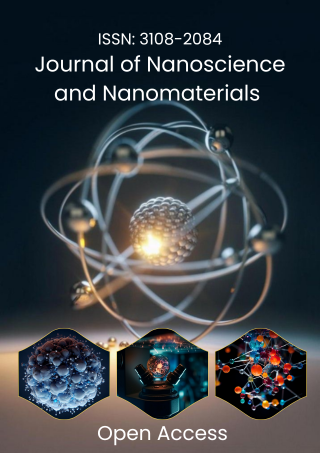
Journal Flyer

Flyer Image