
Journal of Climate Change and Pollution
ISSN:
3108-2025 (Online)
DOI Prefix (Crossref): 10.67238
 Download PDF

Department of Research, Policy and AI Governance, Independent Researcher, Ogbomosho, Nigeria
ABSTRACT
Background
Fungi constitute one of the most diverse and functionally versatile groups of organisms, contributing to ecosystem functioning, agricultural productivity, medical innovation, industrial biotechnology, and environmental sustainability. Despite these diverse applications, knowledge on fungal contributions remains fragmented across disciplinary fields, limiting integrated understanding of their potential within the emerging global bioeconomy. Although several reviews have examined specific fungal applications, comparatively few have synthesized evidence across these major sectors to identify common themes, knowledge gaps, and future research priorities.
Objective
This integrative review synthesizes published evidence on the roles of fungi in agriculture, medicine, industry, and environmental management to develop a cross-sector perspective on their contributions to sustainable bioeconomic development while identifying areas of consensus, emerging opportunities, and unresolved research gaps.
Methods
An integrative review methodology was employed using peer-reviewed literature retrieved from Scopus, Web of Science, PubMed, and Google Scholar. Publications published primarily between 2010 and 2025 were screened using predefined eligibility criteria focusing on fungal ecology, biotechnology, genomics, medical mycology, industrial applications, and environmental sustainability. Eligible studies were organized through thematic synthesis to compare evidence across four application domains and to identify recurring patterns, interdisciplinary linkages, areas of agreement, and reported limitations.
Results
The review synthesized evidence demonstrating that fungi make substantial contributions to sustainable agriculture through mycorrhizal associations, biological pest management, and soil improvement; to medicine through antimicrobial discovery, pathogen surveillance, and advances in medical mycology; to industry through enzyme production, fermentation technologies, and bio-based manufacturing; and to environmental sustainability through biodegradation, bioremediation, and carbon cycling. Across the reviewed literature, increasing integration of artificial intelligence and computational biology was identified as an emerging trend supporting genome analysis, metabolic pathway prediction, and process optimization. However, the review also identified persistent fragmentation between disciplinary fields, limited cross-sector integration, and relatively few studies evaluating fungal applications under diverse climatic, regulatory, and socioeconomic conditions.
Conclusion
The available evidence indicates that fungi represent an important biological resource with broad applications across multiple sectors of the bioeconomy. Greater integration of ecological, agricultural, medical, industrial, and computational research is needed to strengthen translation into sustainable practice. Future research should prioritize interdisciplinary evaluation frameworks, comparative assessments across application domains, and the responsible integration of artificial intelligence to improve the scalability and resilience of fungal-based innovations.
Keywords: Fungi; Global Bioeconomy; Integrative Review; Sustainable Agriculture; Medical Mycology; Industrial Biotechnology; Bioremediation; Artificial Intelligence
INTRODUCTION
Fungi are among the most diverse and ecologically significant kingdoms of life, occupying virtually every habitat on Earth and playing essential roles in ecosystem functioning. From decomposing organic matter to forming mutualistic associations with plants and other organisms, fungi are indispensable to nutrient cycling, soil formation, and environmental stability [1,2]. Despite their ubiquity and functional importance, fungal systems have historically received less scientific and technological attention compared to plants, animals, and bacteria. However, this trend is rapidly changing as advances in Genomics, Molecular Biology, and Biotechnology continue to reveal the vast, largely untapped potential of fungi [3,4].
In ecological contexts, fungi play a central role within Environmental Science, acting as primary decomposers that break down complex organic materials such as lignin and cellulose. This process not only recycles nutrients back into ecosystems but also contributes significantly to global carbon cycling and climate regulation. Mycorrhizal fungi, for instance, form symbiotic relationships with plant roots, enhancing nutrient and water uptake while improving plant resilience to environmental stress. These interactions are increasingly recognized as critical components in sustainable agriculture, particularly in efforts to reduce reliance on synthetic fertilizers and promote soil health [5,6].
In the medical domain, fungi present both opportunities and challenges. On one hand, they are prolific producers of bioactive compounds, including antibiotics, immunosuppressants, and anticancer agents, which have revolutionized modern medicine. On the other hand, fungal pathogens pose serious threats to human and animal health, especially in immunocompromised populations. The growing prevalence of antifungal resistance underscores the urgency of advancing research in Medical Mycology, with an emphasis on understanding host–pathogen interactions, developing novel therapeutics, and improving diagnostic capabilities. Industrial applications of fungi have also expanded significantly, particularly within Industrial Biotechnology. Fungal species are widely utilized in fermentation processes for the production of enzymes, organic acids, biofuels, and food products. Their metabolic versatility and ability to thrive under diverse conditions make them ideal candidates for bioprocessing and the development of sustainable bio-based materials. Moreover, the exploration of fungal secondary metabolites has opened new avenues for innovation in pharmaceuticals, agriculture, and material science [3,7].
Recent advances in artificial intelligence, computational biology, and multi-omics technologies have further expanded opportunities for fungal research by enabling large-scale genome annotation, metabolic pathway prediction, ecological modelling, and optimization of fungal production systems. These digital approaches increasingly complement experimental investigations and facilitate the integration of heterogeneous biological datasets across multiple application domains. Nevertheless, technological advances alone have not resolved the fragmentation of fungal research, as most studies continue to examine agricultural, medical, industrial, or environmental applications independently, with limited cross-sector synthesis.
Existing review articles have provided valuable insights into specific areas of fungal science, including medical mycology, fungal biotechnology, environmental microbiology, and plant–fungal interactions. However, comparatively few reviews have integrated evidence across these disciplines to examine how fungal systems collectively contribute to the emerging global bioeconomy. Consequently, important relationships among biological functions, technological innovations, and sustainability applications remain insufficiently synthesized, limiting the development of comprehensive strategies for research, policy, and industrial implementation.
To address this gap, the present integrative review synthesizes evidence from agricultural, medical, industrial, and environmental literature to identify areas of convergence, divergence, and emerging research priorities. Rather than simply summarizing existing knowledge, the review develops an integrative perspective that connects biological foundations, application domains, and enabling technologies within a unified conceptual framework. This approach provides a broader understanding of how fungal systems contribute to sustainable bioeconomic development while highlighting areas where interdisciplinary collaboration remains necessary.
The review is guided by the following research questions:
RQ1: What evidence exists regarding the contributions of fungi across agricultural, medical, industrial, and environmental sectors?
RQ2: What common themes, interdisciplinary linkages, and knowledge gaps emerge across these application domains?
RQ3: How can existing evidence be synthesized into an integrative conceptual framework that supports future fungal research, innovation, and sustainable bioeconomy policies?
Contribution of the Review
Unlike previous reviews that primarily examine individual sectors of fungal science, this integrative review adopts a cross-disciplinary perspective by synthesizing evidence across agriculture, medicine, industry, environmental sustainability, and emerging digital technologies. The review contributes by (i) identifying converging and diverging evidence across application domains, (ii) highlighting methodological and knowledge gaps that continue to fragment fungal research, and (iii) proposing an integrative conceptual framework that links biological foundations, application domains, and enabling technologies. These contributions provide a foundation for future interdisciplinary research and evidence-informed policy development within the global bioeconomy.
LITERATURE REVIEW
The scientific exploration of fungi has expanded significantly over the past decades, driven by advances in Genomics, Molecular Biology, and Biotechnology. Early studies in fungal taxonomy and systematics laid the foundation for understanding fungal diversity, with classical classification methods relying on morphological characteristics. However, the integration of molecular phylogenetics has revolutionized fungal classification, enabling more precise identification and evolutionary mapping of fungal species. High-throughput sequencing technologies have further accelerated the discovery of novel fungal taxa, revealing that a substantial proportion of fungal biodiversity remains undocumented [7,8,13].
In ecological research, fungi have been consistently recognized as key drivers of ecosystem processes within Environmental Science. Studies on saprophytic fungi demonstrate their essential role in decomposing organic matter, thereby facilitating nutrient recycling and maintaining ecosystem productivity [9,10]. Mycorrhizal associations, particularly arbuscular and ectomycorrhizal fungi, have been widely documented for their contributions to plant health, soil structure, and ecosystem resilience. Recent literature emphasizes the role of fungi in carbon sequestration and climate regulation, positioning them as critical agents in mitigating the impacts of global climate change [8,11].
The field of Medical Mycology has gained prominence due to the increasing incidence of fungal infections and the emergence of antifungal resistance. Pathogenic fungi such as Candida, Aspergillus, and Cryptococcus have been extensively studied for their virulence mechanisms and host interaction s. Contemporary research highlights the complexity of fungal pathogenicity, involving factors such as biofilm formation, immune evasion, and genetic adaptability. Additionally, the discovery of novel antifungal compounds from fungal metabolites continues to be a major focus, although challenges related to drug resistance and toxicity persist [5,7]
In agricultural systems, fungi play dual roles as both beneficial symbionts and harmful pathogens. Literature on plant–fungal interactions underscore the importance of mycorrhizal fungi in enhancing nutrient uptake, improving drought tolerance, and increasing crop productivity [6,12]. Conversely, phytopathogenic fungi are responsible for significant crop losses worldwide, necessitating ongoing research into disease management strategies. The development of fungal-based biofertilizers and biopesticides represents a promising approach toward sustainable agriculture, reducing dependence on chemical inputs while improving environmental outcomes [6,7].
Industrial applications of fungi have been extensively documented within Industrial Biotechnology. Fungi are widely utilized in fermentation technologies for the production of enzymes, antibiotics, organic acids, and biofuels. Research on fungal secondary metabolites has uncovered a diverse array of bioactive compounds with applications in pharmaceuticals, agriculture, and food industries. Advances in metabolic engineering and synthetic biology have further enhanced the efficiency and scalability of fungal production systems, enabling the development of innovative bio-based products [10,4].
More recently, the integration of Artificial Intelligence into fungal research has opened new frontiers. Machine learning algorithms are increasingly used for genome annotation, prediction of metabolic pathways, and optimization of fermentation processes. Data-driven approaches facilitate the analysis of complex biological systems, enabling researchers to identify patterns and relationships that were previously inaccessible. This convergence of computational and biological sciences is expected to significantly accelerate innovation in fungal research [13,19].
Despite these advances, the literature reveals a persistent fragmentation across disciplines, with limited integration of ecological, medical, agricultural, and industrial perspectives. This gap underscores the need for a unified framework that synthesizes existing knowledge and promotes interdisciplinary collaboration. Such an approach is essential for fully harnessing the potential of fungi as central components of sustainable and innovation-driven systems in the global bioeconomy [4,11].
METHODOLOGY AND CONCEPTUAL FRAMEWORK
This study employed an integrative review methodology to synthesize evidence on the contributions of fungi to the global bioeconomy across agricultural, medical, industrial, and environmental domains. Unlike systematic reviews that primarily evaluate narrowly defined research questions, an integrative review allows the inclusion and synthesis of diverse forms of evidence to generate broader conceptual understanding and identify interdisciplinary relationships. The methodological approach adopted in this study was designed to ensure transparency, replicability, and analytical rigor while supporting the development of an evidence-informed conceptual framework.
Research Design
The review followed five sequential stages adapted from established integrative review methodology [14,15]:
- formulation of the review objectives and research questions;
- systematic identification of relevant literature;
- screening and selection of eligible publications;
- thematic extraction and comparative synthesis of evidence; and
- development of an integrative conceptual framework based on recurring themes identified across the reviewed literature.
This structured approach enabled evidence from multiple scientific disciplines to be synthesized while maintaining consistency throughout the review process.
Literature Search Strategy and Selection Criteria
A structured literature search was conducted using four major electronic databases: Scopus, Web of Science, PubMed, and Google Scholar. These databases were selected because they collectively provide comprehensive coverage of biological sciences, biotechnology, environmental science, agriculture, and medical research. The search primarily included peer-reviewed publications published between 2010 and 2025, while earlier seminal studies were retained where they provided essential theoretical or historical context.
Searches were performed using combinations of the following keywords: fungi, fungal biotechnology, fungal genomics, medical mycology, industrial fungi, sustainable agriculture, bioremediation, bioeconomy, fungal applications, and artificial intelligence AND fungi. Boolean operators ("AND" and "OR") were used to refine database searches and improve retrieval of relevant studies.
Studies were included if they addressed the biological characteristics, ecological functions, technological applications, or bioeconomy contributions of fungi within agricultural, medical, industrial, or environmental contexts. Original research articles, review papers, and authoritative book chapters published in English were considered eligible. Duplicate records, conference abstracts without full-text availability, non-English publications, and studies unrelated to the objectives of the review were excluded.
Titles and abstracts were screened for relevance before full-text assessment. Publications meeting the predefined eligibility criteria were retained for thematic synthesis and comparative analysis.
Quality Assessment, Data Extraction and Thematic Synthesis
Because this integrative review incorporated evidence from diverse study designs, methodological quality was assessed using general evaluation criteria rather than a single appraisal instrument [20,21]. Publications were evaluated based on methodological clarity, relevance to the review objectives, scientific credibility, completeness of reported findings, and contribution to interdisciplinary understanding.
For each eligible publication, information was extracted on study objectives, fungal application domain, research focus, principal findings, reported limitations, and implications for sustainable bioeconomy development. The extracted evidence was subsequently organized using thematic synthesis, whereby recurring concepts were coded, grouped into broader analytical themes, and compared across agricultural, medical, industrial, and environmental application domains [16,17]. This approach facilitated identification of common patterns, areas of convergence and divergence, and research gaps that informed development of the integrative conceptual framework.
Integration of Artificial Intelligence
Artificial intelligence was examined as an emerging enabling technology rather than as a primary focus of the review. Publications describing machine learning, computational genomics, predictive modelling, metabolic pathway analysis, and automated genome annotation were synthesized to evaluate how digital technologies support fungal research and industrial innovation [4,11,18].
Rather than assuming universal effectiveness, the review also considered reported limitations, including data availability, model interpretability, computational requirements, and challenges associated with transferring AI models across different biological systems. This balanced assessment provides a more realistic evaluation of AI's current and potential contributions to fungal science.
Development of the Conceptual Framework
The integrative conceptual framework was developed through iterative comparison of the synthesized evidence. Recurring concepts identified across the reviewed studies were progressively grouped into higher-order themes representing enabling technologies, biological foundations, application domains, and sustainable bioeconomy outcomes. Relationships among these themes were examined to identify common patterns and interdisciplinary linkages, which collectively informed the framework presented in Figure 1 [19,20,21].
Interpretation of the Conceptual Framework
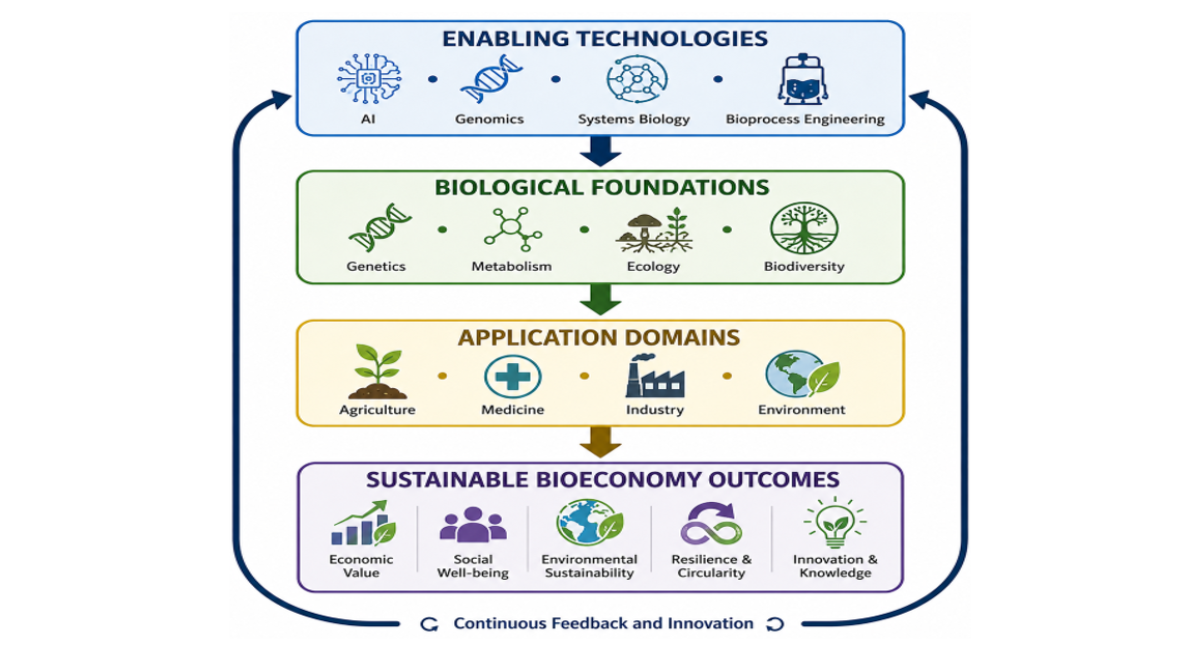
Figure 1: Integrative Conceptual Framework Linking Biological Foundations, Application Domains, and Enabling Technologies within the Global Fungal Bioeconomy
Figure 1 illustrates the integrative conceptual framework developed from the thematic synthesis of the reviewed literature. The framework demonstrates how enabling technologies, including artificial intelligence, genomics, systems biology, and bioprocess engineering, enhance understanding of fungal biological foundations such as genetics, metabolism, ecology, and biodiversity. These biological foundations support diverse application domains encompassing agriculture, medicine, industry, and environmental sustainability. The interaction among these dimensions contributes to sustainable bioeconomy outcomes through innovation, resource efficiency, environmental stewardship, and societal benefits. The feedback loop emphasizes the dynamic nature of fungal research, whereby advances in scientific knowledge, technological innovation, and practical applications continuously inform and strengthen one another.
RESULTS AND DISCUSSION
The thematic synthesis identified four principal application domains in which fungi contribute to the global bioeconomy: sustainable agriculture, medicine, industrial biotechnology, and environmental sustainability. Across the reviewed literature, evidence consistently supports the biological versatility of fungi; however, the strength of evidence varies across application areas. Agricultural and industrial applications are supported by extensive experimental and field-based studies, whereas research on AI-enabled fungal systems and integrated bioeconomy frameworks remains comparatively limited. Most published studies originate from Europe, North America, and East Asia, with relatively few investigations conducted in low- and middle-income countries, highlighting an important geographical imbalance in the current evidence base. The following sections synthesize the literature by comparing major findings, identifying areas of consensus and disagreement, and highlighting cross-sector implications.
Fungi in Sustainable Agriculture and Food Systems
The reviewed literature consistently demonstrates that mycorrhizal and endophytic fungi improve nutrient acquisition, soil structure, and plant resilience under a wide range of agricultural conditions [10,18]. These findings have supported increasing interest in fungal biofertilizers and biological pest management as sustainable alternatives to synthetic agricultural inputs [4,8].
Nevertheless, evidence also indicates that these benefits are context dependent [6]. Crop responses vary according to fungal species, soil characteristics, climatic conditions, crop genotype, and agricultural management practices [6,12]. Several studies have reported inconsistent improvements in crop productivity where soil nutrient availability, environmental stress, or microbial competition limited successful fungal colonization [6]. Consequently, while the overall evidence supports fungal contributions to sustainable agriculture, successful implementation requires adaptation to local ecological and agronomic conditions rather than universal application [8].
Compared with medical and industrial applications, agricultural research represents one of the most mature areas of fungal investigation, reflecting a relatively extensive body of experimental and field-based evidence [6,9].
|
Fungal Function |
Mechanism of Action |
Agricultural Benefit no |
|
Mycorrhizal associations |
Enhanced nutrient and water uptake |
Improved crop yield and resilience |
|
Biocontrol agents |
Suppression of plant pathogens |
Reduced pesticide use |
|
Soil structure improvement |
Hyphal network formation |
Increased soil fertility |
|
Endophytic symbiosis |
Production of growth-promoting compounds |
Enhanced plant growth and immunity |
Table 1: Roles of Fungi in Sustainable Agriculture
Source: Authors' synthesis based on [6,8,12]
Medical Applications and Emerging Challenges
Medical mycology represents one of the fastest-growing areas of fungal research because of the increasing burden of invasive fungal infections and antifungal resistance [5,7,8]. The reviewed studies consistently recognize fungi as valuable sources of antibiotics, immunosuppressants, enzymes, and other therapeutically important compounds while simultaneously identifying fungal pathogens as major public health concerns [5,7,10].
Despite considerable advances in molecular diagnostics and antifungal drug development, significant challenges remain [5,10]. Drug resistance, delayed diagnosis, host immune variability, and limited access to advanced diagnostic technologies continue to constrain clinical management in many regions [5,7]. The literature therefore illustrates an important duality in fungal research: fungi provide essential pharmaceutical resources while simultaneously presenting significant infectious disease challenges that require continued scientific investment [5,7,10].
Industrial and Biotechnological Applications
Industrial biotechnology demonstrates some of the strongest evidence for successful fungal utilization [4,11]. Numerous studies report efficient applications of fungi in enzyme production, fermentation technologies, pharmaceutical manufacturing, biofuel production, and development of sustainable biomaterials [4,11]. Advances in metabolic engineering and synthetic biology have further expanded opportunities for commercial fungal production [4,11].
However, the literature also identifies several implementation constraints, including production scalability, strain optimization, process standardization, regulatory approval, and economic feasibility [4,11]. Consequently, although industrial applications are comparatively well established, broader commercial deployment depends upon overcoming technological and regulatory barriers that extend beyond laboratory research [4].
|
Application Area |
Fungal Contribution |
Output/Product |
|
Fermentation |
Enzymatic breakdown of substrates |
Alcohol, organic acids |
|
Enzyme production |
Secretion of industrial enzymes |
Amylases, cellulases, proteases |
|
Pharmaceutical production |
Secondary metabolite synthesis |
Antibiotics, anticancer agents |
|
Biofuel generation |
Biomass conversion |
Ethanol, biodiesel |
Table 2: Industrial Applications of Fungi
Source: Authors' synthesis based on [4,9,11]
Environmental Sustainability and Climate Resilience
Across environmental research, fungi are consistently recognized as important contributors to biodegradation, nutrient recycling, soil regeneration, carbon sequestration, and ecosystem restoration [6,7,16]. Numerous laboratory and field studies demonstrate fungal capacity to degrade hydrocarbons, pesticides, plastics, and other persistent pollutants, supporting their potential application in environmental remediation [15,16].
Nevertheless, field-scale implementation remains comparatively limited [14]. Environmental effectiveness depends upon pollutant characteristics, fungal species, climatic conditions, ecosystem complexity, and long-term ecological stability [6,7,16]. Consequently, although laboratory evidence is generally encouraging, additional large-scale field evaluations are required before many fungal remediation technologies can be implemented routinely [15].
|
Environmental Function |
Process |
Impact |
|
Biodegradation |
Breakdown of organic and synthetic waste |
Pollution reduction |
|
Bioremediation |
Detoxification of contaminated sites |
Ecosystem restoration |
|
Carbon cycling |
Decomposition and carbon sequestration |
Climate regulation |
|
Soil regeneration |
Organic matter transformation |
Enhanced ecosystem productivity |
Table 3: Environmental Roles of Fungi
Source: Authors' synthesis based on [6,8,15]
Artificial Intelligence and Emerging Technologies
Artificial intelligence emerged as an enabling rather than transformative technology across the reviewed literature [19]. Machine learning has demonstrated promising applications in genome annotation, metabolic pathway prediction, fungal classification, fermentation optimization, and bioactive compound discovery [4,11,19]. These approaches have improved analytical efficiency and expanded opportunities for integrating large biological datasets [19].
However, relatively few studies have systematically evaluated AI performance against conventional analytical methods [19]. Existing evidence remains concentrated within computational modelling, with limited validation across diverse fungal species and operational environments [19]. Accordingly, AI should presently be regarded as an emerging research support technology whose practical contribution continues to evolve rather than as a fully established solution across fungal science [19].
Cross-Domain Synthesis
Comparative analysis across the four application domains reveals several common themes. First, fungal biodiversity and metabolic versatility provide the biological foundation underpinning applications across agriculture, medicine, industry, and environmental sustainability [4,7,8]. Second, advances in genomics, biotechnology, and computational methods increasingly facilitate knowledge transfer across traditionally separate disciplines [4,11,19]. Third, despite substantial scientific progress, research remains fragmented, with relatively few studies integrating evidence across multiple application domains.
The review also identifies important knowledge gaps. Comparative evaluations across climatic regions remain limited, socioeconomic and regulatory influences are rarely examined, and evidence from developing countries remains underrepresented. These limitations restrict the broader transferability of fungal innovations and reinforce the need for interdisciplinary collaboration, standardized evaluation methods, and greater international research investment. These findings directly informed the conceptual framework presented in Section 3.5 and provide the basis for the interpretative discussion presented in the following section.
DISCUSSION
Interpretation of the Findings
The integrative synthesis demonstrates that fungi make important contributions across agriculture, medicine, industry, and environmental sustainability [4,8,11,15]. However, the evidence indicates that their contribution to the global bioeconomy extends beyond individual sectoral applications. Rather, fungal systems represent interconnected biological resources whose ecological functions, metabolic diversity, and biotechnological potential create opportunities for addressing multiple sustainability challenges simultaneously [4,9]. This cross-sector perspective distinguishes the present review from domain-specific reviews by highlighting common biological mechanisms that underpin diverse practical applications.
The comparative analysis further shows that the maturity of evidence differs considerably across application domains. Agricultural and industrial biotechnology benefit from extensive experimental research and established commercial applications [4,6,11], whereas AI-supported fungal research and integrated bioeconomy frameworks remain at relatively early stages of development [19]. These differences suggest that future research should prioritize interdisciplinary integration rather than continued expansion within isolated disciplinary boundaries.
Comparison with Previous Reviews
Previous review studies have primarily examined fungi within individual disciplines, including medical mycology, fungal biotechnology, agricultural microbiology, and environmental remediation [3,7,9,14]. While these reviews have substantially advanced disciplinary knowledge, relatively few have synthesized evidence across these sectors to examine fungi within the broader context of the global bioeconomy.
The present review extends previous work by integrating evidence from multiple disciplines into a unified conceptual perspective. This broader synthesis reveals common enabling mechanisms, identifies recurring research gaps, and demonstrates how advances in genomics, biotechnology, and computational biology increasingly connect previously independent areas of fungal research [4,11,19]. Consequently, the proposed conceptual framework contributes to a more holistic understanding of fungal science and its relevance for sustainable development.
Why Research Fragmentation Persists
Despite decades of scientific progress, fungal research remains fragmented across disciplinary, institutional, and geographical boundaries. Agricultural scientists, medical researchers, industrial biotechnologists, and environmental scientists frequently investigate similar fungal systems using different conceptual frameworks, research priorities, and evaluation methods. This disciplinary separation limits opportunities for knowledge transfer and reduces the development of integrated bioeconomy strategies.
Fragmentation is also reinforced by differences in funding priorities, regulatory environments, and publication practices, which often encourage specialization rather than interdisciplinary collaboration. Addressing these structural barriers will require greater cooperation among biological scientists, engineers, computational researchers, policymakers, and industry stakeholders.
Critical Perspective on Artificial Intelligence
Although artificial intelligence has emerged as a promising enabling technology, the reviewed evidence suggests that its current contribution should be interpreted cautiously [19]. Most published applications focus on genome annotation, metabolic pathway prediction, image classification, and process optimization using relatively specialized datasets [19]. Comparatively few studies have validated AI models across diverse fungal taxa, ecological conditions, or industrial production systems [19].
Consequently, AI should currently be regarded as a complementary analytical tool rather than a replacement for experimental research. Future studies should emphasize model validation, transparent reporting, reproducibility, and integration of computational predictions with laboratory and field investigations.
Transferability of Fungal Applications
An important finding of this review concerns the limited evidence regarding the transferability of fungal innovations across different geographical and socioeconomic settings. Most published studies originate from high-income countries with advanced research infrastructure, whereas evidence from developing regions remains comparatively scarce. Climatic variation, agricultural practices, regulatory frameworks, economic capacity, and local biodiversity may substantially influence the effectiveness of fungal technologies.
Accordingly, caution should be exercised when generalizing findings across regions. Future research should include comparative international studies to evaluate how fungal applications perform under different environmental, regulatory, and socioeconomic conditions, thereby strengthening the global relevance of fungal bioeconomy strategies.
Implications for Research and Practice
The findings highlight several priorities for future research. Greater methodological transparency is needed in integrative fungal reviews, alongside increased interdisciplinary collaboration linking ecology, agriculture, medicine, biotechnology, and computational sciences. Standardized evaluation frameworks would improve comparability across studies, while expanded research in underrepresented geographical regions would strengthen the evidence base supporting global bioeconomy development.
From a practical perspective, successful implementation of fungal innovations will depend not only on scientific advances but also on supportive policy environments, investment in research infrastructure, appropriate regulatory frameworks, and effective knowledge transfer between academia, industry, and government.
CONCLUSION AND IMPLICATIONS
This integrative review synthesized evidence on the contributions of fungi to agriculture, medicine, industry, and environmental sustainability within the context of the emerging global bioeconomy. The reviewed literature demonstrates that fungi provide important biological resources that support sustainable food production, pharmaceutical innovation, industrial biotechnology, ecosystem restoration, and environmental management [4,8,11,14]. Collectively, these findings reinforce the value of adopting interdisciplinary approaches that connect biological sciences with technological innovation and sustainability policy.
A key contribution of this review is the development of an integrative conceptual framework linking biological foundations, application domains, and enabling technologies. The synthesis further demonstrates that although considerable progress has been achieved within individual disciplines, research remains fragmented, limiting opportunities for knowledge integration and broader application across sectors. Addressing this fragmentation will require stronger collaboration among agricultural scientists, medical researchers, environmental scientists, industrial biotechnologists, and computational specialists.
The conclusions presented in this review should be interpreted in light of several limitations. The review was restricted to English-language publications retrieved from selected scientific databases and relied on qualitative thematic synthesis rather than quantitative meta-analysis. Furthermore, evidence availability differed substantially across application domains, with comparatively limited research evaluating AI-supported fungal systems [19] and relatively few studies originating from low- and middle-income countries. These limitations may influence the generalizability of the findings and indicate areas requiring further investigation.
Practical and Policy Implications
The findings suggest several implications for research, industry, and policy.
Governments and funding agencies should strengthen investment in interdisciplinary fungal research that integrates ecology, agriculture, medicine, biotechnology, and computational sciences.
Regulatory agencies should promote evidence-based frameworks that facilitate the safe adoption of fungal technologies in agriculture, environmental remediation, and industrial biotechnology.
Research institutions should encourage collaborative programmes that reduce disciplinary fragmentation and improve knowledge transfer across sectors.
Greater international collaboration is required to expand research capacity in underrepresented regions and improve the global applicability of fungal innovations.
Future Research Agenda
The review identifies several priorities for future investigation.
Conduct comparative studies evaluating fungal applications across different climatic, ecological, and socioeconomic settings.
Develop standardized methodological frameworks for integrative fungal research to improve transparency and reproducibility.
Expand evaluation of artificial intelligence through rigorous validation using diverse fungal species and real-world operational environments.
Investigate policy, regulatory, and economic factors influencing the large-scale adoption of fungal technologies.
Strengthen interdisciplinary research linking fungal biology with sustainability science, digital technologies, and circular bioeconomy strategies.
Overall, the available evidence indicates that fungi represent an important component of sustainable bioeconomic development [4,8,11,15]. Continued interdisciplinary research, methodological rigor, and evidence-informed policy will be essential for translating fungal innovations into practical solutions that address global challenges in agriculture, public health, industry, and environmental sustainability.
LIMITATIONS
Several limitations should be acknowledged. First, the review was restricted to English-language publications indexed within the selected databases, potentially excluding relevant studies published elsewhere. Second, because evidence was drawn from multiple scientific disciplines employing diverse methodologies, formal quantitative comparison was not feasible. Third, although thematic synthesis enabled cross-disciplinary integration, some degree of interpretive judgement was unavoidable during theme development. Finally, rapidly evolving areas such as artificial intelligence and fungal biotechnology continue to develop, meaning that newly published evidence may extend or modify the conclusions presented in this review.
REFERENCES
- Abarenkov K, Zirk A, Piirmann T, Pöhönen R, Ivanov F, Nilsson RH, Kõljalg U. UNITE general FASTA release for eukaryotes 2.. 2020. [Google Scholar]
- Blackwell M. The Fungi: 1, 2, 3… 5.1 million species?. American journal of botany. 2011;98(3):426-38. [Crossref] [Google Scholar] [PubMed]
- Heitman J, Howlett BJ, Crous PW, Stukenbrock EH, James TY, Gow NAR, editors. The Fungal Kingdom. Washington, DC: American Society for Microbiology Press; 2017.
- Meyer V, Basenko EY, Benz JP, Braus GH, Caddick MX, Csukai M, et al. Growing a circular economy with fungal biotechnology: a white paper. Fungal biology and biotechnology. 2020;7(1):5. [Crossref] [Google Scholar] [PubMed]
- Fisher MC, Hawkins NJ, Sanglard D, Gurr SJ. Worldwide emergence of resistance to antifungal drugs challenges human health and food security. Science. 2018;360(6390):739-42. [Crossref] [Google Scholar] [PubMed]
- van Der Heijden MG, Martin FM, Selosse MA, Sanders IR. Mycorrhizal ecology and evolution: the past, the present, and the future. New phytologist. 2015;205(4):1406-23. [Crossref] [Google Scholar] [PubMed]
- Brown GD, Denning DW, Gow NA, Levitz SM, Netea MG, White TC. Hidden killers: human fungal infections. Science translational medicine. 2012;4(165):165rv13-. [Crossref] [Google Scholar] [PubMed]
- Frąc M, Hannula SE, Bełka M, Jędryczka M. Fungal biodiversity and their role in soil health. Frontiers in microbiology. 2018;9:707. [Crossref] [Google Scholar] [PubMed]
- Hawksworth DL, Lücking R. Fungal diversity revisited: 2.2 to 3.8 million species. Microbiology spectrum. 2017 ;5(4):10-128. [Crossref] [Google Scholar] [PubMed]
- Köhler JR, Casadevall A, Perfect J. The spectrum of fungi that infects humans. Cold Spring Harbor perspectives in medicine. 2015;5(1):a019273. [Crossref] [Google Scholar] [PubMed]
- Lange L, Ahring BK, Lübeck M, Lübeck PS, Andersen B, Krogh KBRM. Fungal biotechnology: Unlocking fungal potential for sustainable development. Trends in Biotechnology. 2021;39(3):281–294.
- Martin FM, Uroz S, Barker DG. Ancestral alliances: plant mutualistic symbioses with fungi and bacteria. Science. 2017;356(6340):eaad4501. [Crossref] [Google Scholar] [PubMed]
- Naranjo‐Ortiz MA, Gabaldón T. Fungal evolution: diversity, taxonomy and phylogeny of the Fungi. Biological Reviews. 2019;94(6):2101-37. [Crossref] [Google Scholar] [PubMed]
- Noble SM, Gianetti BA, Witchley JN. Candida albicans cell-type switching and functional plasticity in the mammalian host. Nature Reviews Microbiology. 2017;15(2):96-108. [Crossref] [Google Scholar] [PubMed]
- Paterson RRM, Lima N. Biodegradation of pollutants by fungi. Applied Microbiology and Biotechnology. 2017;101(3):953–965.
- Peay KG, Kennedy PG, Talbot JM. Dimensions of biodiversity in the Earth mycobiome. Nature Reviews Microbiology. 2016;14(7):434-47. [Crossref] [Google Scholar] [PubMed]
- Riley R, Salamov AA, Brown DW, Nagy LG, Floudas D, Held BW, et al. Extensive sampling of basidiomycete genomes demonstrates inadequacy of the white-rot/brown-rot paradigm for wood decay fungi. Proceedings of the National Academy of Sciences. 2014;111(27):9923-8. [Crossref] [Google Scholar] [PubMed]
- Spatafora JW, Chang Y, Benny GL, Lazarus K, Smith ME, et al. A phylum-level phylogenetic classification of zygomycete fungi based on genome-scale data. Mycologia. 2016;108(5):1028-46. [Crossref] [Google Scholar] [PubMed]
- Zhou J, Xie J, Liao H, Wang H, Wang Y. Artificial intelligence in microbiology: Applications, challenges, and future perspectives. Frontiers in Microbiology. 2021;12:675467.
- Whittemore R, Knafl K. The integrative review: updated methodology. Journal of advanced nursing. 2005;52(5):546-53. [Crossref] [Google Scholar] [PubMed]
- Torraco RJ. Writing integrative literature reviews: Guidelines and examples. Human resource development review. 2005;4(3):356-67. [Crossref] [Google Scholar]

Article Processing Timeline
| Stage 1 |
Initial Quality & Plagiarism Check The manuscript is reviewed for journal scope, basic submission requirements, ethical compliance, and similarity/plagiarism concerns. |
| Stage 2 |
Editorial Assessment & Peer Review Manuscripts that pass the initial screening undergo editorial assessment and independent peer review in accordance with the journal's peer-review policy. |
| Stage 3 |
Revision & Editorial Decision Authors may be requested to revise their manuscript based on reviewer and editor comments. A final editorial decision is made after the required review and revision stages are completed. |
| Stage 4 |
Production & Publication Accepted manuscripts proceed to production, author proofing, final quality checks, and online publication. |
EDITORIAL & PUBLICATION INFORMATION
| English | Publication Language |
| Single-Blind | Peer-Review Model |
| 17% | Acceptance Rate |
| <18% | Similarity Screening Guideline |
| Open Access | Access Model |
All manuscripts undergo editorial assessment and originality screening as part of the journal's evaluation process. The acceptance rate shown is based on journal-level editorial data and may change over time. Similarity reports are assessed editorially and are not interpreted solely on the basis of a numerical similarity score.
Why Publish with us?
Ethics & Policies
Editorial & Management
Useful Links
Journal Highlights
Open Access Journals
Journal Flyer