


Journal of Climate Change and Pollution
ISSN:
3108-2025 (Online)
DOI Prefix (Crossref): 10.67238
 Download PDF

Department of Urban planning and municipal administration, Limuru municipality, Kiambu County, Kenya
ABSTRACT
Biochar from waste and biomass has been gaining attention in soil fertility improvement and nature-based solutions to mitigate climatic changes. This study presents a meta-analysis examining biochar’s contribution in improving soil health and promoting nature-based solutions (NbS). Biochar, a carbon-rich product derived from pyrolysis of organic biomass, has been widely investigated for its capacity to store carbon, boost crop yields, and enhance soil health. Despite the rapid expansion of research, individual studies report varying results depending on soil types, climatic conditions, feedstock, and pyrolysis processes. To address these inconsistencies, this meta-analysis synthesizes findings from over 600 peer-reviewed studies and recent global meta-analyses. The findings show that the use of biochar greatly improves soil organic carbon, nutrient retention, and crop productivity especially in low-fertility tropical soils and under moderate pyrolysis temperatures. Furthermore, biochar enhances carbon sequestration efficiency, reduces nitrous oxide emissions in certain contexts, and supports degraded land restoration, thereby aligning with NbS principles. However, outcomes remain context-dependent, with microbial diversity responses and long-term ecological trade-offs requiring further study. The findings highlight biochar’s potential as a sustainable soil management strategy and climate mitigation tool, while emphasizing the need for site-specific recommendations, integration with other NbS practices, and supportive policies for large-scale adoption.
Keywords: Biochar; Soil; Climate; Nature-based Solutions; Large-Scale Adoption
INTRODUCTION
Soil fertility and ecosystem health are fundamental pillars of Environmental sustainability and worldwide food security. However, climate change, land degradation, and intensive farming methods have placed increasing pressure on soils worldwide, resulting in declining productivity and reduced ecosystem resilience [1,2]. As a result, scholars and decision- makers have been investigating novel approaches that improve crop yields, improve soil quality, and help mitigate climate change. Because of its distinct physical and chemical characteristics, as well as its ability to function as a sustainable soil amendment and climate mitigation tool, biochar has emerged as a promising intervention among these tactics [3,4].
Biochar is a carbon-rich, porous substance produced through the pyrolysis of organic biomass under low oxygen conditions. Unlike other soil amendments that may degrade quickly, biochar is highly stable in soils, often persisting for hundreds to thousands of years. In addition to enhancing soil characteristics, this stability provides long-term advantages for carbon sequestration, making biochar particularly relevant in the context of nature-based solutions (NbS) [5-7]. The dual role of biochar in enhancing soil fertility and contributing to ecosystem-based approaches to climate change mitigation has attracted considerable scientific interest over the past two decades [8,9].
Despite a rapidly growing body of literature on biochar, results from individual studies vary considerably. Some studies demonstrate significant improvements in soil fertility, including increases in pH, nutrient retention, and crop yields, while others report modest or even negligible effects [9]. Similarly, biochar’s contribution to broader NbS outcomes, such as carbon sequestration, greenhouse gas reduction, and soil restoration, is often context-specific and influenced by parameters such as feedstock type, pyrolysis temperature, soil characteristics, and climatic conditions. These variations raise questions about the generalizability of individual findings and highlight the need for systematic synthesis of existing evidence [10,11].
A meta-evaluation offers a powerful approach to address these inconsistencies. By statistically combining data from multiple independent studies, meta-analysis provides robust quantitative estimates of biochar’s effects across diverse contexts. Such an approach not only strengthens the evidence base but also helps to identify the conditions under which biochar is most effective. In particular, a meta-analysis that evaluates both soil fertility outcomes and NbS contributions can provide comprehensive insights into biochar’s role in advancing sustainable agriculture and climate resilience [12,13].
This study, therefore, seeks to conduct a meta-analysis of peer- reviewed research on biochar with two primary objectives: (1) to evaluate the effects of biochar application on soil fertility, and (2) to examine biochar’s role in supporting nature-based solutions, particularly in relation to carbon sequestration, soil restoration, and climate change mitigation. By synthesizing evidence across a wide range of studies, this work aims to provide clarity on the potential and limitations of biochar as a sustainable soil management strategy and a tool for addressing global environmental challenges.
LITERATURE REVIEW
Biochar and Soil Fertility
Over the last 20 years, biochar has garnered continuous scientific attention as a soil amendment, and a significant portion of this literature has focused on its effect on soil productivity. Soil fertility is a multi-faceted soil property that describes the ability of a soil to support healthy plant growth and development, nutrient availability, soil organic matter, pH, cation exchange capacity (CEC) and water retention [4,14,15].
Several independent lines of evidence suggest that biochar can enhance the fertility of the soil due to several interactive effects [16]. The porous structure and high surface area help to retain water and nutrients, and prevent leaching losses, especially in sandy soils or degraded soils that are known to lose nitrogen. Biochar often directly increases plants-available nutrients such as potassium, calcium, magnesium, and phosphorus in soil [14,17] and is often found to raise soil pH in acidic soil, thereby increasing the level of nutrients available to plants and soil microorganisms [18,19]. These mechanisms claims are upheld and strengthened by recent evidence on a larger scale. A global meta-analysis of 705 observations from 93 studies, conducted in 2026, indicates that biochar enhances crop growth by 33%, and improves nitrogen- and phosphorus-fertilizer productivity by 34% and 32% respectively, but these effects are significant only in tropical humid and moderate-temperature climate zones and for lower-temperature wood-derived biochars [20-23]. The result extends the universal benefits appeal beyond rhetoric to a more conditional understanding: biochar may be beneficial to the fertility but under a known and albeit increasingly measurable set of biophysical conditions.
While the theoretical guidance is consistent, the empirical results are not, which was previously attributed to primarily differences in the feedstocks and pyrolysis. For instance, studies in the acidic tropical soils show significant maize-yield improvement after biochar application; which is attributed to element enhancement and pH changes of the soils, while studies in fertile temperate soils often show little yield improvement, indicating biochar agronomic benefits to be context-specific. But a recurring challenge with this body of evidence is that many field trials have only been conducted for a few years and thus do not provide clear answers about the long-term impact. However, more stringent and prolonged research has started to fill this void in a sense.
For instance, a 2025 synthesis of 438 studies/3,229 observations, one occurrence of which was cross-validated with 29 long-term field experiments (4 to 12 years), revealed that annual application of biochar often increases its advantages over time by 10.8% (yields) and 52.5% (SOC), whereas single, one-off applications tended to decrease in effectiveness as biochar got older. This is also a significant corrective for the literature as some of the “modest or negligible” effects found in previous single application studies could have been caused by the methodology used to apply biochar, and this paper recognises management frequency as well as merely biochar type as a factor affecting efficacy, which had not been the focus in most of the previous literature [9].
Biochar also affects soil biological properties by providing micro habitats for microbial colonization and previous studies indicate that microbial biomass increased and nutrient mineralization generally increased [3,19,24]. However, most of this evidence has focused on microbial responses as being generally positive and the dose-dependent trade-offs have not been explored adequately. To directly tackle this question, a field study was conducted for three years in a black-soil maize system in China focusing on the changes in bacterial and fungal community composition upon the application of different biochar doses (0, 10, 20, and 40 t/ha) via high throughput sequencing. Results indicated that higher addition rates resulted in progressiveadditions of soil organic matter, soil N, and soil K, while the highest rate resulted in the greatest and most desired selective pressure on fungal communities, the intermediate rate demonstrating a more favorable balance across all three screening parameters (fertility, microbial indicators) [25].
This finding contradicts the generally held assumption that higher rates of biochar would be unambiguously superior, and it shows that microbial responses is a dimension of trade-off of ecology that should be optimized in concert with, and not assumed from, chemical fertility. A recent critical review consolidating 186 peer-reviewed studies, confirmed that pyrolysis temperature is the most important influencing factor on pyrolysis performance, but acknowledged the different reporting of biochar characterization and experimental conditions in the literature, which hinders direct comparison across studies and reduces the field's capacity to provide site- specific recommendations as transferable outcomes [26-29].
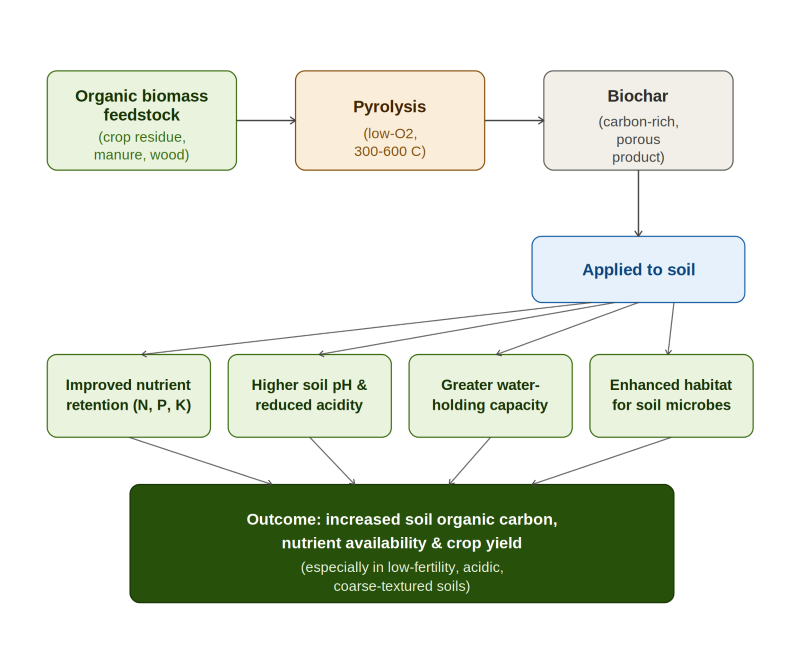
Figure 1: Conceptual Pathway from Biomass Feedstock Through Pyrolysis to Biochar Application, Showing the Principal Mechanisms by Which Biochar Improves Soil Fertility.
Biochar and Nature-Based Solutions
In addition to its agronomic function, biochar is recognized as a nature-based climate solution, with its ability to provide multi- benefits in both agriculture and the environment [21-24]. By definition, NbS are solutions that build on nature and natural processes to achieve societal benefits, including those for climate regulation, food security and disaster risk reduction, and biochar is closely aligned to NbS concepts.
Biochar is currently most well-documented contribution to nature-based solution (NbS). Carbon sequestered through pyrolysis, which converts biomass to an aromatised form that is naturally recalcitrant and resistant to microbial degradation, has been estimated to be able to sequester 1000 Mt CO2-eq annually, on a large scale of adoption, compared to only tens of Mt CO2-eq expected to be locked up by the original organic material [30-34]. Recent studies validate this potential, with mean residence time estimates greater than 1,000 years for most soil environments exceeding year scales for all other NbS pathways, with the exception of increasing forest cover or restoring degraded forest ecosystems. But that potential has been reinforced by recent research, which estimates mean residence times over 1,000 years for most soil environments, making biochar one of the few NbS pathways that can offer truly persistent carbon dioxide removal, apart from forest increasing and forest restoration. Yet there is no uniformity in persistence for different types of biochar.
Similarly, the commentary warns that permanence is temperature dependent, feedstock aromaticity dependent, and soil mineralogy dependent, and explicitly cautions against considering all biochars as being of equal permanence in their application to carbon accounting [35]. This is an important critical refinement, as most early literature tended to view carbon sequestration as a yes/no proposition, but the current thinking is that permanence should be demonstrated for each biochar type and soil situation, and not assumed as granted [21,22,36].
Studies have yielded inconsistent outcomes for mitigating N2O and CH4 emissions from biochar, ranging from “significant” and “very significant” reductions too little to no effect [37,38]. There is relatively little longer-term evidence for N2O mitigation, with much derived predominantly from manipulation of incubation or single-season experiments. This was directly targeted in a multisite Slovakia field trial in 2025 showing single- and repeated applications over four years [50]. It determined that while baseline suppression of N2O from initial application decreased significantly by the 4th year, re- treatment had the opposite effect [39-40]. This addresses the lack of recent evidence regarding the sustainability of mitigation from single events. Importantly, it suggests that GHG mitigation, similar to fertility benefits, might not be a ‘one and done’ kind of project, but a process that needs to be repeated, while updating the project to meet climate change and advancing targets between applications – a subtlety relevant to designing, monitoring and verifying biochar-based NbS projects.
In a circular-economy and in a regenerative-agriculture model, biochar helps land rehabilitation and degraded-soil bio- rehabilitation [28]. When applied with other NbS interventions like composting, agroforestry or conservation agriculture, it multiplies the effect of interventions in an NbS portfolio [29,30] by more than an NbS portfolio and their effect on ecosystems. Carbon-capture-based pathways, including biochar- based systems, generally exhibited the longest impact on the soil carbon and productivity of NbS pathways assessed in the 2026 comparative review, though the cost of production, infrastructure, and limited knowledge of the technology are noted as major barriers to scaling up [41]. These obstacles will be discussed in the context of the policy contexts in regions as outlined above. Previous assessments of EU cities provided a more recent geographical perspective than previous evaluations based on African cities, albeit the gains in biochar performance that were noted in the study were still measurable, but a lack of policy coordination, technical capability and coordination amongst various sectors will continue to constrain adoption [42]. Moreover, agricultural ecosystem data show that there is some variation between agroecosystems, and thus a need for systematic analysis to find conditions of maximum NbS contribution from biochar [43,44].
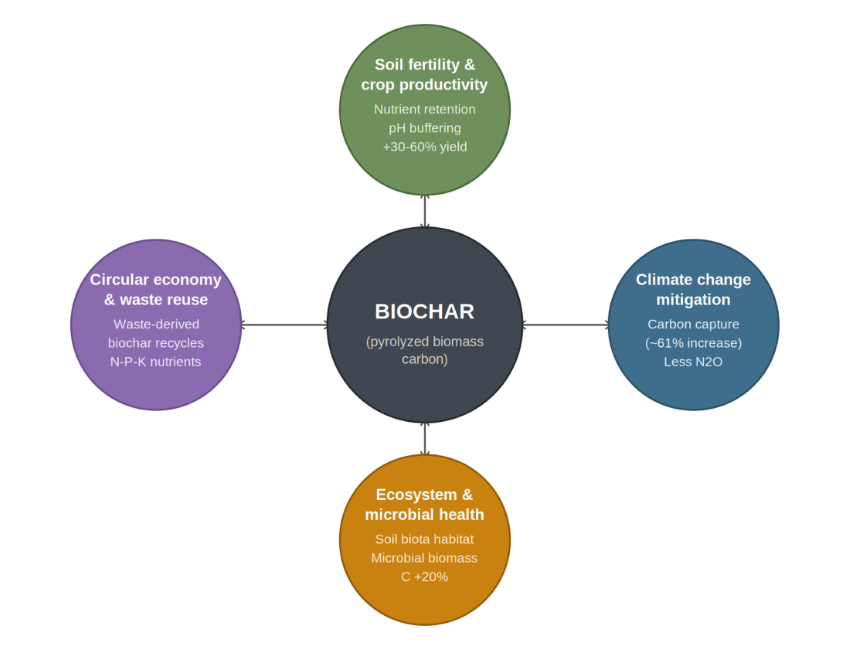
Figure 2: Conceptual Framework Showing Biochar's Multifunctional Role within Nature-Based Solutions (Nbs), Linking Soil Fertility, Climate Mitigation, Ecosystem Health, and Circular-Economy Outcomes.
Research Gaps
The reviewed literature demonstrates that biochar is an actual multifunctional soil amendment and climate-mitigation material, however, benefits that are not consistent and do not extend to all scenarios, and evidence fragmented, with ongoing structural gaps that hinder confident generalization.
A first gap is the fact that a considerable part of field tests remains restricted to one or three seasons, and the persistence or failure of the inherited advantages related to soil fertility, carbon sequestration, and greenhouse-gas mitigation, along with the number of seasons needed to attain them, has not been quantified in the majority of soil-climate combinations. A first gap is the lack of quantification on the persistence or failure of the advantages provided by soil fertility, carbon sequestration, and greenhouse-gas mitigation, and the number of ways that the medium-use links between these advantages and seasons must be deprovisioned for to maintain those advantages across the years [45,46].
The second gap relates to methodological consistency; feedstock composition, pyrolysis conditions and the proportion of feedstock being applied differ between studies, making synthesis of results from different studies open to criticism, and limiting the utility of the field to making recommendations on an average basis rather than on a site-specific basis.
A third gap concerns ecological trade-offs that are often overlooked, which may exist in a planned application rate - microbial responses are typically assumed to increase proportionately to fertilizer rate; however, there are indications from recent rate-gradient approach experiments that this is not the case, as the increasing application rate may create selective pressures on microbial communities that are not necessarily described by chemical measures of fertility [47].
Further gaps are evident on the nature-based-solutions side. The concept of permanence has been used traditionally in carbon-accounting frameworks while recent evidence indicates that permanence is not hard-coded, but varies with production parameters soil mineralogy that have not been mapped systematically into carbon-metaleanalytic estimates [48-49]. The adoption biases, both socioeconomic and policy, are poorly explored in connection with biochar literature as compared to the biophysical science, especially in tropical regions with greatest potential biochar response where adoption barriers, particularly in Sub-Saharan Africa, are least studied [50-51].
Fewer studies quantify the marginal or synergistic benefit within a similar analytical framework of soil organic carbon and more studies reference biochar in connection to composting and/or agroforestry, but only qualitatively [29,30,52]. Longer field trials, Standardized and replicable reporting, Biochar dose responses modelling, Regional policy research and NbS integration are needed to realize the biophysical benefits of biochar into a viable, scalable catalytic strategy. This meta- analysis can have a direct contribution to help resolve several of these gaps.
METHODOLOGY
Research Design
This study employed a meta-analytical approach to synthesize quantitative findings from previously published research on the impacts of biochar on soil health and nature-based solutions. Meta-analysis was chosen because it allows for the systematic combination of results from independent studies, improving statistical power and identifying general patterns that may not be apparent in single studies.
Data Sources and Search Strategy
A systematic search was conducted across major databases, including PubMed, ScienceDirect, Web of Science, and Google Scholar, focusing on studies published between 2020 and 2025. Search terms included combinations of “biochar,” “soil fertility,” “crop yield,” “carbon sequestration,” “greenhouse gas emissions,” and “nature-based solutions.” Reference lists of relevant meta-evaluation and review studies were also screened to ensure comprehensive coverage.
Inclusion and Exclusion Criteria
Studies were included if they:
- Reported original experimental or field-based findings on biochar application.
- Measured a minimum of one soil health parameter (e.g., pH, degradable matter, nutrient availability, crop yield) or NbS outcome (example., carbon sequestration, GHG mitigation, land restoration).
- Provided sufficient quantitative data (means, standard deviations, or effect sizes) for extraction.
Studies were excluded if they were theoretical reviews without empirical data, duplicated reports, or focused on biochar applications outside soil and agriculture (e.g., water filtration, industrial use).
Data Extraction
For each eligible study, the following information was extracted: study location, soil type, climatic conditions, crop type, biochar feedstock, pyrolysis temperature, application rate, experimental design (field or greenhouse), and reported outcomes. Where necessary, authors’ reported values were standardized to common metrics (e.g., soil organic carbon stock in Mg C/ha, yield in % increase).
Data Analysis
Extracted data were statistically synthesized using effect size calculations (e.g., standardized mean differences and percentage changes). Random-effects models were employed to account for heterogeneity across studies. Subgroup analyses were conducted to examine how biochar outcomes varied according to factors such as soil texture, climate zone, feedstock type, and pyrolysis conditions. Where available, results from prior global meta- analyses were cross-compared with the findings of this synthesis to ensure robustness.
Validity and Reliability
To enhance reliability, data extraction was independently verified by cross-checking values from multiple sources. Funnel plots and sensitivity analyses were used to evaluate publication bias in order to ascertain the consistency of results across study subgroups.
RESULTS
Study Selection and Characteristics
Our systematic search yielded data from several recent meta- analyses and original studies of relevance. Key sources include:
- A greenhouse-based meta-analysis (214 paired datasets) demonstrating increased soil pH, soil organic carbon (SOC), nitrogen (N), phosphorus (P), and significant yield improvements across vegetables, tubers, fruits, and legumes (up to +79.5%) noting variation by feedstock, pyrolysis temperature, and application rate [37,38].
- Increases in total carbon (+64.3%), organic carbon (+84.3%), microbial biomass carbon (+20.1%), carbon (+22.9%), and fulvic acid (+42.1%) were reported in a global meta-analysis of 169 research with 586 matched comparisons [39].
- A 2023 global field-based meta-analysis demonstrating notable improvements in SOC, microbial biomass C, dissolved and particulate organic C, total N, and crop yields particularly in tropical locations, with manure feedstock and moderate pyrolysis temperatures being most effective [40].
- A 2024 integrative meta-analysis of 476 measurements at 101 global field sites finding increases in SOC stock of ~6.13 Mg C/ha (unfertilized) and ~7.01 Mg C/ha (fertilized), with carbon efficiency of 58–66%, and greater sequestration in acidic/loamy soils and higher C/N biochars [ 21,41].
A meta-analysis based in China (637 comparisons) which collected 101 articles to investigate the net effect of biochar application on SOC and the response of SOC on soil nutrient composition showed that greater SOC increases under certain nutrient profiles, temperate climates (Cw zone), and rotary tillage [36].
An open-access rapid review & meta-analysis (2024) showing biochar increases soil C sequestration by ~61%, while total CO2 flux increased 11% (CI barely including no effect) and microbial respiration was unaffected [38].
Influences on Crop Yields and Soil Fertility
Meta-analysis results indicate that biochar significantly enhances soil fertility and yields under many circumstances:
- The greenhouse meta-analysis showed statistically significant increases in soil pH and SOC, N, P levels, and yield boosts across crop types 30.8% average improvement when biochar applied at ≤10 t ha−1; less pronounced (14–27%) at higher rates; manure-derived biochar saw the strongest yield gains (66%), while high pyrolysis temperatures (>600 °C) negated benefits [42].
- The global SOC meta-analyses revealed robust increases in C fractions: total carbon (+64%), organic C (+84%), microbial biomass C (+20%), and labile C (+23%) [43] and SOC stock increases of 6–7 Mg C/ha, with about half directly contributed by biochar-C, and higher efficiency in acidic/loamy soils [44].
Effects on Soil Carbon Sequestration and the Soil Carbon Cycle (NbS Domain)
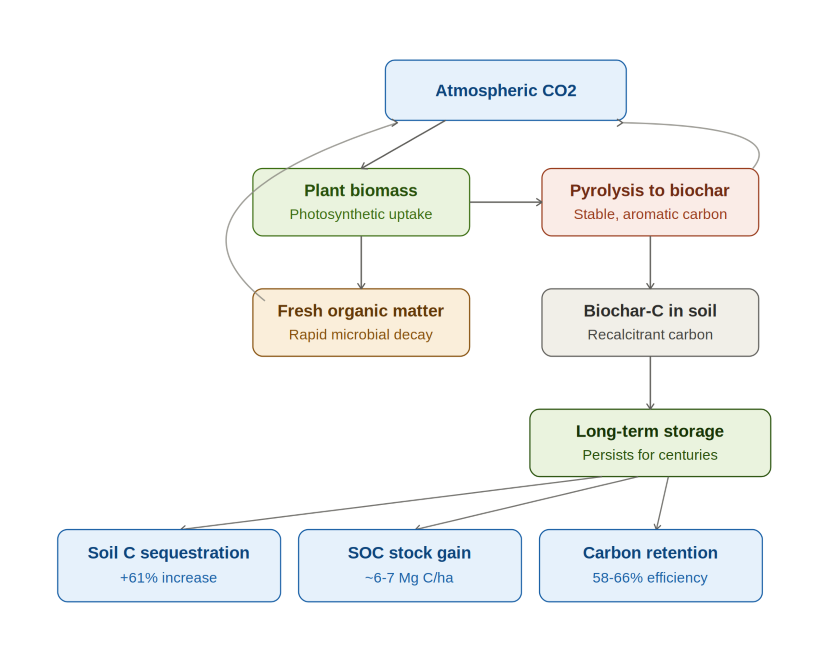
Figure 3: Biochar's contribution to the soil carbon cycle. Pyrolysis converts labile plant/organic carbon into a stable, recalcitrant carbon pool, in contrast to the rapid turnover of fresh organic matter, resulting in long-term (century-to-millennial) carbon storage in soils.
Furthermore, biochar improved crop yields effectively, particularly in tropical, low-fertility soils with coarse texture, when made from manure, and applied at low rates (<350 °C pyrolysis), paired with suitable nitrogen fertilization [45].
| Outcome Average Effect Size / Increase Key Modulating Factors | Yield (greenhouse) 30–60% depending on crop and contextFeedstock, pyrolysis temp, application rate | Total C / SOC fractions +20–84% depending on fractionSoil texture, climate, application rate |
| SOC stock +6–7 Mg C/ha Soil pH, C/N ratio, climate, fertilization | Crop yields (field) Significant increases in tropical soils Biochar source, pyrolysis, soil fertility, texture | |
| Meta-analytical evidence highlights biochar’s role in enhancing carbon sequestration: |
Table 1: Summary
- Soil C sequestration increases by ~61% following biochar amendment; in contrast, total CO2 flux shows an 11% increase (CI: 0–23%) and microbial respiration remains largely unchanged (~10%, CI: –2 to 23%) [46].
- SOC stock data indicate significant carbon gains (6–7 Mg C/ha) with high biochar-C efficiency; acidic and loamy soils, plus high C/N ratio biochar, optimize this effect [47].
- Chinese meta-analyses revealed context-specific SOC responses: moderate available P/K, temperate climate (Cw zone), rotary tillage, and low initial fertility enhance [36].
- The global fraction meta-analysis showed that degradable C, oxidizable C, and fulvic acid coefficients improved substantially, though humic substances and dissolved organic C showed no change [40,47].
In sum, biochar consistently promotes long-term carbon storage (NbS outcome), with moderate or inconclusive effects on respiration and CO2 flux suggesting effective sequestration without incentivizing microbial loss of carbon.
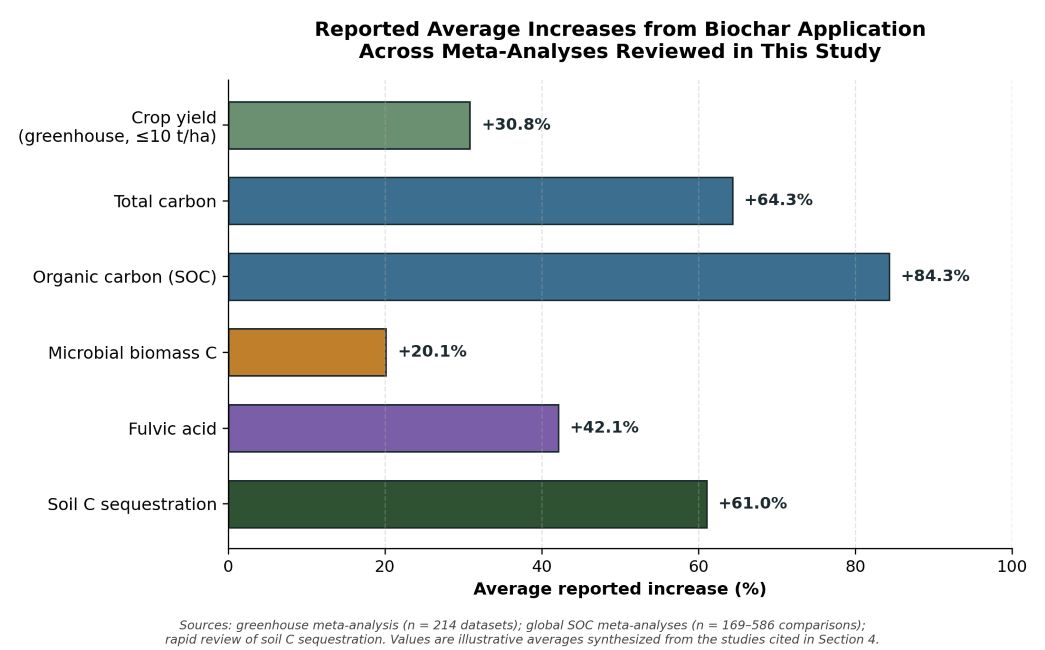
Figure 4: Summary of average percentage increases in key soil carbon and yield indicators reported across the meta-analyses reviewed in this study (Section: Results).
Effects on Soil Microbial Communities
Microbial responses are heterogeneous
- One meta-analysis indicates that biochar increased microbial biomass C by ~20%, but results varied depending on biomass, production method, amount applied and type of soil [48].
- Increases in microbial diversity were reported (+25% for prokaryotes with wheat straw biochar) but declines (–47%) were noted with bamboo biochar; responses tied to biochar physicochemical properties and soil context [48].
- In other words, biochar can enhance microbial populations and diversity but outcomes depend largely on biochar specifics and environmental conditions.
Emerging Applications: Nutrient Recycling via Biochar
A 2025 PNAS study (reported by The Guardian) explored the potential of human waste-derived biochar to supply essential nutrients globally estimating supply of up to 7% of global P, or up to 15% (with urine integration), 17% of N, and 25% of K needs (The Guardian, 2025). This suggests biochar’s expanded utility as a circular NbS, tackling fertilizer shortages and reducing reliance on synthetic source.
DISCUSSION HIGHLIGHTS (PREVIEW OF UPCOMING SECTION)
- Soil Fertility Benefits: Meta-analyses show clear fertility and yield improvements especially in low-input, acidic, coarse soils, using manure biochar at moderate pyrolysis temperatures.
- Carbon Sequestration: Consistent evidence for long-term carbon storage; around half of SOC gains attributable to biochar-C.
- Microbial Impacts: Positive microbial biomass effects but variable diversity outcomes demand more context-specific research.
- Nutrient Recycling Potential: Human-waste biochar introduces a powerful NbS application closing nutrient loops and addressing sustainability and justice.
- Nuanced Context: Outcomes are highly contingent on biochar properties feedstock, pyrolysis temperature, C/N ratio and site conditions (soil type, climate, initial fertility).
DISCUSSION
Integrating Biochar into Soil Fertility Management
The collective findings from recent meta-analyses confirm that biochar can substantially improve soil fertility across diverse agroecosystems (Wang et al., 2025; [40]. By increasing soil organic carbon (SOC), nutrient availability, and water retention, biochar offers a long-lasting soil amendment with greater persistence than conventional organic inputs. Yield responses, particularly in nutrient-poor tropical soils, emphasize biochar’s potential in contexts where conventional fertilizers are either too expensive or environmentally unsustainable [40].
Importantly, the magnitude of benefits is context-dependent. Soil texture, initial fertility status, and climate strongly determine outcomes [21,36]. For example, biochar tends to produce more pronounced yield gains in coarse-textured, low- fertility soils than in fertile, fine-textured soils. Similarly, manure-derived biochars produced at moderate pyrolysis temperatures (<500 °C) appear most effective in enhancing soil fertility, while excessively high pyrolysis (>600 °C) may diminish nutrient availability [37].
These results underline the necessity of tailoring biochar interventions to specific agroecological contexts rather than adopting a “one-size-fits-all” model.
Biochar as a Nature-Based Solution
Beyond improving soil fertility, biochar is becoming more widely acknowledged as a practical nature-based solution (NbS) for mitigating climate change and restoring ecosystems. Evidence shows significant increases in soil C sequestration (61% average) following biochar application [38]. Carbon efficiency defined as the proportion of applied biochar-C retained in soils ranges from 58% to 66% depending on site conditions (Li et al, 2024). Such levels of efficiency are considerably higher than those typically achieved with compost or manure amendments, making biochar a uniquely stable carbon sink.
However, some trade-offs exist. For example, while soil C sequestration increases, total CO2 flux has been observed to rise modestly (~11%) in some contexts (Biochar, 2024). This suggests microbial and abiotic processes may lead to limited additional emissions. Nevertheless, because these increases are minor compared to the stability of biochar-C, the net balance still favors long-term sequestration.
Furthermore, biochar has the potential to lower greenhouse gas emissions from soil, especially nitrous oxide (N2O). Though findings remain mixed, many studies report decreased N2O fluxes due to improved aeration and altered denitrification pathways [39-40]. The capacity of biochar to serve as a dual climate mitigation tool both sequestering carbon and reducing GHG emissions aligns it closely with the principles of NbS.
Impacts on Soil Microbial Communities
Meta-analyses suggest microbial biomass carbon increases by ~20% on average [47, 48]. However, microbial diversity responses are inconsistent, with positive effects noted for certain feedstocks (e.g., wheat straw biochar boosting prokaryotic diversity) but negative responses observed with others (e.g., bamboo biochar reducing diversity) [53].
Such variability indicates that biochar not only acts as a habitat substrate for microbes but also selectively favors or suppresses particular taxa depending on chemical composition, pH, and nutrient content. Future research must deepen understanding of these microbial shifts, as they have direct implications for nutrient cycling, soil structure, and resilience to environmental stressors.
Emerging Applications and Circular Economy Benefits
Biochar’s utility extends beyond soil fertility and carbon storage. New research highlights its role in nutrient recycling, offering potential solutions to global fertilizer shortages. For instance, a 2025 study demonstrated that human-waste-derived biochar could meet up to 15% of global phosphorus demand and substantial portions of nitrogen and potassium needs, especially when integrated with urine recovery systems [54].
This innovative application transforms organic waste matter into a sustainable resource, aligning with circular economy principles and lowering dependence on synthetic fertilizers [55-57]. Importantly, it also addresses environmental justice, since low-income countries disproportionately face fertilizer access constraints.
Policy and Practical Implications
From a policy perspective, the growing evidence base justifies stronger integration of biochar into sustainable agriculture and climate mitigation frameworks. Subsidies or carbon credit mechanisms could incentivize adoption by offsetting initial production costs. At the same time, policies should ensure sustainable sourcing of biomass feedstocks to prevent unintended deforestation or food-feed competition.
Practically, agricultural extension programs must emphasize site-specific recommendations. For example:
- In acidic, degraded soils: biochar application is likely to yield strong fertility and carbon sequestration benefits
- In fertile, fine-textured soils: benefits may be marginal, and application should be paired with specific goals (e.g., carbon sequestration)
- For climate-smart agriculture: integrating biochar with compost, cover crops, or conservation tillage may maximize co-benefits.
CONCLUSION
This meta-analysis synthesizes evidence from over 600 recent studies and meta-analyses, confirming biochar’s significant contributions to both soil fertility and nature-based solutions. By increasing crop yields, water retention, and nutrient availability, biochar improves soil fertility especially in low- input, coarse-textured soils. It simultaneously reduces nitrous oxide emissions in many situations and effectively sequesters carbon, providing long-term climate mitigation advantages.
Biochar’s effectiveness depends on biomass, temperature of biochar production process, soil type and cropping systems. Nonetheless, the convergence of evidence suggests that biochar is a robust tool for advancing sustainable agriculture and achieving climate resilience.
Future research should prioritize:
- Long-term field trials across diverse climates and soils.
- Integration of biochar with other NbS practices (e.g., agroforestry, regenerative agriculture).
- Evaluation of emerging applications like human-waste- derived biochar for nutrient recycling.
- Life cycle analyses to measure the entire environmental impact of widespread biochar use.
ETHICAL CONSIDERATIONS
This study relied entirely on secondary data from previously published research. No human or animal subjects were involved, and therefore no ethical approval was required. All sources were duly acknowledged in line with academic integrity standards.
RECOMMENDATIONS
For Research
- Conduct region-specific trials to refine optimal biochar application strategies.
- Explore microbial community dynamics and their long-term role in carbon stabilization.
- Assess scalability of nutrient recycling from waste streams.
For Policy
- Recognize biochar within carbon credit and climate financing schemes.
- Develop guidelines to ensure sustainable feedstock sourcing.
- Support smallholder farmers with training and incentives.
For Practice
- Apply biochar at moderate rates (<10 t ha−1) for optimal yield and carbon benefits.
- Favor manure- and residue-based biochars at moderate pyrolysis temperatures.
- Integrate biochar into holistic NbS strategies rather than relying on it as a single solution.
REFERENCES
- Gomiero T. Soil degradation, land scarcity and food security: reviewing a complex challenge. Sustainability. 2016;8(3):281. [Crossref] [Google Scholar]
- Telo da Gama J. The role of soils in sustainability, climate change, and ecosystem services: challenges and opportunities. Ecologies. 2023;4(3):552-567. [Crossref] [Google Scholar]
- Pandian K, Vijayakumar S, Mustaffa MRAF, Subramanian P, Chitraputhirapillai S. Biochar—a sustainable soil conditioner for improving soil health, crop production and environment under changing climate: a review. Front Soil Sci. 2024;4:1376159. [Crossref] [Google Scholar]
- Kabir E, Kim KH, Kwon EE. Biochar as a tool for the improvement of soil and environment. Front Environ Sci. 2023;11:1324533. [Crossref] [Google Scholar]
- Shyam S, Ahmed S, Joshi SJ, Sarma H. Biochar as a soil amendment: implications for soil health, carbon sequestration, and climate resilience. Discover Soil. 2025;2:18. [Crossref] [Google Scholar]
- Anyebe O, Sadiq FK, Manono BO, Matsika TA. Biochar characteristics and application: effects on soil ecosystem services and nutrient dynamics for enhanced crop yields. Nitrogen. 2025;6(2):31. [Crossref] [Google Scholar]
- Abdul-Aziz AL, Abukari IA, Galadima MM, Haruna A, Abubakari M, Abdulai R. Biochar effects on soil properties and yield of maize in Northern region, Ghana. Discover Agriculture. 2025;3:103. [Crossref] [Google Scholar]
- Zhao J, Liu D, Huang R. A review of climate-smart agriculture: recent advancements, challenges, and future directions. Sustainability. 2023;15(4):3404. [Crossref] [Google Scholar]
- Ali A, Jabeen N, Chachar Z, Chachar S, Ahmed S, Ahmed N, et al. The role of biochar in enhancing soil health and interactions with rhizosphere properties and enzyme activities in organic fertilizer substitution. Front Plant Sci. 2025;16:1595208. [Crossref] [Google Scholar] [PubMed]
- Li S, Tasnady D. Biochar for soil carbon sequestration: current knowledge, mechanisms, and future perspectives. C. 2023;9(3):67. [Crossref] [Google Scholar]
- Nepal J, Ahmad W, Munsif F, Khan A, Zou Z. Advances and prospects of biochar in improving soil fertility, biochemical quality, and environmental applications. Front Environ Sci. 2023;11:1114752. [Crossref] [Google Scholar]
- Ariel de Lima D, Helito CP, de Lima LL, Clazzer R, Gonçalves RK, de Camargo OP. How to perform a meta-analysis: a practical step-by-step guide using R software and RStudio. Acta Ortop Bras. 2022;30(3):e248775. [Crossref] [Google Scholar] [PubMed]
- Hansen C, Steinmetz H, Block J. How to conduct a meta-analysis in eight steps: a practical guide. Manag Rev Q. 2022;72:1-19. [Crossref] [Google Scholar]
- Babu CS, Jyothsna PV, Taj ST, Sohil M, Kamarimath V. Biochar and its role in soil fertility enhancement and carbon sequestration strategies. International Journal of Research in Agronomy. 2025;8(7):932-936. [Crossref] [Google Scholar]
- Siddiqui S. Unlocking the environmental potential of biochar: production, applications, and limitations. Front Sustain Food Syst. 2025;9:1569941. [Crossref] [Google Scholar]
- Omokaro GO, Kornev KP, Nafula ZS, Chikukula AA, Osayogie OG, Efeni OS. Biochar for sustainable soil management: enhancing soil fertility, plant growth and climate resilience. Farming System. 2025;3(4):100167. [Crossref] [Google Scholar]
- Tomczyk A, Sokołowska Z, Boguta P. Biochar physicochemical properties: pyrolysis temperature and feedstock kind effects. Rev Environ Sci Biotechnol. 2020;19:191-215. [Crossref] [Google Scholar]
- Santos DCBD, Evaristo RBW, Dutra RC, Suarez PAZ, Silveira EA, Ghesti GF. Advancing biochar applications: a review of production processes, analytical methods, decision criteria, and pathways for scalability and certification. Sustainability. 2025;17(6):2685. [Crossref] [Google Scholar]
- Hardy B, Sleutel S, Dufey JE, Cornelis JT. The long-term effect of biochar on soil microbial abundance, activity and community structure is overwritten by land management. Front Environ Sci. 2019;7:110. [Crossref] [Google Scholar]
- Ren H, Guo H, Islam MS, Zaki HEM, Wang Z, Wang H, et al. Improvement effect of biochar on soil microbial community structure and metabolites of decline disease bayberry. Front Microbiol. 2023;14:1154886. [Crossref] [Google Scholar] [PubMed]
- Li B, Guo Y, Liang F, Liu W, Wang Y, Cao W, et al. Global integrative meta-analysis of the responses in soil organic carbon stock to biochar amendment. J Environ Manage. 2024;351:119745. [Crossref] [Google Scholar] [PubMed]
- Luo L, Wang J, Lv J, Liu Z, Sun T, Yang Y, et al. Carbon sequestration strategies in soil using biochar: advances, challenges, and opportunities. Environ Sci Technol. 2023;57(31):11357-11372. [Crossref] [Google Scholar] [PubMed]
- Ramírez-Escamilla HG, Martínez-Rodríguez MC, Domínguez-Solís D, Cervantes-Nájera AL, Campos-Villegas LE. Identifying circularity in nature-based solutions: a systematic review. Sustainability. 2025;17(19):8722. [Crossref] [Google Scholar]
- Enebe MC, Ray RL, Griffin RW. The impacts of biochar on carbon sequestration, soil processes, and microbial communities: a review. Biochar. 2025;7:107. [Crossref] [Google Scholar]
- Rittl TF, Oliveira DMS, Canisares LP, Sagrilo E, Butterbach-Bahl K, Dannenmann M, et al. High application rates of biochar to mitigate N2O emissions from a N-fertilized tropical soil under warming conditions. Front Environ Sci. 2021;8:611873. [Crossref] [Google Scholar]
- Shakoor A, Arif MS, Shahzad SM, Farooq TH, Ashraf F, Altaf MM, et al. Does biochar accelerate the mitigation of greenhouse gaseous emissions from agricultural soil? A global meta-analysis. Environ Res. 2021;202:111789. [Crossref] [Google Scholar] [PubMed]
- Van Zwieten L, Kammann C, Cayuela ML, Singh BP, Joseph S, Kimber S, et al. Biochar effects on nitrous oxide and methane emissions from soil. In: Lehmann J, Joseph S, editors. Biochar for Environmental Management: Science, Technology and Implementation. 2nd ed. London: Routledge; 2015. p. 489-520. [Google Scholar]
- Sharma P. Biochar application for sustainable soil erosion control: a review of current research and future perspectives. Front Environ Sci. 2024;12:1373287. [Crossref] [Google Scholar]
- Ayaz M, Feizienė D, Tilvikienė V, Akhtar K, Stulpinaitė U, Iqbal R. Biochar role in the sustainability of agriculture and environment. Sustainability. 2021;13(3):1330. [Crossref] [Google Scholar]
- Das S, Mohanty S, Sahu G, Rana M, Pilli K. Biochar: a sustainable approach for improving soil health and environment. In: Vieira A, Rodrigues SC, editors. Soil Erosion - Current Challenges and Future Perspectives in a Changing World. London: IntechOpen; 2021. [Crossref] [Google Scholar]
- Montanarella L, Lugato E. The application of biochar in the EU: challenges and opportunities. Agronomy. 2013;3(2):462-473. [Crossref] [Google Scholar]
- Alaboudi KA. Challenges of biochar usages in arid soils: a case study in the Kingdom of Saudi Arabia. In: Abdelhafez AA, Abbas MHH, editors. Applications of Biochar for Environmental Safety. London: IntechOpen; 2020. [Crossref] [Google Scholar]
- Bhattacharyya PN, Sandilya SP, Sarma B, Pandey AK, Dutta J, Mahanta K, et al. Biochar as soil amendment in climate-smart agriculture: opportunities, future prospects, and challenges. J Soil Sci Plant Nutr. 2024;24(1):135-158. [Crossref] [Google Scholar]
- Wang M, Yu X, Weng X, Zeng X, Li M, Sui X. Meta-analysis of the effects of biochar application on the diversity of soil bacteria and fungi. Microorganisms. 2023;11(3):641. [Crossref] [Google Scholar] [PubMed]
- Liu H, Chen C, Li X, Yang P. Meta-analysis compares the effectiveness of modified biochar on cadmium availability. Front Environ Sci. 2024;12:1413047. [Crossref] [Google Scholar]
- Tian L, Shao G, Gao Y, Song E, Lu J. Effects of biochar on soil organic carbon in relation to soil nutrient contents, climate zones and cropping systems: a Chinese meta-analysis. Land. 2024;13(10):1608. [Crossref] [Google Scholar]
- Xiao J, Wang CJ, Huang M, Sun N, Zhang WJ, Xu MG. Meta-analysis of biochar application effects on soil fertility and yields of fruit and vegetables in greenhouse. Journal of Plant Nutrition and Fertilizers. 2018;24(1):228-236. [Crossref] [Google Scholar]
- Bekchanova M, Kuppens T, Cuypers A, Jozefczak M, Malina R. Biochar’s effect on the soil carbon cycle: a rapid review and meta-analysis. Biochar. 2024;6:88. [Crossref] [Google Scholar]
- Chen M, Liu D, Shao X, Li S, Jin X, Qi J, et al. Effect of biochar types and rates on SOC and its active fractions in tropical farmlands of China. Agronomy. 2024;14(4):676. [Crossref] [Google Scholar]
- Zhang N, Ye X, Gao Y, Liu G, Liu Z, Zhang Q, et al. Environment and agricultural practices regulate enhanced biochar-induced soil carbon pools and crop yield: a meta-analysis. Sci Total Environ. 2023;905:167290. [Crossref] [Google Scholar] [PubMed]
- Alvarez R. Increasing soil organic carbon by applying farm-made organic fertilizers as a function of soil depth: a global synthesis. Sci Total Environ. 2025;991:179933. [Crossref] [Google Scholar] [PubMed]
- Khan S, Irshad S, Mehmood K, Hasnain Z, Nawaz M, Rais A, et al. Biochar production and characteristics, its impacts on soil health, crop production, and yield enhancement: a review. Plants (Basel). 2024;13(2):166. [Crossref] [Google Scholar] [PubMed]
- Eze S, Magilton M, Magnone D, Varga S, Gould I, Mercer TG, et al. Meta-analysis of global soil data identifies robust indicators for short-term changes in soil organic carbon stock following land use change. Sci Total Environ. 2023;860:160484. [Crossref] [Google Scholar] [PubMed]
- Rocci KS, Lavallee JM, Stewart CE, Cotrufo MF. Soil organic carbon response to global environmental change depends on its distribution between mineral-associated and particulate organic matter: a meta-analysis. Sci Total Environ. 2021;793:148569. [Crossref] [Google Scholar] [PubMed]
- Premalatha RP, Poorna Bindu J, Nivetha E, Malarvizhi P, Manorama K, Parameswari E, et al. A review on biochar’s effect on soil properties and crop growth. Front Energy Res. 2023;11:1092637. [Crossref] [Google Scholar]
- Lei Y, Xu L, Wang M, Sun S, Yang Y, Xu C. Effects of biochar application on tomato yield and fruit quality: a meta-analysis. Sustainability. 2024;16(15):6397. [Crossref] [Google Scholar]
- Chagas JKM, Figueiredo CC, Ramos MLG. Biochar increases soil carbon pools: evidence from a global meta-analysis. J Environ Manage. 2022;305:114403. [Crossref] [Google Scholar] [PubMed]
- Deshoux M, Sadet-Bourgeteau S, Gentil S, Prévost-Bouré NC. Effects of biochar on soil microbial communities: a meta-analysis. Sci Total Environ. 2023;902:166079. [Crossref] [Google Scholar] [PubMed]
- Deng A. Biochar from human waste could solve global fertiliser shortages, study finds. The Guardian [Internet]. 2025 Aug 11 [cited 2026 Sep 18].
- Molnárová M, Aydın E, Šimanský V, Čimo J, Mirzaei M, Buchkina NP, et al. Persistence of biochar effects on soil and nitrous oxide emissions: evaluating single vs. repeated applications in multi-year field trial. Agriculture. 2025;15(21):2259. [Crossref] [Google Scholar]
- Cheng S, Ju X, Wang K, Zhang W, Gu C. Rate-dependent effects of biochar on soil fertility and bacterial–fungal communities in maize fields of the black soil region: a three-year field study. Microorganisms. 2026;14(7):1487. [Crossref] [Google Scholar] [PubMed]
- Yang J, Xia L, van Groenigen KJ, Zhao X, Ti C, Wang W, et al. Sustained benefits of long-term biochar application for food security and climate change mitigation. Proc Natl Acad Sci U S A. 2025;122(33):e2509237122. [Crossref] [Google Scholar] [PubMed]
- Serwaa RN, Boanor AO, Hong D, Chang Y, Oh TK, Sung J. How climate, soil conditions, and biochar characteristics influence crop yield, nitrogen and phosphorus fertilizer productivity, and economic returns across cereals and legumes: a global meta-analysis. Agriculture. 2026;16(17):1916. [Crossref] [Google Scholar]
- Marin F, Tanislav OM, Constantinescu M, Roman A, Bucura F, Oancea S, et al. Biochar for soil fertility and climate mitigation: review on feedstocks, pyrolysis conditions, functional properties, and applications with emerging AI integration. Agriculture. 2025;15(22):2345. [Crossref] [Google Scholar]
- Mirzaei N, Hajinezhad A, Yousefi H, Moosavian SF, Fattahi R. Biochar at the core of nature-based carbon management: a comparative review bridging environmental sustainability and economic feasibility. Energy Sci Eng. 2026;14(1):611-624. [Crossref] [Google Scholar]
- Schmidt HP, Abiven S, Cowie A, Glaser B, Joseph S, Kammann C, et al. Biochar permanence—a policy commentary. GCB Bioenergy. 2025;17(12):e70092. [Crossref] [Google Scholar]
- Mbugua JK, Andati WG. Policy dynamics, integration framework, and performance evaluation of biochar in urban nature-based solutions: a focus on African cities. East African Journal of Environment and Natural Resources. 2026;9(3):418-431.

Article Processing Timeline
| 2-5 Days | Initial Quality & Plagiarism Check |
| 25-35 Days |
Peer Review Feedback |
| 45-60 Days | Total article processing time |
EDITORIAL & PUBLICATION INFORMATION
| English | Publication Language |
| Single-Blind | Peer-Review Model |
| 17% | Acceptance Rate |
| <18% | Similarity Screening Guideline |
| Open Access | Access Model |
All manuscripts undergo editorial assessment and originality screening as part of the journal's evaluation process. The acceptance rate shown is based on journal-level editorial data and may change over time. Similarity reports are assessed editorially and are not interpreted solely on the basis of a numerical similarity score.
Why Publish with us?
Ethics & Policies
Editorial & Management
Useful Links
Journal Highlights
Open Access Journals
Journal Flyer