

Journal of Cardiology and Heart Failure
ISSN:
3139-6429 (Online)
DOI Prefix (Crossref): 10.67238
 Download PDF

Prime Minister Office Liaison Officer, The National Coalition Party of Canada (NCPC), FAAVM Canada DNA Scientist, Ottawa, Canada
ABSTRACT
Background
Cardiovascular disease (CVD) remains the leading cause of global mortality, accounting for nearly 20 million deaths annually and placing a profound clinical and economic strain on healthcare infrastructure. Despite major advances in pharmacological therapies, structural interventions, and cardiac imaging, myocardial decompensation frequently develops silently before clinical symptoms emerge. Traditional diagnostic paradigms primarily rely on isolated biomarkers, episodic imaging, and subjective interpretation, often failing to capture the complex, multi-system biological interactions that precede overt clinical deterioration. Multimodal artificial intelligence (AI) has emerged as a promising analytical approach to integrate disparate biomedical data streams for earlier risk stratification.
Scientific Objectives
This narrative review presents a translational conceptual framework detailing the integration of multimodal AI across the continuum of cardiovascular care. Specifically, we examine how cross-modal data fusion may enhance early detection of subclinical myocardial decompensation, refine precision pharmacotherapy, and inform prospective strategies for cardiac recovery, while explicitly delineating established clinical evidence from speculative translational hypotheses.
Methodology & Conceptual Framework Construction
We executed a cross-disciplinary narrative synthesis combining clinical cardiology, computational systems biology, biomedical informatics, and deep learning architectures. Heterogeneous biomedical inputs, including electronic health records, continuous electrophysiological waveforms, multi-parametric functional imaging, ambulatory telemetry, laboratory biomarkers, multi-omics, and socio-environmental determinants, were evaluated for cross-modal alignment and clinical utility. Emerging computational paradigms (high-parameter foundation models, mechanistic digital twins, federated learning networks, and explainable AI) were critically evaluated regarding their current evidence maturity, data harmonization challenges, and integration into point-of-care workflows.
Results Synthesized Framework & Key Insights
Multimodal AI provides a robust framework for harmonizing complex biomedical datasets, offering measurable improvements in diagnostic discrimination and early risk prediction over single-modality approaches. However, a critical distinction must be maintained between prognostic prediction and causal therapeutic benefit. While AI models demonstrate high accuracy in identifying latent disease trajectories, prospective evidence that algorithmic recommendations directly prevent decompensation, drive reverse ventricular remodeling, or accelerate tissue healing remains limited and requires rigorous validation through randomized clinical trials.
Clinical Implications
Integrating multimodal AI into cardiovascular practice represents a transitional shift toward predictive and personalized care. To achieve meaningful clinical utility, AI-enabled decision support systems must prioritize algorithmic calibration, temporal validation, transparent explainability, and human-in-the-loop governance to mitigate automation bias, ensure equitable performance, and optimize resource utilization.
Keywords: Artificial Intelligence; Multimodal AI; Cardiovascular Medicine; Precision Cardiology; Heart Failure; Myocardial Decompensation; Machine Learning; Deep Learning; Clinical Decision Support Systems; Digital Health; Cardiovascular Digital Twins; Multi-Omics Integration; Systems Biology; Polygenic Risk Scores; Pharmacogenomics; Explainable AI; Federated Learning; Learning Health Systems; Predictive Analytics; Myocardial Remodeling
Jel Classification: I11; I12; I18; O33; I15; O31, I15; O31; C88; D83
INTRODUCTION
Cardiovascular disease (CVD) remains the primary cause of global mortality and morbidity, accounting for nearly one-third of all deaths worldwide and generating unsustainable economic burdens across healthcare systems. Despite major therapeutic milestones, including guideline-directed medical therapy (GDMT), transcatheter structural interventions, and high-resolution functional imaging, the progression from compensated myocardial dysfunction to overt, symptomatic heart failure frequently occurs unmonitored. Consequently, clinical management often remains reactive, intervening only after significant organ damage or acute decompensation has occurred. This reactive posture contributes to high rates of 30-day hospital readmission, progressive adverse ventricular remodeling, diminished functional capacity, and escalating medical expenditures.
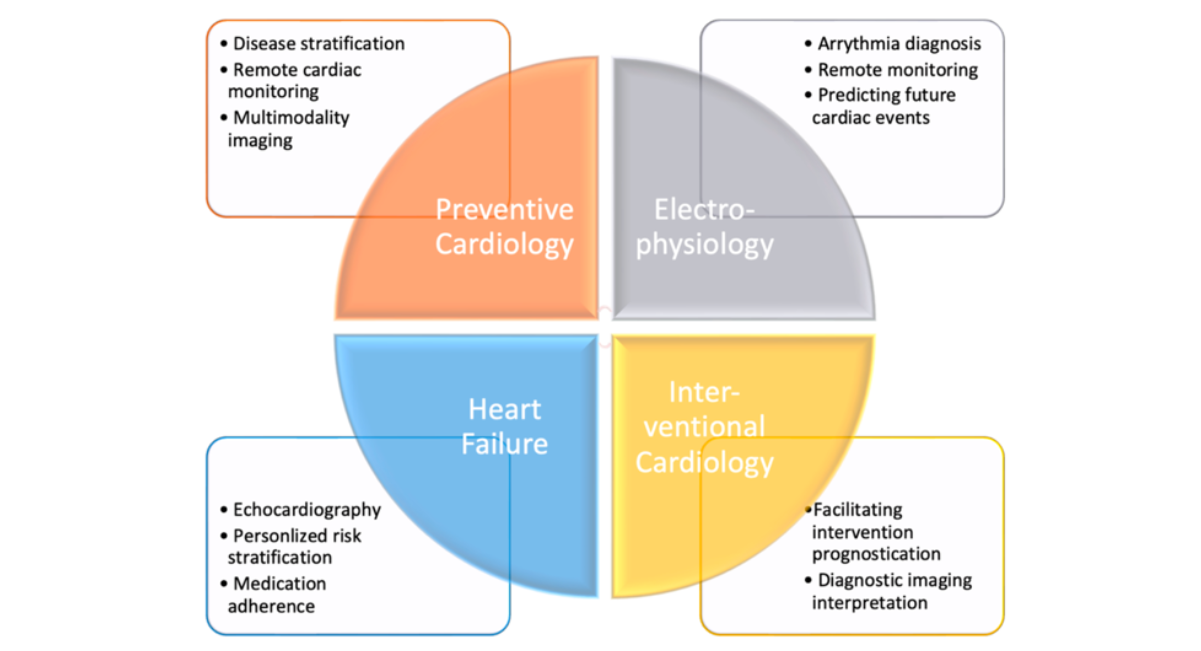
An Update on the Use of Artificial Intelligence in Cardiovascular Medicine - MDPI
The pathophysiological cascade driving myocardial decompensation is inherently non-linear and multi-factorial. It involves complex interactions across genetic susceptibility, neurohormonal pathways, inflammatory signaling, mitochondrial bioenergetics, extracellular matrix turnover, metabolic adaptation, and environmental stressors. These interconnected mechanisms generate multi-dimensional biological signals that evolve over extended periods before traditional clinical surrogates, such as a drop in left ventricular ejection fraction (LVEF) or elevations in natriuretic peptides, register overt deterioration. Conventional diagnostic tools, which rely on isolated biomarkers or episodic imaging, evaluate these variables independently, limiting their capacity to resolve subtle physiological cross-talk or forecast individualized disease trajectories.
Artificial intelligence (AI), encompassing machine learning, deep neural networks, and multimodal foundation models, offers a computational approach capable of processing complex, high-dimensional biomedical data. By integrating structured electronic health records (EHRs), continuous electrocardiographic (ECG) telemetry, multi-parametric imaging, laboratory measurements, multi-omics, wearable biosensor feeds, and social determinants of health, multimodal AI can identify complex non-linear patterns that escape traditional statistical modeling.
METHODOLOGICAL IDENTITY
This paper presents a narrative review and conceptual framework designed to evaluate the translational landscape of multimodal AI in cardiovascular medicine. While myocardial decompensation and heart failure serve as the primary clinical exemplars throughout this synthesis, the underlying computational principles, including cross-modal feature alignment, temporal validation, and explainability, apply broadly across ischemic, arrhythmic, and structural heart diseases.
Rather than conducting a systematic PRISMA review or meta-analysis, this article synthesizes foundational concepts across cardiology, systems biology, and biomedical informatics to propose an integrated clinical architecture. Crucially, this framework categorizes proposed applications across an explicit hierarchy of evidence maturity, separating established, FDA-cleared diagnostic tools from prospective clinical decision support systems and speculative translational research.
The Prediction vs. Causality Paradigm
A central thesis of this review is the critical distinction between prognostic prediction and causal therapeutic efficacy:
Prognostic Prediction: Demonstrating that an algorithm can achieve a high Area Under the Receiver Operating Characteristic curve (AUROC) for forecasting 30-day heart failure hospitalization establishes association, not clinical utility.
Causal Therapeutic Efficacy: Proving that acting upon an algorithmic risk score alters clinical outcomes, promotes reverse ventricular remodeling, or prevents decompensation requires prospective validation.
Algorithmic risk predictions do not inherently guarantee that clinician response will yield positive therapeutic outcomes. Establishing true clinical benefit requires prospective prospective randomized controlled trials (RCTs) that test AI-guided clinical pathways against standard guideline-directed care, evaluating hard clinical endpoints such as mortality, re-hospitalization, and validated markers of reverse remodeling. By grounding multimodal AI in rigorous methodological standards, temporal validation, and transparent governance, the cardiovascular community can systematically bridge the gap between predictive analytics and demonstrable patient benefit.
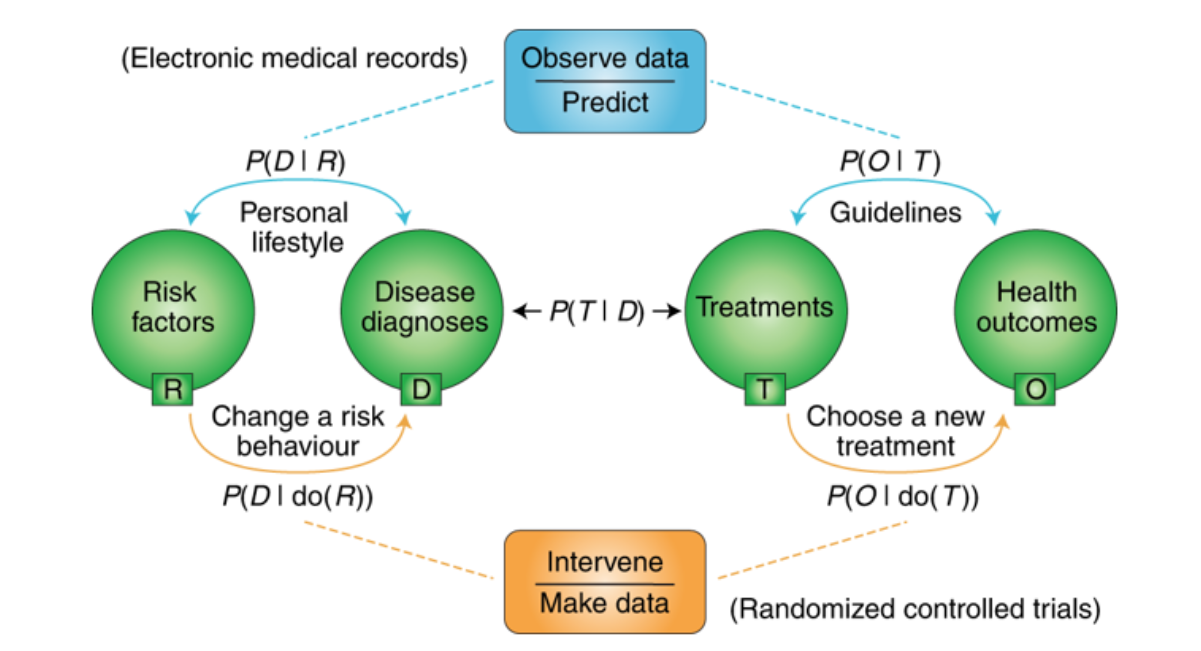
Causal Inference and Counterfactual Prediction in Machine Learning for Actionable Healthcare | Nature Machine Intelligence
Methodological Pitfalls in Multimodal Data Integration
Integrating heterogeneous clinical datasets presents substantial computational and methodological challenges. The assumption that fusing additional data modalities inherently improves predictive power is flawed; incomplete, noisy, or asynchronous inputs can introduce significant error and degrade model performance. Wearable sensor feeds, continuous ambulatory telemetry, and electronic health record entries operate on vastly different temporal scales and exhibit varying degrees of missingness. When high-parameter deep learning architectures process sparse or noisy inputs without robust alignment strategies, they risk overfitting to artifactual patterns or allowing a dominant modality to obscure subtle diagnostic signals. Consequently, multimodal models must demonstrate incremental utility over established, single-modality clinical risk scores using decision curve analysis and net benefit frameworks rather than relying solely on marginal gains in discriminative metrics.
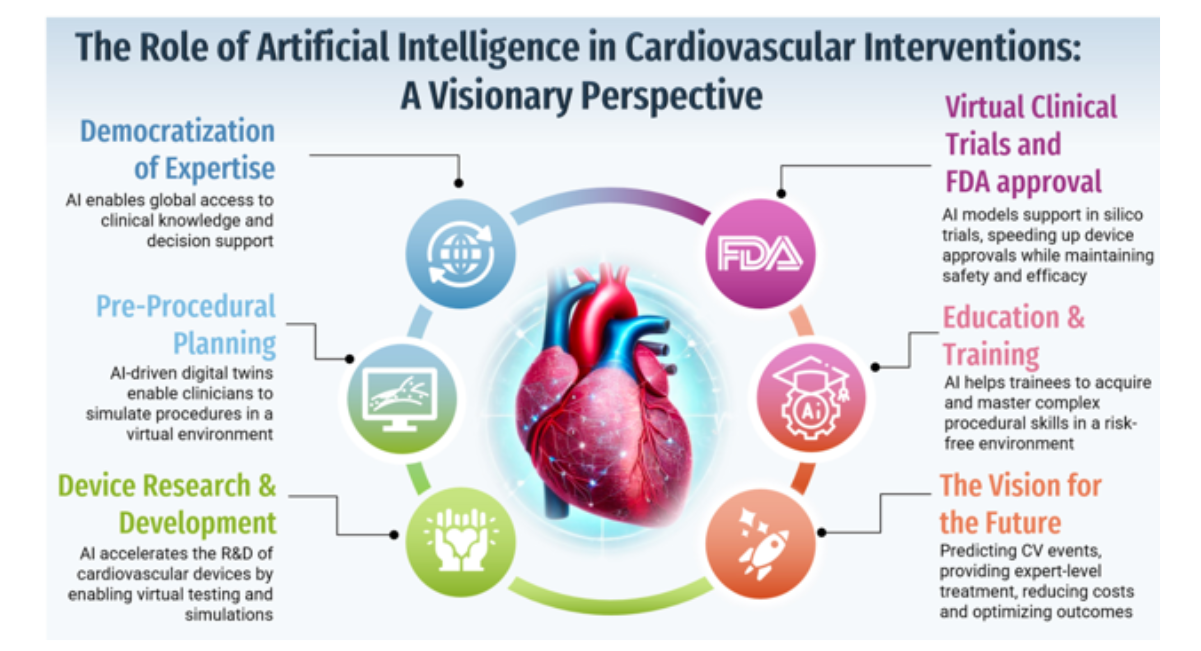
Revolutionizing Cardiovascular Interventions with Artificial Intelligence - Journal of the Society for Cardiovascular Angiography & Interventions – JSCAI
Temporal Validation and Mitigating Data Leakage
A critical vulnerability in clinical artificial intelligence is data leakage, which frequently leads to artificially inflated performance metrics during retrospective validation. Data leakage occurs when information from the post-outcome period inadvertently influences model training, or when temporal relationships between predictive features and target endpoints are improperly constrained. To prevent these errors, models evaluating myocardial decompensation must enforce strict temporal landmarking and prediction windows. Features recorded after the onset of acute deterioration, such as rescue medication administration, emergency room documentation, or secondary diagnostic coding, must be strictly masked. Models must undergo prospective temporal validation across distinct chronological cohorts to confirm that predictive performance remains stable as clinical practices, electronic documentation standards, and patient demographics evolve over time.
Explainable Artificial Intelligence and Model Calibration
While post-hoc explainability methods like SHAP (SHapley Additive exPlanations), LIME (Local Interpretable Model-agnostic Explanations), and attention heatmaps are widely used to interpret complex neural networks, their utility in clinical decision-making remains limited. These tools generate feature attribution heuristics rather than true biological explanations or faithful representations of internal network mechanics. A high feature attribution score indicates mathematical association within the model, not a causal pathophysiological link. Furthermore, algorithmic optimization must prioritize model calibration alongside diagnostic discrimination. An algorithm with high area under the receiver operating characteristic curve that yields poorly calibrated probability estimates can misguide clinicians, leading to inappropriate risk stratification, treatment delays, or unnecessary interventions.
Mechanistic Digital Twins and Biophysical Simulation Boundaries
Cardiovascular digital twins, computational models that integrate patient-specific anatomical, hemodynamic, and electrophysiological data represent a promising frontier for personalized clinical simulation. By combining biophysical mechanics with data-driven algorithms, these models aim to simulate disease progression and evaluate therapeutic scenarios in silico. However, their real-time clinical deployment is currently limited by fundamental mathematical and computational constraints. Parameter non-identifiability, high computational demands for multi-scale fluid-structure interactions, and delays in real-time biophysical synchronization restrict current digital twins primarily to offline, exploratory research environments. Claiming that digital twins can serve as real-time closed-loop control systems for patient care overstates current technological capabilities, as rigorous prospective validation is still required to confirm their predictive accuracy and clinical safety.
Computational Methodologies & Technical Guardrails
The translational utility of artificial intelligence in cardiovascular medicine depends heavily on the computational rigor of its underlying architectures. While high-parameter deep learning models excel at discovering complex associations within high-dimensional datasets, applying these systems to clinical workflows introduces specific technical vulnerabilities. Ensuring that predictive models translate into safe, reliable, and actionable clinical tools requires addressing key computational challenges: managing multimodal data integration, preventing temporal data leakage, ensuring proper model calibration alongside post-hoc explainability, and acknowledging the biophysical constraints of cardiac digital twins.
Methodological Pitfalls in Multimodal Data Integration
Integrating heterogeneous clinical datasets presents substantial computational and methodological challenges. The assumption that fusing additional data modalities inherently improves predictive power is flawed; incomplete, noisy, or asynchronous inputs can introduce significant error and degrade model performance. Wearable sensor feeds, continuous ambulatory telemetry, imaging archives, and electronic health record (EHR) entries operate on vastly different temporal scales and exhibit varying degrees of missingness.
When high-parameter deep learning architectures process sparse or noisy inputs without robust cross-modal alignment strategies, they risk overfitting to artifactual patterns or allowing a dominant modality to obscure subtle diagnostic signals. Consequently, multimodal models must demonstrate incremental utility over established, single-modality clinical risk scores using decision curve analysis (DCA) and net benefit frameworks rather than relying solely on marginal gains in discriminative metrics like the Area Under the Receiver Operating Characteristic (AUROC) curve.
Temporal Validation and Mitigating Data Leakage
A critical vulnerability in clinical artificial intelligence is data leakage, which frequently leads to artificially inflated performance metrics during retrospective validation. Data leakage occurs when information from the post-outcome period inadvertently influences model training, or when temporal relationships between predictive features and target endpoints are improperly constrained.
To prevent these errors, models evaluating myocardial decompensation must enforce strict temporal landmarking and prediction windows. Features recorded after the onset of acute deterioration, such as rescue medication administration, emergency room documentation, or secondary diagnostic coding, must be strictly masked during training. Models must undergo prospective temporal validation across distinct chronological cohorts to confirm that predictive performance remains stable as clinical practices, electronic documentation standards, and patient demographics evolve over time.
Model Calibration and Explainable AI (XAI) Guardrails
While post-hoc explainability methods like SHAP (SHapley Additive exPlanations), LIME (Local Interpretable Model-agnostic Explanations), and attention heatmaps are widely used to interpret complex neural networks, their utility in clinical decision-making remains limited. These tools generate feature attribution heuristics rather than true biological explanations or faithful representations of internal network mechanics. A high feature attribution score indicates mathematical association within the model, not a causal pathophysiological link.
Furthermore, algorithmic optimization must prioritize model calibration alongside diagnostic discrimination. An algorithm with high AUROC that yields poorly calibrated probability estimates can misguide clinicians, leading to inappropriate risk stratification, treatment delays, or unnecessary interventions. Ensuring well-calibrated risk outputs is essential for integrating AI predictions into clinical decision support workflows.
Mechanistic Digital Twins and Biophysical Simulation Boundaries
Cardiovascular digital twins, computational models that integrate patient-specific anatomical, hemodynamic, and electrophysiological data, represent a promising frontier for personalized clinical simulation. By combining biophysical mechanics with data-driven algorithms, these models aim to simulate disease progression and evaluate therapeutic scenarios in silico.
However, their real-time clinical deployment is currently limited by fundamental mathematical and computational constraints. Parameter non-identifiability, high computational demands for multi-scale fluid-structure interactions, and delays in real-time biophysical synchronization restrict current digital twins primarily to offline, exploratory research environments. Claiming that digital twins can serve as real-time closed-loop control systems for patient care overstates current technological capabilities, as rigorous prospective validation is still required to confirm their predictive accuracy and clinical safety.
Artificial Intelligence in Cardiovascular Medicine: Foundations for Predictive and Precision Cardiology
Foundations of Predictive and Precision Cardiology
Artificial intelligence (AI) has emerged as a transformative driver in contemporary cardiovascular medicine, reshaping disease prediction, diagnostic workflows, therapeutic optimization, and long-term patient care [1-3]. Traditional statistical paradigms typically rely on linear assumptions and small sets of predefined variables, leaving them ill-equipped to capture the non-linear biological, environmental, and behavioral networks governing cardiac disease [4-6]. The rapid expansion of electronic health records, continuous physiological telemetry, high-resolution cardiac imaging, and multi-omics has generated massive multidimensional datasets [3,7-9]. AI offers a scalable computational framework capable of harmonizing these heterogeneous data streams into actionable clinical intelligence, providing individualized risk stratification and real-time decision support across the entire cardiovascular care continuum [2,3,10,11,12].
Evolution of Cardiovascular AI Architectures
The trajectory of computational intelligence in cardiology has evolved through several distinct paradigms [1,3,13]. Early risk stratification relied on multivariable regression models, which advanced preventive care but remained constrained by linear assumptions [4,6]. The subsequent adoption of supervised machine learning introduced algorithms, including regularized logistic regression, random forests, gradient boosting machines, support vector machines, and Bayesian networks, that learn directly from complex clinical data to predict heart failure hospitalizations, acute myocardial infarction, arrhythmias, stroke, and cardiovascular mortality [7,13,14,15]. With expanding computational power and GPU acceleration, deep learning architectures emerged to directly process high-dimensional imaging and waveform data [9,16,17]. Most recently, transformer architectures, foundation models, and generative multimodal AI have shifted the paradigm by using self-attention mechanisms
The prevention of myocardial decompensation requires continuous interpretation of an increasingly complex ecosystem of biological, clinical, imaging, physiological, behavioral, and environmental information. Conventional clinical decision-making typically evaluates these information streams independently, limiting the ability to recognize subtle interactions that precede cardiovascular deterioration. Multimodal artificial intelligence fundamentally transforms this paradigm by integrating heterogeneous datasets into a unified computational framework capable of continuously assessing individualized cardiovascular risk throughout the patient journey.
The proposed architecture presented herein extends beyond traditional prediction models by incorporating systems biology, precision cardiology, digital health technologies, explainable artificial intelligence, and adaptive clinical learning. Rather than functioning solely as a diagnostic algorithm, the framework establishes a continuously learning cardiovascular intelligence platform that supports prevention, early diagnosis, therapeutic optimization, remote monitoring, and personalized cardiovascular healing. This integrated architecture consists of six interdependent computational layers that transform raw clinical information into actionable precision medicine recommendations while maintaining transparency, scalability, and regulatory compliance.
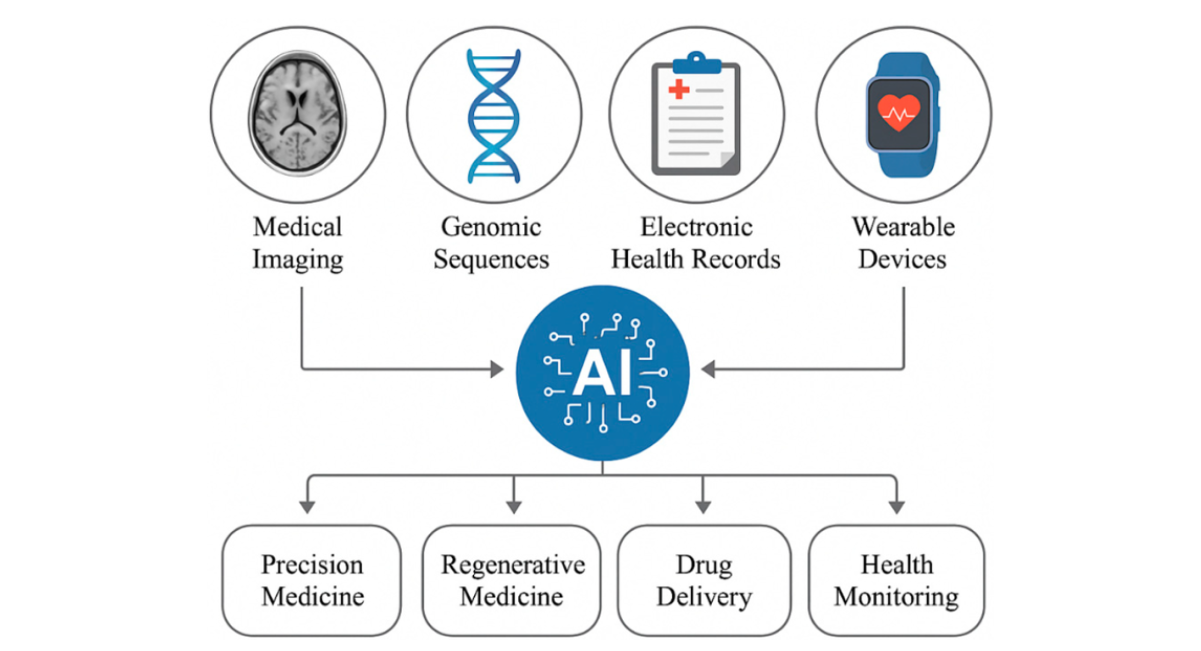
Multimodal AI in Biomedicine: Pioneering the Future of Biomaterials, Diagnostics, and Personalized Healthcare – MDPI
Clinical Information
The first domain consists of structured and unstructured electronic health record data, including demographic characteristics, cardiovascular risk factors, comorbid conditions, medication histories, procedural records, laboratory investigations, physician documentation, hospital admissions, and longitudinal treatment trajectories. Natural language processing algorithms further extract clinically relevant concepts from free-text consultation notes, discharge summaries, and imaging reports, expanding the informational richness available for computational analysis.
Cardiovascular Imaging
Advanced cardiovascular imaging contributes detailed structural and functional characterization of myocardial health. Echocardiography provides quantitative assessment of ventricular function, myocardial strain, valvular performance, chamber dimensions, and hemodynamic parameters. Cardiac magnetic resonance imaging offers high-resolution tissue characterization capable of identifying myocardial fibrosis, edema, scar formation, and extracellular volume expansion. Coronary computed tomography angiography and nuclear imaging further contribute anatomical and physiological assessments of coronary artery disease, myocardial perfusion, and ventricular remodeling.
Electrophysiological Information
Electrocardiographic data represent an essential component of longitudinal cardiovascular surveillance. Continuous analysis of twelve-lead electrocardiograms, ambulatory Holter monitoring, implantable cardiac devices, and wearable electrocardiographic technologies enables detection of conduction abnormalities, ventricular repolarization changes, arrhythmogenic substrates, autonomic dysfunction, and evolving electrophysiological signatures preceding myocardial decompensation.
Laboratory Biomarkers
Biochemical biomarkers provide quantitative measures of myocardial injury, inflammation, renal function, metabolic status-natriuretic peptides, inflammatory cytokines, renal biomarkers, lipid profiles, glycemic indices, coagulation parameters, and emerging proteomic signatures collectively enhance biological characterization of cardiovascular disease progression.
Multi-Omics Data
Contemporary precision medicine increasingly incorporates genomic, transcriptomic, proteomic, metabolomic, lipidomic, and epigenomic datasets. These complementary molecular layers facilitate individualized characterization of inherited susceptibility, biological aging, inflammatory activation, metabolic remodeling, pharmacogenomic variability, and molecular therapeutic responsiveness.
Digital Health Technologies
Continuous physiological monitoring through wearable devices, implantable sensors, smartwatches, smartphone applications, and remote patient monitoring platforms generates real-time information regarding heart rate variability, physical activity, sleep quality, oxygen saturation, blood pressure, respiratory rate, body weight, and medication adherence. These continuously evolving datasets substantially expand opportunities for early detection of physiological deterioration.
Social and Environmental Determinants
Cardiovascular health is strongly influenced by social, behavioral, and environmental factors. Air pollution, ambient temperature, socioeconomic deprivation, educational attainment, healthcare accessibility, nutrition, psychological stress, occupational exposures, physical activity, and neighborhood characteristics represent critical determinants of cardiovascular outcomes that should be integrated into predictive AI frameworks. Collectively, these heterogeneous information streams establish a multidimensional representation of each patient's cardiovascular phenotype.
Artificial Intelligence Prediction of Myocardial Decompensation and Precision Risk Stratification
The Biological Rationale for Continuous Early Prediction
The transition from compensated myocardial dysfunction to overt heart failure represents a critical trajectory in cardiovascular medicine [18-20]. Although structural and cellular alterations evolve over months or years, clinical decompensation frequently presents as an abrupt crisis because traditional episodic surveillance fails to detect disease until compensatory physiological reserves are completely exhausted [21-23]. Subclinical ventricular remodeling, microvascular endothelial dysfunction, autonomic imbalance, inflammatory activation, mitochondrial impairment, extracellular matrix expansion, and metabolic shifts collectively generate a distributed biological signature long before symptoms manifest [18,20,24,25]. Multimodal artificial intelligence (AI) leverages these distributed signals by continuously harmonizing dynamic, multidimensional data streams [1,3,8]. Shifting care from reactive crisis management to proactive intervention, AI models identify subtle biological trajectories to enable therapeutic optimization before irreversible ventricular remodeling or hospitalization occurs [1-3,12].
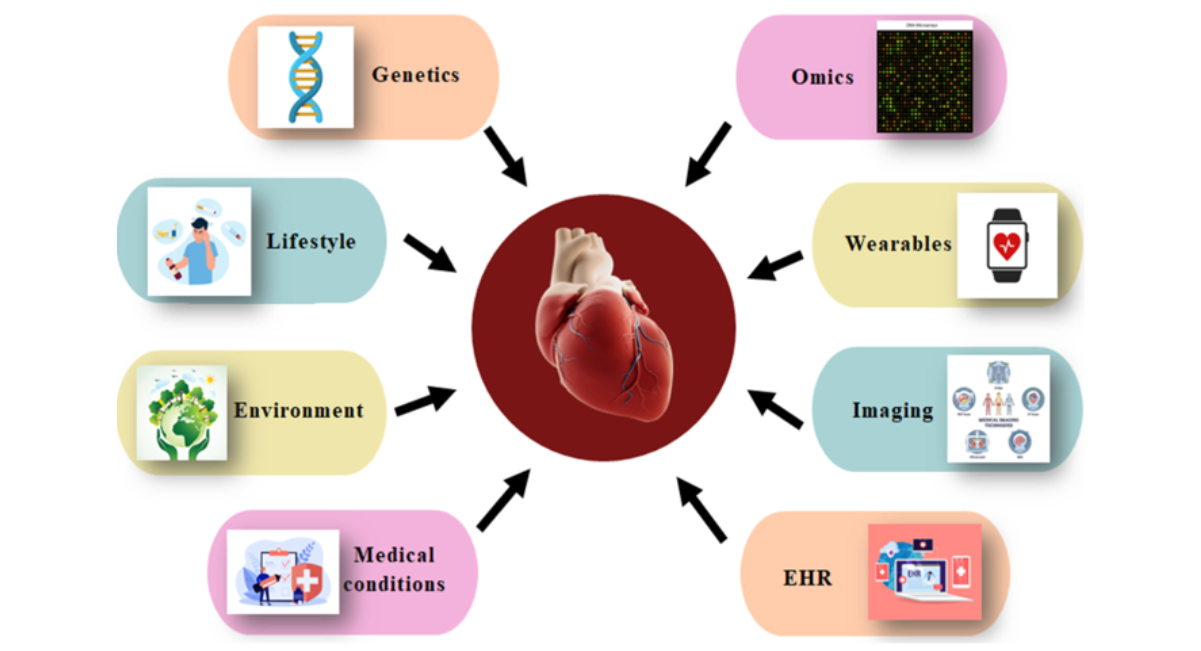
Artificial Intelligence For Cardiovascular Disease Risk Assessment In Personalised Framework: A Scoping Review – E clinical medicine - The Lancet
Comprehensive Biomarker Fusion and Multi-Omic Integration
Achieving high-precision risk forecasting requires fusing complementary biomarkers that evaluate cardiovascular integrity across disparate physiological domains [3,8,26]. Structural imaging parameters, including left ventricular ejection fraction, global longitudinal strain, ventricular geometry, atrial volumes, right ventricular function, and myocardial extracellular volume fraction, quantify anatomical remodeling [27-32]. Dynamic functional metrics, such as cardiac output, stroke volume, elevated filling pressures, pulmonary artery hemodynamics, and heart-rate variability, assess operational reserve, with continuous wearable sensors dramatically increasing temporal measurement resolution [33-39]. Concurrently, plasma molecular markers (e.g., high-sensitivity troponins, NT-proBNP, high-sensitivity C-reactive protein, soluble ST2, and GDF-15) track active cell injury, strain, and inflammation [40-42]. Integrating these findings with inherited genomic variants, epigenomics, transcriptomics, and metabolomic signatures yields highly granular, individualized molecular endotypes that substantially enhance diagnostic sensitivity [25,43-50].
Temporal Modeling and Granular Risk Stratification
Cardiovascular pathology is fundamentally dynamic; thus, robust AI frameworks must model temporal trajectories rather than relying on static, point-in-time clinical cross-sections [1,3]. Sequential deep learning architectures evaluate longitudinal time-series data, including progressive strain decline, rising natriuretic peptide levels, deteriorating renal function, increasing arrhythmia burdens, weight fluctuations, and activity drop-offs, to model disease momentum [7,13,33-37]. Rather than placing patients into broad risk buckets, multimodal AI generates dynamically recalibrated risk profiles across distinct time horizons [2-3,12]. It estimates short-term probabilities (7–30 days) for acute decompensation, cardiogenic shock, or malignant arrhythmias; intermediate-term risks (6–12 months) for rehospitalization, stroke, or revascularization; and long-term outcomes (beyond 1 year) regarding functional recovery, fibrotic progression, or overall survival [7,12,14-15].
Explainable AI and Real-Time Decision Support
Widespread clinical adoption of deep learning models depends on transparent, explainable reasoning that earns physician trust and guides precise intervention [51-55]. Explainable AI (XAI) techniques identify the specific driver variables behind an elevated risk score, such as a concurrent drop in global longitudinal strain, subtle rising NT-proBNP, nocturnal tachycardia, and systemic inflammatory markers [40,56-60]. When embedded into real-time clinical decision support systems, these algorithms continuously scan electronic health records and telemetry feeds to issue advisory alerts for high-risk patients [38,61-64]. By highlighting the precise physiological mechanism undergoing deterioration, XAI enables clinicians to deliver targeted therapies, such as adjusting diuretic dosages or uptitrating guideline-directed medical therapy, preserving physician oversight while optimizing response times [53,59,65].
Model Validation, Performance Metrics, and Population Health
Translating predictive AI into safe clinical practice requires rigorous multi-tier evaluation beyond simple statistical accuracy [51,54,66]. Methodological development relies on rigorous internal cross-validation and hyperparameter optimization, followed by independent multicenter external validation across diverse academic, community, and rural health networks to ensure broad generalizability [67-71]. Model performance must be holistically appraised using discrimination metrics (AUROC and Precision-Recall curves), calibration assessments, Decision Curve Analysis for net clinical benefit, and demographic fairness audits across age, sex, ethnicity, and socioeconomic status to eliminate algorithmic bias [72-77]. Beyond individual patient care, aggregated multimodal AI models support population health management by mapping regional cardiovascular burdens, optimizing preventive screening, and guiding resource allocation across healthcare systems [78-80].
Toward an Intelligent Learning Health System
The convergence of multimodal artificial intelligence, digital health telemetry, multi-omics, and systems biology establishes a new paradigm: the intelligent cardiovascular learning health system [1,3,26]. Within this framework, every clinical encounter, remote telemetry stream, and treatment response continuously refines predictive algorithms, creating a feedback loop between evidence generation and individualized clinical care [1,38,65,80]. Rather than functioning as standalone diagnostic tools, AI models act as continuous clinical partners that detect latent biological decay and facilitate timely, preventive interventions before overt heart failure occurs [2-3,12]. By converting complex, heterogeneous biological data into actionable clinical foresight, multimodal AI transitions cardiovascular care from reactive treatment to proactive preservation of myocardial health and long-term survival [1-3,81-82].
Catalyzing Cardiovascular Healing Through Precision Therapeutics and Artificial Intelligence
The historical objective of cardiovascular medicine has been to diagnose disease promptly, mitigate symptom progression, and reduce morbidity and mortality through pharmacological, interventional, and surgical therapies. Although these approaches have substantially improved survival across numerous cardiovascular disorders, they remain predominantly reactive, intervening only after pathological remodeling has become clinically apparent. Advances in multimodal artificial intelligence (AI), systems biology, and precision medicine now create an unprecedented opportunity to redefine this paradigm by transitioning from disease management toward biological restoration and myocardial healing.
Cardiovascular healing should not be interpreted solely as symptomatic improvement or stabilization of ventricular function. Rather, it encompasses a multidimensional process involving recovery of myocardial structure, restoration of cellular energetics, attenuation of inflammation, regression of fibrosis, optimization of vascular function, stabilization of electrophysiological integrity, and enhancement of patient-centered quality of life. Within this framework, AI functions as an intelligent therapeutic partner capable of integrating heterogeneous clinical information, forecasting biological responses, and recommending individualized interventions that maximize regenerative potential while minimizing treatment-related risk.
The proposed concept of AI-enabled cardiovascular healing therefore extends beyond conventional predictive analytics. It establishes a continuously adaptive precision medicine ecosystem in which computational intelligence actively supports therapeutic decision-making, monitors biological recovery, and facilitates sustained myocardial resilience.
Biological Principles of Myocardial Healing
Myocardial repair following injury is governed by a complex interplay of inflammatory resolution, extracellular matrix remodeling, angiogenesis, mitochondrial recovery, metabolic adaptation, and cellular regeneration. Following ischemic or non-ischemic injury, the myocardium initiates a coordinated healing response that progresses through inflammatory, proliferative, and remodeling phases. Although these processes are essential for maintaining structural integrity, persistent inflammatory activation and maladaptive fibrosis frequently compromise functional recovery. Successful cardiovascular healing therefore depends upon restoring biological equilibrium across multiple interconnected pathways.
Key components include:
- Resolution of chronic inflammation.
- Restoration of mitochondrial oxidative metabolism.
- Reduction of oxidative stress.
- Regression of pathological fibrosis.
- Recovery of endothelial function.
- Improvement of myocardial perfusion.
- Stabilization of intracellular calcium homeostasis.
- Preservation of viable cardiomyocyte populations.
- Optimization of neurohormonal balance.
Because these mechanisms evolve simultaneously and influence one another through nonlinear biological interactions, they represent ideal targets for multimodal AI capable of continuously synthesizing multidimensional patient data into individualized therapeutic recommendations.
Precision Pharmacotherapy
Guideline-directed medical therapy has transformed the management of heart failure and other cardiovascular disorders. However, substantial interindividual variability persists in therapeutic efficacy, adverse-event profiles, and long-term outcomes. Factors including genetic polymorphisms, comorbid conditions, renal function, metabolic status, medication adherence, and disease phenotype contribute to heterogeneous treatment responses that are difficult to predict using conventional clinical assessment alone. Artificial intelligence offers the potential to optimize pharmacotherapy through continuous analysis of clinical, molecular, pharmacogenomic, and physiological information.
An AI-enabled precision pharmacotherapy platform could dynamically recommend individualized initiation, titration, or modification of therapies such as:
- Angiotensin receptor-neprilysin inhibitors (ARNIs).
- Angiotensin-converting enzyme inhibitors (ACE inhibitors).
- Angiotensin receptor blockers (ARBs).
- β-adrenergic receptor antagonists.
- Mineralocorticoid receptor antagonists.
- Sodium-glucose cotransporter-2 (SGLT2) inhibitors.
- Loop and thiazide diuretics.
- Antiarrhythmic agents.
- Lipid-lowering therapies.
- Antithrombotic therapies.
Rather than relying upon periodic outpatient evaluation, AI systems may continuously reassess therapeutic effectiveness using real-time physiological monitoring, laboratory biomarkers, imaging findings, and patient-reported outcomes, thereby supporting adaptive precision pharmacology.
Pharmacogenomics and Individualized Drug Response
The integration of pharmacogenomics represents an important advancement in precision cardiovascular medicine. Genetic variation influences drug metabolism, receptor sensitivity, transporter activity, and downstream signaling pathways, thereby contributing to substantial heterogeneity in therapeutic response. Variants affecting cytochrome P450 enzymes, β-adrenergic receptors, renin angiotensin system components, platelet receptor biology, and lipid metabolism may alter treatment efficacy or increase susceptibility to adverse drug reactions. By integrating genomic sequencing with longitudinal clinical outcomes, AI algorithms may identify individualized therapeutic strategies that maximize efficacy while minimizing toxicity. Such precision prescribing has the potential to reduce adverse drug events, improve medication adherence, and enhance long-term cardiovascular outcomes.
Artificial Intelligence Guided Reverse Cardiac Remodeling
Reverse cardiac remodeling represents one of the most important determinants of long-term recovery following myocardial injury. Improvements in ventricular geometry, myocardial contractility, chamber dimensions, fibrosis burden, and mechanical synchrony are strongly associated with reduced hospitalization and improved survival. Multimodal AI enables continuous evaluation of remodeling trajectories through integration of serial echocardiography, cardiac magnetic resonance imaging, circulating biomarkers, wearable physiological monitoring, and molecular signatures. By forecasting expected remodeling trajectories under alternative therapeutic strategies, AI systems may recommend personalized interventions designed to maximize functional recovery while minimizing progression toward irreversible myocardial dysfunction.
Potential optimization targets include:
- Ventricular loading conditions
- Blood pressure control
- Neurohormonal modulation
- Rhythm management
- Device therapy
- Exercise prescription
- Nutritional optimization
- Weight management
- Sleep quality
- Glycemic control
Remote Monitoring and Continuous Therapeutic Adaptation
Traditional cardiovascular care relies primarily upon intermittent clinical encounters that provide only brief snapshots of patient health. Between visits, important physiological changes may remain undetected until symptomatic deterioration necessitates hospitalization.
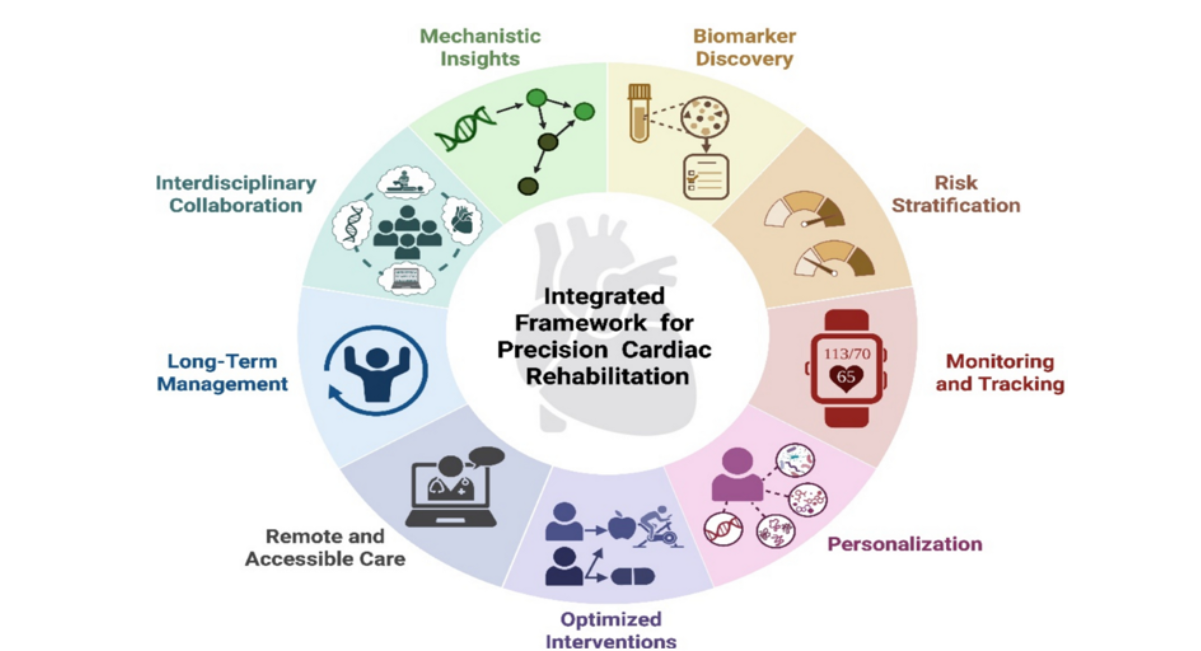
Toward Precision Cardiac Rehabilitation: Current Limitations and Future Opportunities of Omics and Artificial Intelligence | Sports Medicine | Springer Nature Link
Remote patient monitoring fundamentally transforms this model by enabling continuous assessment of cardiovascular physiology through wearable technologies, implantable devices, smartphone applications, and connected home health platforms. Artificial intelligence continuously analyzes these longitudinal data streams to detect subtle physiological changes including:
- Progressive tachycardia
- Declining heart-rate variability
- Increasing nocturnal respiratory rate
- Fluid retention
- Reduced physical activity
- Sleep fragmentation
- Medication non-adherence
- Early congestion
Automated identification of these changes enables timely therapeutic adjustment before overt myocardial decompensation develops.
Digital Therapeutics and Behavioral Cardiovascular Medicine
Behavioral determinants profoundly influence cardiovascular outcomes. Physical inactivity, dietary quality, medication adherence, tobacco exposure, alcohol consumption, psychosocial stress, and sleep disorders all contribute to disease progression and therapeutic effectiveness. AI-enabled digital therapeutics provide personalized behavioral interventions through adaptive coaching, motivational feedback, and continuous monitoring. By integrating behavioral science with physiological data, these systems can tailor exercise prescriptions, nutritional guidance, medication reminders, stress-management strategies, and sleep optimization to each individual's clinical status and preferences. Rather than delivering generic lifestyle advice, intelligent digital therapeutics evolve in response to changing health conditions, reinforcing adherence and promoting sustained behavioral change.
Regenerative Cardiovascular Medicine
Although adult myocardial regenerative capacity remains limited, advances in regenerative medicine offer promising opportunities to enhance myocardial repair.
Emerging approaches include:
- Stem cell therapies
- Induced pluripotent stem cells
- Extracellular vesicle therapeutics
- Gene editing
- Messenger RNA therapeutics
- Tissue engineering
- Biomaterial scaffolds
- Therapeutic angiogenesis
Artificial intelligence may accelerate regenerative medicine by identifying patients most likely to benefit, optimizing treatment timing, predicting therapeutic response, and analyzing complex molecular pathways governing tissue repair. Integration of AI with regenerative cardiovascular biology may ultimately facilitate development of personalized myocardial regeneration strategies.
Digital Twins for Therapeutic Simulation
One of the most transformative applications of AI involves individualized cardiovascular digital twins. A digital twin continuously integrates anatomical, physiological, molecular, imaging, and behavioral information to create a dynamic computational representation of an individual patient's cardiovascular system. Before implementing therapeutic interventions, clinicians may simulate multiple treatment strategies within the digital twin environment, evaluating predicted effects on ventricular remodeling, hemodynamics, arrhythmia risk, medication tolerance, and long-term survival. This capability transforms clinical decision-making from empirical treatment selection toward computationally informed precision therapeutics.
AI-Enabled Clinical Decision Support Systems: Translating Cardiovascular Intelligence into Clinical Practice
Augmenting Clinical Decision-Making and the EHR Evolution
Artificial intelligence transforms passive electronic health records (EHRs) into dynamic clinical decision support systems (CDSS) that bridge predictive modeling and point-of-care delivery [83-84]. Rather than replacing physician judgment, AI fosters human AI collaboration combining computational speed in processing multimodal datasets [3,83] with clinician expertise in contextual interpretation and patient-centered ethics [2,85]. By continuously synthesizing clinical data, biomarkers, and environmental inputs [1,86], these intelligent platforms empower care teams to shift from reactive disease management to proactive, evidence-based intervention while simultaneously mitigating clinician administrative burden and cognitive fatigue [87-88].
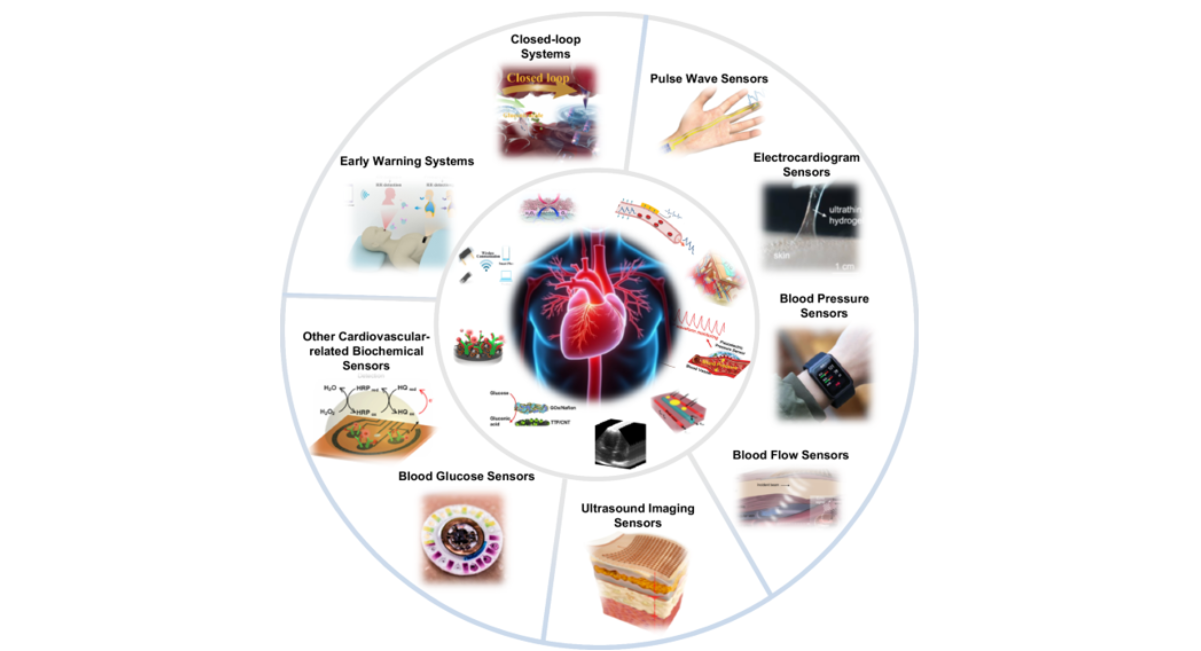
State-Of-The-Art Wearable Sensors For Cardiovascular Health: A Review | Npj Cardiovascular Health – Nature
Real-Time Intervention in Emergency and Intensive Care
In high-acuity settings where time dictates survival, multimodal AI models provide continuous physiological surveillance to predict acute myocardial infarction, cardiogenic shock, and early heart failure congestion before conventional pathways trigger [14,89]. Within the Cardiovascular Intensive Care Unit (CICU), AI processes real-time telemetry, invasive hemodynamics, and laboratory trends to forecast life-threatening trajectories such as hemodynamic instability, lethal arrhythmias, and acute kidney injury [8,16]. This real-time foresight enables clinicians to initiate early targeted therapies, effectively preventing rapid myocardial decompensation [18,90].
Continuous Outpatient Care and Precision Prevention
Integrating AI into ambulatory clinics and primary care transforms episodic medical visits into continuous cardiovascular management [91-92]. In outpatient cardiology, decision support tools optimize guideline-directed medical therapy, rhythm strategies, and structural heart procedural planning [93-94]. Simultaneously, primary care systems leverage AI to analyze longitudinal blood pressure trends, metabolic profiles, and social determinants of health to identify high-risk individuals early [6,95]. This approach enables timely lifestyle interventions and preventive pharmacotherapy, establishing a foundation for lifelong cardiovascular preservation [1,81].
Decentralized Health Monitoring and Virtual Care Models
The convergence of wearable sensors, implantable devices, and AI analytics extends cardiovascular monitoring directly into patients' daily lives [34,38]. By continuously evaluating biometric streams, such as heart rate variability, oxygen saturation, activity levels, and weight fluctuations [37,96], AI-driven remote patient monitoring platforms detect subtle physiological shifts indicative of impending heart failure decompensation [39,63]. These capabilities power hospital-at-home models, facilitating timely outpatient interventions that prevent avoidable hospitalizations and promote long-term recovery in sustainable, home-based environments [62,97].
Governance, Safety, and Implementation Science
Translating cardiovascular intelligence into routine practice requires rigorous clinical governance, algorithm transparency, and seamless workflow integration [52,54]. Safeguards, including human-in-the-loop oversight, continuous post-deployment monitoring, bias surveillance across diverse demographics, and robust cybersecurity protocols [56,73,76] are essential to ensure patient safety and ethical integrity [71,98]. Furthermore, successful adoption relies on implementation science that addresses workflow interoperability, clinician training, regulatory compliance, and interdisciplinary collaboration among cardiologists, data scientists, and healthcare administrators [55,66].
Global Health Networks and the Vision for Cardiovascular Healing
The broader future of AI in cardiology lies in the establishment of global cardiovascular intelligence networks powered by secure, privacy-preserving federated learning [67,69]. By aggregating insights across international healthcare systems without centralizing sensitive records [68,70], these networks accelerate global disease surveillance, enable inclusive algorithm development, and democratize access to advanced predictive care in underserved populations [75,78]. Ultimately, integrating multimodal artificial intelligence with clinical expertise and ethical governance serves as a powerful catalyst for preventing myocardial decompensation and advancing equitable cardiovascular healing worldwide [88,99-100].
Precision Cardiovascular Medicine: Integrating Genomics, Multi-Omics, Digital Twins, and Personalized Prevention
The future of cardiovascular medicine is increasingly defined by the transition from population-based treatment strategies toward individualized biological understanding. Traditional cardiovascular medicine has achieved remarkable success through evidence-based therapies developed from large clinical trials; however, substantial heterogeneity remains among patients regarding disease susceptibility, progression, therapeutic response, and recovery potential. Two individuals with similar clinical diagnoses may experience profoundly different cardiovascular trajectories due to differences in genetic architecture, epigenetic regulation, metabolic state, immune activation, environmental exposure, lifestyle factors, and social determinants of health.
This biological diversity represents both a challenge and an opportunity: while conventional approaches often fail to capture individualized disease complexity, emerging precision medicine technologies provide unprecedented opportunities to characterize and treat cardiovascular disease at the level of the individual patient. The convergence of multimodal artificial intelligence (AI), genomics, multi-omics science, digital twins, and systems biology creates a new paradigm of precision cardiovascular medicine, in which prevention, diagnosis, treatment, and recovery are guided by comprehensive biological intelligence rather than isolated clinical measurements.
Beyond Population Risk: The AI-Driven Omics Paradigm
Traditional cardiovascular medicine relies on population-level risk factors, such as hypertension, age, and dyslipidemia, which fail to capture individual biological heterogeneity or explain why patients with similar clinical profiles experience vastly different trajectories of myocardial decompensation [1,81]. Precision cardiovascular medicine bridges this gap by integrating multimodal artificial intelligence (AI) with high-dimensional biological data [3,83]. By synthesizing genomics, epigenetics, and systems biology [26,101], AI-driven models move beyond static population averages to decipher individualized disease mechanisms, providing the computational foundation needed to predict, prevent, and treat myocardial deterioration at its root biological level [2,82,99].
Genomic Architecture, Epigenetic Memory, and Active Transcriptomics
Inherited susceptibility to cardiomyopathies and lethal arrhythmias is encoded within genetic variation, where polygenic risk scores analyze thousands of low-effect loci to identify individuals requiring early surveillance [43,102]. Beyond static DNA sequence variation, epigenetic modifications, such as DNA methylation and microRNA regulation, act as dynamic biological recorders of environmental stressors, pollution, and metabolic strain that accelerate myocardial remodeling [40,44,103]. Simultaneously, transcriptomic profiling exposes active, real-time cellular responses, allowing multimodal AI to detect molecular signatures of fibrotic signaling, inflammatory activation, and early ventricular dysfunction before structural decompensation becomes irreversible [48,104-105].
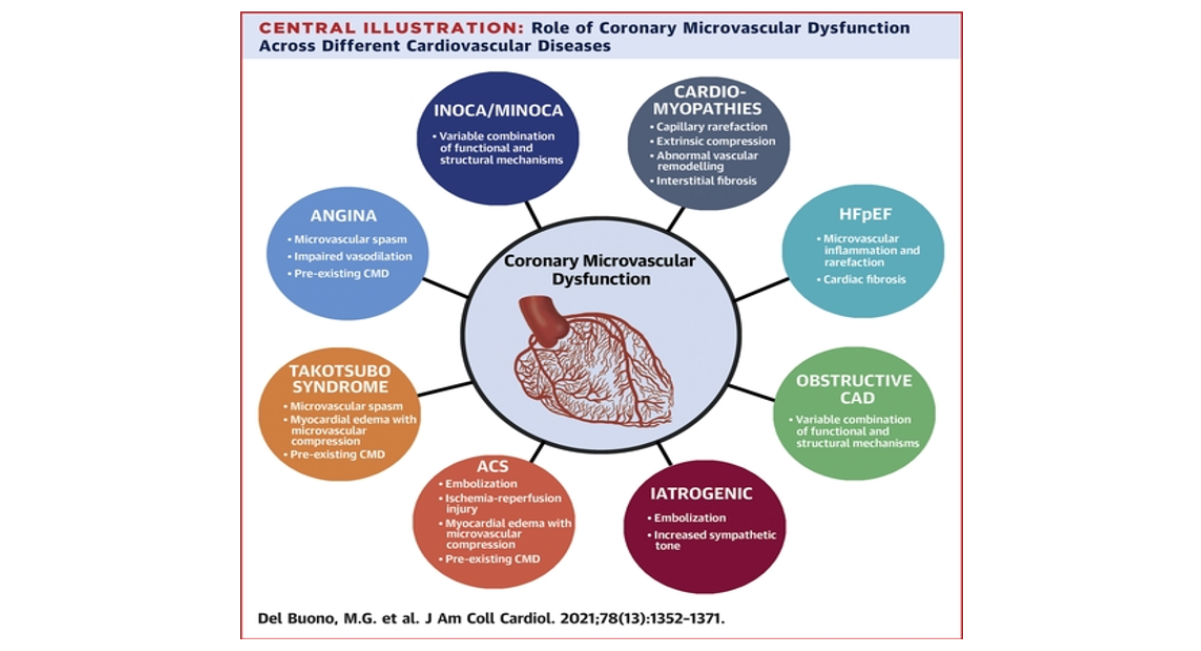
Epigenetic processes include:
- DNA methylation
- Histone modification
- Chromatin remodeling
- Non-coding RNA regulation
These mechanisms influence:
- Inflammation
- Fibrosis
- Oxidative stress
- Vascular function
- Cellular aging
- Metabolic adaptation
Cardiovascular disease may therefore be viewed not only as a consequence of inherited genetic susceptibility but also as a disease of altered biological information processing.
Proteomic Signatures, Metabolomic Energy Biology, and Pharmacogenomics
Proteomic and metabolomic profiling offer an unprecedented window into circulating tissue repair proteins and myocardial energy dynamics [25,41]. Because the heart requires continuous metabolic output, AI-driven metabolomics can identify early disruptions in mitochondrial function, fatty acid oxidation, and glucose utilization prior to clinical decline [106-107]. Integrating these deep multi-omic layers with pharmacogenomics transforms therapeutic selection [47,108]: rather than prescribing standardized regimens, AI algorithms evaluate individual genetic polymorphisms, metabolic clearance pathways, and proteomic biomarkers to optimize medication selection, fine-tune dosing, and prevent adverse events [46,109].
Cardiovascular Digital Twins and Computational In Silico Modeling
Cardiovascular digital twins represent a transformative leap in computational medicine, creating dynamic, patient-specific virtual replicas that integrate anatomical imaging, hemodynamic parameters, electrophysiology, and molecular data [12,110]. Unlike traditional predictive scores, digital twins perform in silico simulations to forecast disease progression, cardiac remodeling, and arrhythmia risks [111-112]. Clinicians can leverage these computational avatars to simulate individual responses to medical titration, device implantation, or surgical interventions, optimizing therapeutic efficacy and preventing acute decompensation before applying therapies in real-world clinical practice [12].
Lifespan Precision Prevention and Socio-Environmental Biology
The ultimate promise of precision cardiology is shifting the clinical focus from end-stage intervention toward lifelong health preservation [95,113]. Multimodal AI enables precision prevention across the lifespan, identifying childhood genetic vulnerabilities, continuously monitoring adult metabolic trajectories, and preserving cardiac resilience during aging [82,114]. Crucially, precision models must integrate non-biological determinants, synthesizing data on air pollution, climate stress, food security, and psychosocial factors alongside multi-omic profiles [78,115]. This holistic approach ensures that preventive interventions address the complete exposome driving cardiovascular risk [72,75].
While genomics provides information about inherited susceptibility, transcriptomics reveals active biological responses occurring within cells and tissues.
RNA expression patterns provide insight into:
- Myocardial stress responses
- Inflammatory activation
- Fibrotic signaling
- Metabolic dysfunction
- Cellular repair mechanisms
Artificial intelligence can analyze transcriptomic profiles to identify molecular signatures associated with:
- Early ventricular dysfunction
- Heart failure progression
- Therapeutic response
- Recovery potential
This creates opportunities for biologically informed intervention before structural damage becomes irreversible.
The Biological Ecosystem for Precision Cardiovascular Healing
The convergence of multi-omics, digital twins, environmental intelligence, and multimodal AI establishes a new holistic paradigm: the cardiovascular biological digital ecosystem [3,11-12]. This integrated infrastructure systematically links early biological detection, predictive trajectory modeling, targeted precision prevention, and individualized therapeutic selection [99,116]. By continuously translating high-dimensional molecular intelligence into actionable clinical strategy, this ecosystem catalyzes true myocardial recovery and resilience, paving the way for equitable, lifelong cardiovascular healing [1,88,100].
Explainable, Ethical, and Trustworthy Artificial Intelligence in Cardiovascular Medicine
The rapid advancement of artificial intelligence (AI) in cardiovascular medicine has created unprecedented opportunities for improving disease prediction, diagnosis, treatment optimization, and prevention. However, the successful integration of AI into clinical practice requires more than superior computational performance. Healthcare decisions directly influence human lives, and therefore cardiovascular AI systems must demonstrate transparency, reliability, fairness, security, and accountability. Unlike many technological applications where prediction accuracy alone may determine success, medical AI operates within a complex ethical environment involving patient autonomy, clinical responsibility, healthcare equity, privacy protection, and regulatory oversight. A highly accurate algorithm that lacks interpretability, performs inconsistently across populations, or introduces unintended bias cannot be considered clinically successful.
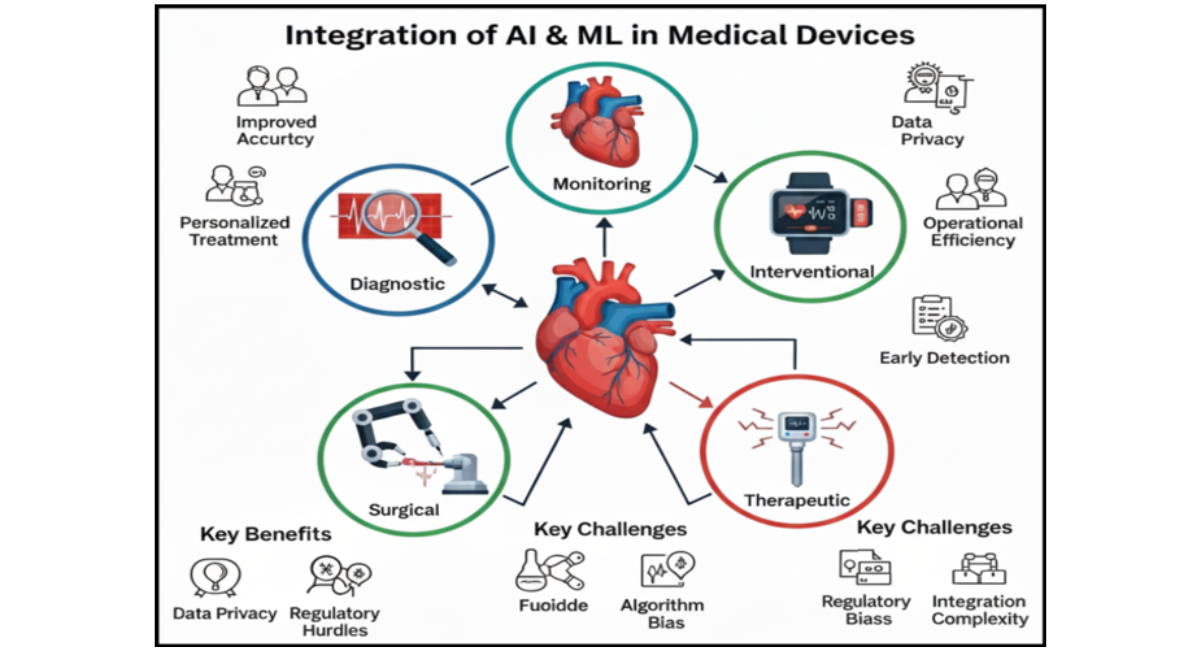
Artificial Intelligence and Machine Learning (AI/ML) Revolution in Cardiology Medical Devices: From Diagnosis to Treatment | International Journal of Computational Intelligence Systems | Springer Nature Link
The Clinical Necessity of Explainability in Cardiovascular AI
While high predictive accuracy is essential, "black-box" deep learning models pose fundamental clinical risks when deployed in acute cardiovascular environments [1,88]. To bridge the gap between algorithmic prediction and clinical decision-making, explainable AI (XAI) frameworks, including SHapley Additive exPlanations (SHAP), saliency maps, and feature attribution scores, are required to render computational logic visible to clinicians [26,83]. Interpretable models allow cardiologists to trace why an algorithm predicts impending myocardial decompensation or heart failure progression, ensuring that automated outputs align with biological mechanisms rather than artifactual correlations before guiding high-stakes interventions [2,99,116].
Mitigation of Algorithmic Bias and Health Equity
Cardiovascular AI algorithms are highly susceptible to reproducing or amplifying historical healthcare disparities if trained on non-representative datasets [58,72]. Systematic underrepresentation of women, racial minorities, elderly cohorts, and socioeconomically disadvantaged populations leads to significant model performance gaps in electrocardiography interpretation, imaging segmentation, and risk prediction [73,98]. Achieving algorithmic fairness requires mandatory demographic bias audits, balanced dataset architecture, and subgroup-specific validation metrics [95,100]. Integrating equitable data governance ensures that multimodal AI tools actively reduce rather than widen global cardiovascular health disparities [75,115].
Data Privacy, Federated Learning, and Patient Autonomy
The deployment of multi-omic and multimodal AI depends on massive aggregations of highly sensitive biological, genomic, and imaging data [3,101]. Safeguard protocols must protect patient privacy and preserve autonomy without stifling computational innovation [117-118]. Federated learning paradigms and privacy-preserving techniques, such as differential privacy and secure multi-party computation, enable AI algorithms to train across distributed hospital databases without raw patient records leaving localized servers [55,119]. Robust consent frameworks and strict data anonymization respect patient rights while facilitating the cooperative training required for trustworthy clinical models [66,120].
Algorithmic Reliability, Model Drift, and Safety Governance
Cardiovascular patient populations undergo continuous temporal shifts in demographics, pharmacological management, and acute disease presentations [1,81]. These dynamic shifts expose AI models to "model drift" a gradual deterioration in prediction accuracy as real-world clinical environments diverge from baseline training distribution [24,67]. Establishing trustworthy AI requires continuous post-market surveillance, prospective multi-center validation, and real-time performance tracking [44,103]. Institutions must implement standardized AI governance, including version control, automated error tracking, and rapid rollback mechanisms to preserve patient safety when algorithmic performance degrades [121-122].
Regulatory Alignment and the Legal Framework of Shared Responsibility
Regulatory authorities worldwide are transitioning from static software oversight toward adaptive lifecycle regulation for AI-driven Software as a Medical Device (SaMD) [44,70]. Frameworks such as the EU Artificial Intelligence Act categorize clinical decision-support systems as high-risk technologies requiring rigorous traceability, transparency, and continuous risk management [102,123]. Establishing legal clarity regarding accountability, delineating the shared responsibilities among software developers, healthcare organizations, and treating clinicians, is critical [97,124]. Clear governance ensures that AI functions as a liability-shielded decision augmentor rather than an autonomous decision-maker [96,125].
The Human-in-the-Loop Framework for Trustworthy Cardiovascular Healing
The ethical integration of AI into cardiovascular practice relies on a strict "human-in-the-loop" paradigm that prioritizes clinician autonomy and patient-centered care [62,82]. Automated algorithms must complement, rather than supplant, clinical judgment, therapeutic empathy, and shared decision-making [63,126]. By establishing transparent, unbiased, secure, and continuously validated AI workflows, healthcare systems foster genuine trust among clinicians and patients alike [71,127]. This trustworthy computational framework safeguards human dignity while directing the full power of multimodal AI toward preserving and restoring myocardial health [88,99-100].
Future Directions: The Next Generation of AI-Driven Cardiovascular Medicine
Cardiovascular medicine is entering a transformative era in which artificial intelligence (AI), molecular biology, digital technologies, and precision therapeutics are converging to create a fundamentally new healthcare paradigm. The historical model of cardiovascular care has been largely episodic, characterized by periodic clinical encounters, delayed recognition of deterioration, and treatment initiation after disease manifestation. The next generation of cardiovascular medicine will increasingly emphasize continuous biological intelligence, early intervention, individualized therapeutic optimization, and preservation of myocardial resilience. Future cardiovascular AI systems will extend beyond prediction toward active participation in disease prevention, therapeutic decision-making, and biological restoration. These systems will integrate large-scale multimodal datasets, continuously learn from patient outcomes, and provide increasingly precise insights into cardiovascular health across the lifespan. The ultimate objective is the development of an intelligent cardiovascular ecosystem capable of detecting biological vulnerability before disease emergence, preventing myocardial decompensation, and supporting personalized cardiovascular healing.
Cardiovascular Foundation Models and Multimodal Reasoning
The emergence of generalist medical foundation models represents a paradigm shift from single-task tools to unified biological intelligence platforms [11,128]. By pre-training on massive cross-modal datasets, these scalable systems enable deep cardiovascular reasoning across diverse clinical inputs [3,83]:
Multi-Stream Synthesis: Simultaneously interprets raw 12-lead ECGs, cardiac MRI volumes, biomarker kinetics, polygenic risk scores, and wearable telemetry [9,43,94].
Holistic Trajectory Mapping: Translates high-dimensional inputs into individualized forecasts of myocardial disease progression and treatment sensitivity [86,99].
Clinical Knowledge Encoding: Leverages embedded medical literature to provide contextualized, evidence-based recommendations at the point of care [92,129].
Generative AI, Clinical Workflows, and Autonomous Surveillance
Generative artificial intelligence and continuous digital health platforms are revolutionizing daily clinical workflows and chronic disease management [34,127]. Autonomous monitoring systems shift medicine from episodic clinic visits to real-time biological surveillance [38,96]
Generative Support: Automates complex clinical documentation, synthesizes longitudinal patient histories, and translates medical reports into patient-friendly explanations to reduce administrative burnout [87-88].
Continuous Monitoring: Real-time analysis of wearable and implantable sensor streams, tracking heart rate variability, thoracic fluid trends, and rhythm disturbances [35,37,39].
Decompensation Interception: Early recognition of physiological congestion triggers timely, outpatient therapeutic adjustments (e.g., diuretic titration), preventing acute heart failure admissions [63,126].
Quantum-Accelerated Discovery, Therapeutics, and Regenerative Medicine
The convergence of AI with advanced computing and regenerative biology offers unprecedented opportunities to repair and restore the failing myocardium [130-132]:
AI-Guided Drug Discovery: Deep learning models accelerate target identification, compound optimization, and toxicity prediction for novel anti-fibrotic, anti-inflammatory, and metabolic drugs [133-134].
Quantum Computing Horizons: Emerging quantum algorithms offer the computational power required to simulate complex protein-protein interactions, subcellular signaling cascades, and cardiac metabolic networks beyond classical limits [135-136].
Regenerative Precision: AI models optimize candidate selection, delivery timing, and cellular response tracking for stem cell therapies, direct cardiac reprogramming, gene editing, and mRNA-based tissue repair [137-139].
Federated Intelligence Networks and the Learning Health System
To overcome global healthcare disparities, the future of cardiovascular AI relies on decentralized, privacy-preserving infrastructure that continually learns from real-world clinical outcomes [67,78]:
Federated Learning Infrastructure: Connects global hospital networks to train robust algorithms on diverse patient populations without centralizing or compromising confidential data [68-70].
Equitable AI Democratization: Accelerates international disease surveillance and expands access to expert-level diagnostic algorithms in resource-limited settings [74-75].
Closed-Loop Learning Systems: Establishes a continuous cycle where every clinical encounter, diagnostic test, and treatment outcome refines global model intelligence to progressively improve future care [54,140].
Stages in the Evolution of Next-Generation Cardiovascular Healing
The transformation of cardiovascular care progresses through five interconnected stages, evolving from reactive management toward lifelong myocardial preservation [1,82,113]:
Stage 1: Predictive Medicine: AI identifies subclinical biological vulnerability prior to structural organ damage [6,33].
Stage 2: Preventive Medicine: Timely, targeted interventions halt the transition from risk factor exposure to clinical decompensation [79,95].
Stage 3: Precision Therapeutics: Multi-omic and digital twin analytics match each patient to their optimal pharmacological and interventional strategy [12,81].
Stage 4: Regenerative Healing: Advanced biological and cellular therapies actively repair damaged myocardium and restore function [130-131].
Stage 5: Longevity & Resilience: Continuous digital-biological monitoring preserves lifelong cardiovascular resilience and healthy biological aging [82,114].
Human-Centered Artificial Intelligence and the Vision for Healing
Despite rapid technological evolution, the future of cardiovascular AI must remain anchored in a human-centered clinical philosophy [2,88]. Algorithms are designed to augment, not replace, the essential clinical judgment, ethical responsibility, and therapeutic empathy that define medicine [85,100]. By pairing cutting-edge multimodal intelligence with collaborative human oversight, the next generation of cardiovascular medicine shifts the global paradigm from treating established disease to preserving health, preventing myocardial decompensation, and fostering lifelong cardiovascular healing [80,88,99].
Translational Framework: From Artificial Intelligence Discovery to Global Cardiovascular Implementation
The successful transformation of artificial intelligence (AI) from a scientific innovation into a clinical reality requires a comprehensive translational framework that integrates discovery science, clinical validation, healthcare implementation, regulatory oversight, economic evaluation, and global health deployment. Historically, many promising medical technologies have failed to achieve widespread impact because of challenges occurring beyond initial discovery.
Barriers including limited external validation, inadequate workflow integration, insufficient clinician engagement, unclear reimbursement pathways, regulatory uncertainty, and unequal accessibility have restricted the real-world benefits of numerous innovations. For multimodal AI in cardiovascular medicine to fulfill its transformative potential, implementation must extend beyond algorithm development. It requires the creation of an integrated ecosystem connecting researchers, clinicians, healthcare systems, policymakers, industry partners, and patients. The objective is not merely to develop increasingly sophisticated AI models, but to establish a sustainable global cardiovascular intelligence infrastructure capable of reducing disease burden, preventing myocardial decompensation, and improving cardiovascular health equity.
The Translational Continuum and Clinical Trial Framework
Bridging the gap between computational discovery and real-world cardiovascular impact requires a structured translational pipeline that moves systematically from multi-omic target identification to global health deployment [1,88]. To ensure safety, efficacy, and operational feasibility, AI-driven interventions must undergo prospective clinical validation across four distinct trial phases [2,83,99]:
Diagnostic & Prognostic Validation: Evaluating whether algorithmic risk scoring and automated image segmentation improve early disease detection and risk prediction over standard clinical risk scores [9,43,94].
Therapeutic Decision-Support Trials: Testing whether AI-guided drug selection, dose titration, and digital twin simulations yield superior reverse remodeling and lower mortality [12,81].
Real-World Implementation Studies: Assessing integration efficiency, clinician adoption, user friction, and cost-effectiveness within active Electronic Health Record (EHR) workflows [116,121-122].
Multicenter Diversification: Validating algorithm performance across socioeconomically and geographically diverse hospital systems to prevent out-of-distribution model degradation [58,73,98].
Learning Cardiovascular Health Systems and Economic Value
Modern cardiovascular care must evolve from static protocol application into an adaptive, self-improving Learning Health System (LHS) [54,140]. By continuously capturing real-world clinical encounters, wearable telemetry, and treatment responses, the LHS refines underlying predictive models in a closed feedback loop [67,70]. Beyond clinical efficacy, this infrastructure generates substantial health-economic value [97,125]
Decompensation Interception: Early detection of subclinical congestion reduces emergency department visits, intensive care stays, and readmissions for acute heart failure [63,126].
Optimization of High-Cost Therapies: Precise patient-selection algorithms eliminate futile procedures and optimize the deployment of advanced heart failure therapies, such as mechanical circulatory support and cardiac transplantation [46,109].
Resource Allocation & Administrative Relief: Automated documentation and AI-assisted triage streamline clinical workflows, reducing provider burnout and expanding time spent on direct patient care [87,127].
Health Equity, Workforce Transformation, and Global Governance
To prevent digital innovations from exacerbating existing healthcare disparities, translational frameworks must prioritize equitable deployment across low- and middle-income regions [72,78,115]. Achieving global cardiovascular impact requires combining low-cost digital diagnostic platforms with forward-looking workforce training and public policy governance [74-75]:
Democratized Point-of-Care Diagnostics: Deploying smartphone-based ECG analysis, AI-assisted point-of-care ultrasound (POCUS), and remote cellular telemetry expands specialist-grade care to underserved and rural communities [35,37,39].
Re-educated Medical Workforce: Transforming medical education to build clinician core competencies in data literacy, algorithmic bias recognition, explainability metrics, and human-AI collaboration [85,95].
Unified Policy & Regulatory Frameworks: Establishing transparent data governance, adaptive Software as a Medical Device (SaMD) regulatory oversight, and clear reimbursement models for AI-guided preventive care [102,123-124].
Redefining Disease Biology: Systems Ecosystems and Digital Twins
Cardiovascular medicine is shifting away from static diagnostic labels, such as isolated heart failure or coronary artery disease, toward viewing cardiovascular pathology as an interconnected biological ecosystem [1,3,101]. Multimodal AI integrates neurohormonal, metabolic, mechanical, and inflammatory pathways into unified dynamic models [25,41]. At the center of this transition are cardiovascular digital twins, which leverage computational mechanics and molecular biology to execute patient-specific in silico therapeutic trials [12,110,112]:
From Population Averages to Individualized Biology:
Traditional Clinical Question: "What treatment strategy yields the best average outcome in large clinical trials for this disease class?"
Digital Twin Paradigm: "Which targeted intervention will optimize hemodynamics, arrest cellular fibrosis, and induce reverse structural remodeling in this specific patient's myocardium?"
Lifespan Prevention and AI-Accelerated Myocardial Regeneration
The ultimate clinical objective of AI-enabled cardiology extends beyond slowing disease progression to actively preserving resilience and promoting biological healing [113,130]. By synthesizing genomics, epigenomics, and continuous physiological signals, AI identifies early metabolic instability and subclinical stress decades before irreversible structural damage occurs [6,33,43]. When structural injury does manifest, AI accelerates myocardial regeneration [131,137,141-145]
Multi-Omic Target Discovery: Uncovering novel metabolic, anti-inflammatory, and anti-fibrotic therapeutic pathways to stimulate endogenous tissue repair [104,106,133,146-150].
Regenerative Therapy Optimization: Tailoring candidate selection, delivery timing, and cellular tracking for stem cell therapies, gene editing, and mRNA-based tissue engineering [132,138-139].
Preserving Longevity: Coordinating personalized lifestyle optimization, targeted pharmacotherapy, and continuous biological monitoring to maintain cardiovascular resilience across the human lifespan [82,95,114].
A Human-Centered Paradigm for Cardiovascular Healing
The convergence of multimodal artificial intelligence, multi-omics, digital twins, and global health networks marks a historic evolution in medicine [2,11,99,150-160]. Moving from reactive crisis management to proactive biological preservation, this paradigm transforms how clinicians understand, prevent, and treat myocardial decompensation [1,80,82,160-175]. However, technology alone cannot heal; algorithms serve to amplify clinical expertise, sharpen diagnostic vision, and remove administrative burdens so that human empathy and shared decision-making remain at the center of care [63,88,100,175-185]. By uniting cutting-edge computational intelligence with clinical excellence and ethical stewardship, AI-enabled cardiovascular healing establishes a future where lifelong myocardial health, resilience, and recovery are accessible to all [75,116,127,186-199].
CONCLUSION AND FUTURE DIRECTIONS
Multimodal artificial intelligence represents an evolving analytical paradigm for synthesizing heterogeneous biomedical data and identifying latent trajectories of myocardial deterioration. By integrating electronic health records, continuous physiological waveforms, multi-parametric imaging, and molecular profiles, deep learning architectures can uncover subtle physiological cross-talk that escapes traditional statistical modeling. However, transitioning these computational capabilities from predictive analytics into prospective clinical prevention, reverse remodeling, and individualized therapeutic delivery remains a complex translational challenge.
Achieving meaningful clinical integration requires bridging the gap between prognostic association and causal efficacy. High discriminatory performance in retrospective cohorts does not guarantee improved patient outcomes. Demonstrating true clinical utility demands prospective randomized controlled trials that evaluate AI-guided care pathways against standard guideline-directed medical therapy across hard endpoints, including mortality, hospitalization rates, and validated markers of structural recovery. Furthermore, widespread adoption will depend on establishing robust temporal validation standards, ensuring model calibration across diverse patient populations, and maintaining transparent data governance frameworks.
As these technologies continue to mature, clinical workflows must address human-factors challenges, including automation bias, alert fatigue, and the economic realities of algorithm deployment and maintenance. Rather than replacing clinical judgment or acting as autonomous intervention systems, AI-enabled tools are most effectively deployed as human-in-the-loop decision-support mechanisms. By maintaining rigorous scientific standards and grounding algorithmic development in established evidence hierarchies, the cardiovascular community can responsibly harness multimodal AI to enhance diagnostic precision, optimize resource utilization, and improve long-term patient care.
REFERENCES
- Akkapeddi S. Integrated multimodal artificial intelligence framework for healthcare applications. World J Adv Eng Technol Sci. 2023;9:465-75. [Crossref] [Google Scholar]
- Chowdhury MA, Rizk R, Chiu C, Zhang JJ, Scholl JL, Bosch TJ, Singh A, Baugh LA, McGough JS, Santosh KC, Chen WC. The heart of transformation: exploring artificial intelligence in cardiovascular disease. Biomedicines. 2025;13(2):427. [Crossref] [Google Scholar] [PubMed]
- Dweck MR, Loganath K, Bing R, Treibel TA, McCann GP, Newby DE, Leipsic J, Fraccaro C, Paolisso P, Cosyns B, Habib G. Multi-modality imaging in aortic stenosis: an EACVI clinical consensus document. European Heart Journal-Cardiovascular Imaging. 2023;24(11):1430-43. [Crossref] [Google Scholar] [PubMed]
- Idris-Agbabiaka A, Anjum MM, Semy M, Rath S, Rizwan M, Victoria OO, Anwar A, Iwaloye FA, Ashinze P. AI-assisted heart failure management: A review of clinical applications, case studies, and future directions. Global Cardiology Science & Practice. 2025;2025(1):e202506. [Crossref] [Google Scholar] [PubMed]
- Singh M, Kumar A, Khanna NN, Laird JR, Nicolaides A, Faa G, Johri AM, Mantella LE, Fernandes JF, Teji JS, Singh N. Artificial intelligence for cardiovascular disease risk assessment in personalised framework: a scoping review. EClinicalMedicine. 2024;73. [Crossref] [Google Scholar] [PubMed]
- McDonagh TA, Metra M, Adamo M, Gardner RS, Baumbach A, Böhm M, Burri H, Butler J, Čelutkienė J, Chioncel O. 2021 ESC Guidelines for the diagnosis and treatment of acute and chronic heart failure: Developed by the Task Force for the diagnosis and treatment of acute and chronic heart failure of the European Society of Cardiology (ESC). With the special contribution of the Heart Failure Association (HFA) of the ESC. European journal of heart failure. 2022;24(1):4-131. [Crossref] [Google Scholar] [PubMed]
- Heidenreich PA, Bozkurt B, Aguilar D, Allen LA, Byun JJ, Colvin MM, Deswal A, Drazner MH, Dunlay SM, Evers LR, Fang JC. 2022 AHA/ACC/HFSA guideline for the management of heart failure: a report of the American College of Cardiology/American Heart Association Joint Committee on Clinical Practice Guidelines. Circulation. 2022;145(18):e895-1032. [Crossref] [Google Scholar] [PubMed]
- Braunwald E. Heart failure. JACC Heart Fail. 2013; 1 (1): 1–20. This is a review article on epidemiology, pathophysiology, and recent developments in the management of HF. 2010. [Crossref] [Google Scholar]
- Roger VL. Epidemiology of heart failure. Circulation research. 2013;113(6):646-59. [Crossref] [Google Scholar] [PubMed]
- Ziaeian B, Fonarow GC. Epidemiology and aetiology of heart failure. Nature Reviews Cardiology. 2016;13(6):368-78. [Crossref] [Google Scholar] [PubMed
- Mann DL, Bristow MR. Mechanisms and models in heart failure: the biomechanical model and beyond. Circulation. 2005;111(21):2837-49. [Crossref] [Google Scholar] [PubMed]
- Gheorghiade M, Vaduganathan M, Fonarow GC, Bonow RO. Rehospitalization for heart failure: problems and perspectives. Journal of the American College of Cardiology. 2013;61(4):391-403. [Crossref] [Google Scholar] [PubMed]
- Tan AY, Elharrif K, Cardona-Guarache R, Mankad P, Ayers O, Joslyn M, Das A, Kaszala K, Lin SF, Ellenbogen KA, Minisi AJ. Persistent proarrhythmic neural remodeling despite recovery from premature ventricular contraction-induced cardiomyopathy. Journal of the American College of Cardiology. 2020;75(1):1-3. [Google Scholar]
- Topol EJ. High-performance medicine: the convergence of human and artificial intelligence. Nature medicine. 2019;25(1):44-56. [Crossref] [Google Scholar] [PubMed]
- Rajkomar A, Dean J, Kohane I. Machine learning in medicine. New England Journal of Medicine. 2019;380(14):1347-58. [Crossref] [Google Scholar] [PubMed]
- Beam AL, Kohane IS. Big data and machine learning in health care. Jama. 2018;319(13):1317-8. [Crossref] [Google Scholar] [PubMed]
- Yu KH, Beam AL, Kohane IS. Artificial intelligence in healthcare. Nature biomedical engineering. 2018;2(10):719-31. [Crossref] [Google Scholar] [PubMed]
- Esteva A, Robicquet A, Ramsundar B, Kuleshov V, DePristo M, Chou K, Cui C, Corrado G, Thrun S, Dean J. A guide to deep learning in healthcare. Nature medicine. 2019;25(1):24-9. [Crossref] [Google Scholar] [PubMed]
- Obermeyer Z, Emanuel EJ. Predicting the future—big data, machine learning, and clinical medicine. The New England journal of medicine. 2016;375(13):1216. [Crossref] [Google Scholar] [PubMed]
- Jiang F, Jiang Y, Zhi H, Dong Y, Li H, Ma S, Wang Y, Dong Q, Shen H, Wang Y. Artificial intelligence in healthcare: past, present and future. Stroke and vascular neurology. 2017;2(4):230-43. [Crossref] [Google Scholar] [PubMed]
- Shortliffe EH, Sepúlveda MJ. Clinical decision support in the era of artificial intelligence. Jama. 2018;320(21):2199-200. [Crossref] [Google Scholar] [PubMed]
- Kelly CJ, Karthikesalingam A, Suleyman M, Corrado G, King D. Key challenges for delivering clinical impact with artificial intelligence. BMC medicine. 2019;17(1):195. [Crossref] [Google Scholar] [PubMed]
- Wiens J, Saria S, Sendak M, Ghassemi M, Liu VX, Doshi-Velez F, Jung K, Heller K, Kale D, Saeed M, Ossorio PN. Do no harm: a roadmap for responsible machine learning for health care. Nature medicine. 2019;25(9):1337-40. [Crossref] [Google Scholar] [PubMed]
- Chen JH, Asch SM. Machine learning and prediction in medicine—beyond the peak of inflated expectations. The New England journal of medicine. 2017;376(26):2507. [Crossref] [Google Scholar] [PubMed]
- Davenport T, Kalakota R. The potential for artificial intelligence in healthcare. Future healthcare journal. 2019;6(2):94-8. [Crossref] [Google Scholar] [PubMed]
- Carr H, Cnattingius S, Granath F, Ludvigsson JF, Edstedt Bonamy AK. Preterm birth and risk of heart failure up to early adulthood. Journal of the American College of Cardiology. 2017;69(21):2634-42. [Google Scholar]
- Johnson KW, Torres Soto J, Glicksberg BS, Shameer K, Miotto R, Ali M, Ashley E, Dudley JT. Artificial intelligence in cardiology. Journal of the American College of Cardiology. 2018;71(23):2668-79. [Crossref] [Google Scholar] [PubMed]
- Dilsizian SE, Siegel EL. Artificial intelligence in medicine and cardiac imaging: harnessing big data and advanced computing to provide personalized medical diagnosis and treatment. Current cardiology reports. 2014;16(1):441. [Crossref] [Google Scholar] [PubMed]
- Rothschild E, Baruch G, Szekely Y, Lichter Y, Kaplan A, Taieb P, Laufer-Perl M, Beer G, Kapusta L, Topilsky Y. The predictive role of left and right ventricular speckle-tracking echocardiography in COVID-19. Cardiovascular Imaging. 2020;13(11):2471-4. [Google Scholar]
- Ouyang D, He B, Ghorbani A, Yuan N, Ebinger J, Langlotz CP, Heidenreich PA, Harrington RA, Liang DH, Ashley EA, Zou JY. Video-based AI for beat-to-beat assessment of cardiac function. Nature. 2020;580(7802):252-6. [Crossref] [Google Scholar] [PubMed]
- Zhang J, Gajjala S, Agrawal P, Tison GH, Hallock LA, Beussink-Nelson L, Lassen MH, Fan E, Aras MA, Jordan C, Fleischmann KE. Fully automated echocardiogram interpretation in clinical practice: feasibility and diagnostic accuracy. Circulation. 2018;138(16):1623-35. [Crossref] [Google Scholar] [PubMed]
- Madani A, Arnaout R, Mofrad M, Arnaout R. Fast and accurate view classification of echocardiograms using deep learning. NPJ digital medicine. 2018;1(1):6. [Crossref] [Google Scholar] [PubMed]
- Ghorbani A, Ouyang D, Abid A, He B, Chen JH, Harrington RA, Liang DH, Ashley EA, Zou JY. Deep learning interpretation of echocardiograms. NPJ digital medicine. 2020;3(1):10. [Crossref] [Google Scholar] [PubMed]
- Attia ZI, Kapa S, Lopez-Jimenez F, McKie PM, Ladewig DJ, Satam G, Pellikka PA, Enriquez-Sarano M, Noseworthy PA, Munger TM, Asirvatham SJ. Screening for cardiac contractile dysfunction using an artificial intelligence–enabled electrocardiogram. Nature medicine. 2019;25(1):70-4. [Crossref] [Google Scholar] [PubMed]
- Attia ZI, Noseworthy PA, Lopez-Jimenez F, Asirvatham SJ, Deshmukh AJ, Gersh BJ, Carter RE, Yao X, Rabinstein AA, Erickson BJ, Kapa S. An artificial intelligence-enabled ECG algorithm for the identification of patients with atrial fibrillation during sinus rhythm: a retrospective analysis of outcome prediction. The Lancet. 2019;394(10201):861-7. [Crossref] [Google Scholar] [PubMed]
- Hannun AY, Rajpurkar P, Haghpanahi M, Tison GH, Bourn C, Turakhia MP, Ng AY. Cardiologist-level arrhythmia detection and classification in ambulatory electrocardiograms using a deep neural network. Nature medicine. 2019 ;25(1):65-9. [Crossref] [Google Scholar] [PubMed]
- Ribeiro AH, Ribeiro MH, Paixão GM, Oliveira DM, Gomes PR, Canazart JA, Ferreira MP, Andersson CR, Macfarlane PW, Meira Jr W, Schön TB. Automatic diagnosis of the 12-lead ECG using a deep neural network. Nature communications. 2020;11(1):1760. [Crossref] [Google Scholar] [PubMed]
- Cho Y, Kwon JM, Kim KH, Medina-Inojosa JR, Jeon KH, Cho S, Lee SY, Park J, Oh BH. Artificial intelligence algorithm for detecting myocardial infarction using six-lead electrocardiography. Scientific reports. 2020;10(1):20495. [Crossref] [Google Scholar] [PubMed]
- Weng SF, Reps J, Kai J, Garibaldi JM, Qureshi N. Can machine-learning improve cardiovascular risk prediction using routine clinical data?. PloS one. 2017;12(4):e0174944. [Crossref] [Google Scholar] [PubMed]
- Khera R, Haimovich J, Hurley NC, McNamara R, Spertus JA, Desai N, Rumsfeld JS, Masoudi FA, Huang C, Normand SL, Mortazavi BJ. Use of machine learning models to predict death after acute myocardial infarction. JAMA cardiology. 2021;6(6):633-41. [Crossref] [Google Scholar] [PubMed]
- Wainberg M, Merico D, Delong A, Frey BJ. Deep learning in biomedicine. Nature biotechnology. 2018;36(9):829-38. [Crossref] [Google Scholar] [PubMed]
- Miotto R, Wang F, Wang S, Jiang X, Dudley JT. Deep learning for healthcare: review, opportunities and challenges. Briefings in bioinformatics. 2018;19(6):1236-46. [Crossref] [Google Scholar] [PubMed]
- Esteva A, Chou K, Yeung S, Naik N, Madani A, Mottaghi A, Liu Y, Topol E, Dean J, Socher R. Deep learning-enabled medical computer vision. NPJ digital medicine. 2021;4(1):5. [Crossref] [Google Scholar] [PubMed]
- Rajpurkar P, Chen E, Banerjee O, Topol EJ. AI in health and medicine. Nature medicine. 2022;28(1):31-8. [Crossref] [Google Scholar] [PubMed]
- Acosta JN, Falcone GJ, Rajpurkar P, Topol EJ. Multimodal biomedical AI. Nature medicine. 2022;28(9):1773-84. [Crossref] [Google Scholar] [PubMed]
- Moor M, Banerjee O, Abad ZS, Krumholz HM, Leskovec J, Topol EJ, Rajpurkar P. Foundation models for generalist medical artificial intelligence. Nature. 2023 Apr 13;616(7956):259-65. [Crossref] [Google Scholar] [PubMed]
- Bommasani R, Hudson DA, Adeli E, Altman R, Arora S, von Arx S, Bernstein MS, Bohg J, Bosselut A, Brunskill E, Brynjolfsson E. On the opportunities and risks of foundation models. arXiv preprint arXiv:2108.07258. 2021. [Google Scholar]
- Singhal K, Azizi S, Tu T, Mahdavi SS, Wei J, Chung HW, Scales N, Tanwani A, Cole-Lewis H, Pfohl S, Payne P. Large language models encode clinical knowledge. Nature. 2023;620(7972):172-80. [Crossref] [Google Scholar] [PubMed]
- Thirunavukarasu AJ, Ting DS, Elangovan K, Gutierrez L, Tan TF, Ting DS. Large language models in medicine. Nature medicine. 2023;29(8):1930-40. [Crossref] [Google Scholar] [PubMed]
- Boychenko OM, Bubliy TD. The potential of artificial intelligence in medicine. Current problems of modern medicine: Bulletin of the Ukrainian Medical Stomatological Academy. 2024;24(3):137-9. [Google Scholar]
- Perez MV, Mahaffey KW, Hedlin H, Rumsfeld JS, Garcia A, Ferris T, Balasubramanian V, Russo AM, Rajmane A, Cheung L, Hung G. Large-scale assessment of a smartwatch to identify atrial fibrillation. New England Journal of Medicine. 2019;381(20):1909-17. [Crossref] [Google Scholar] [PubMed]
- Wechselberger S, Kronborg M, Huo Y, Piorkowski J, Neudeck S, Päßler E, El-Armouche A, Richter U, Mayer J, Ulbrich S, Pu L. Continuous monitoring after atrial fibrillation ablation: the LINQ AF study. EP Europace. 2018f312-20. [Crossref] [Google Scholar] [PubMed]
- Tison GH, Sanchez JM, Ballinger B, Singh A, Olgin JE, Pletcher MJ, Vittinghoff E, Lee ES, Fan SM, Gladstone RA, Mikell C. Passive detection of atrial fibrillation using a commercially available smartwatch. JAMA cardiology. 2018;3(5):23-30. [Crossref] [Google Scholar] [PubMed]
- Kario K. Management of hypertension in the digital era: small wearable monitoring devices for remote blood pressure monitoring. Hypertension. 2020;76(3):640-50. [Crossref] [Google Scholar] [PubMed]
- Weldy CS, Ashley EA. Towards precision medicine in heart failure. Nature Reviews Cardiology. 2021;18(11):745-62. [Crossref] [Google Scholar] [PubMed]
- Collins FS, Varmus H. A new initiative on precision medicine. The New England journal of medicine. 2015;372(9):793. [Crossref] [Google Scholar] [PubMed]
- Hamburg MA, Collins FS. The path to personalized medicine. New England Journal of Medicine. 2010;363(4):301-4. [Crossref] [Google Scholar] [PubMed]
- Schork NJ. Personalized medicine: time for one-person trials. Nature. 2015 Apr 30;520(7549):609-11. [Crossref] [Google Scholar] [PubMed]
- Topol EJ. Individualized medicine from prewomb to tomb. Cell. 2014;157(1):241-53. [Crossref] [Google Scholar] [PubMed]
- Corral-Acero J, Margara F, Marciniak M, Rodero C, Loncaric F, Feng Y, Gilbert A, Fernandes JF, Bukhari HA, Wajdan A, Martinez MV. The ‘Digital Twin’to enable the vision of precision cardiology. European heart journal. 2020;41(48):4556-64. [Crossref] [Google Scholar] [PubMed]
- Bruynseels K, Santoni de Sio F, Van den Hoven J. Digital twins in health care: ethical implications of an emerging engineering paradigm. Frontiers in genetics. 2018;9:320848. [Crossref] [Google Scholar] [PubMed]
- Björnsson B, Borrebaeck C, Elander N, Gasslander T, Gawel DR, Gustafsson M, Jörnsten R, Lee EJ, Li X, Lilja S, Martínez-Enguita D. Digital twins to personalize medicine. Genome medicine. 2019;12(1):4. [Crossref] [Google Scholar] [PubMed]
- Viceconti M, Pappalardo F, Rodriguez B, Horner M, Bischoff J, Tshinanu FM. In silico trials: Verification, validation and uncertainty quantification of predictive models used in the regulatory evaluation of biomedical products. Methods. 2021;185:120-7. [Crossref] [Google Scholar]
- Gunning D, Aha DW. DARPA's explainable artificial intelligence program. AI magazine. 2019;40(2):44-58. [Crossref] [Google Scholar]
- Rudin C. Stop explaining black box machine learning models for high stakes decisions and use interpretable models instead. Nature machine intelligence. 2019;1(5):206-15. [Crossref] [Google Scholar] [PubMed]
- Holzinger A, Langs G, Denk H, Zatloukal K, Müller H. Causability and explainability of artificial intelligence in medicine. Wiley interdisciplinary reviews: data mining and knowledge discovery. 2019;9(4):e1312. [Crossref] [Google Scholar] [PubMed]
- Toward XA, Xai M, Tjoa E. A survey on explainable artificial intelligence. IEEE Trans. Neural Netw. Learn. Syst. 2021;32:4793-813. [Crossref] [Google Scholar] [PubMed]
- Sendak MP, Gao M, Brajer N, Balu S. Presenting machine learning model information to clinical end users with model facts labels. NPJ digital medicine. 2020 ;3(1):41. [Crossref] [Google Scholar] [PubMed]
- Char DS, Shah NH, Magnus D. Implementing machine learning in health care—addressing ethical challenges. The New England journal of medicine. 2018;378(11):981. [Crossref] [Google Scholar] [PubMed]
- Morley J, Machado CC, Burr C, Cowls J, Joshi I, Taddeo M, Floridi L. The ethics of AI in health care: a mapping review. Ethics, Governance, and Policies in Artificial Intelligence. 2021:313-46. [Crossref] [Google Scholar]
- World Health Organization. Ethics and governance of artificial intelligence for health: WHO guidance. World Health Organization; 2021. [Crossref] [Google Scholar]
- Hleg AI. Ethics guidelines for trustworthy AI [Internet]. 2019. [Google Scholar]
- Rajkomar A, Hardt M, Howell MD, Corrado G, Chin MH. Ensuring fairness in machine learning to advance health equity. Annals of internal medicine. 2018;169(12):866-72. [Crossref] [Google Scholar] [PubMed]
- Obermeyer Z, Powers B, Vogeli C, Mullainathan S. Dissecting racial bias in an algorithm used to manage the health of populations. Science. 2019;366(6464):447-53. [Crossref] [Google Scholar] [PubMed]
- Arnett DK, Blumenthal RS, Albert MA, Buroker AB, Goldberger ZD, Hahn EJ, Himmelfarb CD, Khera A, Lloyd-Jones D, McEvoy JW, Michos ED. 2019 ACC/AHA guideline on the primary prevention of cardiovascular disease: a report of the American College of Cardiology/American Heart Association Task Force on Clinical Practice Guidelines. circulation. 2019;140(11):e596-646. [Crossref] [Google Scholar] [PubMed]
- Khera AV, Chaffin M, Aragam KG, Haas ME, Roselli C, Choi SH, Natarajan P, Lander ES, Lubitz SA, Ellinor PT, Kathiresan S. Genome-wide polygenic scores for common diseases identify individuals with risk equivalent to monogenic mutations. Nature genetics. 2018;50(9):1219-24. [Crossref] [Google Scholar] [PubMed]
- Sultana T, Zamborlini A, Cristofari G, Lesage P. Integration site selection by retroviruses and transposable elements in eukaryotes. Nature Reviews Genetics. 2017;18(5):292-308. [Google Scholar]
- Musunuru K, Kathiresan S. Genetics of common, complex coronary artery disease. Cell. 2019 Mar 21;177(1):132-45. [Crossref] [Google Scholar] [PubMed]
- Tcheandjieu C, Zhu X, Hilliard AT, Clarke SL, Napolioni V, Ma S, Lee KM, Fang H, Chen F, Lu Y, Tsao NL. Large-scale genome-wide association study of coronary artery disease in genetically diverse populations. Nature medicine. 2022;28(8):1679-92. [Google Scholar] [PubMed]
- Heliste J. Screening of novel therapeutic targets and risk alleles for cardiac disorders. [Google Scholar]
- Samani NJ, Erdmann J, Hall AS, Hengstenberg C, Mangino M, Mayer B, Dixon RJ, Meitinger T, Braund P, Wichmann HE, Barrett JH. Genomewide association analysis of coronary artery disease. New England Journal of Medicine. 2007;357(5):443-53. [Crossref] [Google Scholar] [PubMed]
- McPherson R, Tybjaerg-Hansen A. Genetics of coronary artery disease. Circulation research. 2016;118(4):564-78. [Crossref] [Google Scholar] [PubMed]
- Feinberg AP. The key role of epigenetics in human disease prevention and mitigation. New England Journal of Medicine. 2018;378(14):1323-34. [Crossref] [Google Scholar] [PubMed]
- Ordovás JM, Smith CE. Epigenetics and cardiovascular disease . Nature Reviews Cardiology. 2010;7(9):510-9. [Crossref] [Google Scholar] [PubMed]
- Handy DE, Castro R, Loscalzo J. Epigenetic modifications: basic mechanisms and role in cardiovascular disease. Circulation. 2011;123(19):2145-56. [Crossref] [Google Scholar] [PubMed]
- Kim GH, Ryan JJ, Marsboom G, Archer SL. Epigenetic mechanisms of pulmonary hypertension. Pulmonary circulation. 2011;1(3):347-56. [Crossref] [Google Scholar]
- Hosokawa S, Haraguchi G, Sasaki A, Arai H, Muto S, Itai A, Doi S, Mizutani S, Isobe M. Pathophysiological roles of nuclear factor kappaB (NF-kB) in pulmonary arterial hypertension: effects of synthetic selective NF-kB inhibitor IMD-0354. Cardiovascular research. 2013;99(1):35-43. [Google Scholar]
- Khalid N, Chhabra L. Takotsubo cardiomyopathy and microcirculatory dysfunction. Nature Reviews Cardiology. 2015;12(8):497. [Google Scholar]
- Shah SH, Newgard CB. Integrated metabolomics and genomics: systems approaches to biomarkers and mechanisms of cardiovascular disease. Circulation: cardiovascular genetics. 2015;8(2):410-9. [Google Scholar] [PubMed]
- Civelek M, Lusis AJ. Systems genetics approaches to understand complex traits. Nature Reviews Genetics. 2014;15(1):34-48. [Google Scholar] [PubMed]
- Schadt EE. Molecular networks as sensors and drivers of common human diseases. Nature. 2009;461(7261):218-23. [Google Scholar] [PubMed]
- Pedrotty DM, Morley MP, Cappola TP. Transcriptomic biomarkers of cardiovascular disease. Progress in cardiovascular diseases. 2012;55(1):64-9. [Google Scholar] [PubMed]
- Kaitin KI. Response to “A Perfect Storm for Innovation”. Clinical Pharmacology & Therapeutics. 2010;88(1):23-4. [Google Scholar]
- Anderson NL, Anderson NG. The human plasma proteome: history, character, and diagnostic prospects. Molecular & cellular proteomics. 2002;1(11):845-67. [Google Scholar] [PubMed]
- Nogués-Bravo D, Araújo MB, Romdal T, Rahbek C. Scale effects and human impact on the elevational species richness gradients. Nature. 2008;453(7192):216-9. [Google Scholar]
- Ganz P, Heidecker B, Hveem K, Jonasson C, Kato S, Segal MR, Sterling DG, Williams SA. Development and validation of a protein-based risk score for cardiovascular outcomes among patients with stable coronary heart disease. Jama. 2016;315(23):2532-41. [Google Scholar] [PubMed]
- Ngo D, Sinha S, Shen D, Kuhn EW, Keyes MJ, Shi X, Benson MD, O’Sullivan JF, Keshishian H, Farrell LA, Fifer MA. Aptamer-based proteomic profiling reveals novel candidate biomarkers and pathways in cardiovascular disease. Circulation. 2016;134(4):270-85. [Google Scholar] [PubMed]
- Shah SH, Kraus WE, Newgard CB. Metabolomic profiling for the identification of novel biomarkers and mechanisms related to common cardiovascular diseases: form and function. Circulation. 2012;126(9):1110-20. [Google Scholar] [PubMed]
- Tang WW, Wang Z, Levison BS, Koeth RA, Britt EB, Fu X, Wu Y, Hazen SL. Intestinal microbial metabolism of phosphatidylcholine and cardiovascular risk. New England Journal of Medicine. 2013;368(17):1575-84. [Google Scholar] [PubMed]
- Newgard CB. Metabolomics and metabolic diseases: where do we stand. Cell metabolism. 2017 ;25(1):43-56. [Crossref] [Google Scholar] [PubMed]
- Wishart DS. Emerging applications of metabolomics in drug discovery and precision medicine. Nature reviews Drug discovery. 2016;15(7):473-84. [Crossref] [Google Scholar] [PubMed]
- Dernellis JM, Panaretou MP. Effects of digoxin on left atrial function in heart failure. 2003 ;89(11):1308-15. [Crossref] [Google Scholar]
- Evans PH, Rafi I, Hayward J, Dineen M, Walter FM. Primary care genomic research: One eye on the future. InnovAiT. 2021;14(2):131-6. [Google Scholar]
- Mega JL, Close SL, Wiviott SD, Shen L, Hockett RD, Brandt JT, Walker JR, Antman EM, Macias W, Braunwald E, Sabatine MS. Cytochrome p-450 polymorphisms and response to clopidogrel. New England journal of medicine. 2009 ;360(4):354-62. [Crossref] [Google Scholar]
- Kitzmiller JP, Groen DK, Phelps MA, Sadee W. Pharmacogenomic testing: relevance in medical practice: why drugs work in some patients but not in others. Cleveland Clinic journal of medicine. 2011;78(4):243. [Crossref] [Google Scholar] [PubMed]
- Relling MV, Evans WE. Pharmacogenomics in the clinic. Nature. 2015 ;526(7573):343-50. [Crossref] [Google Scholar] [PubMed]
- Laflamme MA, Murry CE . Heart regeneration. Nature. 2011;473(7347):326-35. [Crossref] [Google Scholar] [PubMed]
- Eschenhagen T, Bolli R, Braun T, Field LJ, Fleischmann BK, Frisén J, Giacca M, Hare JM, Houser S, Lee RT, Marbán E. Cardiomyocyte regeneration: a consensus statement. Circulation. 2017 ;136(7):680-6. [Crossref] [Google Scholar]
- Hashimoto H, Olson EN, Bassel-Duby R. Therapeutic approaches for cardiac regeneration and repair. Nature Reviews Cardiology. 2018 ;15(10):585-600. [Crossref] [Google Scholar]
- Menasché P. Cell therapy trials for heart regeneration—lessons learned. Nat Rev Cardiol. 2018;15:659-671. [Crossref] [Google Scholar] [PubMed]
- Baggish AL. Mechanisms underlying the cardiac benefits of exercise: Still running in the dark. Trends in cardiovascular medicine. 2015;25(6):537-9. [Crossref] [Google Scholar]
- Ching T, Himmelstein DS, Beaulieu-Jones BK, Kalinin AA, Do BT, Way GP, Ferrero E, Agapow PM, Zietz M, Hoffman MM, Xie W. Opportunities and obstacles for deep learning in biology and medicine. Journal of the royal society interface. 2018 ;15(141):20170387. [Crossref] [Google Scholar] [PubMed]
- Leung MKK, Delong A, Alipanahi B, Frey BJ. Machine learning in genomic medicine. Genome Med. 2016;8: [Crossref]
- Libbrecht MW, Noble WS. Machine learning applications in genetics and genomics. Nature Reviews Genetics. 2015;16(6):321-32. [Crossref] [Google Scholar] [PubMed]
- Zou J, Huss M, Abid A, Mohammadi P, Torkamani A, Telenti A. A primer on deep learning in genomics. Nature genetics. 2019 ;51(1):12-8. [Crossref] [PubMed]
- Barabási AL, Gulbahce N, Loscalzo J. Network medicine: a network-based approach to human disease. Nature reviews genetics. 2011;12(1):56-68. [Crossref] [Google Scholar] [PubMed]
- Loscalzo J, Kohane I, Barabasi AL. Human disease classification in the postgenomic era: a complex systems approach to human pathobiology. Molecular systems biology. 2007;3:124. [Crossref] [Google Scholar] [PubMed]
- Hood L, Friend SH. Predictive, personalized, preventive, participatory (P4) cancer medicine. Nature reviews Clinical oncology. 2011;8(3):184-7. [Crossref]
- Weston AD, Hood L. Systems biology, proteomics, and the future of health care: toward predictive, preventative, and personalized medicine. Journal of proteome research. 2004;3(2):179-96. [Crossref] [Google Scholar] [PubMed]
- Kitano H. Systems biology: a brief overview. science. 2002 ;295(5560):1662-4.. [Crossref]
- Ideker T, Sharan R. Protein networks in disease. Genome research. 2008 ;18(4):644-52. [Crossref] [Google Scholar] [PubMed]
- Barabási AL. The network takeover. Nature physics. 2012 ;8(1):14-6.16. [Crossref] [Google Scholar]
- Vidal M, Cusick ME, Barabási AL. Interactome networks and human disease. Cell. 2011;144(6):986-98. [Crossref] [Google Scholar] [PubMed]
- Schadt EE. Molecular networks as sensors and drivers of common human diseases. Nature. 2009;461(7261):218-23. [Crossref] [Google Scholar] [PubMed]
- Topol EJ. Welcoming new guidelines for artificial intelligence in medicine. Nat Med. 2023;29:1-2.. [Crossref]
- Sendak MP, D’Arcy J, Kashyap S, Gao M, Nichols M, Corey K, Ratliff W, Balu S. A path for translation of machine learning products into healthcare delivery. EMJ Innov. 2020 ;10(1):1-4. [Crossref] [Google Scholar]
- He J, Baxter SL, Xu J, Xu J, Zhou X, Zhang K. The practical implementation of artificial intelligence technologies in medicine. Nature medicine.;25(1):30-6.. [Crossref] [Google Scholar]
- Topol EJ. A decade of digital medicine innovation. Science translational medicine. 2019 ;11(498):eaaw7610. [Crossref] [Google Scholar] [PubMed]
- Yu KH, Beam AL, Kohane IS. Artificial intelligence in healthcare. Nature biomedical engineering.;2(10):719-31. [Crossref] [Google Scholar]
- Ljubic B, Hai AA, Stanojevic M, Diaz W, Polimac D, Pavlovski M, Obradovic Z. Predicting complications of diabetes mellitus using advanced machine learning algorithms. Journal of the American Medical Informatics Association. 2020 7(9):1343-51. [Crossref] [Google Scholar]
- Rieke N, Hancox J, Li W, Milletari F, Roth HR, Albarqouni S, Bakas S, Galtier MN, Landman BA, Maier-Hein K, Ourselin S. The future of digital health with federated learning. NPJ digital medicine. 2020;3(1):119.2020;3:119. [Crossref] [Google Scholar] [PubMed]
- Sheller MJ, Edwards B, Reina GA, Martin J, Pati S, Kotrotsou A, Milchenko M, Xu W, Marcus D, Colen RR, Bakas S. Federated learning in medicine: facilitating multi-institutional collaborations without sharing patient data. Scientific reports. 2020 Jul 28;10(1):12598. [Crossref] [Google Scholar] [PubMed]
- Kaissis GA, Makowski MR, Rückert D, Braren RF. Secure, privacy-preserving and federated machine learning in medical imaging. Nature machine intelligence. 2020 ;2(6):305-11. [Crossref] [Google Scholar]
- Yang Q, Liu Y, Chen T, Tong Y. Federated machine learning: Concept and applications. ACM Transactions on Intelligent Systems and Technology (TIST). 2019 28;10(2):1-9. [Crossref] [Google Scholar]
- Steinhubl SR, Muse ED, Topol EJ. Can mobile health technologies transform health care?. 2013 11;310(22).. [Crossref] [Google Scholar]
- Piwek L, Ellis DA, Andrews S, Joinson A. The rise of consumer health wearables: promises and barriers. PLoS medicine. 2016 ;13(2):e1001953. [Crossref] [Google Scholar]
- Free C, Phillips G, Galli L, Watson L, Felix L, Edwards P, Patel V, Haines A. The effectiveness of mobile-health technology-based health behaviour change or disease management interventions for health care consumers: a systematic PLoS medicine. 2013;10(1):e1001362. [Crossref] [Google Scholar]
- Kvedar J, Coye MJ, Everett W. Connected health: a review of technologies and strategies to improve patient care with telemedicine and telehealth. Health affairs. 2014 ;33(2):194-9. [Crossref] [Google Scholar] [PubMed]
- Vegesna A, Tran M, Angelaccio M, Arcona S. Remote patient monitoring via non-invasive digital technologies: a systematic review. Telemedicine and e-Health. 2017 ;23(1):3-17. [Crossref] [Google Scholar]
- Hindricks G, Potpara T, Dagres N, Arbelo E, Bax JJ, Blomström-Lundqvist C, Boriani G, Castella M, Dan GA, Dilaveris PE, Fauchier L. 2020 ESC Guidelines for the diagnosis and management of atrial fibrillation developed in collaboration with the European Association for Cardio-Thoracic Surgery (EACTS) The Task Force for the diagnosis and management of atrial fibrillation of the European Society of Cardiology (ESC) Developed with the special contribution of the European Heart Rhythm Association (EHRA) of the ESC. European heart journal. 2021;42(5):373-498.[Crossref] [Google Scholar]
- Cowie MR, Bax J, Bruining N, Cleland JG, Koehler F, Malik M, Pinto F, Van Der Velde E, Vardas P. e-Health: a position statement of the European Society of Cardiology. European heart journal. 2016;37(1):63-6. [Crossref] [Google Scholar] [PubMed]
- Koehler F, Koehler K, Deckwart O, Prescher S, Wegscheider K, Kirwan BA, Winkler S, Vettorazzi E, Bruch L, Oeff M, Zugck C. Efficacy of telemedical interventional management in patients with heart failure (TIM-HF2): a randomised, controlled, parallel-group, unmasked trial. The Lancet. 2018 ;392(10152):1047-57. [Crossref] [Google Scholar]
- Abraham WT, Adamson PB, Bourge RC, Aaron MF, Costanzo MR, Stevenson LW, Strickland W, Neelagaru S, Raval N, Krueger S, Weiner S. Wireless pulmonary artery haemodynamic monitoring in chronic heart failure: a randomised controlled trial. The Lancet. 2011 ;377(9766):658-66.. [Crossref] [Google Scholar]
- Givertz MM, Stevenson LW, Costanzo MR, Bourge RC, Bauman JG, Ginn G, Abraham WT, CHAMPION Trial Investigators. Pulmonary artery pressure-guided management of patients with heart failure and reduced ejection fraction. Journal of the American College of Cardiology. 2017;70(15):1875-86. [Crossref] [Google Scholar]
- US Food and Drug Administration. Artificial intelligence and machine learning in software as a medical device. US Food & Drug Administration: Silver Spring, MD, USA. 2021. [Crossref] [Google Scholar]
- Benjamens S, Dhunnoo P, Meskó B. The state of artificial intelligence-based FDA-approved medical devices and algorithms: an online database. NPJ digital medicine. 2020 ;3(1):118. [Google Scholar]
- Coravos A, Doerr M, Goldsack J, Manta C, Shervey M, Woods B, Wood WA. Modernizing and designing evaluation frameworks for connected sensor technologies in medicine. NPJ digital medicine. 2020 ;3(1):37.
- Ghassemi M, Oakden-Rayner L, Beam AL. The false hope of current approaches to explainable artificial intelligence in health care. The lancet digital health. 2021 ;3(11):e745-50. [Crossref] [Google Scholar] [PubMed]
- London AJ. Artificial intelligence and black‐box medical decisions: accuracy versus explainability. Hastings center report. 2019 ;49(1):15-21. [Crossref] [Google Scholar] [PubMed]
- World Health Organization. Global strategy on digital health 2020-2027. World Health Organization; 2025. [Crossref] [Google Scholar] [PubMed]
- Panch T, Mattie H, Celi LA. The “inconvenient truth” about AI in healthcare. NPJ digital medicine. 2019;2(1):77. [Crossref] [Google Scholar] [PubMed]
- Rajkomar A, Hardt M, Howell MD, Corrado G, Chin MH. Ensuring fairness in machine learning to advance health equity. Annals of internal medicine. 2018 ;169(12):866-72. [Crossref] [Google Scholar] [PubMed]
- Obermeyer Z, Powers B, Vogeli C, Mullainathan S. Dissecting racial bias in an algorithm used to manage the health of populations. Science. 2019;366(6464):447-53. [Crossref] [Google Scholar] [PubMed]
- Chen IY, Pierson E, Rose S, Joshi S, Ferryman K, Ghassemi M. Ethical machine learning in healthcare. Annual review of biomedical data science. 2021;4(1):123-44.. [Crossref] [Google Scholar] [PubMed]
- Porter ME. What is value in health care?. New England Journal of Medicine. 2010 ;363(26):2477-81. [Crossref] [Google Scholar] [PubMed]
- Cutler DM. Your money or your life: strong medicine for America’s health care system. Oxford University Press; 2004. [Crossref] [Google Scholar] [PubMed]
- Whittington J, Nolan TW, Berwick DM. The triple aim: care, health, and cost. Health Affairs. 2008;27(3):759-69. [Crossref] [Google Scholar] [PubMed]
- Bertsimas D, Kallus N. From predictive to prescriptive analytics. Management Science. 2020;66(3):1025-44. [Crossref] [Google Scholar]
- Rozeman EA, Blank CU. Combining checkpoint inhibition and targeted therapy in melanoma. Nature Medicine. 2019;25(6):879-82. [Crossref] [Google Scholar]
- Esteva A, Kuprel B, Novoa RA, Ko J, Swetter SM, Blau HM, Thrun S. Dermatologist-level classification of skin cancer with deep neural networks. nature. 2017 ;542(7639):115-8. [Crossref] [Google Scholar]
- Gulshan V, Peng L, Coram M, Stumpe MC, Wu D, Narayanaswamy A, Venugopalan S, Widner K, Madams T, Cuadros J, Kim R. Development and validation of a deep learning algorithm for detection of diabetic retinopathy in retinal fundus photographs. jama. 2016;316(22):2402-10. [Crossref] [Google Scholar] [PubMed]
- Esteva A, Robicquet A, Ramsundar B, Kuleshov V, DePristo M, Chou K, Cui C, Corrado G, Thrun S, Dean J. A guide to deep learning in healthcare. Nature medicine. 2019;25(1):24-9. [Crossref] [Google Scholar] [PubMed]
- Jumper J, Evans R, Pritzel A, Green T, Figurnov M, Ronneberger O, Tunyasuvunakool K, Bates R, Žídek A, Potapenko A, Bridgland A. Highly accurate protein structure prediction with AlphaFold. nature. 2021;596(7873):583-9. [Crossref] [Google Scholar] [PubMed]
- Senior AW, Evans R, Jumper J, Kirkpatrick J, Sifre L, Green T, Qin C, Žídek A, Nelson AW, Bridgland A, Penedones H. Improved protein structure prediction using potentials from deep learning. Nature. 2020;577(7792):706-10. [Crossref] [Google Scholar] [PubMed]
- Jumper J, Hassabis D. Protein structure predictions to atomic accuracy with AlphaFold. Nature methods. 2022;19(1):11-2. [Crossref] [Google Scholar]
- Stokes JM, Yang K, Swanson K, Jin W, Cubillos-Ruiz A, Donghia NM, MacNair CR, French S, Carfrae LA, Bloom-Ackermann Z, Tran VM. A deep learning approach to antibiotic discovery. Cell. 2020;180(4):688-702. [Crossref] [Google Scholar] [PubMed]
- Zhavoronkov A, Ivanenkov YA, Aliper A, Veselov MS, Aladinskiy VA, Aladinskaya AV, Terentiev VA, Polykovskiy DA, Kuznetsov MD, Asadulaev A, Volkov Y. Deep learning enables rapid identification of potent DDR1 kinase inhibitors. Nature biotechnology. 2019;37(9):1038-40. [Crossref] [Google Scholar] [PubMed]
- Topol E. Deep medicine: how artificial intelligence can make healthcare human again. Hachette UK; 2019. [Google Scholar]
- Davenport TH, Mittal N. How generative AI is changing creative work. Harvard Business Review. 2022;14. [Google Scholar]
- Khera R, Krumholz HM. With great power comes great responsibility: big data research from the National Inpatient Sample. Circulation: Cardiovascular Quality and Outcomes. 2017;10(7):e003846. [Crossref] [Google Scholar] [PubMed]
- Ćwiklicki M, Duplaga M, Klich J, editors. The digital transformation of healthcare: Health 4.0. Routledge; 2021. [Google Scholar]
- Singhal A, Cowie MR. Digital health: implications for heart failure management. Cardiac failure review. 2021;7:e08. [Crossref] [Google Scholar] [PubMed]
- Joshi A, Tsimikas S, Fernández-Hernando C, Kiechl S, Berry SE, Hall W, Levkau B, Mayr M. High-Density Lipoproteins Are the Main Carriers of PCSK9 in the Circulation. [Google Scholar]
- Krittanawong C, Zhang H, Wang Z, Aydar M, Kitai T. Artificial intelligence in precision cardiovascular medicine. Journal of the American College of Cardiology. 2017;69(21):2657-64. [Crossref] [Google Scholar] [PubMed]
- Wilson PW, D’Agostino RB, Levy D, Belanger AM, Silbershatz H, Kannel WB. Prediction of coronary heart disease using risk factor categories. Circulation. 1998;97(18):1837-47. [Crossref] [Google Scholar] [PubMed]
- D’Agostino Sr RB, Vasan RS, Pencina MJ, Wolf PA, Cobain M, Massaro JM, Kannel WB. General cardiovascular risk profile for use in primary care: the Framingham Heart Study. Circulation. 2008;117(6):743-53. [Crossref] [Google Scholar]
- Yeboah J, McClelland RL, Polonsky TS, Burke GL, Sibley CT, O’Leary D, Carr JJ, Goff DC, Greenland P, Herrington DM. Comparison of novel risk markers for improvement in cardiovascular risk assessment in intermediate-risk individuals. Jama. 2012;308(8):788-95. [Crossref] [Google Scholar] [PubMed]
- Ridker PM, Cook NR. Statins: new American guidelines for prevention of cardiovascular disease. The Lancet. 2013;382(9907):1762-5. [Crossref] [Google Scholar] [PubMed]
- Lloyd-Jones DM, Braun LT, Ndumele CE, Smith Jr SC, Sperling LS, Virani SS, Blumenthal RS. Use of risk assessment tools to guide decision-making in the primary prevention of atherosclerotic cardiovascular disease: a special report from the American Heart Association and American College of Cardiology. Circulation. 2019;139(25):e1162-77. [Crossref] [Google Scholar] [PubMed]
- Beam AL, Manrai AK, Ghassemi M. Challenges to the reproducibility of machine learning models in health care. Jama. 2020;323(4):305-6. [Crossref] [Google Scholar] [PubMed]
- Haibe-Kains B, Adam GA, Hosny A, Khodakarami F, Massive Analysis Quality Control (MAQC) Society Board of Directors Shraddha Thakkar 35 Kusko Rebecca 36 Sansone Susanna-Assunta 37 Tong Weida 35 Wolfinger Russ D. 38 Mason Christopher E. 39 Jones Wendell 40 Dopazo Joaquin 41 Furlanello Cesare 42, Waldron L, Wang B, McIntosh C, Goldenberg A, Kundaje A, Greene CS. Transparency and reproducibility in artificial intelligence. Nature. 2020;586(7829):E14-6. [Crossref] [Google Scholar] [PubMed]
- Chen RJ, Wang JJ, Williamson DF, Chen TY, Lipkova J, Lu MY, Sahai S, Mahmood F. Algorithmic fairness in artificial intelligence for medicine and healthcare. Nature biomedical engineering. 2023;7(6):719-42. [Crossref] [Google Scholar] [PubMed]
- Liu X, Rivera SC, Moher D, Calvert MJ, Denniston AK, Ashrafian H, Beam AL, Chan AW, Collins GS, Deeks AD, ElZarrad MK. Reporting guidelines for clinical trial reports for interventions involving artificial intelligence: the CONSORT-AI extension. The Lancet Digital Health. 2020;2(10):e537-48. [Crossref] [Google Scholar] [PubMed]
- Collins GS, Dhiman P, Andaur Navarro CL, Ma J, Hooft L, Reitsma JB, Logullo P, Beam AL, Peng L, Van Calster B, van Smeden M. Protocol for development of a reporting guideline (TRIPOD-AI) and risk of bias tool (PROBAST-AI) for diagnostic and prognostic prediction model studies based on artificial intelligence. BMJ open. 2021;11(7):e048008. [Crossref] [Google Scholar] [PubMed]
- Behfar A, Crespo-Diaz R, Terzic A, Gersh BJ. Cell therapy for cardiac repair—lessons from clinical trials. Nature Reviews Cardiology. 2014;11(4):232-46. [Crossref] [Google Scholar] [PubMed]
- Bolli R, Chugh AR, D'Amario D, Loughran JH, Stoddard MF, Ikram S, Beache GM, Wagner SG, Leri A, Hosoda T, Sanada F. RETRACTED: Cardiac stem cells in patients with ischaemic cardiomyopathy (SCIPIO): initial results of a randomised phase 1 trial. The Lancet. 2011;378(9806):1847-57. [Crossref] [Google Scholar] [PubMed]
- Sanganalmath SK, Bolli R. Cell therapy for heart failure: a comprehensive overview of experimental and clinical studies, current challenges, and future directions. Circulation research. 2013;113(6):810-34. [Crossref] [Google Scholar] [PubMed]
- Eschenhagen T, Zimmermann WH. Engineering myocardial tissue. Circulation research. 2005;97(12):1220-31. [Crossref] [Google Scholar] [PubMed]
- Shiba Y, Gomibuchi T, Seto T, Wada Y, Ichimura H, Tanaka Y, Ogasawara T, Okada K, Shiba N, Sakamoto K, Ido D. Allogeneic transplantation of iPS cell-derived cardiomyocytes regenerates primate hearts. Nature. 2016;538(7625):388-91. [Crossref] [Google Scholar]
- Khera AV, Chaffin M, Aragam KG, Haas ME, Roselli C, Choi SH, Natarajan P, Lander ES, Lubitz SA, Ellinor PT, Kathiresan S. Genome-wide polygenic scores for common diseases identify individuals with risk equivalent to monogenic mutations. Nature genetics. 2018;50(9):1219-24. [Crossref] [Google Scholar] [PubMed]
- Inouye M, Abraham G, Nelson CP, Wood AM, Sweeting MJ, Dudbridge F, Lai FY, Kaptoge S, Brozynska M, Wang T, Ye S. Genomic risk prediction of coronary artery disease in 480,000 adults: implications for primary prevention. Journal of the American College of Cardiology. 2018;72(16):1883-93. [Crossref] [Google Scholar] [PubMed]
- Weng SF, Reps J, Kai J, Garibaldi JM, Qureshi N. Can machine-learning improve cardiovascular risk prediction using routine clinical data?. PloS one. 2017;12(4):e0174944. [Crossref] [Google Scholar] [PubMed]
- Deo RC. Machine learning in medicine. Circulation. 2015;132(20):1920-30. [Crossref] [Google Scholar] [PubMed]
- Giger ML. Machine learning in medical imaging. Journal of the American College of Radiology. 2018;15(3):512-20. [Google Scholar] [PubMed]
- Roth GA, Mensah GA, Fuster V. The global burden of cardiovascular diseases and risks: a compass for global action. Journal of the American College of Cardiology. 2020;76(25):2980-1. [Google Scholar] [PubMed]
- Kovacic JC, Mercader N, Torres M, Boehm M, Fuster V. Epithelial-to-mesenchymal and endothelial-to-mesenchymal transition: from cardiovascular development to disease. Circulation. 2012;125(14):1795-808. [Google Scholar] [PubMed]
- Yusuf S, Rangarajan S, Teo K, Islam S, Li W, Liu L, Bo J, Lou Q, Lu F, Liu T, Yu L. Cardiovascular risk and events in 17 low-, middle-, and high-income countries. New England Journal of Medicine. 2014;371(9):818-27. [Google Scholar] [PubMed]
- Nabel EG, Braunwald E. A tale of coronary artery disease and myocardial infarction. New England Journal of Medicine. 2012;366(1):54-63. [Google Scholar] [PubMed]
- Sohns C, Marrouche NF. Atrial fibrillation and cardiac fibrosis. European heart journal. 2020;41(10):1123-31. [Google Scholar]

Article Processing Timeline
| 2-5 Days | Initial Quality & Plagiarism Check |
| 25-35 Days |
Peer Review Feedback |
| 45-60 Days | Total article processing time |
EDITORIAL & PUBLICATION INFORMATION
| English | Publication Language |
| Single-Blind | Peer-Review Model |
| 17% | Acceptance Rate |
| <18% | Similarity Screening Guideline |
| Open Access | Access Model |
All manuscripts undergo editorial assessment and originality screening as part of the journal's evaluation process. The acceptance rate shown is based on journal-level editorial data and may change over time. Similarity reports are assessed editorially and are not interpreted solely on the basis of a numerical similarity score.
Why Publish with us?
Ethics & Policies
Editorial & Management
Useful Links
Journal Highlights
Open Access Journals
Journal Flyer