
Journal of Plant Science and Biotechnology
ISSN:
3139-6437 (Online)
DOI Prefix (Crossref): 10.67238
 Download PDF
ABSTRACT
Fish and fishery products deteriorate through interacting microbial, oxidative, and endogenous enzymatic processes. This structured critical narrative review evaluates protective cultures, fermentation-derived metabolites, bacteriocins, organic acids, plant bioactives, biopolymers, bacteriophages, and endolysins, while distinguishing these agents from refrigeration, modified atmospheres, and non-thermal processes used as complementary hurdles. Selected fish studies report approximately 1-log lower spoilage counts with nanoemulsions or active packaging and up to 3.9-log lower inoculated Vibrio parahaemolyticus counts with a target-specific phage, relative to untreated controls. These are not equivalent measures of killing or shelf-life extension. The evidence also shows that pathogen control, spoilage control, oxidation, and sensory acceptance cannot be inferred from one another. We integrate published evidence within a proposed development pathway linking bioactivity discovery, mechanistic attribution, standardisation, fish-matrix and cold-chain validation, formulation, sensory and safety assessment, microbiome/antimicrobial-resistance assessment, pilot manufacture, and regulatory readiness. The central research need is not additional undifferentiated in-vitro screening, but reproducible multi-endpoint validation of defined systems under realistic seafood-processing and distribution conditions.
Keywords: Food Biopreservation; Microbial Cultures; Bacteriocins; Plant Bioactives; Biopolymer Delivery Systems; Antimicrobial Resistance; Microbiome; Seafood Safety
INTRODUCTION
Fish is nutritionally valuable but intrinsically difficult to pre-serve. Its composition and post-mortem physiology permit rapid quality loss through enzymatic autolysis, lipid oxidation, and microbial growth, while contamination may also introduce safety hazards that are not necessarily accompanied by obvious sensory deterioration [1,2]. Preservation must therefore control several processes simultaneously while retaining the nutritional and sensory attributes for which fish is valued. Conventional measures such as chilling, freezing, salting, drying, smoking, and chemical preservation remain important, but no single method reliably arrests all deterioration pathways under every processing and storage condition [2,3].
GRAPHICAL ABSTRACT
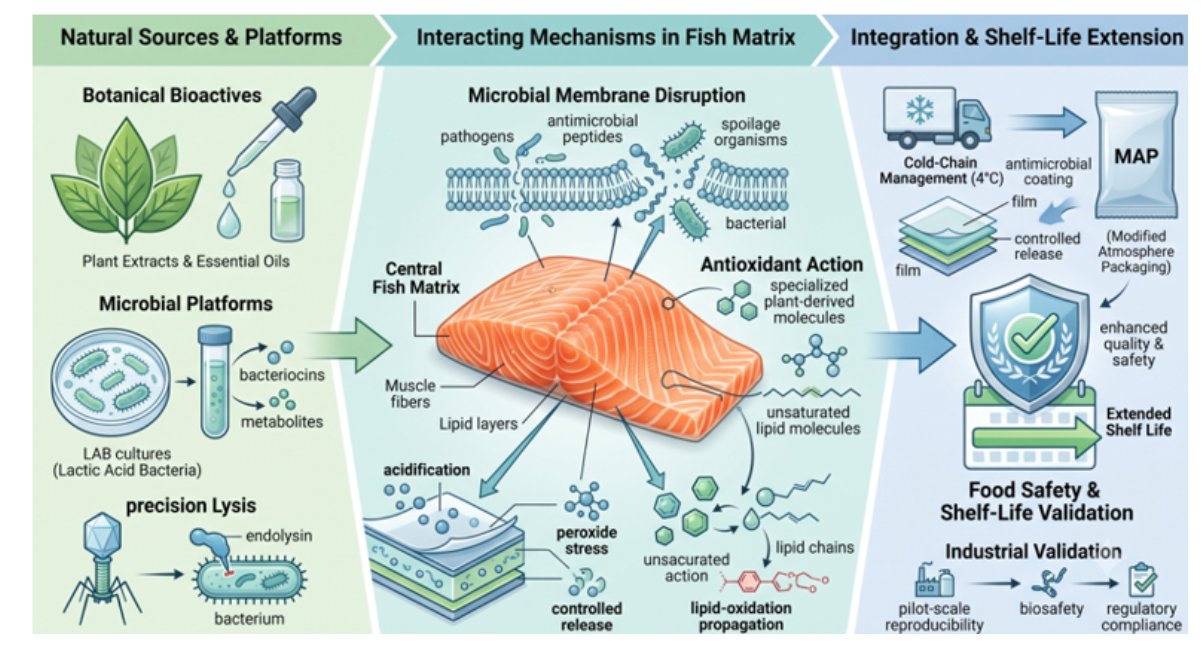
Evidence, not source identity alone, connects biological activity to fish preservation. The three outcome domains require separate measurements. Refrigeration and other processing hurdles complement the active; neither sensory acceptability nor lower total counts establish pathogen safety. The validation gate summarises the authors’ proposed translational priorities, not an established certification process.
Mechanistically, deterioration reflects interactions among en-dogenous enzymes, indigenous and contaminating microbiota, oxygen exposure, fish composition, processing history, and storage conditions [1,4,5]. The relevant endpoint is therefore not inhibition in a simplified assay alone, but reproducible control of defined hazards or spoilage processes in the intended product [6,7].
In this review, biopreservation is defined operationally as the deliberate use of microorganisms, bacteriophages, or biolog-ically derived antimicrobial, antioxidant, or barrier-forming agents to improve the safety or acceptable storage life of fish and seafood. Primary biopreservative agents include protec-tive cultures, lactic acid bacteria (LAB) and their metabolites, bacteriocins and bacteriocin-like inhibitory substances (BLIS), fermentation-derived organic acids, plant extracts and essential oils, bacteriophages, endolysins, and bioactive biopolymers or biologically loaded delivery systems. Refrigeration, modified-atmosphere packaging (MAP), high hydrostatic pressure, pulsed electric fields, pulsed light, ultrasound, cold plasma, irradia-tion, and related operations are treated here as complementary hurdles. They may enhance, stabilise, or enable a biological intervention, but are not themselves classified as biopreserva-tives.
The objective is to integrate microbial mechanisms, natural-product and fermentation processing, formulation engineering, fish-matrix validation, safety, and scale-up. The strongest published evidence is identified as such; interpretations drawn across studies are signalled as syntheses; and development priorities are explicitly presented as the authors’ proposed framework.
Previous reviews have usefully synthesised natural preservatives, essential oils, LAB, chitosan, and hurdle technologies, often as separate domains [6-10]. The novelty of the present review is its translation-oriented organisation of these domains into one evidence chain: bioactivity discovery → mechanistic attribution → standardised active → fish-matrix validation → formulation and delivery → refrigerated or cold-chain validation → sensory, safety, microbiome, and antimicrobial-resistance (AMR) assessment → pilot-scale validation → regulatory readiness. This is an integrative framework proposed by the authors, not a claim that every step has already been demonstrated for every technology.
LITERATURE SEARCH AND REVIEW METHODOLOGY
This is a structured critical narrative review, not a systematic review or meta-analysis. The available literature collection provided the starting set. During the final evidence audit on 6 September 2026, targeted online title, DOI, and topic searches were used to consult PubMed records, PubMed Central articles, publisher-hosted papers, and research-institution repositories; FDA and EFSA documents were consulted for regulatory exam-ples. This date records targeted verification, not an exhaustive literature-search cutoff. Recent primary studies, particularly from 2021–2026, were prioritised alongside foundational mech-anistic and fish-spoilage literature.
Thematic searches concerned fish/seafood biopreservation; pro-tective cultures and bacteriocins/BLIS; plant extracts and es-sential oils; chitosan, encapsulation and antimicrobial pack-aging; phages/endolysins; microbial communities and AMR; and temperature-dependent shelf-life modelling. Represen-tative combinations for these domains are (fish OR seafood OR salmon) AND (biopreservation OR bacteriocin OR pro-tective culture), and (fish OR seafood) AND (nanoemulsion OR active packaging OR phage OR microbiome OR shelf-life model); targeted searches also used individual study titles and identifiers. Eligible efficacy studies identified a post-harvest fish/seafood matrix, intervention, comparator, and microbial or quality endpoint. Mechanistic experiments, reviews, and official guidance were retained for their respective explanatory roles. Aquaculture-health studies without a post-harvest food endpoint and reports without an identifiable treatment or outcome were excluded from efficacy comparisons.
Titles and abstracts were assessed for relevance, followed by examination of accessible full texts contributing direct effi-cacy, mechanistic, safety, formulation, or translational evidence. Where full text was unavailable, interpretation was restricted to explicitly reported abstract information. Studies were com-pared by active/source, matrix, target, dose, application, storage conditions, comparator, and endpoint. Evidence was distin-guished as direct seafood efficacy, non-seafood transfer evidence, isolated-system mechanism, or author-proposed interpretation. Inoculated pathogens, surrogate organisms, naturally occurring spoilage flora, and chemical/sensory endpoints were kept sep-arate. Selection was purposive rather than exhaustive; there was no registered protocol, formal risk-of-bias score, or pooled estimate. Accessibility and heterogeneous study designs limit completeness and comparability. The evidence tables identify unavailable parameters and abstract-limited extraction rather than estimating values.
Spoilage as a Multidimensional Preservation Problem
The preservation target is not a single reaction. Autolysis changes tissue structure after death; oxidation degrades suscep-tible lipids and contributes to rancid odours and flavours; and microbial metabolism produces undesirable compounds and may compromise safety. The relative importance and rate of these processes vary with species, composition, harvest season, post-harvest handling, initial microbial load, processing history, and storage environment [1,11]. A treatment that is strongly antimicrobial may therefore fail to prevent oxidative rejection, whereas an antioxidant may retain chemical quality without adequately controlling pathogens or spoilage organisms.
Enzymatic autolysis must also be distinguished from microbial proteolysis. Endogenous enzymes remain active after harvest and contribute to softening and loss of structural integrity, whereas microbial enzymes become increasingly important as spoilage populations develop. Natural preservatives may delay the composite deterioration phenotype by suppressing mi-croorganisms, limiting oxidative damage to tissue components, or shifting pH away from conditions favourable to particular reactions. This does not demonstrate direct inhibition of every endogenous enzyme. A valid claim of anti-autolytic action requires enzyme-specific evidence or a design that separates en-dogenous change from microbial activity. Otherwise, improved texture retention should be interpreted as an integrated preser-vation outcome rather than proof of direct enzyme inhibition [1,2].
Pathogen studies require organism-specific measurement of hazards such as Listeria monocytogenes or pathogenic Vibrio, whereas spoilage studies examine total counts, specific spoilage organisms, metabolites and sensory rejection [4,5,12]. Quality indices include total volatile basic nitrogen (TVB-N), trimethy-lamine (TMA), pH, texture and thiobarbituric acid-reactive substances (TBARS), an oxidation measure [1,8]. None sub-stitutes for pathogen enumeration. Biogenic amines are not merely spoilage markers: histamine is a separate chemical safety hazard requiring its own endpoint [13]. The evidence tables consequently distinguish pathogen, surrogate, spoilage and quality outcomes.
Biological agents can complement refrigeration, MAP, and non-thermal processing [8,9]. Greater inhibition by a combination than by either component alone does not establish synergy. Ad-ditivity is agreement with a prespecified non-interaction model; synergy exceeds, and antagonism falls below, its expected effect. “Neutral” or “indifferent” should be defined operationally, be-cause checkerboard categories and dose–response models do not share identical boundaries [14,15]. Fractional inhibitory con-centration index (FICI) analysis compares combination MICs with individual MICs; Bliss independence and Loewe additivity use different reference expectations. Response surfaces and time–kill kinetics can test dose- and time-dependent departures from those expectations [15]. These are transferable analytical methods, not evidence of seafood efficacy. Protein binding, lipid partitioning, diffusion, and storage conditions may change the interaction in fish, requiring matrix-specific factorial validation [6,7].
Evidence Language and Translational Scope
The literature does not use “biopreservation” with complete uniformity. A relatively narrow definition centres on protective microorganisms and their metabolites, particularly LAB, bacteriocins, organic acids, and hydrogen peroxide [10,16]. Broader treatments include plant- and animal-derived antimicrobials, biopolymers, bacteriophages, and endolysins [8,17]. This breadth is useful for comparing natural alternatives, but it can obscure major differences in mechanism, regulatory status, standardisation, and safety assessment. A live protective culture, a purified peptide, a crude botanical extract, and a chitosan–essential-oil film are not interchangeable technologies. Evaluation should therefore specify the active material, its com-position, delivery vehicle, intended target, and role within the overall preservation system.
Throughout this review, “studies demonstrated” is reserved for results directly reported under the cited conditions. “Collectively, the evidence suggests” denotes synthesis across heterogeneous studies. “We propose” or “we recommend” identifies the authors’ translational framework. This distinction is important because a requirement for commercial development is not necessarily a universally tested biological law.
For translation, a candidate is more informative when its pro-duction platform, identity or composition, potency, stability, delivery method, intended target, and position within the processing chain are specified. These attributes permit replication and comparison; their absence does not negate observed activity, but lowers confidence that the intervention is a reproducible preservation preparation.
Bioprocessing Platforms and Mechanisms of Action
Biopreservation combines cellular, molecular and material functions, but each active has a restricted spectrum and operating range. Figure 1 separates antimicrobial routes from oxidation control and delivery functions; it is a mechanistic synthesis, not evidence that every route operates in each product [18-22].
Plant bioactives: discovery, extraction, and formulation engineering
Plant-derived materials constitute one of the most extensively developed natural-preservation strategies. Phenolics, essential oils, carotenoids, lignin-related compounds, and other phyto-chemicals can contribute antimicrobial and antioxidant func-tions [23]. Their antimicrobial action is generally interpreted as a concentration-dependent disturbance of microbial physiology rather than a single universal molecular event. Hydrophobic constituents of essential oils can associate with lipid-rich cel-lular envelopes, increasing permeability and disrupting the maintenance of ionic and energetic gradients [7]. Phenolic constituents can also interact with proteins and membrane struc-tures. At the product level, these effects are expressed as delayed microbial growth rather than guaranteed sterilisation, and their magnitude depends on compound composition, exposure time, target organism, and matrix conditions [7,8].
We propose linking botanical authentication, extraction, compo-sitional profiling, potency, stability, and delivery as one develop-ment process. This recommendation addresses the preparation-dependent variability described in the plant-preservation litera-ture [6,23]
Activity depends on the concentration reaching the microbial surface. Protein association and lipid partitioning can alter the freely available fraction, so a minimum inhibitory concentration (MIC) measured in broth is not a validated dose for fish tissue [6,7]. Matrix-specific dose and delivery trials are needed; retention of a hydrophobic constituent alone does not establish its availability to target cells.
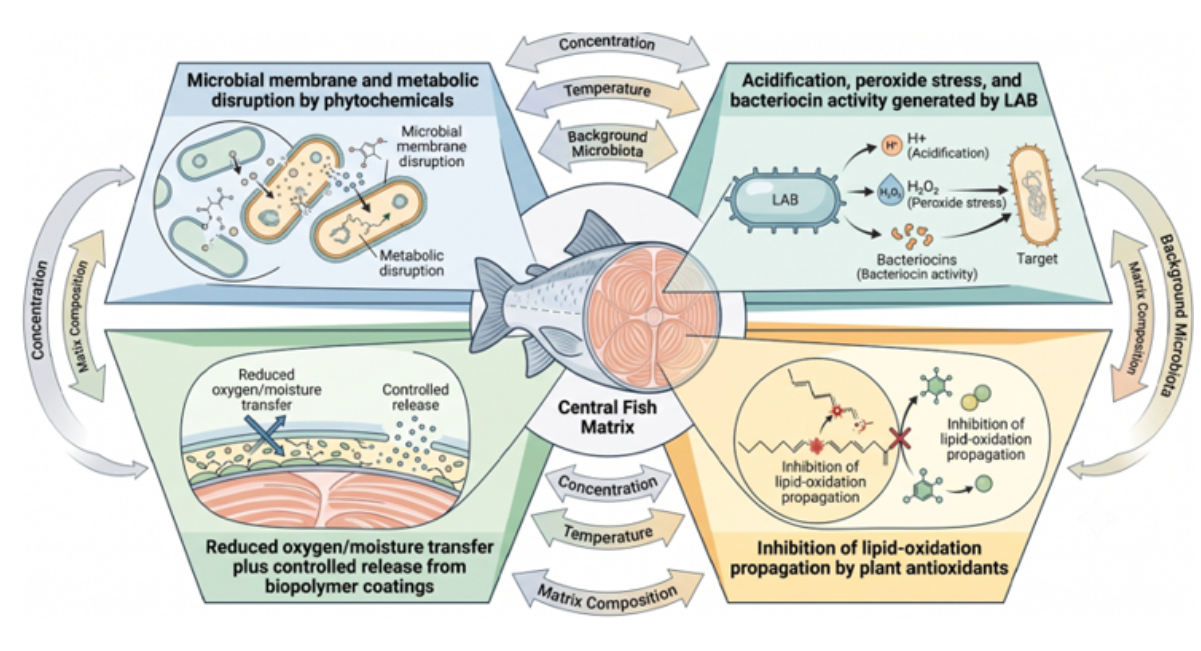
Figure 1: Mechanistic Landscape of Fish Biopreservation
Panel links describe candidate functions, not universal effects or equivalent efficacy. LAB, lactic acid bacteria; H2O2, hydrogen peroxide. Peptide action is molecule-specific, and phage infection is distinct from externally applied endolysin activity. Oxidation control and coating performance require their own measurements; neither establishes pathogen control or direct inhibition of endogenous fish enzymes. Conceptual synthesis of the mechanistic literature and target-defined fish evidence [18-22].
Antioxidant preservation is equally important because fish lipids are susceptible to oxidative deterioration. Plant-derived an-tioxidants can retard the propagation of oxidation by donating reducing equivalents to reactive intermediates or by otherwise limiting the availability and persistence of pro-oxidative species [6,23]. The practical outcome is delayed development of rancid odour and flavour, but the effect depends on whether active molecules remain stable, dispersed, and chemically available in the fish matrix. Antioxidant activity measured in a simpli-fied chemical system therefore cannot be assumed to persist unchanged in tissue containing water, salt, protein, endogenous enzymes, pigments, and highly unsaturated lipid substrates [6,23].
Antioxidant and antimicrobial functions may occur simultane-ously, but they should be evaluated independently. A treatment can suppress microbial growth while failing to protect suscepti-ble lipids, or it can delay oxidative rancidity without controlling safety-relevant organisms. Plant-derived preservation stud-ies therefore require parallel microbiological, chemical, and sensory endpoints. This is particularly important because an extract that delays one deterioration pathway may alter colour, odour, or flavour at the concentration required to control another. The technically optimal concentration is thus not necessarily the concentration producing the largest inhibition zone or the strongest antioxidant response; it is the lowest formulation that provides balanced product protection without unacceptable sensory change [7,8,23].
“Plant extract” is not a chemically invariant intervention. Botan-ical identity, plant part, growing and processing conditions, solvent polarity, extraction time and temperature, concentra-tion procedure, and subsequent storage can alter the recovered mixture. Presenza et al. [6] identify procurement, extraction, application, and composition as determinants of technical per-formance and industrial feasibility. Polar extraction conditions preferentially recover different constituents from those obtained with less polar solvents, while excessive thermal exposure can change heat-sensitive compounds [6,23]. Consequently, studies using nominally similar botanical sources may not test equiva-lent preparations. Without compositional characterisation or marker-based standardisation, differences in antimicrobial or antioxidant performance cannot be attributed confidently to fish species or treatment conditions alone.
Essential oils can be applied directly or through coatings and emulsions, but volatility, dispersion, and sensory intensity con-strain dosing [7]. In flathead mullet at 2 ◦C, grape/cinnamon-oil nanoemulsions yielded mesophilic and psychrotrophic counts up to 1 and 1.5 log CFU/g below controls, respectively. Cru-cially, sensory shelf life was 14 versus 10 days, whereas the microbiological endpoint was 12 versus 10 days [24]. These are different endpoints, not competing estimates of a universally acceptable storage period.
Chitosan–cinnamon coating maintained trout acceptability for 16 rather than 10 days [25]; a chitosan–ginger-oil film main-tained barracuda acceptability for 20 rather than 12 days at 2 ◦C [26]. These studies support selected formulations, not a ranking of films against nanoemulsions: fish composition, initial flora, dose, carrier, temperature, and rejection criteria differed. Within-study carrier-only and active-only controls are more informative about formulation benefit than nominal shelf-life gains across studies.
Delivery format changes both exposure kinetics and the interpretation of efficacy. Immersion can provide rapid surface contact but may produce uneven uptake and losses into the treatment solution; spraying can reduce the quantity applied but depends on surface coverage; and incorporation into a film or nanoemulsion can slow volatilisation and extend release. Controlled release is advantageous only when the active concentration at the food surface remains above the effective level throughout storage. Excessively slow release can yield inadequate early control, whereas rapid release can recreate the sensory and stability limitations of direct application. Formulation studies should therefore relate release behaviour to microbial growth, oxidation, and sensory acceptance over the full intended storage period [6,7]
The principal gap is now comparability: fish trials support particular preparations, but variable composition, dose and sensory thresholds obstruct transfer to other products [6,7]. We therefore treat formulation complexity as a design feature, not an evidence-maturity criterion.
Protective cultures, bacteriocins, and microbial cell factories
LAB-based preservation constitutes a microbial bioprocessing platform that can deploy viable protective cultures, controlled fermentations, cell-free metabolite preparations, or purified antimicrobial peptides. LAB function as microbial cell fac-tories for organic acids, hydrogen peroxide, bacteriocins, and other inhibitory metabolites [16]. Bacteriocin yield, spectrum, stability, and process compatibility depend on strain identity, fermentation conditions, downstream recovery, and formula-tion. In fish products, protective cultures and their metabolites therefore require strain-level authentication and process control before they can be treated as reproducible preservation systems [10].
The choice between a live culture and a prepared metabolite sys-tem has major technological consequences. A viable protective culture may continue producing inhibitory metabolites during storage and can respond dynamically to the product environment. Its efficacy, however, depends on survival, growth, substrate availability, temperature, salt concentration, and competition with the indigenous microbiota. A cell-free preparation or purified bacteriocin offers more controllable dosing and avoids continued microbial metabolism, but its activity can decline through dilution, adsorption to tissue components, enzymatic degradation, or uneven distribution. These approaches should therefore be evaluated as distinct preservation formats rather than as interchangeable expressions of LAB activity [10,16,17].
The principal interpretive challenge is causal resolution. In a culture-based system, pathogen or spoilage suppression may result from acidification, nutrient competition, peroxide production, bacteriocin activity, or interactions among these factors. Organic-acid accumulation lowers extracellular pH and in-creases exposure to undissociated acid, while hydrogen peroxide imposes oxidative stress on susceptible cells [10,16]. Bacteriocins act as antimicrobial peptides or proteins, but activity varies with bacteriocin class, target-cell envelope, concentration, and environmental conditions [16]. Unless experiments use neutralised cell-free supernatants, catalase treatment, protease sensitivity, purified fractions, or comparable controls, inhibition cannot be attributed specifically to a bacteriocin-like inhibitory substance. Evidence for LAB-mediated preservation is there-fore stronger than evidence assigning every observed effect to one molecule or mechanism.
A mechanism-discriminating sequence can strengthen BLIS identification. Activity retained after pH neutralisation is less readily explained by acidity alone; loss of activity following catalase treatment implicates hydrogen peroxide; and sensitivity to proteolytic enzymes supports the involvement of a proteina-ceous inhibitor. Heat, pH, and storage-stability testing can then establish whether the inhibitory preparation is compatible with processing and refrigerated distribution. Even this sequence does not replace purification or molecular identification, but it separates a general inhibitory supernatant from a more de-fensible bacteriocin-like preparation and reduces the risk of assigning multi-metabolite activity to a single peptide [16,17].
Lactocin 63 illustrates an evidence chain rather than a single efficacy claim. Han et al. [27] purified and characterised the peptide, then used flow cytometry and microscopy to investigate envelope disruption in isolated Shewanella putrefaciens. The subsequent seabass trial addressed community and quality out-comes [28]. The first study supports mechanism in a laboratory system; the second supports product-level performance. Neither alone establishes that every quality benefit in fish is caused by the same membrane event.
Bacteriocin spectrum is another critical constraint. A narrow spectrum may be valuable when a defined organism is the principal target, but it may have little effect on the mixed succession of spoilage bacteria present during chilled storage. Conversely, broad inhibition can disturb microbial ecology in ways that are not fully predicted by single-strain assays. Candidate bacteriocins should therefore be screened against relevant fish-associated organisms and then tested within mixed microbiota and product matrices. The preservation endpoint must include both the intended target and the possibility that non-susceptible organisms become dominant after treatment [9,10,16].
Stupar et al. [29] found that four LAB candidates inhibited listeriae in vitro, but only Carnobacterium maltaromaticum 35 restrained Listeria innocua in vacuum-packed raw salmon. This surrogate study demonstrates strain-dependent transfer to the fish matrix, not direct control of pathogenic L. monocytogenes.
Chen et al. [30] compared 25 and 250 ppm nisin in low-inoculum cold-smoked salmon. The higher dose reduced L. monocytogenes prevalence more effectively, with strain-dependent responses. This experimentally inoculated design is not natural-contamination evidence; it illustrates why dose and strain coverage must accompany a bacteriocin efficacy claim.
Fermentation time is process-specific. The 48-h fermented alginate preparation outperformed the 24-h sea-bass coating [31], whereas extending soy-whey fermentation from 24 to 48 h did not further improve antimicrobial performance in oysters [32]. Longer fermentation therefore cannot be assumed to give better preservation across processes.
Cold storage is an ecological selection pressure, not a passive background condition. An alginate coating fermented with Lactobacillus reuteri and glycerol delayed major spoilage groups and preserved sensory quality of sea-bass fillets at 4 ◦C; the 48-h fermented formulation outperformed the 24-h formulation [31]. This fish-specific study supports a reuterin-generating coating strategy, whereas broad claims about protective cultures still require strain-, product-, and temperature-specific evidence.
The within-study advantage of the 48-h over the 24-h fermen-tation is more informative mechanistically than a comparison with unrelated coatings because fermentation time and reuterin concentration changed within the same platform [31]. Even so, the treatment combined alginate, viable or fermentation-derived components, glycerol conversion, and surface-barrier effects. In contrast, the salmon organic-acid experiment applied chemically defined salts at a fixed concentration [33]. The former tests a dynamically generated multi-component system, whereas the latter provides stronger control over dose identity; neither design alone establishes whether gradual metabolite production is superior to direct addition.
Microbial organic acids and multi-metabolite bioprocesses
Organic acids illustrate the interface between controlled fermen-tation and food-process engineering. They may be generated in situ by protective cultures, recovered from fermentation, or incorporated as defined additives, while their antimicrobial per-formance depends on acid identity, dissociation behaviour, dose, distribution, and the buffering capacity of the fish matrix [8,16]. Consequently, source alone is less informative than production route, chemical specification, and process-controlled exposure.
The antimicrobial effect of an organic acid is governed by more than the measured bulk pH. Acid identity and dissociation behaviour determine the proportion present in the undissoci-ated form, while product composition governs buffering and distribution. Two treatments producing a similar bulk pH may therefore exert different inhibitory pressures if they differ in acid species, local concentration, or retention at the fish surface. This distinction is especially relevant when comparing direct acid dips with acids produced gradually by LAB, because the latter occur alongside other metabolites and biological competition [8,10,16].
For analytical purposes, the critical questions are concentration, acid dissociation under product conditions, method of applica-tion, distribution through tissue, buffering capacity, and sensory consequences. The undissociated form of an organic acid can cross susceptible microbial membranes more readily than the dissociated form. Dissociation within the comparatively neutral cytoplasm then imposes proton stress and anion accumulation, requiring energy-dependent homeostatic responses and interfer-ing with normal metabolism [8,16]. Fish muscle can buffer added acid, however, so the nominal treatment concentration does not necessarily determine the pH or undissociated-acid exposure at every point in the product. Surface dipping, in-corporation into a coating, and generation by an active LAB culture therefore create different spatial and temporal exposure profiles.
Acidification can contribute directly to microbial control, but it can also confound claims that a crude microbial preparation contains a peptide inhibitor. Conversely, neutralisation dur-ing mechanistic testing may underestimate how the complete metabolite mixture functions in an applied preservation sys-tem. Mechanistic assays and product trials therefore answer different questions and should be linked rather than treated as substitutes. Organic acids may also influence enzyme activity and protein structure through pH modification, but preserva-tion benefits must be balanced against acid-induced changes in texture, flavour, and appearance.
Application method determines the spatial pattern of acid exposure. A brief dip acts mainly at the surface unless diffusion continues during storage, whereas incorporation into a coating can retain acid close to the product–environment interface. Acid generated by a live culture develops progressively and may vary spatially with microbial growth. These formats can produce different microbial and sensory outcomes even at the same nominal dose. Product trials should therefore report treatment concentration, exposure time, pH evolution, storage temperature, and the relationship between microbiological control and changes in texture or flavour [8,10].
Organic acids can also function as one component of a multi-metabolite hurdle. Acid stress may increase the burden placed on microbial homeostasis while bacteriocins, peroxide, refrig-eration, or packaging impose additional constraints. Such combinations may permit lower concentrations of individual agents, but synergy should be demonstrated rather than as-sumed. Factorial designs comparing acid alone, the second hurdle alone, and their combination are needed to determine whether the observed improvement is additive, synergistic, or simply dominated by one treatment [9,17].
The sliced-salmon trial provides a useful controlled comparison of acid identity: at the same 2.5% treatment concentration, sodium acetate produced an estimated 15-day shelf life, whereas sodium lactate and sodium citrate each produced 12 days, compared with 8 days for the untreated control [33]. Because fish matrix, application method, concentration, and storage conditions were held within one experiment, this difference more directly supports acid-specific performance than comparisons across species. It does not, however, distinguish antimicrobial effects from changes in oxidation, sensory perception, or tissue chemistry unless these endpoints are interpreted together.
Biopolymer platforms and functional delivery systems
Recent fish-matrix work illustrates the distinction between active identity and delivery material. Li et al. [34] embedded bacteri-ocin CAMT6 in emulsion-electrospun polycaprolactone/lecithin fibres and reported slower microbial growth, oxidation, and water loss in chilled salmon. This is a bioactive-loaded synthetic-polymer package, not evidence that the complete film is a natural edible coating. Likewise, 1018K6 is a designed synthetic an-timicrobial peptide, not a bacteriocin produced by a protective culture [35]. These examples are included as bioinspired deliv-ery comparators; neither packaging sophistication nor improved storage indices alone demonstrate controlled release as the causal mechanism.
Animal-derived antimicrobials and biopolymers provide a biomaterials-engineering platform for fish preservation. Beyond intrinsic antimicrobial activity, these materials can be designed as carrier matrices, oxygen or moisture barriers, immobilisation surfaces, and controlled-release systems. Chitosan-containing coatings combined with essential oils exemplify the convergence of bioactive selection with polymer formulation, interfacial ad-hesion, permeability control, and release engineering [7,8]. Biosource traceability and allergen assessment remain essential design constraints.
The performance of a biopolymer coating depends on its physi-cal continuity, adhesion to the fish surface, permeability, and compatibility with the active compound. A discontinuous coat-ing may provide little barrier effect, whereas a highly restrictive film can alter moisture conditions or product appearance. The carrier may also change the apparent activity of the incorporated preservative by modifying solubility, diffusion, volatility, or contact with microorganisms. Consequently, coating thickness, formulation, drying conditions, and active-compound loading should be considered integral treatment variables rather than ancillary processing details [7,8].
This multifunctionality complicates experimental attribution. A coating can modify oxygen transfer, moisture exchange, surface colonisation, and retention of an active compound simultane-ously [7,8]. Reduced oxygen transfer can slow oxidative reac-tions, while immobilisation of an antimicrobial near the surface can increase exposure at the site where contamination is often concentrated. Appropriate controls should therefore include the untreated product, carrier alone, active compound alone, and combined formulation. Without this factorial structure, enhanced storage performance cannot be assigned confidently to the antimicrobial, the physical barrier, or their interaction.
Coatings also create a potential route for reconciling antimi-crobial efficacy with sensory acceptability. Retaining an active compound at the surface and releasing it gradually may reduce the total quantity needed compared with unrestricted direct addi-tion. However, the same retention can concentrate odour-active constituents near the consumer-facing surface. Sensory testing must therefore be conducted throughout storage and linked to release behaviour, microbial control, and oxidative stability. Safety evaluation must additionally consider the biopolymer source, possible allergenicity, and the intended conditions of consumption [7,8].
Cross-study patterns are consistent with multifunctionality but do not resolve causation. Chitosan alone improved microbial, chemical, and sensory indices in silver carp stored at −3 ◦C [36]; chitosan combined with cinnamon oil extended rainbow- trout acceptability to 16 days [25]; and a chitosan–ginger-oil film extended barracuda acceptability to 20 days [26]. The first study shows that the polymer carrier can contribute preservation effects without an essential oil, whereas the latter studies show performance of combined systems. Without harmonised carrier-only, active-only, and combined controls under the same fish and temperature conditions, the larger nominal shelf-life values in active films cannot be attributed quantitatively to essential-oil addition or controlled release.
Bacteriophages, endolysins, and precision antimicrobials
Bacteriophages and endolysins represent precision antimicro-bial tools whose host range, lytic performance, stability, and delivery can potentially be selected or engineered [16,17]. Their specificity is advantageous when a defined pathogen or spoilage organism is the principal target, but it can limit control of complex microbial communities. Product development must therefore incorporate host-range mapping, resistance surveil-lance, genomic and biosafety assessment, matrix-dependent activity testing, and compatibility with complementary hurdles.
Phage specificity creates both precision and vulnerability. A phage can target a defined bacterial host while leaving other microorganisms relatively unaffected, but efficacy may be lost when the target population is heterogeneous or develops re-sistance. A preparation intended for fish preservation must therefore be matched to the relevant target strains and evaluated in the presence of the broader product microbiota. Activity observed in broth does not ensure equivalent performance on fish surfaces, where spatial separation, adsorption to tissue, and limited encounter between phage and host may reduce effective contact [16,17].
Endolysins provide a related but distinct strategy because the an-timicrobial agent is the lytic enzyme rather than the replicating phage. This can simplify dose control and avoid dependence on phage replication, although activity still depends on target accessibility and environmental stability. Protein engineering and related approaches are discussed as routes for modify-ing potency or spectrum, but such development increases the importance of safety, production consistency, and regulatory assessment [16,17].
Negative matrix-transfer evidence is particularly instructive. Misiou et al. [37] combined endolysin PlyP825 with high hydro-static pressure against L. monocytogenes. Enhanced inactivation and storage control reported in milk and mozzarella were not reproduced in smoked salmon. This directly limits extrapolation from dairy to seafood and shows why a combination described as synergistic in one food cannot be assumed to retain that interaction in another. It does not establish that all endolysins fail in salmon.
Fish-specific phage evidence is target-defined. VPT02 yielded up to 3.9-log lower Vibrio parahaemolyticus counts than un-treated raw-fish controls [22]. With the three-phage cocktail SPMIX3-156, total viable counts in inoculated catfish fillets were 3.21 log lower than controls after one day at 25 ◦C and 2.75 log lower after ten days at 4 ◦C; pH, TVB-N, and sensory indices also improved [38]. Differences from growing controls are not necessarily equivalent to killing the same number of organisms relative to the initial load.
The two phage studies answer different preservation questions. VPT02 demonstrated rapid, pathogen-specific decontamination in a short ready-to-eat fish challenge, whereas SPMIX3-156 examined longer-term suppression of named spoilage organisms and associated quality change. The larger VPT02 reduction therefore should not be interpreted as evidence that a single phage is more effective than a cocktail: target organisms, inocula, phage doses, matrices, temperatures, sampling times, and endpoints differed. Both studies used inoculated systems, so naturally contaminated products, strain coverage, resistant survivors, and lot-to-lot reproducibility remain necessary before broad shelf-life or safety claims are made [22,38].
The most defensible near-term role for phages and endolysins is therefore within a target-defined hurdle system. Refrigeration, hygienic handling, packaging, or another natural antimicrobial can control the broader spoilage environment while the bio-logical agent addresses a specific organism. Validation should include emergence of resistant survivors, persistence of activ-ity during storage, effects of formulation and packaging, and confirmation that selective removal of one organism does not permit undesirable replacement by another. These requirements explain why promising specificity does not yet equate to a general-purpose fish preservative [9,17].
The principal natural biopreservative classes, their proposed antimicrobial and physicochemical functions, the fish matrices represented, and their major limitations are synthesised in Table 1; representative quantitative fish and seafood studies are compared in Table 2.
BIOPROCESS INTEGRATION, HURDLE ENGINEERING, AND SCALE-UP
Biological agents are most plausibly deployed as unit operations within an engineered hurdle process rather than as replacements for hygienic manufacture or temperature control. Process integration may combine protective cultures, metabolites, or bioactive carriers with modified atmospheres, active packaging, edible films, high hydrostatic pressure, pulsed electric fields, pulsed light, ultrasound, plasma, or electrolysed water [3,9,12]. The process-design objective is to achieve complementary control at lower individual treatment intensities while preserving nutritional and sensory quality.
Microbial control is generally encouraging, but technologies are at different stages of development and are not equally ready for industrial use [12]. Laboratory effectiveness does not guar-antee performance at production scale, where product geometry, equipment throughput, cold-chain variability, packaging atmo-sphere, initial contamination, and consumer handling affect outcomes. Tsironi et al. [9] identify limited dissemination of validated laboratory results to the seafood industry as a barrier to uptake. This is not merely a communication problem: it indicates a validation gap between controlled experiments and operationally reproducible processes.
Hurdle design must also avoid assuming that every combina-tion is beneficial. A treatment may reduce microbial counts while accelerating oxidation, changing texture, or producing unacceptable flavour. Similarly, stress imposed by one hurdle may alter microbial susceptibility to another [9]. Robust studies should therefore measure microbiological safety and spoilage, chemical deterioration, sensory acceptance, and nutritional quality over the same storage period. Shelf life should be defined by a pre-specified endpoint rather than inferred from a single favourable indicator.
Table 2 replaces qualitative hurdle expectations with representa-tive quantitative fish/seafood studies. Heterogeneity in species, dose, packaging, temperature, and endpoint prevents ranking treatments as if they were tested head-to-head.
Bioprocessing Constraints and Translational Outlook
Standardisation of biological inputs and performance end-points
The literature covers crude extracts, essential oils, purified or semi-purified metabolites, viable cultures, organic acids, coatings, and advanced processing technologies. Such breadth demonstrates innovation but weakens direct comparison. Treat-ment identity and dose may be expressed differently; applica-tion can involve dipping, spraying, incorporation into films, or processing-mediated delivery; and outcomes may include inhibition zones, microbial counts, oxidation indices, sensory scores, or nominal shelf-life extension [6,7] These endpoints do not provide equivalent evidence.
Process standardisation should define critical quality attributes for each platform, including strain identity, viable count or metabolite potency, chemical fingerprint, particle or film properties, release behaviour, and stability throughout manufacture and storage.
In vitro screening is useful for prioritising candidates but does not reproduce the buffering capacity, lipid and protein interactions, spatial heterogeneity, or mixed microbiota of fish tissue. Matrix-based storage studies are more relevant, yet they remain difficult to compare when fish species, cut, fat content, initial load, packaging, and temperature differ. The recurring dependence of efficacy on food characteristics and processing conditions indicates that preservation performance is system-specific rather than an intrinsic constant of the active compound [1,7].
Mechanistic validation and molecular attribution
For mixed extracts and culture supernatants, inhibition does not identify the causal molecule [6,18]. We recommend combining fractionation, identity/purity measurements, mechanism-discriminating controls and dose–response analysis, then checking whether the identified activity persists in fish. The distinction between lactocin 63 characterisation and its later seabass application illustrates this separation [27,28].
Mechanistic confidence requires convergence among chemical identification, fractionation or purification, loss-of-function con-trols, dose–response behaviour, and activity in the target matrix. Composition, extraction, and delivery are repeatedly identified as central variables [6]. Claims about specific molecular action should therefore remain provisional when this evidential chain has not been completed.
Biosafety, sensory compatibility, and regulatory readiness
Natural origin is not equivalent to safety or acceptability. Animal-derived agents may pose allergen concerns [8], essential oils can face consumer-acceptance and regulatory constraints, and effective concentrations may be limited by their sensory effects [7]. Live cultures additionally require strain-level safety assessment and predictable behaviour in the product environment. Engineered phages raise separate safety and regulatory questions [16].
For microbial agents, EFSA’s characterisation guidance ad-dresses strain identity, genetic modifications, AMR and virulence determinants, and residual cells, DNA, or substances of concern in resulting products [39]. These principles inform the class-specific questions in Table 3; the table is an author synthesis, not an exhaustive statement of legal requirements. Exposure, formulation, and intended food use remain essential to interpretation.
Natural additives are frequently framed as alternatives to syn-thetic preservatives, but comparative risk and benefit cannot be inferred from origin or consumer preference. Legal status is product-, use-, dose-, and jurisdiction-specific. For example, EFSA’s Qualified Presumption of Safety approach pre-assesses eligible microbial taxonomic units but retains strain- or use-specific qualifications, including AMR considerations [40]. In the United States, FDA “no questions” conclusions apply to the notified substance and intended conditions; they are not universal approvals for all phages or foods. A 2025 notice covered a defined Listeria monocytogenes-specific phage preparation for specified foods including fish at 106–107 PFU/g [41].
|
Agent or system |
Principal mechanism |
Direct fish/seafood evidence |
Control objective |
Major qualification |
|
Plant extracts / essential oils |
Membrane disruption; radical-scavenging or metal-chelating activity for some constituents. |
Fillets, burgers, mince, shrimp, and other seafood matrices; quantitative examples appear in Table 2 [6,7]. |
Usually spoilage and oxidation; pathogen control only when a named pathogen is measured. |
Botanical identity, extraction, composition, dose, volatility, and sensory threshold prevent class-wide efficacy claims. |
|
Protective cultures |
Competition plus production of acids, peroxide, reuterin, bacteriocins, or other metabolites. |
Fermented alginate–L. reuteri coatings delayed spoilage of sea bass at 4 °C [31]. |
Spoilage, or a named pathogen when challenge-tested. |
Viability, metabolic activity, sensory effects, AMR/virulence screening, and cold-growth behaviour are strain-specific. |
|
Bacteriocins / other antimicrobial peptides |
Target-envelope binding, pore formation, or other peptide-specific effects. |
Lactocin 63 inhibited seabass deterioration [28]. The synthetic peptide 1018K6 is a separate, non-bacteriocin packaging example [35]. |
Spoilage and/or pathogen control, depending on spectrum and design. |
Activity can be lost through adsorption, proteolysis, dilution, or insufficient release; BLIS claims need mechanism-discriminating controls. |
|
Organic acids |
Undissociated-acid uptake, proton stress, and anion accumulation. |
A 2.5% dip in sodium acetate, lactate, or citrate extended refrigerated salmon shelf life from 8 days to 15, 12, or 12 days, respectively [33]. |
Predominantly spoilage control unless pathogens are enumerated. |
Acid identity, buffering, local pH, exposure, and sensory effects determine performance. |
|
Bioactive biopolymers |
Intrinsic antimicrobial activity for some polymers plus barrier, immobilisation, and controlled-release effects. |
Chitosan/ginger-oil film maintained barracuda acceptability for 20 versus 12 days at 2 °C [26]. |
Spoilage and oxidation; pathogen claims need organism-specific data. |
Molecular weight, deacetylation, source, allergenicity, film integrity, and migration/release require definition. |
|
Bacteriophages / endolysins |
Host-specific infection and lysis, or externally delivered peptidoglycan hydrolysis. |
VPT02 reduced inoculated V. parahaemolyticus on raw fish slices by up to 3.9 log; a Shewanella cocktail inhibited catfish-associated spoilers [22,38]. |
Pathogen or spoilage control is target-specific. |
Host range, resistant survivors, genomic safety, titre stability, matrix contact, and jurisdiction-specific authorisation limit generalisation. |
Table 1: Biopreservative Classes, Mechanisms, Direct Fish/Seafood Evidence, and Evidential Qualifications
AMR, pathogen replacement, and microbiome effects
AMR is a food-chain safety concern, but resistance to a preser-vative, transient stress tolerance, and resistance to therapeutic antibiotics are not interchangeable. A laboratory nisin-resistant L. monocytogenes phenotype showed cross-resistance to other bacteriocins [42]; this is not evidence that nisin treatment selects clinically relevant antibiotic resistance in fish. For live protective cultures, acquired AMR determinants and their potential dissemination require strain-level assessment [39]. We propose comparing pre- and post-exposure susceptibility, persistence after removal of the treatment, and relevant resistance determinants in repeated-exposure fish trials. Broad-spectrum treatments could impose selective pressure, but the direction and magnitude of AMR selection must be demonstrated for the particular system.
Community replacement is experimentally distinguishable from AMR selection. Packaging altered both succession and sensory shelf life in lightly salted grass carp [43], and temperature-associated communities were reported in eastern little tuna [44]. Direct intervention evidence also exists: lactocin 63 altered seabass communities, including spoilage-associated genera, while slowing quality deterioration [28]. Such findings justify tracking non-target survivors but do not demonstrate emergence of a replacement pathogen. Broad-spectrum actives and live cultures warrant community-level assessment because total counts alone cannot establish which organisms persist or dominate.
We propose a question-led monitoring panel: culture-based counts for recoverable organisms; target-specific quantitative PCR (qPCR) for selected organisms or genes; 16S rRNA gene sequencing for bacterial community structure; shotgun metage-nomics for broader taxonomic and functional-gene profiles; and metatranscriptomics where gene expression is the question. Genomic hazard characterisation provides a starting point, not proof of gene transfer or expressed resistance [39]. Relative sequencing abundance should be paired with absolute-load measurements: quantitative profiling demonstrated this methodological need in human gut samples, not seafood [45]. DNA detection alone is not a viability endpoint, and 16S profiling cannot establish an AMR phenotype. We therefore recommend linking molecular profiles to isolate susceptibility, named hazards, spoilage metabolites, and sensory outcomes.
|
Active / source |
Product, target and treat-ment |
Microbial load and effect |
Quality and storage-life out-come |
Comparator / limitation / source |
|
Acetate, lactate or |
Salmon slices; chemi- |
Initial/final microbial counts and |
Estimated shelf life: 15/12/12 |
Untreated salmon. Chemi- |
|
citrate salts |
cal/sensory quality. 2.5% aqueous dips; 1 ◦C. |
numerical log difference NR; no pathogen reduction inferred. |
d, respectively, versus 8 d con-trol. Lower TVB-N, TMA and nucleotide-degradation indices. |
cal/sensory outcomes do not quantify microbial killing; acid salts, not live fermentation. [33] [A]. |
|
Chitosan + cinna- |
Rainbow trout; spoilage |
Initial/final counts and numerical |
Reduced oxidation and TVB-N; |
Untreated and coating com- |
|
mon oil |
flora. Coating: 2% chitosan + 1.5% oil; 4 ± 1 ◦C, 16 d. |
log difference NR; lower viable and psychrotrophic counts. |
acceptability to 16 d versus 10 d control. |
parisons. No named-pathogen challenge; endpoints cannot establish sterilisation. [25] [A]. |
|
Chitosan + ginger |
Barracuda steaks; spoilage |
Initial/final counts and numerical |
Lower TVB-N; sensory accep- |
Unwrapped and EVOH- |
|
essential oil |
flora. Film with 0.3% oil; 2 ◦C, 20 d. |
log difference NR; mesophilic counts lower than controls. |
tance for 20 d versus 12 d. |
packaged controls. Demon-strates combined-film perfor-mance, not pathogen safety. [26]. |
|
Grape/cinnamon-oil |
Flathead mullet; mesophiles |
Initial/final counts NR. Up to 1 |
Sensory shelf life 14 versus 10 |
Untreated fillets. Different |
|
nanoemulsions |
and psychrotrophs. Oil-in-water application; dose NR; 2 ◦C, 14 d. |
log lower mesophiles and 1.5 log lower psychrotrophs than control. |
d; microbiological shelf life 12 versus 10 d. Oxidation and pH/TVB-N changes delayed. |
endpoint-based shelf lives must be retained separately. [24] [A]. |
|
Chitosan |
Silver carp; total viable flora. 2% aqueous coating; −3 ◦C, 30 d. |
Initial TVC 2.9 log CFU/g; treated day-30 count 6.9 log CFU/g. Numerical difference from control NR. |
Chemical indices and sensory quality better retained; numeri-cal shelf-life extension NR. |
Uncoated control. Subzero-storage evidence; counts still increased from baseline. Not a bactericidal reduction. [36] [A]. |
Table 2: Fish/seafood efficacy evidence separated by microbial, quality, and shelf-life endpoints.
Part A: acids, oils and coatings. Only endpoints explicitly reported in the cited source text are presented; no missing counts or effects were reconstructed from graphs. NR = not reported in the source text available for this extraction. [A] identifies abstract-limited extraction: NR in these rows does not establish that the full paper omitted the measurement. Unless stated otherwise, initial and final loads are in log10 CFU/g; an effect expressed as “lower than control” is a between-group difference at the same time, not necessarily a decrease from the initial load. Shelf-life pairs retain the authors’ reported endpoints rather than a calculated common extension. TVC, total viable count; TVB-N, total volatile basic nitrogen; EVOH, ethylene–vinyl alcohol.
Bioprocess Robustness, Reproducibility, And Independent Validation
The selected studies reveal different sources of variability: nisin dose and strain susceptibility [30], fermentation duration [31,32], and failure to transfer laboratory or dairy results to fish [29,37]. We therefore recommend independent batches and laboratories, reference preparations, explicit processing parameters, and common endpoint definitions before extending product-specific claims.
In industry-processed cold-smoked salmon, Heir et al. [46] demonstrated lower L. monocytogenes levels without lower final total aerobic counts from nisin/phage treatment. Fermentates shifted community dominance, while warmer storage increased growth. This separates pathogen control from overall counts and improves manufacturing relevance, without establishing independent multi-site commercial validation.
Predictive modelling can connect microbial or quality trajec-tories to temperature and storage duration. Primary models describe change over time under specified conditions; sec-ondary models relate kinetic parameters to temperature or other product factors; tertiary tools implement those mod-els for decision support. Ntzimani et al. [13] used Baranyi and temperature-dependent modelling for chilled mullet and validated predictions under fluctuating temperatures. Their aerobic-slice quality study and separate Morganella morganii-inoculated sterile-mince histamine experiments must not be treated as one natural-contamination trial. The work supports dynamic cold-chain validation, but not a validated model for any added biopreservative. We recommend recalibration and external validation when an active, salt level, atmosphere, or matrix changes, with uncertainty and the limiting safety or sensory endpoint carried into any decision-support tool.
|
Active / source |
Product, target and treat-ment |
Microbial load and effect |
Quality and storage-life out-come |
Comparator / limitation / source |
|
Fermented alginate / |
Sea bass; spoilage groups. |
Initial/final counts and numer- |
Colour, texture and sensory qual- |
Within-study fermentation |
|
L. reuteri + glycerol |
Coatings fermented for 24 or 48 h; dose and storage duration NR; 4 ◦C. |
ical log difference NR; 48-h preparation delayed growth more effectively. |
ity better preserved; numerical extension NR. |
comparisons. Effect cannot be assigned to purified reuterin alone. [31] [A]. |
|
Synthetic peptide |
Dolphinfish burgers; hy- |
Initial/final counts NR; approxi- |
Freshness and sensory findings |
Unfunctionalised packaging. |
|
1018K6 / polypropy- |
giene indicators and specific |
mately 1 log CFU/g below con- |
favoured active packaging; nu- |
Peptide is not a fermentation- |
|
lene (PP) |
spoilage organisms. Func-tionalised disks contacting both surfaces; loading NR; refrigerated storage. |
trol. |
merical extension and oxidative effect NR. |
derived bacteriocin; surface contact limits transfer to other formats. [35]. |
|
Lytic phage VPT02 / |
RTE raw fish slices; inocu- |
Initial/final counts NR; up to |
Oxidative, physicochemical, |
No-phage control. Pathogen |
|
oyster isolate |
lated V. parahaemolyticus. MOI 10; temperature and treatment duration NR in accessible abstract. |
3.9-log difference from untreated control. |
sensory and shelf-life outcomes NR. |
challenge, not broad spoilage or shelf-life evidence. [22] [A]. |
|
SPMIX3-156 / three |
Inoculated channel-catfish |
Fillet initial/final loads NR; TVC |
pH, TVB-N and sensory indices |
Untreated fillets. Separate |
|
Shewanella phages |
fillets; S. baltica/S. putrefa-ciens. 107 PFU/mL applica-tion; 4 and 25 ◦C. |
3.21 log lower after 1 d at 25 ◦C and 2.75 log lower after 10 d at 4 ◦C than control. |
improved; exact shelf-life exten-sion NR. |
muscle-juice doses/inocula are not assigned to the fillet experiment. [38] [A]. |
|
Nisin / commercial |
Cold-smoked salmon; three |
Artificial initial inoculum approx- |
Sensory and oxidative preserva- |
No-nisin control. Low-level |
|
preparation |
L. monocytogenes strains. 25 or 250 ppm nisin; 4 or 7 ◦C, 30 d. |
imately 102 CFU/g. Final loads varied by strain and condition; higher dose reduced prevalence more effectively. No single pooled log effect. |
tion and shelf-life extension NR. |
inoculation is not natural con-tamination; three strains cannot represent all susceptibility. [30]. |
Table 2:Fish/seafoodefficacyevidence.
Part B: fermented coatings, peptides and target-specific phages
Reporting conventions are as in Part A. CFU, colony-forming units; PFU, plaque-forming units; MOI, multiplicity of infection (phage-to-bacterium ratio); RTE, ready-to-eat. Application-solution titre is not assumed to equal the dose retained per gram of fish. ppm denotes the nisin concentration reported by the study, not the mass fraction of the complete commercial preparation.
Evolution Toward Engineered Biopreservation Systems
The field is evolving from descriptive screening of natural antimicrobials toward engineered biopreservation systems. Earlier work established the interacting microbiological and biochemi-cal bases of spoilage and the continuing importance of temperature and chemical control [1]. Subsequent studies developed LAB metabolites and plant-derived bioactives as alternatives or complements to conventional additives [8,16]. Current research priorities include strain and compound standardisation, fermentation and extraction optimisation, molecular mechanism resolution, encapsulation and controlled release, non-thermal process integration, predictive validation, and industrial feasi-bility [6,7,12]
The foundation combines fish-specific spoilage research [4,5] with broader hurdle, essential-oil, LAB, and bacteriocin literature [18,20,47-50]. Laboratory evidence for acid-mediated outer-membrane permeabilisation [19] and poultry-oriented acid discussion [51] support mechanistic interpretation, whereas the salmon experiment supplies direct fish evidence [33]. Similarly, general chitosan and whey-film reviews [21,52,53] should be distinguished from fish coating trials [25,36,54].
The available evidence supports movement from discovery to-ward formulation and process integration, including nanoemul-sions and active packaging [24,35,55]. It also exposes a recurring mismatch: carrier complexity can advance before active identity, stability, minimum effective dose, release, and fish-matrix mechanism are resolved. We therefore propose that engineering maturity be judged by the evidence completed, not by formulation novelty alone.
|
Active / source |
Product, target and treatment |
Microbial load and effect |
Quality and storage-life outcome |
Comparator / limitation / source |
|
Fermented soy whey / Lactiplantibacillus plantarum 299V |
Pacific oysters; bioaccumulated V. parahaemolyticus and Salmonella challenges. Immersion in fermented whey or cell-free supernatant; 4 °C, 12 d. |
Pathogen initial loads NR here; Vibrio below 2 log CFU/g by day 2 and Salmonella by day 4; reported decreases exceeded 2 and 1 log, respectively. |
TVB-N below 9 mg/100 g at day 12 versus above 15 in controls. Quality retained over study; no calculated shelf-life extension. |
Unfermented whey, cells and untreated comparisons. Below enumeration limit does not mean eradication; soy-whey matrix requires separate exposure assessment. [32] |
|
Nisin + P100 + vinegar fermentates |
Standard / sodium-reduced cold-smoked salmon; L. monocytogenes. Nisin 1 ppm; P100 5 × 10⁷ PFU/cm²; fermentate dose NR; 4/8 °C. |
Initial/final loads NR. Individual nisin/phage treatments: initial differences up to 0.7 log. Combined industry-processed products: up to 1.7 log lower at 34 d. |
No final total-aerobic-count difference from nisin/phage treatment; fermentates altered community dominance. Shelf-life extension NR. |
Untreated and component comparisons. Industrial manufacture improves relevance, but no multi-site economic validation. [46] [A] |
|
Protective LAB / Carnobacterium maltaromaticum 35 |
Vacuum-packed raw salmon; L. innocua surrogate. Initial LAB 4.2–4.6 log CFU/g; 4 °C, 22 d. |
Surrogate control: 3.4 ± 0.1 initially to 5.0 ± 0.3 log CFU/g; no significant proliferation with strain 35. Three other LAB lacked the same in-matrix effect. |
Physicochemical quality and biogenic amines not adversely affected; sensory shelf-life extension NR. |
Control and alternative LAB. Surrogate study, not direct L. monocytogenes validation; absence of significant growth is not proof of eradication. [29] [A] |
|
Lactocin 63 / bacterial bacteriocin |
Seabass; spoilage microbiota. Dose, exact temperature and duration NR in accessible abstract; chilled storage. |
Initial/final counts and numerical log effect NR. Spoilage growth and community composition altered. |
Reduced deterioration of sensory quality and volatile/amine profiles; numerical extension NR. |
Water and nisin comparisons. Qualitative matrix evidence included to expose a reporting gap, not to rank quantitative efficacy. [28] [A] |
|
Temperature / modelling comparator |
Aerobic mullet slices; spoilage and quality kinetics. Storage at 0, 2.5, 5, 10 or 15 °C. |
Initial TVC 5.0 ± 0.1 log CFU/g. No treatment log reduction; final load NR here. |
Shelf lives 15, 11, 7, 3 and 1.5 d, respectively. Models also tested under fluctuating temperatures. |
Temperature comparison; no added biopreservative. Separate sterile-mince histamine challenge not pooled with slice data; no biopreservative efficacy claim. [13] |
Table 2: Fish/seafood efficacy evidence (continued).
Part C: Recent matrix validation and a cold-chain modelling comparator. Reporting conventions are as in Part A. LAB, lactic acid bacteria. Pathogen challenges, surrogate challenges, naturally occurring spoilage communities, and non-intervention modelling evidence are explicitly distinguished. An unchanged overall count does not negate organism-specific suppression; a compositional shift does not establish AMR selection.
|
Class |
Principal safety questions |
Identity/quality requirements |
Regulatory qualification |
|
Live protective cultures |
Pathogenicity, toxigenicity, transferable AMR, virulence, undesirable metabolism, persistence, and host safety. |
Strain-level identity, viable dose, genome-based hazard screening, susceptibility profile, manufacturing purity, and storage stability. |
Species-level history or QPS/GRAS-type status may support assessment but does not replace strain- and use-specific evaluation [40]. |
|
Bacteriocins/BLIS |
Cytotoxicity, immunogenicity where relevant, off-target effects, resistance/tolerance, and impurities from production. |
Molecular identity or defensible BLIS characterisation, potency units, purity, residual producer material, stability, and exposure. |
Authorisation of one bacteriocin or preparation cannot be extrapolated to another; additive versus processing-aid classification differs. |
|
Plant extracts |
Botanical misidentification, contaminants, solvent residues, batch variability, toxicity, allergenicity, and drug-like constituents. |
Voucher/authentication, plant part, extraction process, chemical fingerprint/markers, contaminant limits, and dose. |
Whole herb, flavouring, extract, and purified compound may have different legal status. |
|
Essential oils |
Dose-dependent irritation/toxicity, sensitisation, oxidation products, interactions, and sensory overexposure. |
Chemotype, major constituents, peroxide/oxidation status, carrier, release, migration, and intake estimate. |
Permitted flavour use does not automatically authorise an antimicrobial claim or unrestricted dose. |
|
Chitosan/biopolymers |
Source-related allergenicity, residual proteins/reagents, contaminants, digestibility, and migration of incorporated actives. |
Source, molecular weight, degree of deacetylation, purity, film properties, migration/release, and food-contact compliance. |
Ingredient, coating, and food-contact rules differ by polymer source and use. |
|
Phages / endolysins |
Phages: lysogeny, gene transfer and host residues. Endolysins: protein impurities, toxicity and exposure. Both: target escape and resistant survivors. |
Phages: lytic phenotype, genome, host range and titre. Endolysins: sequence, purity, activity units and stability; lysogeny is not a property of the isolated enzyme. |
Preparation-, use- and jurisdiction-specific; a phage notice does not establish status for its isolated endolysin [39,41]. |
|
Engineered biological systems |
Added genetic functions, horizontal transfer, environmental persistence, containment, unintended metabolites, and traceability. |
Full construct and genome characterisation, stability, phenotype, kill/containment strategy, exposure and environmental assessment. |
Engineered organisms or recombinant products may trigger GMO, novel-food, additive, or processing-aid pathways; early regulator engagement is prudent. |
Table 3: Class-specific safety and standardisation questions for intended food use. Author synthesis of microbial guidance, agent-specific literature, and a defined regulatory example [6,7,18,21,39-41]. These questions are not a universal authorisation checklist; legal conclusions depend on the preparation, exposure, application and jurisdiction.
Proposed development and maturity frameworks
The end-to-end development pathway in Figure 2 links source authentication and active characterisation to formulation, fish-matrix validation, pilot manufacture, and regulatory or commercial implementation.
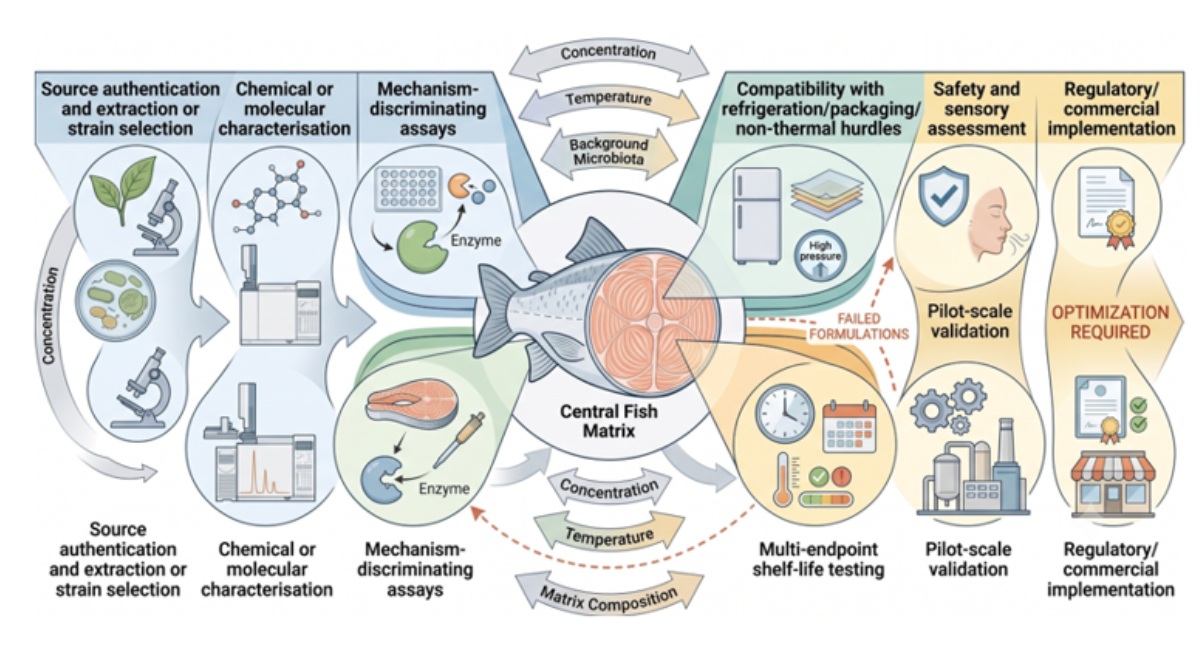
Figure 2: Proposed Development Pathway with Explicit Decision and Reworking Steps
Source selection and production feed an identified, standardised preparation; fish-matrix testing determines whether the formulation meets prespecified safety and quality criteria. Failure returns the preparation to optimisation, rather than advancing it automatically. Pilot reproducibility, economics and jurisdiction-specific review follow successful product validation. Safety assessment begins during source selection and continues through use/exposure assessment. This process map is an author proposal; Figure 3 distinguishes the evidence needed at each stage.
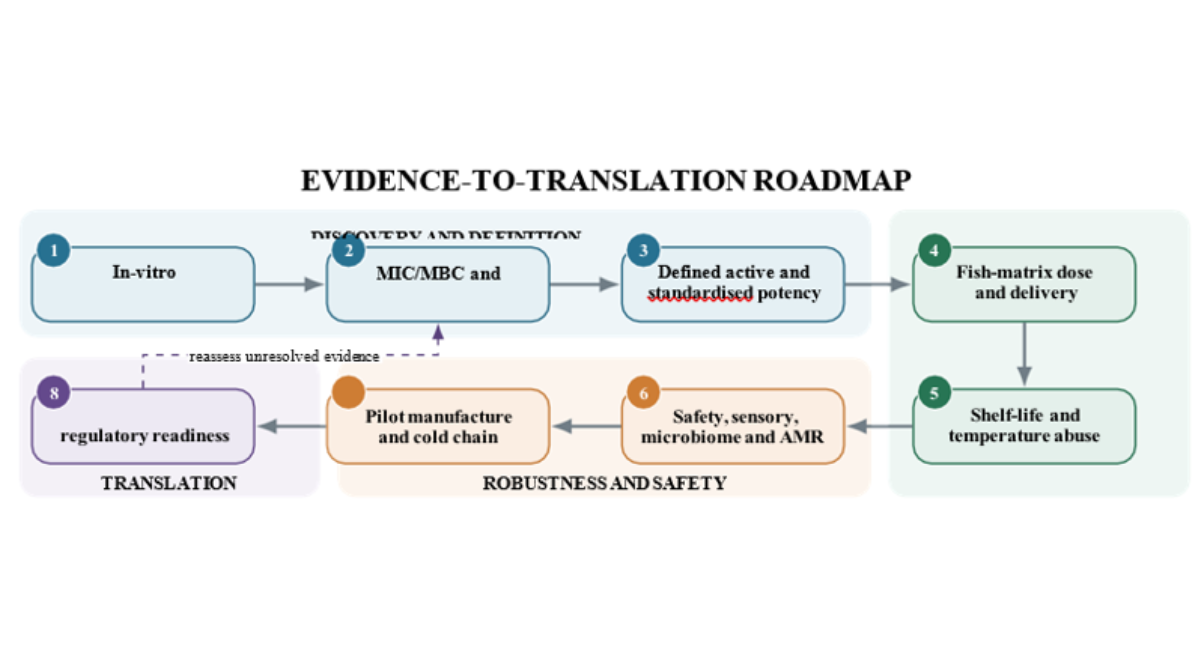
Figure 3: Author-proposed evidence-to-translation maturity framework. Levels 1–3 establish activity, mechanism and a defined preparation; Levels 4–5 establish product-specific performance; Levels 6–7 assess safety and reproducibility; Level 8 addresses economic and regulatory readiness. This is not a validated regulatory or universally accepted scale, and no shared maturity level is assigned to all technologies. Missing earlier evidence remains a gap even when later formulation work exists. MIC/MBC, minimum inhibitory/bactericidal concentration; AMR, antimicrobial resistance. MIC/MBC assays apply where appropriate to the active, not as universal potency tests for live cultures or phages.
Figure 3 is a proposed conceptual evidence-maturity framework developed by the authors, rather than a validated regulatory or universally accepted scale. Each level represents a distinct evi-dence requirement; a formulation may have advanced delivery data while lacking earlier mechanism or identity evidence. No technology is assigned a universal score here. Laboratory and refrigerated-matrix studies dominate the selected examples, but this is a qualitative observation, not a bibliometric estimate.
The proposed sequence prioritises: (i) authenticated strains, sources, or molecular actives; (ii) mechanism-discriminating assays and quantitative potency; (iii) factorial comparison of free active, carrier, and combined formulation; (iv) fish-matrix trials that separate spoilage from pathogen endpoints; (v) refrig-erated and temperature-abuse validation with oxidation, TVB-N, texture, and sensory measurements; (vi) toxicology, AMR, mi-crobiome, allergen, and exposure assessment appropriate to the agent; and (vii) independent pilot-scale manufacture, packaging compatibility, economics, and jurisdiction-specific regulatory review.
Priority validation experiments
For encapsulation, we propose matched untreated, carrier-only, free-active and encapsulated-active groups at a defined active dose in the same fish matrix. Active retention and release should be measured alongside named targets, total counts, community composition, oxidation, TVB-N, texture and blinded sensory ac-ceptance over the same refrigerated period. Independent batches and realistic temperature excursions would test reproducibility. For live cultures, comparison with cell-free preparations and mechanism-discriminating controls would separate persistence from metabolite effects. Prespecified failure criteria would make negative outcomes informative and prevent favourable microbial results from obscuring sensory or safety limitations.
CONCLUSION
Selected fish and seafood studies support pathogen suppres-sion, delayed spoilage, or quality retention by defined cultures, metabolites, coatings, packaging systems, and phages. These outcomes are not interchangeable, and performance varies with strain, dose, formulation, matrix, and temperature. Successful screening can fail in fish; lower pathogen counts need not pro-duce lower total counts or longer sensory shelf life. In-vitro activity alone is therefore insufficient for a preservation claim.
The proposed evidence-maturity framework links these limi-tations to testable development priorities without implying a validated standard. Research should prioritise authenticated ac-tives, mechanism-discriminating controls, matched fish-matrix comparisons, and multi-endpoint validation under realistic cold-chain conditions. Safety, sensory compatibility, community change and potential AMR selection require system-specific assessment. Independent pilot batches, release and stability specifications, economic evaluation, and jurisdiction-specific review are needed to establish whether effective laboratory formulations can become reproducible preservation processes.
ACKNOWLEDGEMENTS
The authors sincerely acknowledge the support and facilities provided by their respective departments.
AUTHOR CONTRIBUTIONS
Arnab Chatterjee: Conceptualisa-tion, writing—original draft, and writing—review and editing. Taniya Dey: Literature investigation and help in preparation of the preliminary manuscript. Sutapa Sanyal: Supervision, guidance, and critical review of the manuscript. Dipan Adhikari: Supervisory support and review of the manuscript.
FUNDING
Not applicable. No external funding was received for this review.
COMPETING INTERESTS
The authors declare that they have no competing interests.
ETHICS APPROVAL
Not applicable. This review did not involve human participants or animals.
CONSENT TO PARTICIPATE
Not applicable
REFERENCES
- Ghaly AE, Dave D, Budge S, Brooks MS. Fish spoilage mechanisms and preservation techniques: review. Am J Appl Sci. 2010;7(7):859-877. [Crossref] [Google Scholar]
- Mahmud A, Abraha B, Samuel M, Abraham W, Mahmud E. Fish preservation: a multi-dimensional approach. MOJ Food Process Technol. 2018;6(3):281-285. [Crossref] [Google Scholar]
- Ali A, Wei S, Ali A, Khan I, Sun Q, Xia Q, et al. Research progress on nutritional value, preservation and processing of fish—a review. Foods. 2022;11(22):3669. [Crossref] [Google Scholar] [PubMed]
- Gram L, Huss HH. Microbiological spoilage of fish and fish products. Int J Food Microbiol. 1996;33(1):121-137. [Crossref] [Google Scholar] [PubMed]
- Gram L, Ravn L, Rasch M, Bruhn JB, Christensen AB, Givskov M. Food spoilage—interactions between food spoilage bacteria. Int J Food Microbiol. 2002;78(1-2):79-97. [Crossref] [Google Scholar] [PubMed]
- Presenza L, Teixeira BF, Galvão JA, Vieira TMFS. Technological strategies for the use of plant-derived compounds in the preservation of fish products. Food Chem. 2023;419:136069. [Crossref] [Google Scholar] [PubMed]
- Pierozan MB, Oliveira Filho JGD, Cappato LP, Costa AC, Egea MB. Essential oils against spoilage in fish and seafood: Impact on product quality and future challenges. Foods. 2024;13(23):3903. [Crossref] [Google Scholar] [PubMed]
- Mei J, Ma X, Xie J. Review on natural preservatives for extending fish shelf life. Foods. 2019;8(10):490. [Crossref] [Google Scholar] [PubMed]
- Tsironi T, Houhoula D, Taoukis P. Hurdle technology for fish preservation. Aquac Fish. 2020;5(2):65-71. [Crossref] [Google Scholar]
- Cortés-Sánchez ADJ, Jaramillo-Flores ME, Díaz-Ramírez M, Espinosa-Chaurand LD, Torres-Ochoa E. Biopreservation and the safety of fish and fish products, the case of lactic acid bacteria: a basic perspective. Fishes. 2024;9(8):303. [Crossref] [Google Scholar]
- Vijayan A, Sivaraman GK, Visnuvinayagam S, Mothadaka MP. Role of natural additives on quality and shelf life extension of fish and fishery products. In: Prieto MA, Otero P, editors. Natural food additives. London: IntechOpen; 2021. [Crossref] [Google Scholar]
- Speranza B, Racioppo A, Bevilacqua A, Buzzo V, Marigliano P, Mocerino E, et al. Innovative preservation methods improving the quality and safety of fish products: Beneficial effects and limits. Foods. 2021;10(11):2854. [Crossref] [Google Scholar] [PubMed]
- Ntzimani A, Papamichail E, Dermesonlouoglou E, Tsironi T, Taoukis P. Shelf life study of chilled mullet (Mugil cephalus): Histamine formation and quality degradation at constant and dynamic storage conditions. Fishes. 2024;9(12):480. [Crossref] [Google Scholar]
- Odds FC. Synergy, antagonism, and what the chequerboard puts between them. J Antimicrob Chemother. 2003;52(1):1. [Crossref] [Google Scholar] [PubMed]
- Yadav B, Wennerberg K, Aittokallio T, Tang J. Searching for drug synergy in complex dose-response landscapes using an interaction potency model. Comput Struct Biotechnol J. 2015;13:504-513. [Crossref] [Google Scholar] [PubMed]
- Singh VP. Recent approaches in food bio-preservation—a review. Open Vet J. 2018;8(1):104-111. [Crossref] [Google Scholar] [PubMed]
- Muthuvelu KS, Ethiraj B, Pramnik S, Raj NK, Venkataraman S, Rajendran DS, et al. Biopreservative technologies of food: An alternative to chemical preservation and recent developments. Food Sci Biotechnol. 2023;32(10):1337-1350. [Crossref] [Google Scholar] [PubMed]
- Gálvez A, Abriouel H, López RL, Ben Omar N. Bacteriocin-based strategies for food biopreservation. Int J Food Microbiol. 2007;120(1-2):51-70. [Crossref] [Google Scholar] [PubMed]
- Alakomi HL, Skyttä E, Saarela M, Mattila-Sandholm T, Latva-Kala K, Helander IM. Lactic acid permeabilizes Gram-negative bacteria by disrupting the outer membrane. Appl Environ Microbiol. 2000;66(5):2001-2005. [Crossref] [Google Scholar] [PubMed]
- Hyldgaard M, Mygind T, Meyer RL. Essential oils in food preservation: Mode of action, synergies, and interactions with food matrix components. Front Microbiol. 2012;3:12. [Crossref] [Google Scholar] [PubMed]
- Elsabee MZ, Abdou ES. Chitosan based edible films and coatings: a review. Mater Sci Eng C Mater Biol Appl. 2013;33(4):1819-1841. [Crossref] [Google Scholar] [PubMed]
- You HJ, Lee JH, Oh M, Hong SY, Kim D, Noh J, et al. Tackling Vibrio parahaemolyticus in ready-to-eat raw fish flesh slices using lytic phage VPT02 isolated from market oyster. Food Res Int. 2021;150:110779. [Crossref] [Google Scholar] [PubMed]
- Biswas O, Kandasamy P, Nanda PK, Biswas S, Lorenzo JM, Das A, et al. Phytochemicals as natural additives for quality preservation and improvement of muscle foods: A focus on fish and fish products. Food Mater Res. 2023;3:5. [Crossref] [Google Scholar]
- Ameur A, Bensid A, Ozogul F, Ucar Y, Durmus M, Kulawik P, et al. Application of oil-in-water nanoemulsions based on grape and cinnamon essential oils for shelf-life extension of chilled flathead mullet fillets. J Sci Food Agric. 2022;102(1):105-112. [Crossref] [Google Scholar] [PubMed]
- Ojagh SM, Rezaei M, Razavi SH, Hosseini SMH. Effect of chitosan coatings enriched with cinnamon oil on the quality of refrigerated rainbow trout. Food Chem. 2010;120(1):193-198. [Crossref] [Google Scholar]
- Remya S, Mohan CO, Bindu J, Sivaraman GK, Venkateshwarlu G, Ravishankar CN. Effect of chitosan based active packaging film on the keeping quality of chilled stored barracuda fish. J Food Sci Technol. 2016;53(1):685-693. [Crossref] [Google Scholar] [PubMed]
- Han J, Meng X, Shen H, Luo W, Yao S, Yang J, et al. Purification, molecular characterization of Lactocin 63 produced by Lactobacillus coryniformis FZU63 and its antimicrobial mode of action against Shewanella putrefaciens. Appl Microbiol Biotechnol. 2021;105(18):6921-6930. [Crossref] [Google Scholar] [PubMed]
- Wu P, Yang J, Meng X, Weng Y, Lin Y, Li R, et al. The inhibitory action of lactocin 63 on deterioration of seabass (Lateolabrax japonicus) during chilled storage. J Sci Food Agric. 2024;104(7):4015-4027. [Crossref] [Google Scholar] [PubMed]
- Stupar J, Hoel S, Lerfall J, Rustad T, Jakobsen AN. Bioprotective lactic acid bacteria for fresh ready-to-eat salmon: Antilisterial effects without compromising product quality. J Food Prot. 2026;100898. [Crossref] [Google Scholar]
- Chen R, Skeens JW, Wiedmann M, Guariglia-Oropeza V. The efficacy of nisin against Listeria monocytogenes on cold-smoked salmon at natural contamination levels is concentration-dependent and varies by serotype. Front Microbiol. 2022;13:930400. [Crossref] [Google Scholar] [PubMed]
- Angiolillo L, Conte A, Del Nobile MA. A new method to biopreserve sea bass fillets. Int J Food Microbiol. 2018;271:60-66. [Crossref] [Google Scholar] [PubMed]
- Chen L, Hua Q, Ten MZM, Li Z, Xue C, Li D. Lactiplantibacillus plantarum 299V-fermented soy whey improved the safety and shelf life of Pacific oysters (Magallana gigas). npj Sci Food. 2024;8:77. [Crossref] [Google Scholar] [PubMed]
- Sallam KI. Chemical, sensory and shelf-life evaluation of sliced salmon treated with salts of organic acids. Food Chem. 2007;101(2):592-600. [Crossref] [Google Scholar]
- Li Q, Liang W, Lv L, Fang Z, Xu D, Liao J, et al. Preparation of PCL/lecithin/bacteriocin CAMT6 antimicrobial and antioxidant nanofiber films using emulsion electrospinning: Characteristics and application in chilled salmon preservation. Food Res Int. 2024;175:113747. [Crossref] [Google Scholar] [PubMed]
- Vuoso V, Gogliettino M, Di Paolo M, Agrillo B, Ambrosio RL, Anastasio A, et al. Effect of novel active packaging containing antimicrobial peptide on the shelf-life of fish burgers (Coryphaena hippurus) during refrigerated storage. Ital J Food Saf. 2022;11(3):10466. [Crossref] [Google Scholar] [PubMed]
- Fan W, Sun J, Chen Y, Qiu J, Zhang Y, Chi Y. Effects of chitosan coating on quality and shelf life of silver carp during frozen storage. Food Chem. 2009;115(1):66-70. [Crossref] [Google Scholar]
- Misiou O, van Nassau TJ, Lenz CA, Vogel RF. The preservation of Listeria-critical foods by a combination of endolysin and high hydrostatic pressure. Int J Food Microbiol. 2018;266:355-362. [Crossref] [Google Scholar] [PubMed]
- Yang ZQ, Tao XY, Zhang H, Rao SQ, Gao L, Pan ZM, et al. Isolation and characterization of virulent phages infecting Shewanella baltica and Shewanella putrefaciens, and their application for biopreservation of chilled channel catfish (Ictalurus punctatus). Int J Food Microbiol. 2019;292:107-117. [Crossref] [Google Scholar] [PubMed]
- EFSA Scientific Committee. Guidance on the characterisation of microorganisms in support of the risk assessment of products used in the food chain. EFSA J. 2025;23(11):e9705. [Crossref] [Google Scholar] [PubMed]
- EFSA BIOHAZ Panel. Update of the list of qualified presumption of safety (QPS) recommended microbiological agents intentionally added to food or feed as notified to EFSA 22: Suitability of taxonomic units notified to EFSA until March 2025. EFSA J. 2025;23(7):e9510. [Crossref] [Google Scholar] [PubMed]
- US Food and Drug Administration. Agency response letter to GRAS Notice No. 1215: bacteriophage preparation specific to Listeria monocytogenes. June 6, 2025. Accessed September 6, 2026. [Google Scholar]
- Crandall AD, Montville TJ. Nisin resistance in Listeria monocytogenes ATCC 700302 is a complex phenotype. Appl Environ Microbiol. 1998;64(1):231-237. [Crossref] [Google Scholar] [PubMed]
- Zhang J, Li Y, Liu X, Lei Y, Regenstein JM, Luo Y. Characterization of the microbial composition and quality of lightly salted grass carp (Ctenopharyngodon idellus) fillets with vacuum or modified atmosphere packaging. Int J Food Microbiol. 2019;293:87-93. [Crossref] [Google Scholar] [PubMed]
- Abdullah A, Pratama R, Nurhayati T, Sibuea W, Sauqi SDA. Bacterial community comparison revealed by metagenomic analysis and physicochemical properties of eastern little tuna (Euthynnus affinis) with storage temperature differences. Fish Aquat Sci. 2023;26(10):593-604. [Crossref] [Google Scholar]
- Vandeputte D, Kathagen G, D'hoe K, Vieira-Silva S, Valles-Colomer M, Sabino J, et al. Quantitative microbiome profiling links gut community variation to microbial load. Nature. 2017;551(7681):507-511. [Crossref] [Google Scholar] [PubMed]
- Heir E, Jensen MR, Åsli AW, Berget I, Holck AL. Reduction and growth inhibition of Listeria monocytogenes by use of anti-listerial nisin, P100 phages and buffered dry vinegar fermentates in standard and sodium-reduced cold-smoked salmon. Foods. 2023;12(24):4391. [Crossref] [Google Scholar] [PubMed]
- Leistner L. Basic aspects of food preservation by hurdle technology. Int J Food Microbiol. 2000;55(1-3):181-186. [Crossref] [Google Scholar] [PubMed]
- Burt S. Essential oils: Their antibacterial properties and potential applications in foods—a review. Int J Food Microbiol. 2004;94(3):223-253. [Crossref] [Google Scholar] [PubMed]
- Stiles ME. Biopreservation by lactic acid bacteria. Antonie Van Leeuwenhoek. 1996;70(2-4):331-345. [Crossref] [Google Scholar] [PubMed]
- Deegan LH, Cotter PD, Hill C, Ross P. Bacteriocins: Biological tools for bio-preservation and shelf-life extension. Int Dairy J. 2006;16(9):1058-1071. [Crossref] [Google Scholar]
- Ricke SC. Perspectives on the use of organic acids and short-chain fatty acids as antimicrobials. Poult Sci. 2003;82(4):632-639. [Crossref] [Google Scholar] [PubMed]
- Shahidi F, Arachchi JKV, Jeon YJ. Food applications of chitin and chitosans. Trends Food Sci Technol. 1999;10(2):37-51. [Crossref] [Google Scholar]
- Rosseto M, Rigueto CVT, Alessandretti I, de Oliveira R, Wohlmuth DAR, Loss RA, et al. Whey-based polymeric films for food packaging applications: A review of recent trends. J Sci Food Agric. 2023;103(7):3217-3229. [Crossref] [Google Scholar] [PubMed]
- Gómez-Estaca J, López de Lacey A, López-Caballero ME, Gómez-Guillén MC, Montero P. Biodegradable gelatin–chitosan films incorporated with essential oils as antimicrobial agents for fish preservation. Food Microbiol. 2010;27(7):889-896. [Crossref] [Google Scholar] [PubMed]
- Nie X, Zuo Z, Zhang R, Luo S, Chi Y, Yuan X, et al. New advances in biological preservation technology for aquatic products. npj Sci Food. 2025;9:15. [Crossref] [Google Scholar] [PubMed]

Article Processing Timeline
| Stage 1 |
Initial Quality & Plagiarism Check The manuscript is reviewed for journal scope, basic submission requirements, ethical compliance, and similarity/plagiarism concerns. |
| Stage 2 |
Editorial Assessment & Peer Review Manuscripts that pass the initial screening undergo editorial assessment and independent peer review in accordance with the journal's peer-review policy. |
| Stage 3 |
Revision & Editorial Decision Authors may be requested to revise their manuscript based on reviewer and editor comments. A final editorial decision is made after the required review and revision stages are completed. |
| Stage 4 |
Production & Publication Accepted manuscripts proceed to production, author proofing, final quality checks, and online publication. |
EDITORIAL & PUBLICATION INFORMATION
| English | Publication Language |
| Single-Blind | Peer-Review Model |
| 17% | Acceptance Rate |
| <18% | Similarity Screening Guideline |
| Open Access | Access Model |
All manuscripts undergo editorial assessment and originality screening as part of the journal's evaluation process. The acceptance rate shown is based on journal-level editorial data and may change over time. Similarity reports are assessed editorially and are not interpreted solely on the basis of a numerical similarity score.
Why Publish with us?
Ethics & Policies
Editorial & Management
Useful Links
Journal Highlights
Open Access Journals
Journal Flyer