
Journal of Plant Science and Biotechnology
ISSN:
3139-6437 (Online)
DOI Prefix (Crossref): 10.67238
 Download PDF
ABSTRACT
Sclerotium rolfsii, which causes collar rot diseases, poses a serious risk to sunflower production in tropical and subtropical areas. Chemical seed treatments are extensively used in agriculture, considering that they predominantly protect the early stages of the cultivated crops. Soil-borne inoculum, on the other hand, tends to survive and induce infection later. The objective of this research was to explore the efficacy of trichocompost alone or in conjunction with seed treatment to decrease the incidence of collar rot disease and enhance the output of sunflower. Seven treatments, along with an untreated control, were used in a field trial. Yield per lot was recorded at harvest, and disease incidence was documented at regular intervals up to 60 days after sowing (DAS). The application of trichocompost and seed treatment together (T 7) had the lowest disease incidence at 60 DAS (17.51%), with tricho compost alone (T 4) coming in second at (18.77%). The reduction in disease pressure led to a large increase in productivity. The yields of T 7 and T 4 were over 2-fold higher, giving 658.03g/plot and 638.81g/plot respectively, compared to the untreated control, which yielded 304.63g/plot. In brief, seed treatment alone provided minimal protection in the initial stages, however, when combined with trichocompost, it resulted in a better, and more reliable disease control, thus emphasizing the importance of a numerically superior approach to soil and seed interventions for efficient management of collar rot disease of sunflower.
Keywords: Sunflower; Collar Rot Diseases; Sclerotium Rolfsii; Trichocompost; Soil Health; Integrated Disease Management
INTRODUCTION
The sunflower ( Helianthus annuus L) originates from North America, specifically in areas of Mexico and the southern United States [1]. The crop exhibits significant adaptation to various climatic conditions, including temperate, tropical, and subtropical environments. Sunflowers are positioned as the fourth most significant oilseed crop globally for both production and economic value [2]. In 1975, Bangladesh commenced limited cultivation of sunflowers as a source of oil-producing crops [3]. A soil-borne fungus called Sclerotium rolfsii Sacc. causes collar rot, root rot, stem rot, wilt and foot rot in more than 500 plant species, including all crops. It is regarded as one of the most devastating fungi and is frequently found in tropical, subtropical, and warm temperate areas [4,5] Researchers reported that, the initial source identified the fungus as the responsible factor for tomato blight in Florida, USA. In 1893, a year later, he recognized the primary morphological characteristic, the spherical sclerotia, and designated the fungus as Sclerotium. The symptoms of collar rot disease are marked by sudden wilting and desiccation of the collar region [6]. The most common symptom is a brown to black rot of the stem, often known as collar rot, which frequently affects sunflowers on all inhabited continents, particularly in regions with warm weather [7]. The complex life cycle of S. rolfsii, which includes cortical invasion, root hair infection, and the generation of long-lived resting spores, makes it more challenging to create efficient management strategies.
Concerns regarding soil degradation, fungicide resistance, and environmental pollution are sparked by an overdependence on chemical-based control approaches [8]. Sunflower foot, root, and stem rot caused by Sclerotium rolfsii has been effectively suppressed by seed treatments using fungicides like carbendazim and captan, either alone or in combination with biocontrol agents like Trichoderma asperellum [9]. While T. viride and T. harzianum are highly effective at controlling sunflower collar rot disease in field conditions [10], trichocompost enriched with Trichoderma spp. Functions as a biocontrol agent by preventing the growth of sunflower pathogens and strengthening the defense mechanism of plants [11]. According to [12], biochar reduces the severity of various soilborne diseases by 50% through improving soil structure and microbial activity. Research on the combined effects of soil amendments in sunflowers is still limited, considering these encouraging results. By evaluating both the individual and combined consequences of seed treatments and organic soil amendments (biochar, vermicompost, and trichocompost) on controlling the growth of sclerotium rolfsii in sunflower, this research seeks to close this gap.
MATERIALS AND METHODS
Description of the Experimental Site
The laboratory experiment was conducted in the central MS laboratory, Department of Plant Pathology, Sher-e-Bangla Agricultural University, and the field experiment was conducted at central farm of Sher-e-Bangla Agricultural University, Dhaka-1207.
Soil Type
The soil of the experimental site belongs to the Agro-Ecological Zone of “Madhupur Tract” (AEZ No. 28). It was Deep Red Brown Terrace soil and belongs to the “Nodda” cultivated series. The topsoil is slightly clay loam in texture. Organic matter content was very low (0.82%), and soil pH varied from 5.47-5.63.
Sowing Date and Harvesting Time
Seed rate was 8-10 kg/ha. After layout preparation, seed was sown in lines on 1 st December, 2022. The selected sunflower plants were harvested at 115 DAS when all plants were fully mature. Yields of each treatment in all replications were recorded separately.
Plot Dimension
The experiment was conducted in a randomized complete block design (RCBD) with three (3) replications and eight (8) treatments. The field layout was done as per the experimental design on 22 th November, 2022. The field was divided into three blocks, each of which represented a replication. The unit plot size was 2m × 2m and, the plot-to-plot distance was 0.5m and the block-to-block distance was 0.75 meter.
Spacing
Sunflower seeds were sown maintaining a row-to-row distance of 50 cm and plant-to-plant distance of 25 cm.
No of Plants Per Plot
Five plants were randomly selected from each of the plots, and the data were recorded on the following parameters:1) Disease incidence (%), 2) Percent disease index, 3) Plant height (cm), 4) Number of leaves per plant, 5) Stem girth (cm), 6) Head diameter (cm), 7) Number of seeds per head, 8) 1000 seeds weight (g), and 9) Yield (g/plot).
Fertigation Schedule
Fertilizers and manures were applied at the doses recommended by BARI for sunflower: urea (180 kg/ha), TSP (150 kg/ha), MoP (120 kg/ha), gypsum (120 kg/ha) and cow dung (8000 kg/ha), equivalent to 81, 68, 54, 54 and 3600 g/plot, respectively. One-third of the urea and full doses of TSP, MoP, gypsum and cow dung were applied as basal dose during final land preparation. The remaining two-thirds of urea was applied as top-dressing in two equal splits at 30 and 50 days after sowing (DAS) each followed by irrigation to enhance nutrient availability and uptake.
The 1/3 rd of the urea and the whole amount of other fertilizers were applied during final land preparation as a basal dose, and the rest 2/3rd urea was applied at 30 DAS and 50 DAS followed by irrigation.
Climate
The experimental area was under a sub-tropical climate, which was characterized by comparatively low rainfall, low humidity, low temperature, relatively short days during November to May and high rainfall, high humidity, high temperature, and long day period during April to September.
Plant Material and Treatments
Sunflower ( Helianthus annuus L.) a variety of BARI named BARI Surjomukhi-2, is known for its susceptibility to collar rot, was used. Seeds were collected from the Bangladesh Agricultural Research Institute (BARI), Gazipur. Seven treatments were evaluated: T0 = Control (no treatment), T1 = Seed treatment with Autostin @ 2 g/kg, T2 = Biochar @ 4–5 t/ha, T3 = Vermicompost @ 5–6 t/ha, T4 = Tricho compost @ 2–2.5 t/ha, T5 = Seed treatment + biochar, T6 = Seed treatment + vermicompost, T7 = Seed treatment + tricho compost. Tricho compost is an organic fertilizer produced by decomposing plant and animal wastes inoculated with beneficial Trichoderma fungal spores (such as Trichoderma harzianum). Treatments were arranged in a randomized complete block design (RCBD) with three replications. The plants were grown under optimum temperature while maintaining proper fertigation.
Collection and Preparation of Diseased Specimens
Diseased sunflower stems showing characteristic symptoms of collar rot were collected from SAU Central Farm. Samples were transported in moist zip-lock polyethylene bags to the laboratory. Seven (7) small tissue sections (2–2.5 mm) containing both healthy and diseased portions were surface sterilized in 70% ethanol for 1 min, rinsed twice with sterile distilled water, blotted on sterile paper, and, once sclerotia had formed, one sclerotium was plated onto one sterile Petri dish containing Potato Dextrose Agar (PDA) medium following [13]. Plates were incubated at 25 ± 2°C under alternating light and dark conditions for two weeks. Emerging fungal colonies were sub-cultured repeatedly to obtain pure cultures for morphological observation.
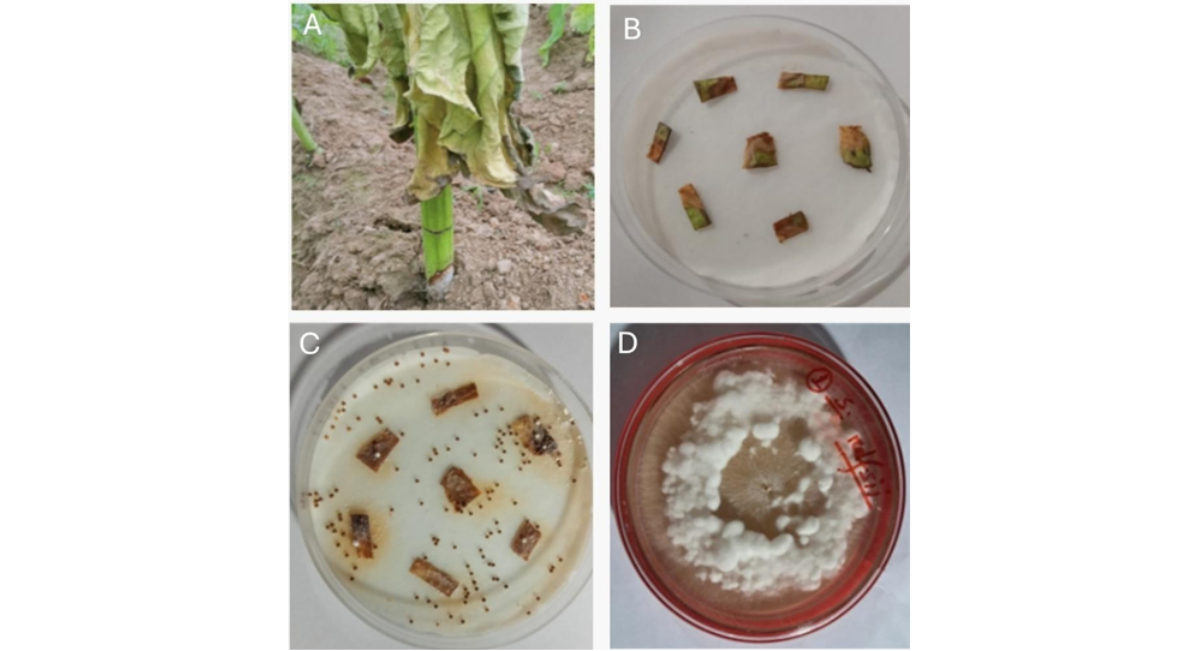
Figure 1: Isolation of the causal organism collar rot of sunflower by tissue planting method. A. symptom on the crown root portion of sunflower; B. incubation of diseased plant samples in a moist chamber; C. sclerotia developed in a moist chamber after 7 days; D. growth of the pathogen on PDA media
Identification and Preservation of Isolates
The causal organism was identified as Sclerotium rolfsii based on colony morphology, sclerotia production, and microscopic observations, following the descriptions of [14] and [15]. Pure cultures were preserved on PDA slants sealed with paraffin wax and stored at 4°C for subsequent use [16].
Preparation of Fungal Inoculum and Pathogenicity Test
Pathogenicity tests were conducted to confirm the role of Sclerotium rolfsii in collar rot development in sunflower plants. Wheat straw was cut into 2–3 cm pieces, soaked in water for 2 hr, and sterilized in 250 ml flasks sealed with cotton and aluminium foil. Each flask was inoculated with a 5 mm PDA mycelial disc of actively growing Sclerotium rolfsii from the pure culture previously isolated from the field specimen and incubated at room temperature for 30 days to allow sclerotia formation. The resulting colonized straw was air-dried and sclerotia were collected for inoculation. For artificial inoculation, sterilized soil (150 g per pot) was infested with sclerotia at a rate of 1 sclerotium per gram of soil in 16 cm diameter pots. Sunflower seeds were sown individually per pot, and soil moisture was maintained at 50% of water-holding capacity. Control pots contained sterilized, uninoculated soil. Plants were observed daily, and disease symptoms were recorded at 30 DAS. The pathogen was re-isolated from symptomatic plants to fulfill Koch’s postulates [17].
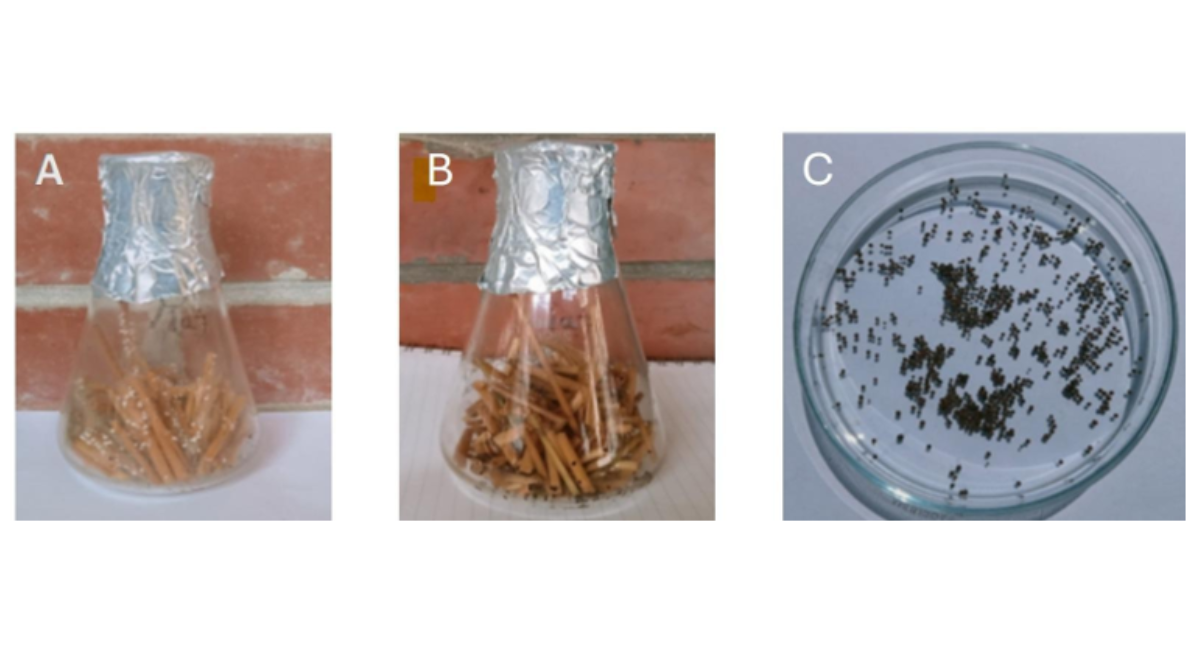
Figure 2: Preparation of fungal inoculum for pathogenicity test. A. actively growing S. rolfsii after placing a 5 mm mycelial disc; B, C production, maturation, and collection of sclerotia
Data Collection
From each plot, five plants were randomly selected for data collection. The following parameters were recorded: (a) disease incidence (%) at 15, 30, 45, 60, and 75 DAS, and were calculated as follows [18]:
Where N d is the number of plants showing characteristic collar rot symptoms, and N is the total number of plants assessed; (b) plant growth parameters: plant height (cm), number of leaves per plant, and stem girth (cm) at 75 DAS; and (c) yield parameters: head diameter (cm) at 90 DAS when the plant's capitulum reached complete maturity, number of seeds per head, 1000-seed weight (g) at 12% moisture, and seed yield per plot (g/plot). Plants were harvested at 115 DAS when fully mature; heads were sun-dried, threshed, and seeds weighed.
Statistical Analysis
Data were analyzed using Statistix 10.0 software. Analysis of variance (ANOVA) was performed, and treatment means were compared using the Least Significant Difference (LSD) test at a 5% significance level.
RESULTS
Symptoms Development
Typical symptoms of sunflower collar rot were observed in the field throughout the crop cycle. Affected plants showed wilting and yellowing of older leaves, eventually leading to complete plant death. At the crown region, water-soaked girdling lesions developed, ranging from tan to dark brown with alternating bright and dark bands, reflecting diurnal fungal growth. The decay of the basal stem and roots was a common occurrence, often leading to soft, discolored tissues at the soil baseline and, at times, resulting in the detachment of roots from the stem. Despite this basal decay, lodging was rarely observed because the stem rind typically remained intact. Under moist conditions, a white mycelial mat formed around lesions and at the plant base. Sclerotia developed externally on lesions, initially white but gradually turning brown to black, and measured 0.5–2 mm in diameter, as mentioned in Figure 3.
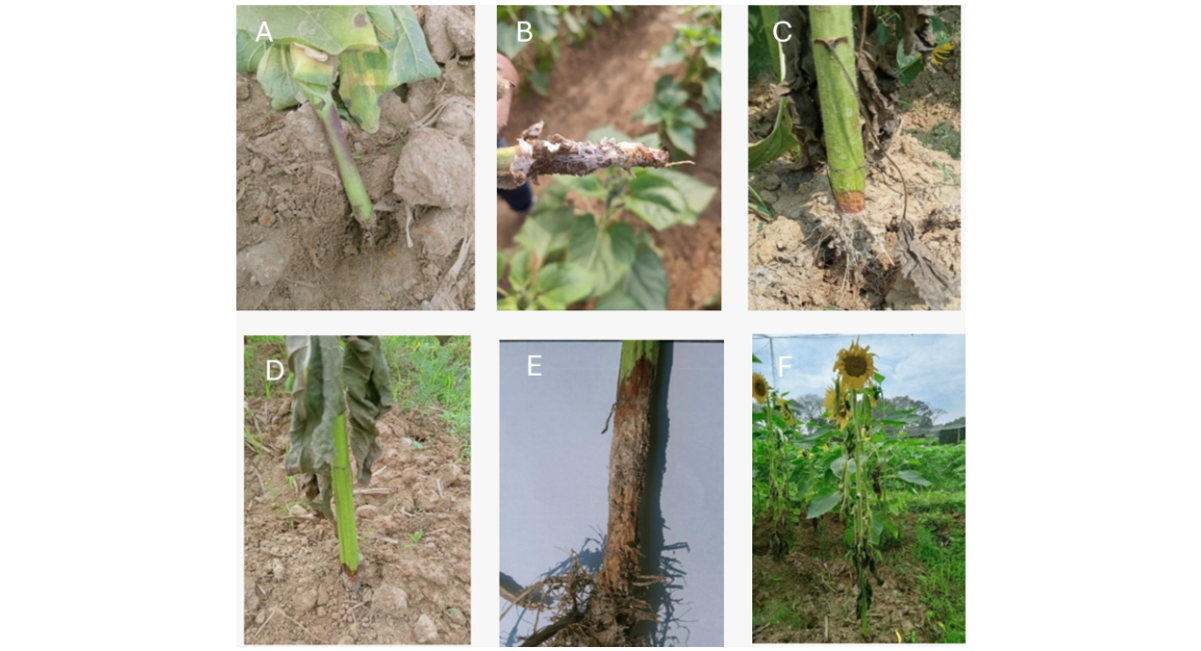
Figure 3: Symptoms of collar rot of sunflower at different stages of plant growth. Breakage at the infection point and presence of white cottony mycelial mass at the seedling stage (A,B); brown, water-soaked lesion and mycelial formation at the collar region (C,D); sclerotia formation and subsequent wilting of plants ( E,F).
Isolation and Identification of The Pathogen
Sclerotium rolfsii was isolated from the crown root portion of symptomatic sunflower plants using the tissue planting method on potato dextrose agar (PDA). The fungus exhibited rapid growth, covering a 9 cm PDA plate within five days (120h). Initial mycelial growth appeared light white, gradually becoming dull white with fan-shaped radial colonies. No clamp connections were observed. Upon maturation over a period of two weeks, the fungus developed compact mycelial aggregates that transformed into sclerotia, which resembled mustard seeds. These sclerotia were shiny and hard, varying in shape from spherical to irregular, and displayed a color range from deep brown to black. Microscopic observation revealed thin-walled, hyaline, septate hyphae with profuse branching. Based on these morphological characteristics, the fungus was identified as Sclerotium rolfsii in accordance with the description in Figure 4.
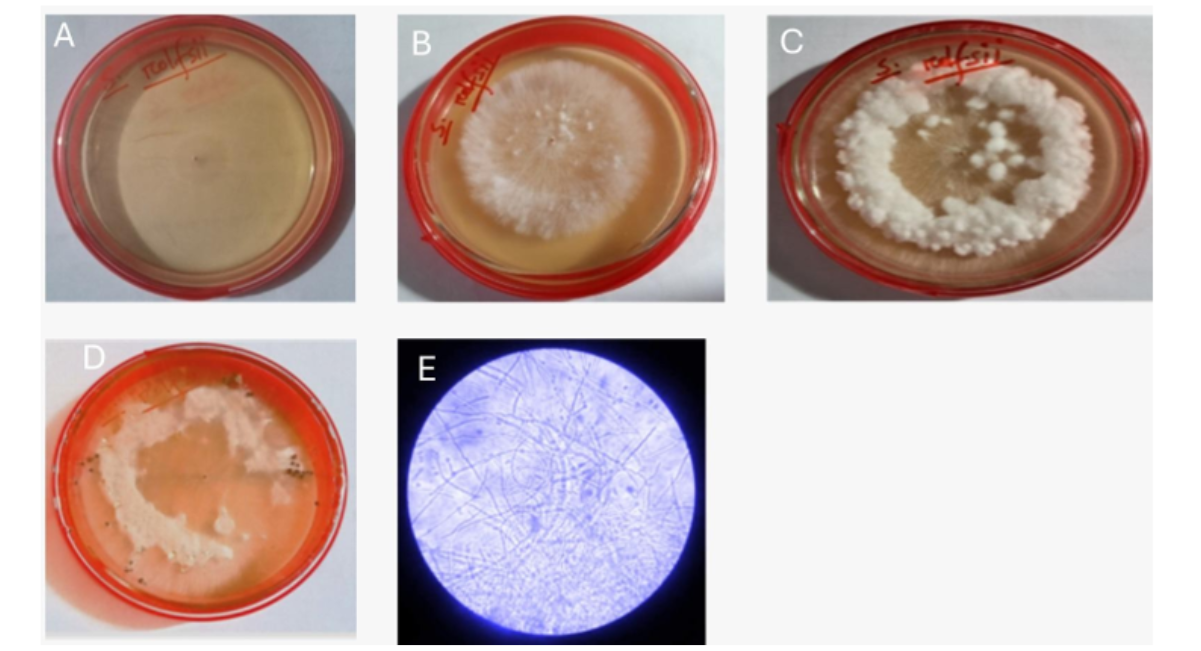
Figure 4: Growth of Sclerotium rolfsii at different days after incubation ( A,B,C,D: 1, 3, 5, and 14 DAI, respectively) and compound microscopic view of the pathogen (E)
Pathogenicity test
Artificial inoculation of sunflower plants with Sclerotium rolfsii produced initial water-soaked lesions at the soil line, showing alternating light and dark brown bands. White mycelial strands developed around diseased areas. Within two days, infected stems near the soil line disintegrated, resulting in wilting and death of the entire plant. Pathogens were re-isolated from these infected tissues, and their morphological characteristics were identical to the original culture, confirming S. rolfsii as the causal agent.
Effect of treatments on collar rot incidence
Table 1 shows that the incidence of collar rot differed considerably between treatments during all observation periods (15-60 DAS). In all cases, the untreated control (T0) recorded the highest disease incidence, while seed treatment + tricho compost (T7) consistently showed the lowest incidence. At 15 DAS, soil amendments already reduced disease incidence compared to the control. Tricho compost alone (T4) and seed treatment + biochar (T5) also performed well, though not as effectively as T7. By 30 and 45 DAS, the difference between control plants and treated ones became more pronounced. Seed treatment with Autostin (T1) lowered disease incidence compared to the control but remained less effective than organic-based treatments. By 60 DAS, T7 still recorded the lowest disease incidence (17.51%), followed by tricho compost (18.77%), but the difference between them was not statistically significant. Overall, the combined application of seed treatment and tricho compost proved most effective in controlling collar rot of sunflower.
|
Treatment |
Disease Incidence (%) |
|||
|
15 DAS |
30 DAS |
45 DAS |
60 DAS |
|
|
T0 = Control |
24.72 a |
33.62 a |
40.19 a |
45.71 a |
|
T1 = Seed treatment with Autostin @ 2 g/kg |
18.63 b |
28.76 b |
32.32 b |
37.52 b |
|
T2 = Biochar @ 4–5 t/ha |
11.76 de |
15.57 de |
21.37 de |
24.21 d |
|
T3 = Vermicompost @ 5–6 t/ha |
14.69 c |
17.85 c |
24.68 c |
30.52 c |
|
T4 = Trichocompost @ 2–2.5 t/ha |
9.73 fg |
12.89 f |
20.89 e |
18.77 e |
|
T5 = Seed treatment + biochar |
11.19 ef |
14.88 e |
15.73 f |
25.56 d |
|
T6 = Seed treatment + vermicompost |
13.05 cd |
16.58 d |
22.62 d |
28.44 c |
|
T7 = Seed treatment + trichocompost |
8.38 g |
12.30 f |
14.78 f |
17.51 e |
|
CV (%) |
6.20 |
3.34 |
2.99 |
3.41 |
*Values in a column with the same letter (s) do not differ significantly (p=0.05)
Table 1: Effect of Seed Treatment and Different Soil Amendments on Disease Incidence of Collar 230 Rot of Sunflower At 15, 30, 45 and 60 DAS
Effects on Growth Parameters
The growth responses of sunflowers varied significantly among different seed treatments and soil amendments presented in Table 2. At 75 DAS, plants in the control plots consistently showed the weakest performance, with the shortest height (108.16 cm), fewer leaves (22), and the thinnest stems (3.95 cm). In contrast, plots treated with tricho compost, whether used alone (T4) or in combination with seed treatment (T7), showed the most vigorous growth across all measured traits. Plants in T7 reached the tallest height (132.24 cm), produced the thickest stems (5.36 cm), and had the highest leaf count (29).
Seed treatment with Autostin (T1) moderately improved growth compared to the control (T0), but the increase in height, leaf number, and stem girth was less pronounced than with organic amendments. Biochar-based treatments (T2 and T5) and vermicompost-based treatments (T3 and T6) exhibited intermediate growth, with values consistently higher than the control (T0) but lower than those of the trichocompost treatments. The results show that trichocompost, especially when combined with seed treatment, strongly promotes sunflower growth. Plants in these treatments were taller, produced more leaves, and had thicker stems, whereas control plants showed the poorest growth.
|
Treatment |
Plant height (cm) |
No. of leaves per plant |
Stem girth (cm) |
|
T0 = Control |
108.16 e |
22 d |
3.95 f |
|
T1 = Seed treatment with Autostin @ 2 g/kg |
113.51 d |
24 c |
4.54 d |
|
T2 = Biochar @ 4–5 t/ha |
122.97 b |
27 b |
4.75 c |
|
T3 = Vermicompost @ 5–6 t/ha |
119.42 bc |
25 bc |
4.24 e |
|
T4 = Trichocompost @ 2–2.5 t/ha |
130.82 a |
29 a |
5.17 b |
|
T5 = Seed treatment + biochar |
124.57 b |
28 a |
5.07 b |
|
T6 = Seed treatment + vermicompost |
118.94 c |
26 b |
4.40 d |
|
T7 = Seed treatment + trichocompost |
132.24 a |
29 a |
5.36 a |
|
CV (%) |
1.24 |
4.02 |
1.81 |
*Values in a column with same letter (s) do not differ significantly (p=0.05)
Table 2: Effectiveness of Seed Treatment and Different Soil Amendments on growth and growth Contributing Characters of Sunflower at 75 DAS
Effects on Yield Parameters
Yield and yield-contributing characters of sunflower also differed prominently among these treatments presented in Table 3. Trichocompost-treated plots, both alone (T4) and combined with seed treatment (T7), consistently outperformed other treatments across all measured parameters. T7 produced the largest heads (17.77 cm), highest number of seeds per head (557), and heaviest 1000-seed weight (63.08 g), resulting in the highest plot yield (658.03 g/plot). In contrast, the untreated control exhibited the lowest values for all traits, indicating poor crop performance in the absence of chemical or organic amendments. Seed treatment alone (T1) and biochar-based treatments (T2, T5) improved yield compared to the control but did not reach the levels achieved by trichocompost treatments. Notably, combining seed treatment with trichocompost (T7) nearly doubled plot yield compared to the control, highlighting the numerically better effect of this combination. These findings demonstrate that organic amendments, particularly trichocompost, play a key role in enhancing sunflower productivity.
|
Treatment |
Head diameter (cm) |
No. of seeds per head |
1000 seed weight (g) |
Yield (g/plot) |
|
T0 = Control |
14.04 e |
343 e |
46.59 d |
304.63 f |
|
T1 = Seed treatment with Autostin @ 2 g/kg |
15.47 d |
446 d |
51.78 c |
565.69 e |
|
T2 = Biochar @ 4–5 t/ha |
16.12 b |
479 bc |
54.19 b |
589.87 cd |
|
T3 = Vermicompost @ 5–6 t/ha |
15.81 c |
463 cd |
52.66 c |
582.52 d |
|
T4 = Trichocompost @ 2–2.5 t/ha |
17.51 a |
487 b |
62.84 a |
638.81 b |
|
T5 = Seed treatment + biochar |
16.30 b |
546 a |
54.68 b |
595.10 c |
|
T6 = Seed treatment + vermicompost |
16.11 b |
470 bc |
52.61 c |
585.37 d |
|
T7 = Seed treatment + trichocompost |
17.77 a |
557 a |
63.08 a |
658.03 a |
|
CV (%) |
0.92 |
2.35 |
1.33 |
0.92 |
*Values in a column with same letter (s) do not differ significantly (p=0.05)
Relationship of Growth and Yield Parameters with Grain Yield
The grain yield of sunflowers showed a clear positive relationship with various growth and yield-related factors presented in figure 5. In our analysis, we found that plant height (cm), the number of leaves per plant, and stem girth (cm) were all closely linked to the yield, with strong correlations indicated by R² values of 0.688, 0.7066, and 0.5914, respectively. Additionally, we observed that head diameter (cm), the number of seeds per head, and the weight of 1000 seeds (g) also had shown even stronger associations with yield, with their R² values at 0.7923, 0.7855, and 0.6254, respectively. These relationships were further supported by scatter plots, which displayed consistent upward trends. Therefore, sunflowers that were taller, had more leaves, thicker stems, larger heads, and a greater number of seeds, as well as heavier seeds, tended to yield more grain. However, plants with lower growth and yield traits produced considerably less. Overall, it's clear that both the vegetative growth of the plants and the various components contributing to yield play a crucial role in determining sunflower grain yield.
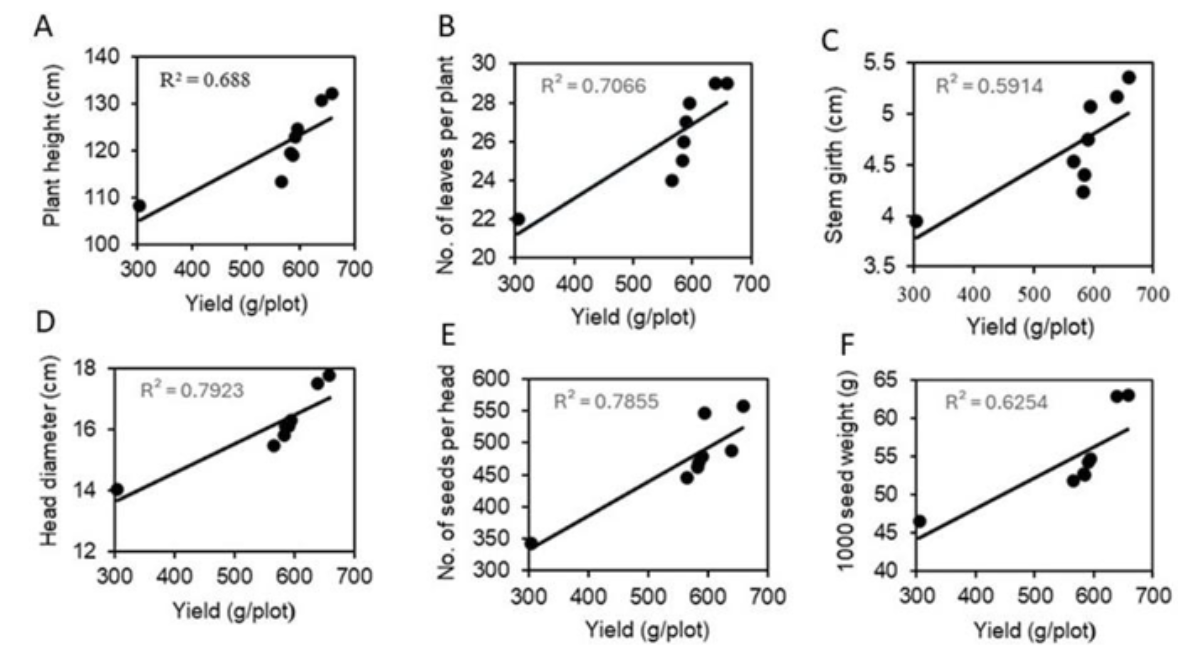
Figure 5: Significant correlation of growth (panel A, B, C) and yield parameters (panel D, E, F) with sunflower grain yield of eight (8) different treatments
DISCUSSION
Trichocompost is a bio-organic fertilizer mixed with the beneficial fungus Trichoderma. It is made from cow dung, poultry waste, water hyacinth, and kitchen scraps. It enriches the soil, helps roots grow strong, and stops harmful soil fungi that cause plant diseases. Trichocompost works as a natural antifungal agent against harmful fungi ( Pythium sp, Sclerotium sp, Phytophthora sp, Rhizoctonia sp, Fusarium sp, Botrytis sp, Sclerotinia sp), which are mostly responsible for soil born disease and fungal wilt; Because of the inclusion of poultry refuse, Trichocompost provides resistance against bacterial wilt and nematode infestation. Sclerotium rolfsii (causing southern blight) overwinters as tough, mustard-seed-like structures called sclerotia or as thread-like mycelium in crop debris.
When warm weather (80–95°F) and wet soil return, sclerotia germinate to produce fungal threads that attack plant stems at the soil line, creating rot, wilting, and new resting sclerotia. This study confirms that Sclerotium rolfsii is the causal agent of sunflower collar rot in the examined fields. Field observations revealed typical disease symptoms, including dark brown lesions at the collar region, white cottony mycelial growth with sclerotia, wilting, and progressive plant death. These observations are consistent with earlier reports on sunflower collar rot worldwide.[4] Researchers first described the general symptoms of S. rolfsii across different hosts, while [6] identified abrupt wilting and drying of the collar region as initial indicators of collar rot. The study noted that the fungus causes pre- and post-emergence damping-off in seedlings and collar rot in adult plants [10]. White cottony mycelial growth near the soil line produces organic acids that damage living plant tissues [19], leading to internal stem decay. Morphological characterization of the isolates showed rapid aerial growth, cottony mycelial production, hyaline septate hyphae, and sclerotia formation within 14 days, in agreement with classical descriptions by Scientists [,4,20,2122,23,24].
They observed white, silky mycelium with sclerotia measuring 0.5–3 mm, turning reddish to dark brown as they matured. Microscopic observations revealed septate, hyaline, thin-walled hyphae with clamp connections and radial fan-like growth. Small mycelial knots appeared as colonies matured, eventually developing into shiny, hard, spherical to irregular sclerotia with brown to brownish- black pigmentation [25,26]. Scientist isolated 18 fungal strains with similar colony morphology, showing white aerial mycelia with branches and septa, radial growth on PDA, and some clamp connections. The colonies produced rich white granular sclerotia (1.18 ± 0.26 mm in diameter; n = 348) that turned brown as they aged, with an average growth rate of 27.6 ± 0.09 mm per day. In this study, we didn’t observe any clamp connections. Pathogenicity tests confirmed that inoculated plants developed symptoms identical to those observed in the field, and the pathogen was successfully re-isolated, providing strong evidence of its role in causing the disease. Similar observations were widely reported [7,27,28,17].Researcher confirmed its pathogenicity in a glasshouse by incorporating fungus-grown sterilized maize bran into soil, producing typical field-like symptoms within seven days.[17] It is demonstrated that S. rolfsii inoculum prepared on sterile wheat straw and applied to soil positively correlated with root colonization. [29] Researcher observed variability among S. rolfsii isolates on different sunflower cultivars, classifying them into four pathogenicity groups, with most cultivars being susceptible while DRSH 1 showed moderate resistance. Regarding pathogenicity,[9] reported that S. rolfsii grown on autoclaved rice straw and incorporated into soil (20 g/kg), infected about 45% of sunflower plants within 15 days of germination. The results also show that combining chemical seed treatment with organic soil amendments successfully reduces collar rot growth. Among all treatments, seed treatment + trichocompost (T7) consistently had the lowest disease incidence throughout the growing season, indicating a numerically better interaction between chemical and organic approaches. Trichocompost (T4) and biochar (T2) alone also reduced disease incidence, most likely due to improved soil quality, increased microbial activity, and higher plant resistance.
These findings align with previous studies [30] that showed that trichocompost significantly reduced disease incidence in lentils while improving crop production.[31] It is reported that biochar and vermicompost reduced collar rot incidence and severity by up to 60%, suppressed fungal pathogens, enhanced beneficial microbes (Trichoderma, P. lilacinus), and improved yield, soil pH, and nutrient status. Unlike many earlier studies that examined seed treatments or soil amendments separately, this study provides evidence that combining both strategies gives greater disease suppression than either treatment alone, offering a sustainable approach for managing S. rolfsii in sunflower. In addition to disease control, T7 significantly improved growth and yield parameters. Plants under this treatment were taller, with more leaves and thicker stems, which corresponded to larger head diameters, more seeds per head, higher 1000-seed weight, and increased plot yields. Treatments with trichocompost alone (T4) and seed treatment + biochar (T5) also improved both vegetative and reproductive traits, whereas control (T0) and seed treatment (T1) consistently showed the lowest performance [32]. Scientists showed trichocompost significantly improved growth and grain yield in rice, especially under moist conditions. [33].
It is reported that sunflower seed yield ranged from 1.78 to 4.95 t ha -1 and was increased by the biochar application. These results suggest that organic soil amendments improve nutrient availability, soil structure, and plant vigor, which leads to better reproductive outcomes. Regression analyses confirmed strong positive relationships between growth parameters, yield components, and final grain yield. Increased plant height (cm), leaf number, and stem girth (cm) were closely associated with higher grain yield (g/plot), and head diameter (cm), seed number per head, and 1000-seed weight (g) also showed strong relationships with productivity. These findings support previous reports [34] showing that improvements in vegetative growth and yield components directly influence sunflower productivity. One of the biggest strengths of this study is the combination of field observations, controlled pathogenicity testing, and quantitative assessment of growth and yield parameters, giving a full picture of how integrated management really pays off. Limitations include the restriction to a single agro-ecological zone and the lack of investigation into the underlying mechanisms explaining why the combination of seed treatment and soil amendments is more effective.
CONCLUSION
The study found that combining seed treatment with trichocompost effectively suppresses S. rolfsii while increasing sunflower growth and production. These findings show the possibility of combining chemical and organic techniques as a long-term strategy for disease management and production improvement, with practical implications for sunflower growers. The results provide a framework for extending integrated management approaches to greater regions and highlight the need for additional study to develop and scale such strategies.
ACKNOWLEDGEMENTS
The authors extend their special thanks to the Bangladesh Agricultural Research Institute (BARI) for providing the seeds of the BARI Surjomukhi-2 variety used in this study.
FUNDING
This research was supported by the National Science and Technology (NST) Fellowship Program (2022), Ministry of Science and Technology, Government of the People’s Republic of Bangladesh.
CONFLICT OF INTEREST
The authors declare that they have no relevant financial or non-financial interests to disclose.
AUTHOR CONTRIBUTIONS
All authors contributed to the study conception and design. Material preparation, data collection and analysis were performed by Tasmia Habiba. The first draft of the manuscript was written by Tasmia Habiba, and all authors commented on previous versions of the manuscript. All authors read and approved the final manuscript. Conceptualization: Nazneen Sultana; Methodology: Tasmia Habiba; Formal analysis and investigation: Tasmia Habiba; Writing-original draft preparation: Tasmia Habiba; Writing - review and editing: Deen Mohammad Deepo, Imamuddin, Suraiya Jitu; Funding acquisition: Tasmia Habiba; Supervision: Nazneen Sultana, Khadija Akhter.
REFERENCES
- Mandel JR, Dechaine JM, Marek LF, Burke JM. Genetic diversity and population structure in cultivated sunflower and a comparison to its wild progenitor, Helianthus annuus L. Theor Appl Genet. 2011;123(5):693-704. [Crossref] [Google Scholar] [PubMed]
- Adeleke BS, Babalola OO. Oilseed crop sunflower (Helianthus annuus) as a source of food: Nutritional and health benefits. Food Sci Nutr. 2020;8(9):4666-4684. [Crossref] [Google Scholar] [PubMed]
- Islam MS, Satter MA, Rahman MM. Krishi Projukti Hatboi (Handbook on Agro-technology). 3rd ed. Gazipur: Bangladesh Agricultural Research Institute.
- Aycock R. Stem rot and other diseases caused by Sclerotium rolfsii: Or the status of Rolfs' fungus after 70 years. Technical Bulletin No. 174. Raleigh: North Carolina Agricultural Experiment Station; 1966. [Google Scholar]
- Rolfs PH. Tomato blight some hints bulletin Fla. Agric. Experimentation Station, Sacc. Phytopathology. 1892;17:417-48. [Google Scholar]
- Datar VV, Bindu KJ. Collar Rot of Sunflower (H. annuus) A New Host Record from India. Current Science. 1974;43(15):496. [Google Scholar]
- Punja ZK. The biology, ecology, and control of Sclerotium rolfsii. Annu Rev Phytopathol. 1985;23:97-127. [Crossref] [Google Scholar]
- Oerke EC. Crop losses to pests. J Agric Sci. 2006;144(1):31-43. [Crossref] [Google Scholar]
- Gandhi V, Taya RS, Kumar A. Management of collar rot (Sclerotium rolfsii Sacc.) in sunflower (Helianthus annuus L.). Indian Journal of Agricultural Research. 2017;7(51):586-90. [Crossref] [Google Scholar]
- Chakraborty SU, Bhowmik TP. Chemical and biological control of sunflower collar rot caused by Sclerotium rolfsii Sacc. [Google Scholar]
- Harman GE. Myths and dogmas of biocontrol: Changes in perceptions derived from research on Trichoderma harzianum T-22. Plant Dis. 2000;84(4):377-393. [Crossref] [Google Scholar] [PubMed]
- Lehmann J, Joseph S, editors. Biochar for environmental management: Science and technology. London: Earthscan; 2009. [Google Scholar]
- Riker AJ, Riker RS. Introduction to research on plant diseases: A guide to the principles and practice for studying various plant-disease problems. St. Louis: John S. Swift Co.; 1936. [Google Scholar]
- Aycock R. Stem rot and other diseases caused by Sclerotium rolfsii. [Google Scholar]
- Agrios GN. Plant pathology. 5th ed. Amsterdam: Elsevier Academic Press; 2005. [Google Scholar]
- Barnett HL, Hunter BB. Illustrated genera of imperfect fungi. [Crossref] [Google Scholar]
- Yaqub F, Shahzad S. Pathogencity of Sclerotium rolfsii on different crops and effect of inoculum density on colonization of mungbean and sunflower roots. Pak. J. Bot. 2005;37(1):175-80. [Google Scholar]
- Campbell CL, Madden LV. Introduction to plant disease epidemiology. 1990. [Google Scholar]
- Cilliers AJ, Herselman L, Pretorius ZA. Genetic variability within and among mycelial compatibility groups of Sclerotium rolfsii in South Africa. Phytopathology. 2000;90(9):1026-1031. [Crossref] [Google Scholar] [PubMed]
- Mordue JE. Corticium rolfsii.[Descriptions of Fungi and Bacteria]. Descriptions of Fungi and Bacteria. 1974;(41)-410. [Crossref] [Google Scholar]
- Punja ZK. The biology, ecology, and control of Sclerotium rolfsii. Annual review of Phytopathology. 1985;23(1):97-127. [Crossref] [Google Scholar]
- Watanabe T. Pictorial atlas of soil and seed fungi: morphologies of cultured fungi and key to species. CRC press; 2010. 2nd ed. Boca Raton: CRC Press; 2002. [Google Scholar]
- Gulya TJ, Mathew F, Harveson R. Diseases of sunflower. In: McGovern R, Elmer W, editors. Handbook of florists' crops diseases. Cham: Springer; 2018.
- Cer C, Morca AU. First report of Athelia rolfsii (Sclerotium rolfsii Sacc.) causing collar rot disease on sunflower in Turkey. Journal of Plant Pathology. 2020;102(3):931. [Crossref] [Google Scholar]
- Kumar MR, Santhoshi MM, Krishna TG, Reddy KR. Cultural and morphological variability Sclerotium rolfsii isolates infecting groundnut and its reaction to some fungicidal. [Crossref] [Google Scholar]
- Zhang T, Li Y, Wen G, Zou J, Yang J. First Report of Athelia rolfsii Causing Stem Rot on Sunflower (Helianthus annuus L.) in Sichuan, China. Plant Disease. 2022. [Crossref] [Google Scholar]
- Shokes FM, Róźalski K, Gorbet DW, Brenneman TB, Berger DA. Techniques for inoculation of peanut with Sclerotium rolfsii in the greenhouse and field. Peanut Science. 1996 Jul 1;23(2):124-8. [Crossref] [Google Scholar]
- Infantino A, Carlucci A, Pucci N, Ciuffreda G, Montuschi C, Lops F, Uccelletti A, Mucci M, Frisullo S. Fungi causing root rots and collapse of cucurbits in Italy. Petria. 2004;14:77-89. [Google Scholar]
- Prasad SL, Sujatha K, Naresh N, Rao SC. Variability in Sclerotium rolfsii associated with collar rot of sunflower. Indian Phytopathology. 2012;65(2):161-5. [Google Scholar]
- SARKER T. EFFECT OF SOWING TIMES AND ORGANIC SOIL AMENDMENTS ON FOOT AND ROOT ROT DISEASE OF LENTIL CAUSED BY SCLEROTIUM ROLFSII (Doctoral dissertation, department of plant pathology). [Google Scholar]
- Were S. Biochar and vermicompost soil amendments reduce root rot disease of common bean (Phaseolous Vulgaris L.). African Journal of Biological Sciences. 2021. [Crossref] [Google Scholar]
- Islam MS, Khan MH, Hossain MS. Effects of different levels of soil moisture and indigenous organic amendments on the yield of boro rice grown under field condition. Dhaka University Journal of Biological Sciences. 2020;29(1):87-96. [Crossref] [Google Scholar]
- Langeroodi AR, Mancinelli R, Radicetti E. Contribution of biochar and arbuscular mycorrhizal fungi to sustainable cultivation of sunflower under semi-arid environment. Field Crops Research. 2021;273:108292. [Crossref] [Google Scholar]
- Sohel MH, Ratul AA, Hashi UH, Ali MF, Tasmim T, Abdur M, Razzak MM. Yield, Profitability and Prospects of Sunflower Cultivation in Chapainawabganj District Bangladesh. EBAUB J. 2023;5:37-45. [Google Scholar]

Article Processing Timeline
| Stage 1 |
Initial Quality & Plagiarism Check The manuscript is reviewed for journal scope, basic submission requirements, ethical compliance, and similarity/plagiarism concerns. |
| Stage 2 |
Editorial Assessment & Peer Review Manuscripts that pass the initial screening undergo editorial assessment and independent peer review in accordance with the journal's peer-review policy. |
| Stage 3 |
Revision & Editorial Decision Authors may be requested to revise their manuscript based on reviewer and editor comments. A final editorial decision is made after the required review and revision stages are completed. |
| Stage 4 |
Production & Publication Accepted manuscripts proceed to production, author proofing, final quality checks, and online publication. |
EDITORIAL & PUBLICATION INFORMATION
| English | Publication Language |
| Single-Blind | Peer-Review Model |
| 17% | Acceptance Rate |
| <18% | Similarity Screening Guideline |
| Open Access | Access Model |
All manuscripts undergo editorial assessment and originality screening as part of the journal's evaluation process. The acceptance rate shown is based on journal-level editorial data and may change over time. Similarity reports are assessed editorially and are not interpreted solely on the basis of a numerical similarity score.
Why Publish with us?
Ethics & Policies
Editorial & Management
Useful Links
Journal Highlights
Open Access Journals
Journal Flyer