


Journal of Plant Science and Biotechnology
ISSN:
3139-6437 (Online)
DOI Prefix (Crossref): 10.67238
 Download PDF
ABSTRACT
Medicinal plants constitute an important reservoir of plant-derived bioactive compounds with multi‑target pharmacological properties. Astragalus membranaceus, Atractylodes macrocephala, Angelica sinensis, and Saposhnikovia divaricata are representative medicinal‑plant resources with distinct phytochemical fingerprints. This work adopted network pharmacology and molecular docking to characterize plant‑derived bioactive constituents originating from Manzhi Guben Granules (MZGB), and to explore their potential molecular mechanisms using chronic bronchitis (CB) as a disease model. A total of 47 plant‑derived bioactive ingredients were screened from the TCMSP database. By intersecting compound‑targets with CB‑related targets retrieved from GeneCards, OMIM and DrugBank databases, 93 overlapping potential targets were obtained. Ingredient‑target and protein‑protein interaction (PPI) networks were subsequently constructed. GO and KEGG enrichment analyses revealed that these plant‑derived compounds mainly modulate inflammation‑ and apoptosis‑associated signaling cascades including PI3K‑Akt, IL‑17, TNF, and AGE‑RAGE pathways. Molecular docking validated that core plant‑originated compounds such as quercetin and formononetin exhibited stable binding to hub proteins JUN, TP53, MAPK1, AKT1 and ESR1 (binding energy ≤ −5.7 kcal/mol), among which quercetin displayed superior affinity toward MAPK1 and AKT1. This study demonstrates that diverse plant‑derived bioactive metabolites from four medicinal herbs exert synergistic effects of anti‑inflammation, anti-oxidative stress, and suppression of airway remodeling, providing phytochemical-oriented theoretical evidence for understanding MZGB and further exploitation of these medicinal‑plant resources against chronic bronchitis.
Keywords: Manzhi Guben Granules; Plant‑Derived Bioactive Compounds; Network Pharmacology; Molecular Docking; Chronic Bronchitis
ABSTRACT
Medicinal plants constitute an important reservoir of plant-derived bioactive compounds with multi‑target pharmacological properties. Astragalus membranaceus, Atractylodes macrocephala, Angelica sinensis, and Saposhnikovia divaricata are representative medicinal‑plant resources with distinct phytochemical fingerprints. This work adopted network pharmacology and molecular docking to characterize plant‑derived bioactive constituents originating from Manzhi Guben Granules (MZGB), and to explore their potential molecular mechanisms using chronic bronchitis (CB) as a disease model. A total of 47 plant‑derived bioactive ingredients were screened from the TCMSP database. By intersecting compound‑targets with CB‑related targets retrieved from GeneCards, OMIM and DrugBank databases, 93 overlapping potential targets were obtained. Ingredient‑target and protein‑protein interaction (PPI) networks were subsequently constructed. GO and KEGG enrichment analyses revealed that these plant‑derived compounds mainly modulate inflammation‑ and apoptosis‑associated signaling cascades including PI3K‑Akt, IL‑17, TNF, and AGE‑RAGE pathways. Molecular docking validated that core plant‑originated compounds such as quercetin and formononetin exhibited stable binding to hub proteins JUN, TP53, MAPK1, AKT1 and ESR1 (binding energy ≤ −5.7 kcal/mol), among which quercetin displayed superior affinity toward MAPK1 and AKT1. This study demonstrates that diverse plant‑derived bioactive metabolites from four medicinal herbs exert synergistic effects of anti‑inflammation, anti-oxidative stress, and suppression of airway remodeling, providing phytochemical-oriented theoretical evidence for understanding MZGB and further exploitation of these medicinal‑plant resources against chronic bronchitis.
Keywords: Manzhi Guben Granules; Plant‑Derived Bioactive Compounds; Network Pharmacology; Molecular Docking; Chronic Bronchitis
INTRODUCTION
Medicinal plants represent an invaluable natural source of plant‑derived bioactive metabolites with species‑specific phytochemical traits, which serve as promising lead molecules for pharmacological research and drug development. Manzhi Guben Granules (MZGB) is a compound herbal preparation composed of four well‑documented medicinal plants: Astragalus membranaceus, Atractylodes macrocephala, Angelica sinensis, and Saposhnikovia divaricate [1]. Astragalus membranaceus is a perennial medicinal herb belonging to the legume family. Its roots are rich in active metabolites [2]. Phytochemical studies have shown that the main active components of A. membranaceus are polysaccharides, triterpenoid saponins, and isoflavones [3]. Pharmacological activity studies have demonstrated that A. membranaceus exerts anti-inflammatory, antioxidant, and immunomodulatory effects by regulating the NF-κB/MAPK pathway, and also possesses antibacterial and anti-hepatocellular carcinoma cell potential [4,5]. Atractylodes macrocephala, a perennial herb belonging to the genus Atractylodes in the family Asteraceae, is used medicinally for its rhizome [6]. The main characteristic components of A. macrocephala include eucalyptane-type sesquiterpene lactones, polyacetylenes, and polysaccharides, including atractylodes lactone I, disesquiterpenes, and various polyacetylene derivatives [7]. As a traditional medicinal plant, its rhizome accumulates specific characteristic metabolites through secondary metabolism and its plant-derived bioactivity is concentrated in anti-inflammatory effects, inhibiting the release of NO and PGE₂, downregulating iNOS and COX-2, and regulating the NF-κB/MAPK pathway [8]. It also possesses immunomodulatory and gastrointestinal protective potential, making it an important resource for developing anti-inflammatory lead molecules [9,10]. Angelica sinensis is a perennial medicinal herb belonging to the genus Angelica in the family Apiaceae. Its dried root is used medicinally, and its secondary metabolic synthesis is driven by high-altitude habitats [11]. Phytochemically characteristic components include phthalides, ferulic acid, and angelica polysaccharides [12]. As a traditional and widely used medicinal plant, its plant-derived activities can regulate the Nrf2/NF-κB/MAPK pathway, exhibiting antioxidant, anti-inflammatory, neuroprotective, hematopoietic, and antiplatelet aggregation activities, showing potential for medicinal development in ischemic stroke and immune regulation [13,14]. Saposhnikovia divaricata, a perennial medicinal herb belonging to the genus Saposhnikovia in the family Apiaceae, is used medicinally for its dried roots [15]. Phytochemically, chromogenin is a marker component, and it also contains coumarins, polyacetylenes, and α-glucan polysaccharides; chromogenin serves as a quality marker [16]. As a traditional diaphoretic herb, its plant-derived activity can inhibit the MAPK/NF-κB pathway, exerting anti-inflammatory, anti-proliferative, and anti-neuro inflammatory effects, making it an important medicinal plant resource for developing anti-inflammatory lead molecules [17,18].
Pharmacological evaluations demonstrated that MZGB can repair airway mucosal injury in CB‑model rats, reduce Pseudomonas aeruginosa adhesion to mitigate respiratory infection risks, prolong cough‑latency time and increase phenol red excretion, thereby producing antitussive, expectorant and anti‑asthmatic effects [19,20]. Clinical observations revealed MZGB ameliorates cough, sputum and wheezing for Chronic bronchitis (CB) and asthma‑remission patients, improves FVC and FEV1 lung‑function indices, elevates T‑lymphocyte transformation rate and CD4⁺/CD8⁺ ratio, and lowers acute‑attack frequency [21,22]. It also down‑regulates serum soluble intercellular adhesion molecule‑1 (sICAM‑1) in asthmatic subjects to alleviate airway inflammation [23,24]. Recent mechanistic studies on composition‑similar Gubenkechuan Granules further advanced our understanding of molecular events for such plant‑derived herbal formulaes.
Network pharmacology is a method based on the drug-target-disease network. It has unique advantages in multi-component aspects to reveal the pharmacological mechanism of traditional Chinese medicine at the biomolecule level, providing new ideas and perspectives for the complex mechanism of traditional Chinese medicine [25,26]. Molecular docking is a theoretical method for drug design based on the characteristics and interactions of receptors and drug ligands [27,28]. It has become one of the necessary links in the research and development of new drugs targeting specific targets [29].
This paper, based on the four medicinal components and their anti-inflammatory activities in MZGB granules, combines network pharmacology and molecular docking to predict the interaction and molecular mechanism between the active ingredients and targets of chronic bronchitis. This study will provide a theoretical basis for further elucidating the pharmacological mechanism of action of MZGB.
MATERIALS AND METHODS
Active Ingredient and Target Screening
Five Chinese herbal medicines (astragalus, atractylodes, angelica, and saposhnikovia) were searched in the database of Traditional Chinese Medicine Systems Pharmacology Database and Analysis Platform (TCMSP, http://lsp. nwu.edu.cn/tcmsp.php). The active ingredients in MZGB were screened out based on absorption, distribution, metabolism, and excretion (ADME) parameters with oral bioavailability (OB) ≥30% and drug similarity (DL) ≥0.18 as screening thresholds. At the same time, the TCMSP database was used to predict the potential targets of these active ingredients [30,31].
Screening of Targets Related to Chronic Bronchitis
Targets related to chronic bronchitis were collected by searching the keyword "chronic bronchitis" in three public databases, including the Human Gene Database (GeneCards, https://www.genecards.org/), the Online Mendelian Inheritance Database (OMIM, https://omim.org/), and the Drug and Drug Targets Comprehensive Database (Drugbank, https://go.drugbank.com) [32-34]. The filtering parameters were set to "Category: Protein Coding" and“Relevance Score > 1”to filter targets from the GeneCards database. Query results from the three databases were combined as disease targets and compared with the potential gene targets of the active ingredients using a Venn diagram. This identified potential target genes for MZGB in treating chronic bronchitis, that is, the overlap between disease targets and drug targets.
Gene Ontology (GO) and Kyoto Encyclopedia of Genes and Genomes (KEGG) enrichment analysis
Based on the R language package“cluster Profiler 4.8.2”, the candidate genes were functionally annotated, and GO enrichment analysis and KEGG pathway enrichment analysis were carried out. GO/KEGG terms with adjusted p-values less than 0.05 were considered significantly enriched. Enrichment results were visualized using the “R package “ggplot 2 3.4.2,” and significant GO terms and KEGG pathways were plotted [35,36].
Network construction
The data of MZGB chronic bronchitis targets, active ingredients, herbs, or signaling pathways were imported into Cytoscape 3.8.0 software, and two networks were constructed: (1) pathway-target network; (2) ingredient-active ingredient-target network. Among them, nodes represent targets, active ingredients, herbs, and signaling pathways, and edges represent interactions between nodes. This network reveals the interactive relationship between MZGB active ingredients and chronic bronchitis-related targets.
Protein-protein interaction (PPI) network construction
The gene/protein interaction database search tool STRING (https://string-db.org) was used to construct a PPI network of targets to study the interaction between MZGB and chronic bronchitis-related targets. The specific settings of STRING are as follows: the confidence level is set to 0.9, and free proteins are removed to obtain the PPI network. Subsequently, the PPI network was visualized using Cytoscape 3.8.0. When the node color changes from white to red and the node size increases, it means that its degree increases. The top 5 genes with the highest degree in the network are regarded as core genes.
Molecular docking
The top 5 potential target proteins and active ingredients with the highest OB values were virtually docked through AutoDock 4.2 to study the interaction between them. The structure of the core protein is from the RSCB PDB database (https://www.rcsb.org/), and the two-dimensional structure of the active ingredient is from the PubChem database (https://pubchem. ncbi.nlm.nih.gov/). These files were imported into AutoDock 4.2 and used to optimize conformational search and sorting. Visualize target proteins and active ingredients using the Protein-Ligand Interaction Profiler (PLIP). The specific binding mode of the target protein and the active ingredient was processed and optimized by PyMol [33].
RESULTS
Network Pharmacology Analysis
Active ingredients, target prediction, and PPI network of MZGB
From TCMSP database, 47 plant‑derived bioactive ingredients of MZGB were screened according to OB and DL criteria: 20 compounds originated from A. membranaceus, seven compounds from A. macrocephala, two compounds from A. sinensis, and eighteen compounds from S. divaricata (Supplementary Table S1). After deduplication, 232 putative targets corresponding to 39 plant‑derived ingredients were predicted (Supplementary Table S2). Disease‑related targets for chronic bronchitis were retrieved from GeneCards, OMIM and DrugBank databases, yielding 765 CB‑associated targets (Supplementary Table S2). The Venn diagram identified 93 overlapping targets shared by MZGB plant‑derived ingredients and CB, regarded as candidate therapeutic targets for this medicinal‑plant formula against CB (Figure 1A).
The ingredient‑target network was built in Cytoscape 3.8.0 to visualize relationships among four original medicinal plants, their 47 plant‑derived bioactive ingredients and 93 overlapping targets (Figure 1B). This network contained 122 nodes (four herb nodes, 33 ingredient nodes, 85 target nodes) and 253 edges. Pink hexagons stand for prototype plant‑derived compounds, yellow V‑shapes represent their in‑ vivo metabolites, and red ellipses denote CB‑relevant potential targets. Among four constituent medicinal plants, A. membranaceus exhibited the highest node degree value (degree = 73), consistent with previous botanical‑phytochemical reports that this leguminous medicinal herb accumulates abundant flavonoids, saponins and polysaccharides as plant‑ specialized secondary metabolites [30].
The 93 potential targets were imported into the STRING database to construct the PPI network. The PPI network consists of 85 nodes and 654 edges (Figure 1C). The hub genes were then screened by Cytoscape 3.8.0. The top five genes include transcription factor AP-1 (JUN), cellular tumor antigen p53 (TP53), mitogen-activated protein kinase 1 (MAPK1), RAC-alpha serine/threonine-protein kinase (AKT1), and estrogen receptor (ESR1), which are considered to be central genes related to chronic bronchitis and cell death. Details are shown in Supplementary Table S3. The target-GO functional enrichment network and the target-KEGG pathway network were constructed to further screen the relevant pathways of important targets (Figure 1D, E). The target-KEGG pathway network showed that the AGE-RAGE signaling pathway, IL-17 signaling pathway, TNF signaling pathway, PI3K-Akt signaling pathway, C-type lectin receptor signaling pathway, HIF-1 signaling pathway, and MAPK signaling pathway were closely related to these core genes (Figure 1D).
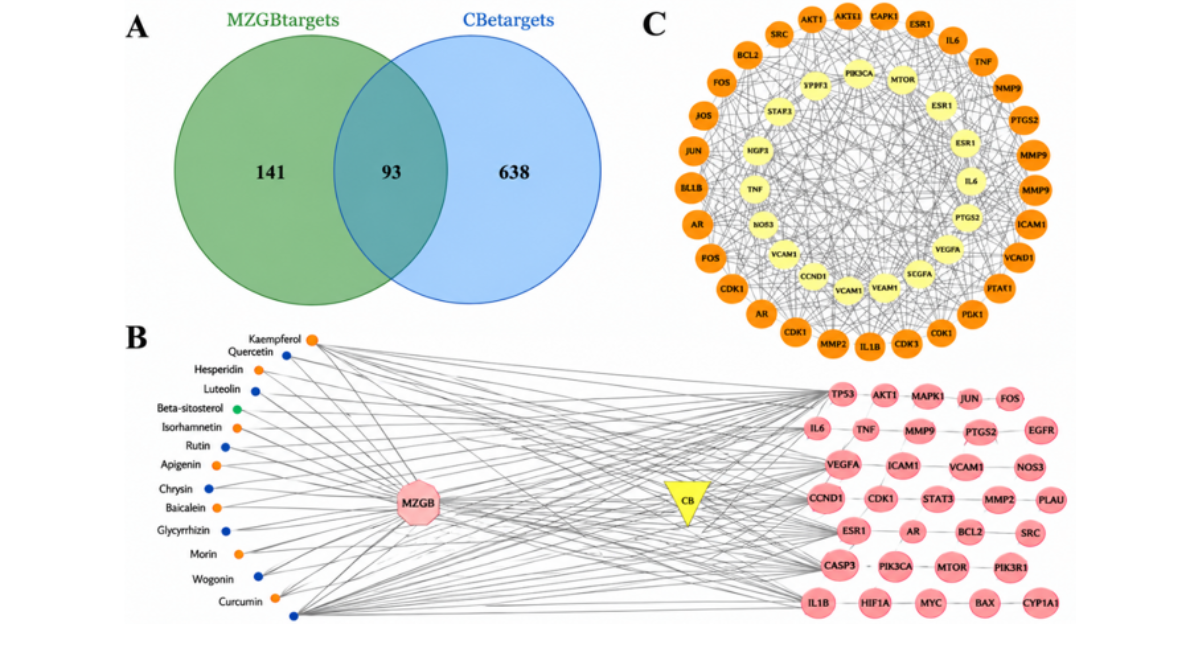
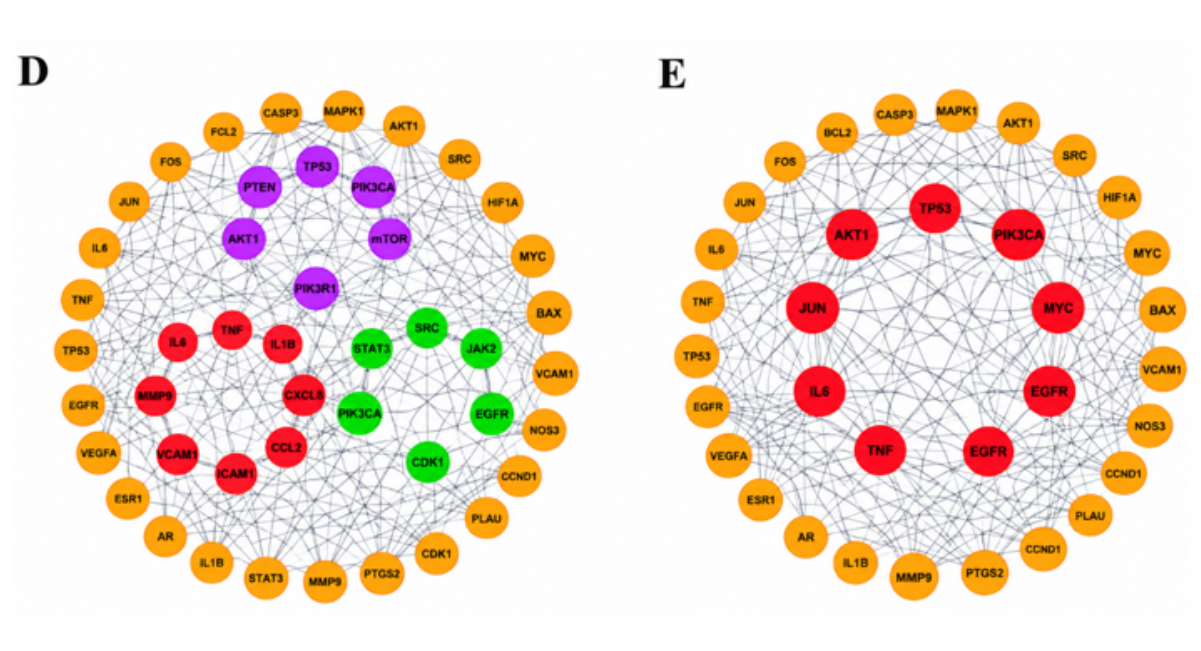
Figure 1: Screening and analysis of key targets of MZGB in the treatment of chronic bronchitis. (A) Venn diagram of active ingredients and disease targets; (B) Component-active ingredient-target network.(C) The PPI network for 85 overlapping genes (the sizes and colors of the nodes and lines are illustrated from large to small and red to white in descending order of degree values); Construction of key target-pathway network: (D) Target-GO term network (the orange node represents the main hub gene, while purple, red, and green nodes represent significant BP, CC, and MF); (E) Target-KEGG pathway network (the orange node represents the main hub gene, and red nodes represent significant KEGG pathways).
GO And KEGG Enrichment Analyses
GO enrichment analysis refers to the analysis of limited acyclic graphs to count the number or composition of proteins or genes in specific functional levels (including cellular components, biological processes, and molecular functions). This study used RStudio software to perform GO enrichment analysis, and a total of 2275 biological process (BP) terms, 57 cellular component (CC) terms, and 139 molecular function (MF) terms were retrieved (P < 0.05). The top 10 terms in CC, BP, and MF are shown in Figure 2(A). Among them, projects related to biological processes mainly involve response to lipopolysaccharide, response to molecules of bacterial origin, and regulation of apoptotic signaling pathway; in terms of cellular components, potential targets mainly focus on membrane rafts, membrane microdomains, vesicle lumen, secretory granule lumen, and cytoplasmic vesicle lumen; projects related to molecular function mainly involve cytokine receptor binding, kinase regulator activity, proteinkinase regulator activity, cytokine activity, ubiquitin-like protein, and ligase binding. KEGG enrichment analysis showed that there were 180 relevant pathways involved in the therapeutic effect of MZGB on chronic bronchitis (P < 0.05). The significant pathways are presented in Figure 2(B). KEGG enrichment analysis results showed that pathways significantly related to inflammation include the AGE-RAGE signaling pathway, IL-17 signaling pathway, TNF signaling pathway, PI3K-Akt signaling pathway, C-type lectin receptor signaling pathway, HIF-1 signaling pathway, and MAPK signaling pathway. Among them, the PI3K-Akt signaling pathway is closely related to the effect of MZGB on chronic bronchitis (Figure 2B). The detailed pathway map of chronic bronchitis is shown in Figure 3, with relevant targets highlighted in red.
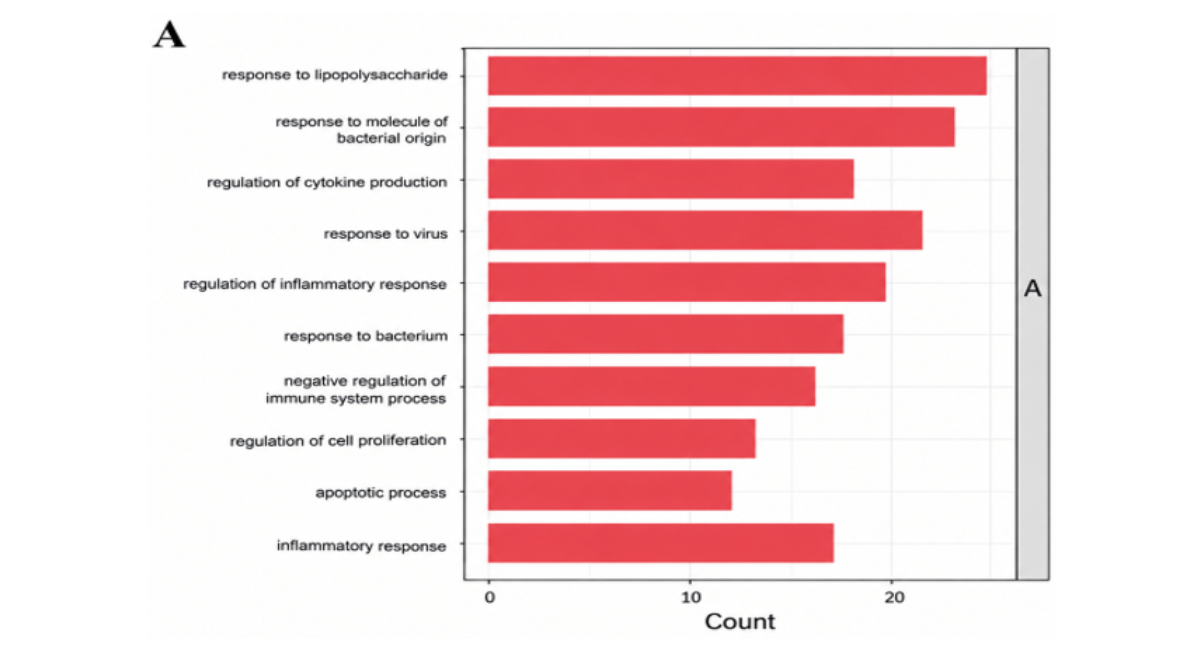
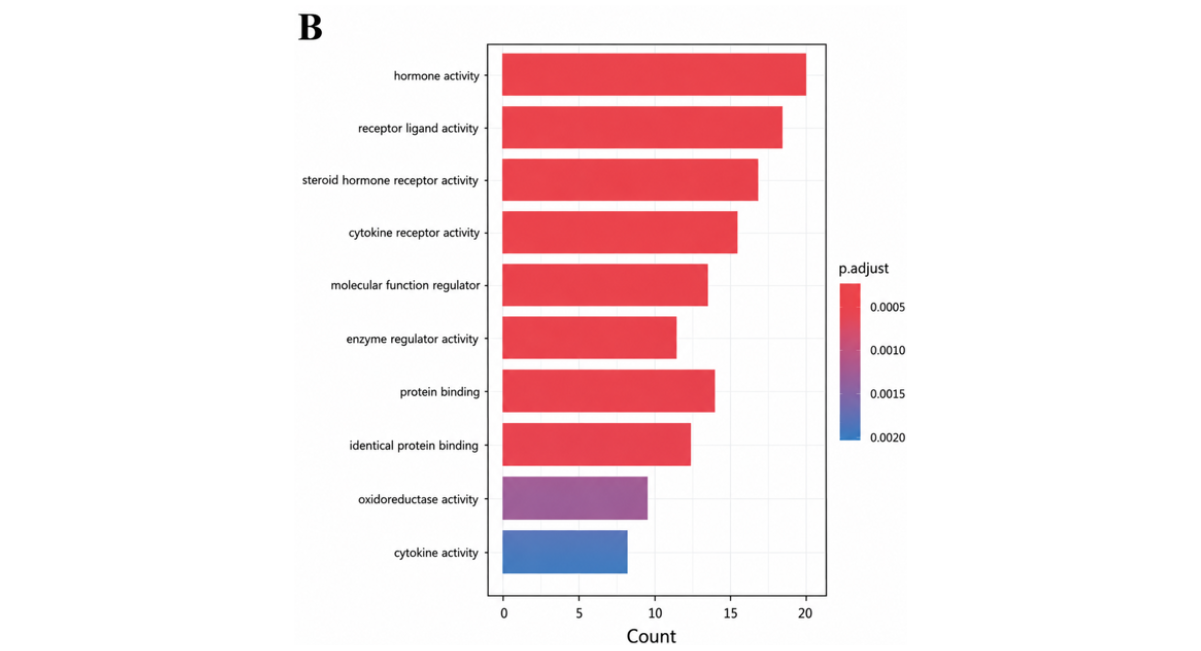
Figure 2: GO And KEGG Enrichment Analysis of Potential Targets for MZGB To Treat Acute Chronic Bronchitis. (A) Barplot Of GO Analysis; (B) Barplot of KEGG Enrichment
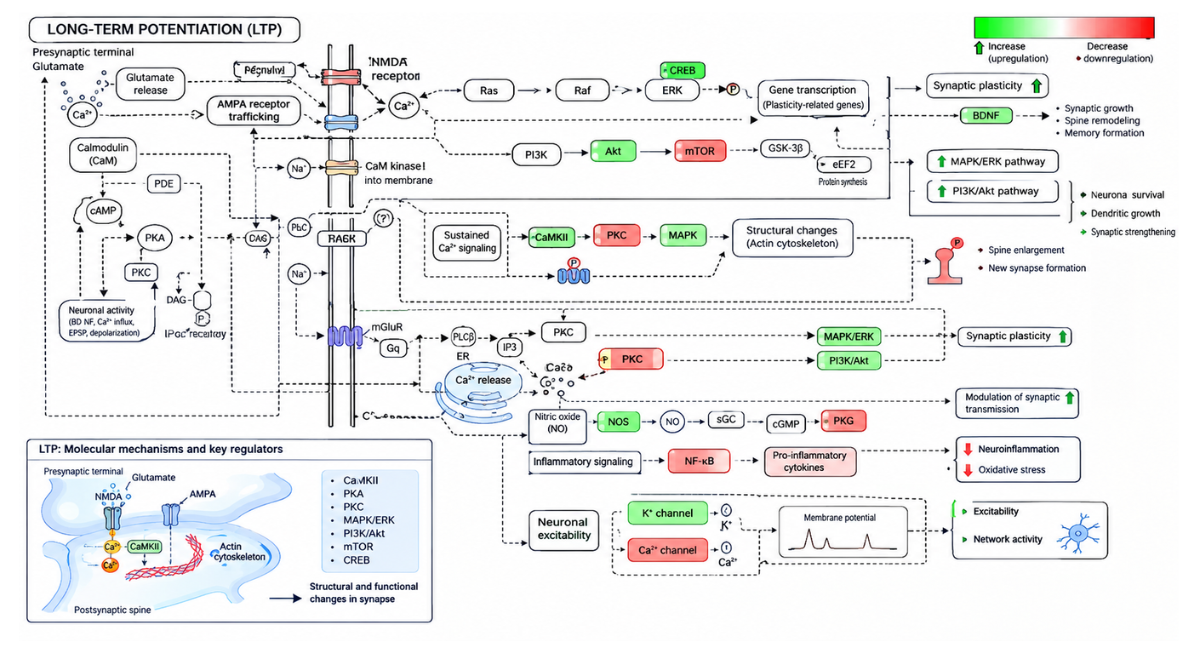
Figure 3: The Detailed Pathway Map of Chronic Bronchitis (CB)
Molecular docking
Molecular docking techniques are used to evaluate drug-target interaction patterns in network pharmacology studies. The top five key target proteins (JUN, TP53, MAPK1, AKT1, and ESR1) were used for molecular docking verification with active ingredients. The core active ingredients were molecularly docked through AutoDock 4.2. Generally, a binding energy lower than -5.0 kcal mol −1 indicates strong binding activity. Formononetin and JUN show a binding energy of -5.7 kcal mol −1, quercetin and TP53 show a binding energy of -6.3 kcal mol −1, quercetin and MAPK1 show a binding energy of -8.5 kcal mol −1, and quercetin and AKT1 show a binding energy of -7.0 kcal. mol −1, 5- O-Methylvisamminol exhibited a binding energy of -6.6 kcal mol −1 with ESR1 (Supplementary Table S4). The above results show that the screened active compounds have formed stable and strong interactions with their respective targets, among which quercetin has particularly outstanding affinity for MAPK1 and AKT1.
Five potential target proteins, including JUN, TP53, MAPK1, AKT1, and ESR1, are all high-order nodes in the interaction network and play a key role in the inflammatory response (Figure 3). JUN and formononetin bind to ARG-302 through a hydrogen bonding network (Figure 4A). TP53 and quercetin bind to LSY-51 through a hydrogen bonding network (Figure 4B). MAPK1 and quercetin bind to MET-108 and ASP-167 through a hydrogen bonding network (Figure 4C). AKT1 and quercetin are stabilized via hydrogen bonds at the amino acid residues ARG-15, ARG-86, and VAL-83 (Fig. 4D). ESR1 and 5-O-Methylvisamminol bind to SER-433 through a hydrogen bonding network (Figure 4E). These docking results indicate that the potential active ingredients of MZGB have high binding affinity to key targets of chronic bronchitis. The results indicate that the active ingredients of MZGB may affect its function by binding to the docking pocket of the target receptor and play an important role in the treatment of chronic bronchitis.
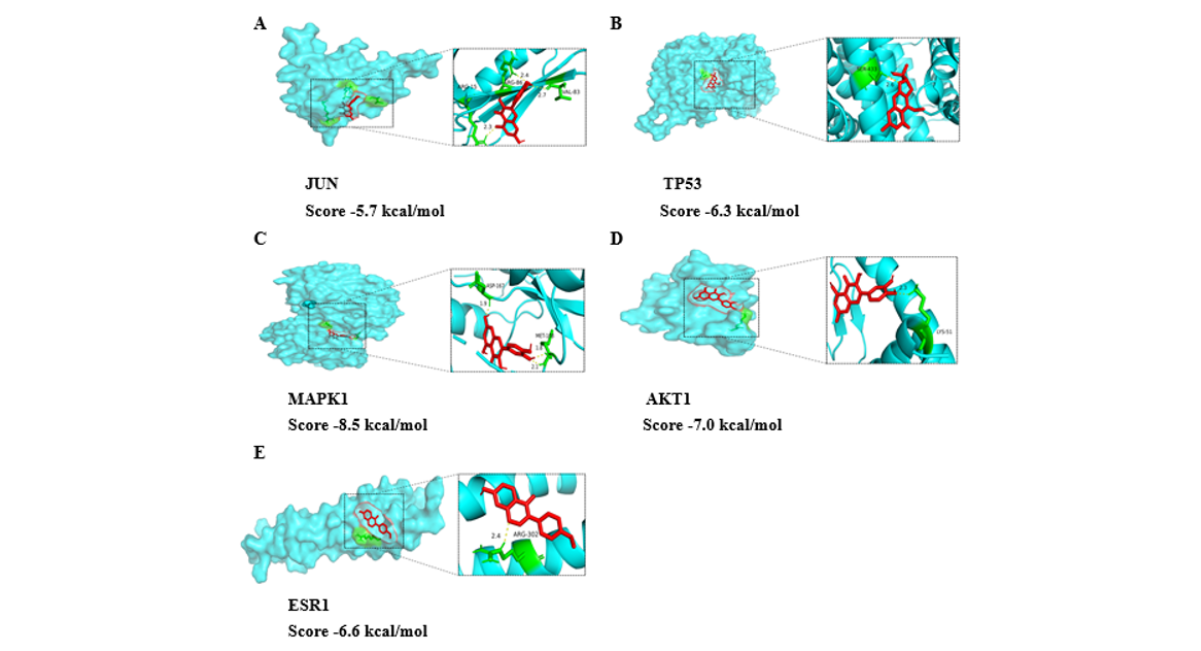
Figure 4: Molecular Docking of Active Ingredients. (A) JUN Binds to Formononetin; (B) TP53 Binds to Quercetin; (C) MAPK1 Binds to Quercetin; (D) AKT1 Binds to Quercetin; (E) ESR1 Binds To 5-O-Methylvisamminol
DISCUSSION
From the perspective of medicinal‑plant science and phytochemistry, the four botanical origins of MZGB represent typical medicinal‑plant resources with species‑specialized secondary‑metabolite profiles. A. membranaceus generates legume‑specific isoflavonoids and cycloartane‑type triterpene saponins, together with immuno‑modulatory polysaccharides, contributing anti‑oxidant and anti‑inflammatory plant‑derived bioactivities. A. macrocephala accumulates rhizome‑specific sesquiterpene lactones and polyacetylenes, supporting immunoregulatory and antibacterial potentials. A. sinensis synthesizes phthalide volatile‑oil constituents under alpine environmental selection, functioning as anti‑oxidative and circulation‑regulating phytochemicals. S. divaricata is distinguished by root‑specific chromone glycosides, which confer prominent anti‑inflammatory and anti‑allergic properties. Such inter‑species phytochemical divergence endows this compound formula with multi‑faceted plant‑derived bioactivities and pharmaceutical prospects. Our network‑pharmacology outcomes should be interpreted in the context of these plant‑derived phytochemical characteristics rather than merely focusing on disease phenotypes.
GO enrichment results indicated plant‑derived ingredients of MZGB are prominently enriched in biological processes including lipopolysaccharide response, bacterial‑origin‑molecule response and apoptotic‑signaling‑pathway regulation, consistent with recurrent airway infection and persistent inflammatory vicious cycle of CB patients. Cellular‑component enrichment pointed to membrane‑raft, vesicle‑lumen compartments, suggesting plant‑derived metabolites may interfere with membrane‑associated receptor aggregation and signal‑transduction micro‑domains. KEGG analysis uncovered multiple inflammation‑stress‑related cascades: AGE‑RAGE, IL‑17, TNF, PI3K‑Akt, HIF‑1 and MAPK pathways. Among them, PI3K‑Akt exhibited the most significant enrichment. Earlier studies reported other similar herbal formula (Gubenkechuan Granules) ameliorates airway inflammation via NF‑ κB/STAT3 axis. Differently, our present work indicated plant‑derived compounds of MZGB concurrently target IL‑17, TNF as well as AGE‑RAGE cascades, revealing potential intervention effect on glycation‑end‑product‑driven chronic‑inflammation amplification and expanding the molecular understanding of “strengthening‑root” theory in medicinal‑plant therapy. Moreover, enrichment of the HIF-1 pathway hints these plant‑originated constituents may mitigate epithelial‑mesenchymal‑transition and fibrotic alteration by reshaping hypoxic airway microenvironment, which is rarely described for anti‑bronchitis herbal preparations.
CONCLUSION
In conclusion, this study characterized multiple plant‑derived bioactive metabolites originating from four medicinal‑plant species (Astragalus membranaceus, Atractylodes macrocephala, Angelica sinensis, Saposhnikovia divaricata) within Manzhi Guben Granules. These phytochemical constituents synergistically act on core hub targets (JUN, TP53, MAPK1, AKT1, ESR1), and coordinately modulate inflammation‑apoptosis‑related signaling pathways such as PI3K‑Akt, IL‑17, TNF and AGE‑RAGE. Such plant‑originated compounds produce comprehensive effects, including anti‑inflammation, anti‑oxidative stress and suppression of airway‑remodeling when applied against chronic‑bronchitis model. Our findings provide phytochemical and medicinal‑plant‑oriented theoretical support for understanding MZGB, as well as supply clues for further resource utilization of these four valuable medicinal‑plant materials. Subsequent experimental validations including in‑vitro, in-vivo, and multi‑center clinical investigations, are required to verify target‑pathway regulations and evaluate long‑term efficacy and safety.
ACKNOWLEDGMENTS
The authors are grateful for the support of the Anhui Provincial Department of Education.
AUTHORS’ CONTRIBUTIONS
Juan Wu and Qinglang Wu:Data processing, analysis, method design, and verification, paper writing; Xueru Wang and Minyan Xu: Literature review and research; Zhanqian Ma and Ziyi Si: Resources; Jiacai Guo, Juan Xu, and Shewei Hu: Review and editing of the paper. All authors read and approved the final manuscript and agree to be accountable for all aspects of this study, ensuring its completeness and accuracy.
DISCLOSURE STATEMENT
The authors report there are no competing interests to declare.
FUNDING
This work was financially supported by the Scientific Research Start-up Project at Bozhou University (No. BYKQ202436), the College Students' Innovative Entrepreneurial Training Plan Program (No. S202512926057) and the Natural Science Research Project of Anhui Universities (No. 2024AH051300).
DATA AVAILABILITY STATEMENT
The data that support the findings of this study are available from the corresponding author upon reasonable request.
REFERENCES
- Kong FZ, Chai XJ, Shi L. Experiment on the efficacy of Manzhi Guben Granules against respiratory Pseudomonas aeruginosa infection. Chin J Exp Tradit Med Form. 1997;3(3):35. [Crossref] [Google Scholar]
- Khedr M, Abdelaziz AE, Albadwi F, Youssef FS, Abd El-maksoud EM, Mekky AE, et al. Astragalus membranaceus polysaccharide (APs) and Eugenol: Multi-target anti-inflammatory, antioxidant, antimicrobial, and anticancer effects validated by in silico studies. J Genet Eng Biotechnol. 2026;24(1):100646. [Crossref] [Google Scholar] [PubMed]
- Huang WY, Pan JH, Jeong I, Oh SJ, Hyun YG, Kim MS, et al. Antifatigue and anti-inflammatory effects of Cervus elaphus L., Angelica gigas Nakai, and Astragalus membranaceus Bunge complex extracts in physically fatigued mice. J Med Food. 2022;25(12):1126-1132. [Crossref] [Google Scholar] [PubMed]
- Durazzo A, Nazhand A, Lucarini M, Silva AM, Souto SB, Guerra F, et al. Astragalus (Astragalus membranaceus Bunge): botanical, geographical, and historical aspects to pharmaceutical components and beneficial role. Rend Lincei Sci Fis Nat. 2021;32(3):625-642. [Crossref] [Google Scholar]
- Zhou G, Chen Y, Xu B, Peng G, Wang L, Huang JP, et al. Phytochemical characterization and comparative analysis of cycloartane-type triterpenes in Astragalus adsurgens and Astragalus membranaceus. Planta Med. 2024;91(3):109-118. [Crossref] [Google Scholar] [PubMed]
- Wang Y, Zhang H, Leng Y, et al. Atractymacronoids A-L, sesquiterpenoids from the rhizomes of Atractylodes macrocephala and their anti-inflammatory activities. Phytochemistry. 2025;244:114761. [Crossref] [Google Scholar]
- Zhang HX, Yin LY, Yu SM, et al. Biatractylonoids A-E, five eudesmane-type sesquiterpenoid dimers from the rhizomes of Atractylodes macrocephala with anti-inflammatory activity. J Org Chem. 2025;90:15748-15759. [Crossref] [Google Scholar]
- Zhou GG, Liu JJ, Wang QJ, et al. Two new polyacetylenes from the roots of Atractylodes macrocephala. Nat Prod Res. 2025;40(8):1-6. [Crossref] [Google Scholar]
- Haixin Z, Chunyu L, Luying Y, et al. Bioactive constituents from the rhizomes of Atractylodes macrocephala. Fitoterapia. 2023;165:105431. [Crossref] [Google Scholar]
- Han Y, Chen Y, Zhang Q, et al. Overview of therapeutic potentiality of Angelica sinensis for ischemic stroke. Phytomedicine. 2021;90:153652. [Crossref] [Google Scholar] [PubMed]
- Zhang S, Luo TH, Fan XK, et al. Chirality determination and anti-inflammatory activity of phthalide monomers in Angelica sinensis. J Nat Prod. 2025;88:1581-1590. [Crossref] [Google Scholar]
- Nai JJ, Zhang C, Shao HL, et al. Extraction, structure, pharmacological activities and drug carrier applications of Angelica sinensis polysaccharide. Int J Biol Macromol. 2021;183:2337-2353. [Crossref] [Google Scholar] [PubMed]
- Jie SB, Jia RF, Jia JL, et al. The bioactivities and potential clinical values of Angelica sinensis polysaccharides. Nat Prod Commun. 2021;16(3):1934578X21997321. [Crossref] [Google Scholar]
- Zolboo B, Kazufumi T, Batkhuu J, et al. Characterization of metabolites in Saposhnikovia divaricata root from Mongolia. J Nat Med. 2020;75(1):1-17. [Crossref] [Google Scholar] [PubMed]
- Liu Y, Li J, Sun Y, et al. Chromones from Saposhnikovia divaricata and their inhibition of IL-1β-induced proliferative activity in SW982 cells. Phytochemistry. 2025;233:114408. [Crossref] [Google Scholar]
- Yuan D, Wang Q, Yu Q, et al. Structural characterization of two glucans from Saposhnikovia divaricata and evaluation of their anti-neuroinflammatory activity. Int J Biol Macromol. 2025;322(P3):146781. [Crossref] [Google Scholar]
- Yan S, Yan PS, Yan L, et al. Four new polyacetylenes from the roots of Saposhnikovia divaricata. Nat Prod Res. 2021;36(14):1-8. [Crossref] [Google Scholar]
- Kong FZ, Lu SQ, Chai XJ, et al. Experimental study on the anti-respiratory tract infection of Manzhi Guben granules. Chin J Integr Tradit West Med. 1998;18(2):82-84. [Google Scholar]
- Li YT, Lu MQ, Kong FZ, et al. Experimental observation on the anti-respiratory bacterial infection of Manzhi Guben granules. Zhejiang J Integr Tradit Chin West Med. 2000;10(5):273-275. [Google Scholar]
- Kong FZ, Xu XH, Chai XJ, et al. Experiment on the efficacy of Manzhi Guben Granules in the treatment of chronic bronchitis. Chin J Integr Tradit West Med. 1996;16(2):101-103. [Google Scholar]
- Shi L, Guo A, Chai XJ, et al. Clinical observation on 319 cases of chronic bronchitis treated with Manzhi Guben Granules. Chin J Integr Tradit West Med. 2000;20(2):108-111. [Google Scholar]
- Li J, Zhang J, Kong FZ, et al. Report on 37 cases of bronchial asthma treated with Manzhi Guben Granules. Chin Med Guide. 2011;9(4):1506-1507. [Google Scholar]
- Zhu WP, Shi L, Guo A, et al. Effects of Manzhi Guben Granules on serum soluble adhesion molecules in patients with bronchial asthma. Chin Sci Technol Tradit Chin Med. 2003;10(1):23-24. [Google Scholar]
- Liang XJ, Li HY, Li S. A novel network pharmacology approach to analyse traditional herbal formulae: the Liu-Wei-Di-Huang pill as a case study. Mol Biosyst. 2014;10(5):1014-1022. [Crossref] [Google Scholar] [PubMed]
- Liu JQ, Liu J, Tong XL, et al. Network pharmacology prediction and molecular docking-based strategy to discover the potential pharmacological mechanism of Huai Hua San against ulcerative colitis. Drug Des Devel Ther. 2021;15:3255-3276. [Crossref] [Google Scholar] [PubMed]
- Dong YL, Zhao QL, Wang YG. Network pharmacology based investigation of potential targets of Astragalus membranaceous-angelica sinensis compound acting on diabetic nephropathy. Sci Rep. 2021;11(1):19496. [Crossref] [Google Scholar] [PubMed]
- Surovi S, Manobjyoti B. Molecular docking: challenges, advances and its use in drug discovery perspective. Curr Drug Targets. 2019;20(5):501-521. [Crossref] [Google Scholar] [PubMed]
- Guo N, Zou Y, Li H, et al. Effective extraction and recovery of linarin from Chrysanthemum indicum L. flower using deep eutectic solvents. Microchem J. 2020;159:105586. [Crossref] [Google Scholar]
- Chen MC, Chen SN, Hu Y. Research progress on the chemical composition and pharmacological effects of Astragalus. Pract Med Clin. 2026;29(5):376-380. [Google Scholar]
- Wang RR, Yuan TY, Chen D, et al. Dan-Shen-Yin Granules prevent hypoxia-induced pulmonary hypertension via STAT3/HIF-1α/VEGF and FAK/AKT signaling pathways. Front Pharmacol. 2022;13:844400. [Crossref] [Google Scholar] [PubMed]
- Liu J, Liu J, Tong X, et al. Network pharmacology prediction and molecular docking-based strategy to discover the potential pharmacological mechanism of Huai Hua San against ulcerative colitis. Drug Des Devel Ther. 2021;15:3255-3276. [Crossref] [Google Scholar] [PubMed]
- Dong Y, Zhao Q, Wang Y. Network pharmacology-based investigation of potential targets of astragalus membranaceous-angelica sinensis compound acting on diabetic nephropathy. Sci Rep. 2021;11(1):19496. [Crossref] [Google Scholar] [PubMed]
- He S, Wang T, Shi C, Wang Z, Fu X. Network pharmacology-based approach to understand the effect and mechanism of Danshen against anemia. J Ethnopharmacol. 2022;282:114615. [Crossref] [Google Scholar] [PubMed]
- Kanehisa M. Toward understanding the origin and evolution of cellular organisms. Protein Sci. 2019;28(11):1947-1951. [Crossref] [Google Scholar] [PubMed]
- Kanehisa M, Furumichi M, Sato Y, Kawashima M, Ishiguro-Watanabe M. KEGG for taxonomy-based analysis of pathways and genomes. Nucleic Acids Res. 2023;51(D1):D587-D592. [Crossref] [Google Scholar] [PubMed]
- Kanehisa M, Goto S. KEGG: Kyoto encyclopedia of genes and genomes. Nucleic Acids Res. 2000;28(1):27-30. [Crossref] [Google Scholar] [PubMed]

Article Processing Timeline
| 2-5 Days | Initial Quality & Plagiarism Check |
| 25-35 Days |
Peer Review Feedback |
| 45-60 Days | Total article processing time |
EDITORIAL & PUBLICATION INFORMATION
| English | Publication Language |
| Single-Blind | Peer-Review Model |
| 17% | Acceptance Rate |
| <18% | Similarity Screening Guideline |
| Open Access | Access Model |
All manuscripts undergo editorial assessment and originality screening as part of the journal's evaluation process. The acceptance rate shown is based on journal-level editorial data and may change over time. Similarity reports are assessed editorially and are not interpreted solely on the basis of a numerical similarity score.
Why Publish with us?
Ethics & Policies
Editorial & Management
Useful Links
Journal Highlights
Open Access Journals
Journal Flyer