
Journal of Climate Change and Pollution
ISSN:
3108-2025 (Online)
DOI Prefix (Crossref): 10.67238
 Download PDF
ABSTRACT
The literature review investigates how secondary school teachers use their classroom activities to develop student environmental awareness and sustainability knowledge. The review analyzes ten peer-reviewed studies about environmental education (EE) and education for sustainable development (ESD). The study shows that teachers who model particular behaviors together with interactive teaching methods and environmental content in their lessons improve students' environmental knowledge. The study shows that teacher assistance programs and training sessions for educators function as essential components that enable effective environmental education delivery. The review emphasizes that community participation needs to occur together with classroom teaching which should address actual environmental challenges; the study recommends improved teacher training programs together with curriculum development and supportive educational policies and ongoing long-term studies to improve environmental education methods.
Keywords: Environmental Education (EE); Environmental Awareness; Teacher Training; Sustainability; Curriculum Integration; Secondary Education; Community Education.
INTRODUCTION
Awareness of environment involves understanding and identifying of our natural surroundings and how human actions affect the welfare of both local and global environment [1]. The environmental awareness comprises all elements of nature, both living and non-living. Environmental related issues are critical due to growing challenges such as climate change, as it encourages understanding, knowledge and action [2]. Teachers at secondary level play a crucial role in cultivating environmental consciousness among [2,3]. Recent research confirms that environmental education not only increase students’ knowledge but also positively shifts their attitudes and behaviors [4]. A Karachi based school in Pakistan showed that youngsters who received structured education about global warming developed noticeably higher understanding and more positive attitudes towards climate change [5]. Environmental education enables educational institutions to promote understanding of the interdependence between society, human behavior, culture, ethics and ecological responsibility. School level environmental awareness is particularly effective, as students can hold the concepts quickly and school systems provide a broad platform for creating awareness. Education contributes significantly to national development [6]. Plato emphasized that teachers are teachers are indicators of nation’s success because they cultivate knowledge, virtue, and leadership necessary for a just and flourishing society [7]. Rafiq argue that a positive educational environment helps students realize their potential. However, Pakistan’s education system has not fully embraced the role of environment education [6]. The review examines how teachers can promote environmental education. Based on ten selected studies, it discussed teacher role modelling, interactive teaching, and real-world integration. This paper also addresses the importance of teacher training, resource provision, and policy support. Although multiple studies have explored different dimensions environmental education including teacher knowledge and attitudes, role modeling and leadership, curriculum and training content, and links between environmental awareness, and student science literacy [3,8-10]. However, a systematic synthesis that integrates this perspective is missing across the ten reviewed works, and three recurring limitations appear:
(1) Many studies are context or population specific (limiting generalizability across region),
(2) They emphasize awareness or attitudes change but rarely assess sustained teacher practice or student behavioral outcomes, and
(3) They discuss community involvement and policy needs in isolation rather than integrating these elements into a unified framework for secondary education.
This review addresses these gaps systematically comparing existing research and highlighting how pedagogical innovation, teacher training, curriculum integration and community partnership can work to enhance environmental awareness among secondary school teachers and students.
Scope of the Study
This study presents a Pakistan-centered literature review, supported by international research to examine how secondary school teachers contribute to environmental awareness and sustainability education. International literature is used to contextualize best practices and highlight comparative insights relevant to developing education system while particular attention is given to the policy, institutional, and classroom realties of Pakistan.
Objectives of the Study
The objectives of this literature review are to:
- Examine the role of secondary school teachers in promoting environmental awareness among students.
- Identify effective pedagogical practices and classroom strategies used in environmental education.
- Analyze intuitional and policy-related barriers affecting the implementation of environmental education, particularly in Pakistan.
- Synthesize existing research to highlight gaps and propose actionable recommendations for strengthening environmental education through teacher empowerment.
LITERATURE REVIEW
The roots of environmental education can be traced back to Jean Jacques Rousseau’s Emile, when he advocated for nature-based learning, and to Lois Agassiz’s promotion of experiential education. These early influences contributed to the development of nature study movements in the late 19th century (Louis, 2023) later formalized the importance of EE through the Tbilisi Declaration, highlighting the needs for environmental knowledge, skills, value and action-oriented learning. To move beyond historical context, the review synthesizes under three thematic areas:
(1) Teacher Training and Knowledge
(2) Classroom Practices and Pedagogical approaches
(3) Policy and Institutional Gaps
Teacher Training and Knowledge
Several studies confirms that teacher training is essential for a successful EE while most secondary school teachers possess basic knowledge for environmental issues, their practical skills vary significantly across gender and school type [3]. Female teachers generally show higher levels of awareness. Similarly, Ishtaque, critiques that B.Ed. programs for emphasizing theoretical instructions over community-based and experiential learning, these gaps suggests that theoretical awareness alone does not translate into classroom efficacy and teacher must also be equipped with the skills to apply EE in practice [9,11-12].
Classroom Practices and Pedagogical Approaches
Smith, emphasizes that teachers act as environmental role models and can influence entire school communities, on the other hand, Hnatyuk, declaring that students’ values are shaped through critical thinking exercises and real-world environmental engagement [8,13]. Experimental strategies such as field trips, environmental projects and community participation deepen learning and make EE relatable. However, as highlighted by Tran Ho these methods require motivated teachers and institutional backing, which are often lacking, but some studies disagree in focus underscore the importance of parental involvement in shaping students’ behavior, while emphasizes on students’ motivation and science self-efficacy that connects environmental awareness with science literacy outcomes in Southeast Asia, suggesting EE’s cross-disciplinary value [10,11,12,14].
Policy and Institutional Gaps
Despite policy recommendations, such as those in Pakistan National Education Policy (2009), implementation has been inconsistent. Farooqi, describes these policy efforts as underdeveloped and fragmented. While Ishtaque, reinforce this by identifying a lack of resources, rigid curricula, and institutional inertia as barriers to EE integration [9].
Policy and Institutional Gaps
Despite policy recommendations, such as those in Pakistan National Education Policy (2009), implementation has been inconsistent. Farooqi, describes these policy efforts as underdeveloped and fragmented. While Ishtaque, reinforce this by identifying a lack of resources, rigid curricula, and institutional inertia as barriers to EE integration [9].
|
S.No |
Teachers Training |
Pedagogical Practices |
Policy and Institutional Gaps |
Study |
|
1. |
Teachers have foundational knowledge but lack practical trainings; female teachers more environmentally aware. |
Limited use of interactive teaching due to workload |
Poor resources provision; lack of time for EE. |
[3] |
|
2. |
B.Ed. programs lack practical EE modules and hands-on experiences |
Community-based and experimental learning underused. |
Need for curriculum reform and teacher incentives. |
[9] |
|
3. |
Highlights the role of teachers as role model and environmental leaders |
Modeling sustainable behaviors effectively influences student’s mindset. |
Recommends stronger for teacher-led initiatives |
[8] |
|
4. |
EE shapes school culture when teachers are well-trained |
Practical projects engage students deeply |
Institutional vision needed to integrate sustainability |
[15] |
|
5. |
Teachers’ motivation is critical for successful EE |
Fieldwork and group projects increase engagement |
Suggests national training frameworks for EE |
[14] |
|
6. |
Teachers-parent-student dynamics enhances EE if teachers are empowered |
Focus on observation and inquiry learning |
Lacks structural support in low-income areas |
[12] |
|
7. |
Greater EE awareness linked to better science efficacy |
Not directly pedagogy-focused but implies importance of exposure. |
Need fpr cross-disciplinary EE integration |
[11] |
|
8. |
EE and science literacy are positively correlated in Southeast Asian countries |
Suggested inquiry-based methods improve outcomes. |
Highlights curriculum flexibility as a key factor |
[10] |
|
9. |
EE recognized in Pakistan, but implementation is minimal |
Teachers not trained to deliver EE effectively |
Weak policy enforcement; urban-rural gap |
[16] |
|
10. |
Advocates critical thinking skills development in EE training |
Recommends dialogical, participatory methods |
Pushes for EE to be part of national reform plans |
[13] |
Table 1: Summary of Reviewed Studies on Environmental Awareness at Secondary Level
Note: Table developed by author based on information synthesized from ten reviewed studies.
While many policies recognize the role of EE, the literature reveals that support system such as n service training, funding and curriculum design remain insufficient. This results in a disconnect between environmental goals and actual classroom practices.
Education systems that. Have mainstreamed environmental and climate learning typically do so through three routes (a) a transversal, while curriculum framing that embeds sustainability across subjects (b) integrated learning areas in the early grades that braid science, social studies, and practical life skills and (c) explicit climate/disaster content in primary and lower-secondary textbooks and teacher guidance. Finland is often cited for route (a) its National Core Curriculum 2014 which was phased in 2016-2019 defines transversal competences including sustainability that every subject must develop, rather than confirming environmental literacy to a single discipline. This design choice matters because it creates assessments and planning obligations across the timetable, not just in science [17]. Bangladesh illustrates route (c) with a strong risk and climate aware curriculum. Since 2013 the National Curriculum and Textbook Board (NCTP) has included climate change, environmental science and disaster management content across primary and secondary textbooks [18]. These inclusions are not merely symbolic, but they position environmental education as part of basic literacy about local risks, an approach particularly relevant for flood affected contexts. Kenya is a salient comparator for route (b). Under the Competency Based Curriculum (CBC) and the Basic Education Curriculum Framework (2017), the early years include environmental activities to build practical, place-based competencies [19]. The Kenyan case shows how systems cam secure time on task for environmental learning without creating a new subject or overloading teachers which is useful foe fiscally constrained contexts. Pakistan specifically Sindh has policy signals pointing towards sustainability and disaster risk but limited explicit climate terminology and assessment anchors in national framework; provincial implementation documents focus on process and emergency learning continuity rather than concrete, assessable outcomes for climate/environmental literacy in the primary years. Post 2022 flood analyses from development patterns emphasizing the need to leverage existing curricula and low-tech methods to sustain learning dusting climate emergencies yet stop short of defining grade wise outcomes or classroom level formative checks for environmental topics [20-21].
Synthesis and Gaps
Overall, the literature agrees on the importance of EE and the teacher’s central role. However, a critical synthesis shows that despite shared goals, there are inconsistencies in execution due to lack of institutional support and policy disconnect and fragmented training. There is a missing link between alignment of teacher training with classroom needs and systematic reforms. Thus, through integrated training programs, collaborative and ongoing research into localized EE implementation future efforts must prioritize bridging this gap.
Environmental Education in Pakistan: Policy Commitments and Ground Realities
In national education policy 2009, Pakistan has acknowledged the importance of environmental education in major policy documents, which state that EE should become an integral part of formal education several initiatives were taken to implement environmental concepts at various levels of school [22]. According to Khanum, specialized EE textbooks were incorporated into public schools’ subjects such as Science, English, and social studies [23]. Despite these policies commitments, the implementation of EE remains inconsistent, with limited integration into the core curriculum and little emphasis on real-world application and many teachers skip or superficially teach these lessons, that results in poor student engagement and insignificant understanding [24]. The curriculum is heavily exam-oriented and overloaded with factual content, leaving little room for participatory or interdisciplinary approaches. Teachers feel pressured to complete lengthy syllabi, prioritizing rote learning over inquiry-based instructions [25]. Moreover, structural modules on environmental education are rarely included in both pre-service and In service teacher training programs. Most training focuses on general pedagogy without offering hands on experience, community-based instructions, or outdoor activities that could make EE meaningful and action-oriented [26].
Infrastructure disparities between urban and rural schools further exacerbate the challenge. While some urban schools’ benefits from NGO partnerships or access to digital resources. Many rural schools making EE a low priority because lack basic facilities such as clean water, electricity and up to date teaching materials. Teachers and students in these areas have least exposure to environmental concepts beyond textbooks, local relevance and limited awareness [27]. There are no standardized indicators to monitor its implementation or assess students’ environmental literacy, although EE is mentioned in high-level documents, but the follow process is also very negligible.
Moreover, students’ attitudes towards environmental responsibilities are influenced by cultural norms, economic hardships, and limited exposure to nature [28]. Students often perceive environmental issues as abstract or irrelevant to daily life without structured opportunities for interaction with their surroundings. The school community stays disconnected from its activities because the educational policies implemented by the government fail to create effective teaching methods that continue in schools. Pakistan has made positive strides through its public policies which support environmental education but educational access remains restricted because of ongoing teacher training deficiencies and fixed curriculum requirements and insufficient educational facilities and school management systems. The interconnected challenges which Pakistan faces in implementing environmental education at public schools are shown through visual elements of Figure 1 because it displays all the structural and contextual factors which obstruct successful program execution.
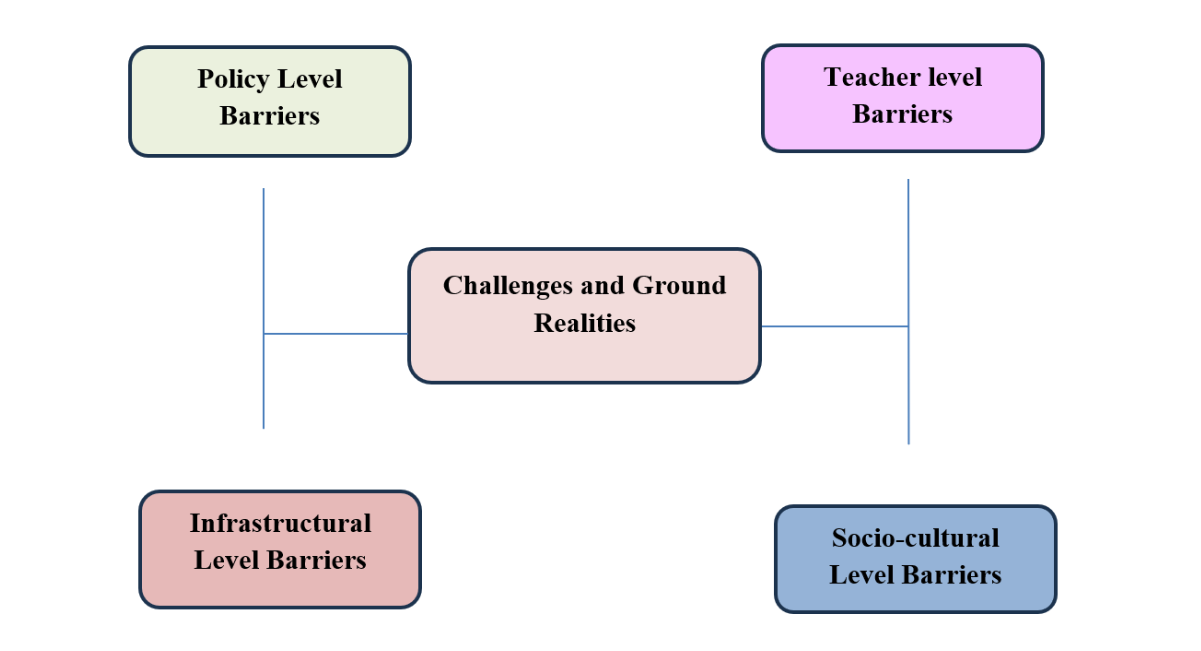
Figure 1: Block Representation of Environmental Education in Pakistan: Policy Commitments and Ground Realities
Theoretical Framework
Environmental Education (EE) and Education for Sustainable Development (ESD)
Environmental education (EE) and education for sustainable development (ESD) provides the conceptual foundation for understanding how teachers promote environmental awareness and sustainability-related behaviors among students. Environmental education primarily focuses on developing knowledge, awareness, and positive attitudes toward environmental protection, while ESD extends this perspective by emphasizing long-term behavioral change, critical thinking, and responsible decision-making for sustainable living. Within this framework, environmental awareness refers to teachers and students understanding of environmental issues and their sense of responsibility toward environmental protection. Behavior change, in contrast, involves the translation if this awareness into environmentally responsible actions and practices. Pedagogical practices represent the instructional strategies and classroom approaches through which teachers facilitate both awareness and behavior change, including participatory learning, inquiry-based activities and real-life problem-solving.
These concepts are interconnected but distinct. While awareness provides the cognitive and attitudinal foundation as the mechanism through which both are developed in educational settings. Situating the present review within the EE and ESD framework allows for a more integrated understanding for how teacher knowledge, instructional strategies, and institutional support collectively shape environmental learning outcomes at the secondary level.
METHODOLOGY
This study adopts a systematic narrative literature review design to synthesize existing research on promoting environmental awareness among secondary school teachers. A literature review design was selected to identify dominate themes, effective practices, and persistent barriers in EE while allowing critical comparison across diverse educational contexts; the review focuses on teacher training, classroom pedagogical practices, and intuitional and policy support mechanisms influencing environmental education at the secondary level.
Data Sources and Search Strategy
This research gathers data from established academic institutions through their academic databases which include ERIC (Education Resource Information Centre), Google Scholar, JSTOR, Springer, UNESCO databases, Research Gate and multiple educational websites. These sources were selected to ensure broad coverage of peer-reviewed and policy-relevant literature in environmental education and education for sustainable development (ESD). Key search terms included combination of: environmental education, teacher training, environmental awareness, secondary education, sustainability education, curriculum integration, and community engagement. Boolean operators were used to refine and combine keywords to improve the relevance of search result.
Inclusion and Exclusion Criteria
The research selects articles and reports through inclusion criteria which require articles to be peer-reviewed and published between 2000 and 2025 while focusing on secondary school teachers who teach environmental education and studies about teacher training and curriculum development and teaching methods and community involvement.
The exclusion criteria eliminate research studies which concentrate solely on primary education or tertiary education and articles which lack peer review and opinion pieces and publications which are not written in English.
Quality Assessment and Risk of Bias
To strengthen methodological rigor the selected studies were assessed for quality based on clarity of research design and objectives, relevance to secondary-level environmental education, transparency of data collection and analysis methods, theoretical and empirical contribution of EE or ESD. Studies with weak methodological descriptions or limited relevance were excluded during the eligibility stages. While publication bias cannot be entirely eliminated, the use of multiple databases, peer-reviewed sources, and explicit inclusion criteria helped minimize selection bias and enhance the credibility of the review.
Literature Selection Process
The review process used a simplified PRISMA method to achieve both transparent reporting and strict methodological standards. The initial search resulted in 78 identified studies through the use of key terms which included environmental education, teacher trainings, environmental awareness, secondary education and curriculum integration. During the screening stage, duplicated studies were removed, and titles and abstracts were reviewed for relevance leaving 25 studies and an eligibility check was then conducted, during which the full texts of these 25 studies were examined to determine whether that met the established inclusion criteria; 15 studies qualified. Finally, in the selection stage, 10 studies were chosen based on their high relevance, methodological soundness, and strong alignment with the objectives of this literature review. The study selection process followed PRISMA-style guidelines, and the identification, screening, eligibility, and inclusion of studies are summarized in figure 2.
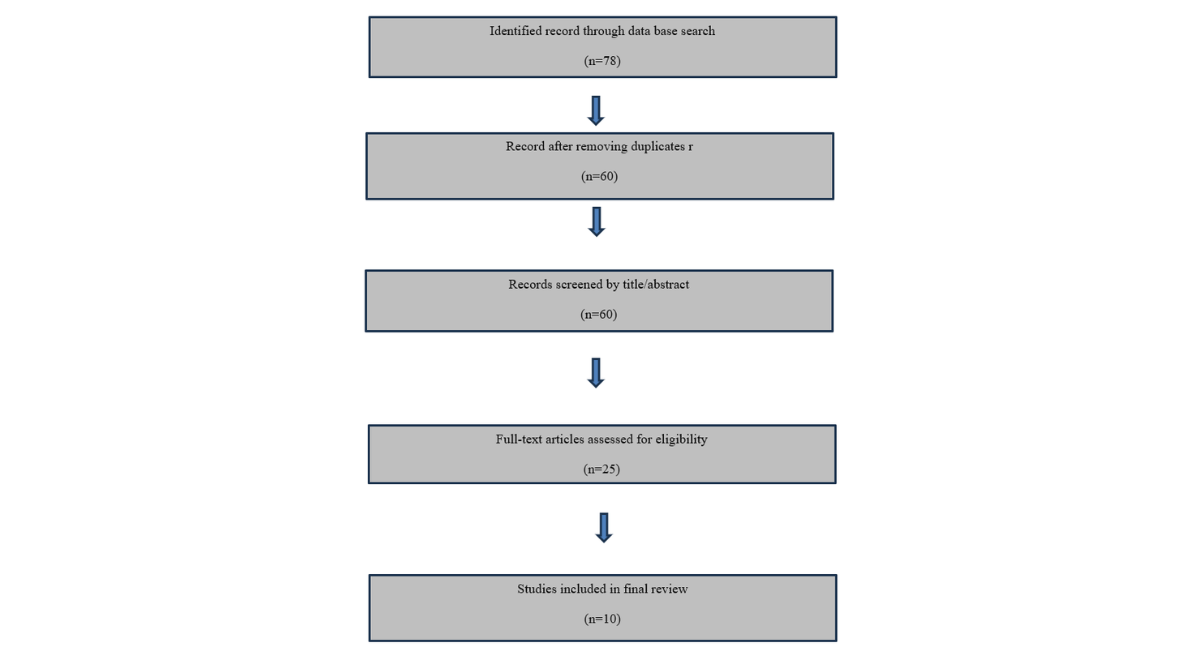
Figure 2: PRISMA-style flow diagram illustrating the study selection process
Data Analysis
A deductive thematic analysis was employed to derive key themes; studies were coded according to recurring concepts such as teacher knowledge, pedagogy, institutional support, and policy barriers. These codes were clustered into three main thematic areas: teachers training and knowledge, classroom practices and pedagogical approaches, and policy gaps, these themes from the foundations of literature review section and guided the synthesis and discussion of findings. A deductive thematic analysis was applied, the coding process was carried out manually, guided by predefined themes derived from the research questions and existing literature. Since the data set was limited to selected academic studies, the use of qualitative data analysis software (NVivo) was not required.
|
S.No |
Excerpt from Literature |
Assigned Code |
Themes |
|
1. |
Teachers lack confidence in delivering environmental topics due to inadequate trainings. |
Inadequate EE training |
Teacher Training and Knowledge |
|
2. |
Students showed greater interest when lessons involved field trips and practical knowledge |
Experiential Learning Benefits |
Classroom Practices |
|
3. |
The curriculum includes environmental topics, but teachers skip them due to syllabus pressure |
Curriculum Neglect |
Policy and Institutional Gaps |
|
4. |
Environmental awareness content exists inn textbooks from grade 4 to 14 but not taught effectively. |
Ineffective implementation |
Policy and Institutional Gaps |
|
5. |
Professional Development (PD) programs should focus more on hands-on EE teaching techniques. |
Need practical professional development |
Teacher Training and Knowledge |
Table 2: Themes Generated from Thematic Analysis of Reviewed Studies
Note: This table was developed by author to present themes emerging from the thematic analysis
Across the review studies, there is strong convergence on the central role of teachers in promoting environmental awareness at the secondary level and the literature consistently emphasized teacher knowledge, attitudes, and pedagogical engagement as a key factor influencing students’ environmental understanding and pro-environmental behaviors. However, notable divergences emerge in how these themes manifest across contexts. Studies conducted in developed countries frequently report structured teacher training, curriculum flexibility, and access to instructional resources. In contrast, studies from Pakistan and similar developing contexts highlights systemic barriers such as limited professional development opportunities, rigid curricula, and insufficient institutional support. These patterns indicate that while thematic priorities in environmental education are broadly shared, their practical implementation is shaped by contextual and institutional conditions. This suggests that environmental education strategies must be adapted to local realities rather than transferred uniformly across educational systems.
DISCUSSION
A key contribution of this review lies in its integrative perspective, which brings together teacher training, pedagogical practices, and policy dimensions within a single analytical framework. Unlike studies that examine these factors in isolation, this review demonstrates how their interaction shapes environmental outcomes particularly in developing contexts such as Pakistan. The findings of this review reveal detection of the critical role that secondary school teachers play in fostering environmental awareness among students. Across diverse contexts, three major themes emerge teacher trainings, pedagogical practices, and institutional support each of which directly influences the success or failure of EE initiatives in schools. The review of ten studies paraphrases that secondary school teachers play a central role in fostering environmental awareness and justifiable attitude among students; most researchers agree that teachers training remain the pillar of an effective environmental education. Naikoo and Begum, and Ishaque, found that while teachers show awareness of environment of environmental issues, they lack practical, hands-on practices to incorporate environmental education into lessons. Similarly, Fang, Smith and Tran Ho highlight that motivated and well-trained teachers act as environmental leaders, using fieldwork and projects to strengthen school culture; Halmatov and Ata adds that empowering teachers to work together with parents improves environmental learning outcomes.
Pedagogical practices also strongly influence how students engage with environmental topics; studies by Smith, Hnatyuk, and fang emphasizes that participatory and inquiry based. Approaches promote critical thinking and lasting behavioral learning outcomes. Lee and Liu and Guo found that exposure to hands-on environmental learning improves science and literacy and student’s efficacy, while Farooqui and Fatmah revealed that, despite policy recognition, EE implementation in Pakistan remains weak and exam driven, limiting interactive teaching.
The effectiveness with which EE is applied also defends on the institutional and policy factors. Naikoo & Begum and Ishaque noticed poor resources provision and time constraints, whereas, Smith, Fang and Hnytyuk called for stronger institutional support and policy enforcement; Farooqi and Fatmiah stressed on the disparities between urban and rural areas and weak policy documents. The present situation demonstrates that Pakistan's educational system implements environmental education in a fragmented manner because of three main obstacles which include deficient institutional support, inflexible academic programs, and inadequate training programs. The research demonstrates that environmental educational programs exist mostly in theoretical form but they fail to deliver consistent practical results. The implementation of environmental education in pre-service and in-service teacher training programs will create more engaging and culturally relevant learning experiences through the use of participatory teaching methods and new educational policies. The development of school-community partnerships will enhance school functions as environmental knowledge centers which deliver rural environmental education programs that help communities develop sustainable environmental practices.
RECOMMENDATIONS
Based on the literature reviewed and the contextual realities of Pakistan’s education system, the following considered actions are recommended to further improve the effectiveness of environmental education through teacher empowerment and the institutional reform these recommendations are proposed at classroom, institutional, and policy levels and identify key stakeholders responsible for implementation, including teachers, school leaders, curriculum developers, and education authorities.
Teacher Professional Development
First, preparation and professional development program of teachers should be enhanced by introducing practical, hands-on EE modules into the pre-service and in-service teacher training curriculum. Outdoor learning, community projects, climate data analysis, and fieldwork safety skills should be included in the module, guided by UNESCO’s Education for Sustainable Development (ESD) framework, to enable teachers to confidently apply the principles of EE in real contexts. District education departments and teacher training institutions should collaboratively organize regular workshops and mentoring programs to support teachers in implementing environmental education effectively.
Curriculum and Pedagogical Practices
Second, we also believe that the environmental context should be embedded across rather than isolated to one discipline of science, social studies and language. Curriculum developers should design locally relevant lesson banks aligned with student learning outcomes in order to attain learning through interdisciplinary learning and critical thinking as suggested by [29]. Encouraging experiential and project-based approaches such as environmental audit, field trips, debates and inquiry projects will make EE more inviting and reflective. To make way for these approaches, reforms should seek to reduce exam pressure and allot teachers with greater curricular flexibility. Curriculum wings and textbook boards should work with experienced teachers to develop locally relevant environmental lesson plans and activity guides.
Institutional and Policy Support
Furthermore, the best wat to implement EE is to make sure adequate infrastructure and equal access to learning resources. All Schools in both urban and rural areas must be equally assured of clean environment, digital tools, and teaching aids. Special attention should be given to undeserved area to reduce the urban rural gap in EE opportunities. Simultaneously, institutional and policy support must be reinforced through the implementation of existing EE frameworks, the provision of dedicated budgets, and development of monitoring and evaluation system by ministries and school boards. Recognition programs or micro-credentials could further motivate teachers to pursue continuous professional learning of EE. Provincial education departments should allocate dedicated budgets and establish monitoring mechanisms to ensure effective implementation of environmental education initiatives.
Community Engagement and Future Research
Lastly, schools can become hubs for environmental issues including waste management, water conservation, and disaster preparedness by cultivating partnership with local government, non-governmental organizations. Longitudinal studies and awareness campaign should be given top priority by higher education institutions and education departments in order to evacuate and promote the impacts of teacher-led EE programs across the country. Universities and research institutions should collaborate with schools to document best practices and generate evidence for policy improvement.
Effective environmental education requires coordinated efforts among teacher education institutions, schools, policymakers, and local communities. Strengthening teacher capacity, improving classroom practices, and ensuring institutional and policy support must occur simultaneously to achieve meaningful environmental awareness and sustainable behavioral change among students in Pakistan.
CONCLUSION
Teachers in secondary schools help students develop environmental awareness through their instructional methods and their environmental education programs. Environmental education research shows that three main factors, which include teacher training and classroom teaching methods and policy backing, determine how successful environmental education programs will be. The educational system needs to include experiential learning through community-based systems which educational institutions need to build their teacher training programs while interactive educational approaches and field research and actual problem-solving methods need to become more used by students to develop their analytical abilities through these methods which face difficulties because of curriculum limitations and resource deficiencies and test-driven educational systems. Environmental education deserves implementation according to existing policies but actual practice shows varying degrees of success particularly in schools located in rural areas with limited resources. The educational system needs to implement complete reform which will establish environmental objectives as the guiding principle for all aspects of curriculum creation and financial distribution and teacher development procedures. The proposed reform process requires specific management guidelines which will direct future development efforts. The three-year implementation plan will begin with the drafting of student learning outcomes (SLOs) and the creation of sample lessons which will first be tested in various educational institutions before they are used in provincial-level projects and assessments and micro-credential programs which will receive support from UNESCO’s ESD technical assistance and its peer networks. The partnership between local universities and educational institutions will create a research base which will enable them to monitor changes in teaching methods and student comprehension.
REFERENCES
- Kollmuss A, Agyeman J. Mind the gap: why do people act environmentally and what are the barriers to pro-environmental behavior?. Environmental education research. 2002 ;8(3):239-60. [Crossref] [Google Scholar]
- Daraz S, Irshadullah HM, Sohail M. Role of teachers in the promotion of environmental education at the secondary school level in district Mardan. Qlantic Journal of Social Sciences. 2023;4(3):207-13. [Crossref] [Google Scholar]
- Naikoo AA, Begum S. Knowledge of secondary school teachers towards environmental education and sustainable development: a case study of high school teachers of District Kupwara of Jammu and Kashmir state, India. International Journal of Research in Social Sciences. 2018;8(1):875-88. [Google Scholar]
- Van De Wetering J, Leijten P, Spitzer J, Thomaes S. Does environmental education benefit environmental outcomes in children and adolescents? A meta-analysis. Journal of Environmental Psychology. 2022 ;81:101782. [Crossref] [Google Scholar]
- Fatima B, Parveen F, Sawani S, Rozi S. Improving global warming awareness among adolescents in Karachi, Pakistan: a quasi-experimental school-based intervention. Discover Public Health. 2025;22(1):499. [Crossref] [Google Scholar]
- Rafiq S, Afzal A, Kamran F. Impact of school environment on students’ academic achievements at the university level. VFAST Transactions on Education and Social Sciences. 2022;10(4):19-30. [Google Scholar]
- Murphy MM. Plato's Philosophy of Education and the Common Core Debate. Online Submission. 2015. [Google Scholar]
- Smith W. The leadership role of teachers and environment club coordinators in promoting ecocentrism in secondary schools: Teachers as exemplars of environmental education. Australian Journal of Environmental Education. 2020;36(1):63-80. [Crossref] [Google Scholar]
- Ishaque B, Paul IA, Fatima H. Exploring environmental education content and pedagogical skills for trainee teachers: A study on ecological literacy, environmental issues, and practical teaching approaches. Open Journal of Social Sciences. 2025;13(1):154-74. [Google Scholar]
- Lee A. The importance of cultivating awareness of environmental matters in science classrooms: a cross-regional study. Australian Journal of Environmental Education. 2023 ;39(4):467-91. [Crossref] [Google Scholar]
- Liu S, Guo L. Based on environmental education to study the correlation between environmental knowledge and environmental value. Eurasia Journal of Mathematics, Science and Technology Education. 2018;14(7):3311-9. [Crossref] [Google Scholar]
- Halmatov M, Ekin S. An assessment of the contribution of parents to environmental awareness for children in the preschool age of 5-6 years. International Journal of Education, Science and Technology. 2017;3(2):78-87. [Google Scholar]
- Hnatyuk V, Pshenychna N, Kara S, Kolodii V, Yaroshchuk L. Education's role in fostering environmental awareness and advancing sustainable development within a holistic framework. Multidisciplinary Reviews. 2024;7. [Crossref] [Google Scholar]
- Tran Ho U, Lepage BA, Fang WT. Environmental education in pre-school teacher training programs in Vietnam: situations and challenges. Journal of Early Childhood Teacher Education. 2023;44(4):703-22. [Crossref] [Google Scholar]
- Fang WT, Hassan AA, LePage BA. Outdoor education. InThe living environmental education: Sound science toward a cleaner, safer, and healthier future 2022(pp. 229-260). Singapore: Springer Nature Singapore. [Crossref] [Google Scholar]
- Farooqi A, Fatimah H. Historical perspective of environment education and its objectives in Pakistan. Science Technology and Development. 2010;21. [Google Scholar]
- Lähdemäki J. Case study: The Finnish national curriculum 2016—A co-created national education policy. Sustainability, human well-being, and the future of education. 2019:397-422. [Crossref] [Google Scholar]
- Biswas AK. Climate change discourse in national curriculum of primary education in Bangladesh (Doctoral dissertation, BRAC University). [Google Scholar]
- Kenya Institute of Curriculum Development. (2014). Environmental Activities | Learning
- (2022). Pakistan | CLIMATE CHANGE COMMUNICATION AND EDUCATION
- Mazari H, Baloch I, Thinley S, Radford K, Kaye T, Perry F. Learning Continuity in Response to Climate Emergencies: Pakistan's 2022 Floods. EdTech Hub; 2023. [Google Scholar]
- Government of Pakistan. (2009). NATIONAL EDUCATION POLICY 2009 Ministry of Education Government of Pakistan.
- Khanum A. Environmentally conscious global citizens: an evolution from environmental education to education for sustainable development in Pakistan (Doctoral dissertation, University of Glasgow). [Google Scholar]
- Saeed A. EDUCATORS'PERCEPTIONS OF CLIMATE CHANGE EDUCATION IN PAKISTAN & STUDENTS’READINESS. Pakistan Journal of Educational Research. 2023;6(3). [Crossref] [Google Scholar]
- Rehmat Ullah, S., Mahmood, T., & Younas Mughal, M. (2022). Curriculum Analysis Regarding Education Sustainable Development Content: Society, Environment, And Economy. Journal of Positive School Psychology , 6(11), 3172–3181
- Mughal SH. Infusing environmental themes into existing primary in-service teacher education programs in science. [Google Scholar]
- Waqar Y, Rashid S, Anis F, Muhammad Y. Digital divide & inclusive education: Examining how unequal access to technology affects educational inclusivity in urban versus rural Pakistan. Journal of Social & Organizational Matters. 2024;3(3):1-3. [Crossref] [Google Scholar]
- Begum A, Jingwei L, Marwat IU, Khan S, Han H, Ariza-Montes A. Evaluating the impact of environmental education on ecologically friendly behavior of university students in Pakistan: The roles of environmental responsibility and Islamic values. Sustainability. 2021;13(18):10188. [Crossref] [Google Scholar]
- Plutzer E, Branch G, Townley AL. Climate change education in US middle schools: changes over five pivotal years. Journal of Microbiology and Biology Education. 2024 ;25(2):e00015-24. [Crossref] [Google Scholar]

Article Processing Timeline
| 2-5 Days | Initial Quality & Plagiarism Check |
| 25-35 Days |
Peer Review Feedback |
| 45-60 Days | Total article processing time |
EDITORIAL & PUBLICATION INFORMATION
| English | Publication Language |
| Single-Blind | Peer-Review Model |
| 17% | Acceptance Rate |
| <18% | Similarity Screening Guideline |
| Open Access | Access Model |
All manuscripts undergo editorial assessment and originality screening as part of the journal's evaluation process. The acceptance rate shown is based on journal-level editorial data and may change over time. Similarity reports are assessed editorially and are not interpreted solely on the basis of a numerical similarity score.
Why Publish with us?
Ethics & Policies
Editorial & Management
Useful Links
Journal Highlights
Open Access Journals
Journal Flyer