


Journal of Climate Change and Pollution
ISSN: 3108-2025
 Download PDF
ABSTRACT
The research introduces the creation and assessment of a technological strip-tillage and volumetric (3-D) spraying system (TIV) aimed at boosting resource efficiency and environmental sustainability in crop production. This TIV system combines several soil and plant management tasks into one pass, performing 3–4 mechanical tillage operations while ensuring precise agrochemical application. With adjustable cultivation widths, it can adapt to different crop needs, improving soil aeration, moisture retention, and nutrient availability leading to yield increases of up to 20%. Compared to conventional plow-based tillage, the TIV system reduces human-induced soil impact by 1.8 times, improving both economic and ecological outcomes. Its advanced 3-D volumetric spraying feature allows fertilizers and crop protection agents to be applied directly to cultivated plants, reducing drift and off-target contamination. The system ensures a more even droplet distribution across plant layers 30–19% coverage from upper to lower leaves and an extra 28% on stems and leaf undersides outperforming traditional continuous spraying approaches. Field experiments in the Volgograd region (Russia) revealed that strip application technologies could boost ecological efficiency by 20–39%, depending on crop row spacing. These findings demonstrate that the TIV system aligns with regenerative agriculture and green economy principles, supporting high productivity while cutting input costs, chemical use, and environmental pollution. Future developments aim to enhance the TIV’s adaptability for vegetable and melon crops and optimize strip width for various cultivation systems.
Keywords: Agricultural machinery; Vegetables; Irrigation system; Strip system
INTRODUCTION
The impacts of climate change on agriculture are becoming more apparent world-wide [1]. Reducing crop losses is crucial to meet the escalating food demand in light of therapidly growing global population approaching eight billion [2,3]. For a long time, destructive land use methods have been used in crop production. The present stage of civilization's development and implementation of new techniques and methods of tillage and crops require the solution of technological, economic, and environmental problems simultaneously with the possibility of creating conditions for the regeneration of soil resources [4]. Implementing these approaches became possible due to the development of new technology for the cultivation of crops based on the exact selective impact on the object of processing [5].
The increased need of humankind for foods highlights the intensification of agricultural production [6]. It is necessary either to increase the size of the sown area or to look for new approaches to improve agricultural land productivity [7]. Developing new areas for cultivation is possible due to the intensification of soil cultivation. Nevertheless, this will decrease the effectiveness of decarbonization programs since this approach will inevitably increase greenhouse gas emissions. Therefore, searching for new solutions to conserve natural resources while obtaining stable predicted crop yields is a vital scientific and technical task [8-9].
Regenerative agriculture is a forward-thinking way of farming that aims to restore and strengthen the natural balance of ecosystems while keeping farms productive. Unlike traditional farming, which can wear down soil and water resources over time, regenerative practices focus on rebuilding soil health, supporting biodiversity, and capturing carbon from the atmosphere [10]. Farmers use methods like rotating crops, planting cover crops, reducing tillage, composting, and incorporating livestock to enrich the soil and boost its fertility [11]. These practices help the land hold more water, prevent erosion, and make crops more resistant to the challenges of climate change. By reviving soil life and promoting natural cycles, regenerative agriculture not only enhances long-term yields and ecosystem health but also plays a key role in fighting climate change [12]. In essence, it’s about creating a sustainable, circular food system that benefits farmers, consumers, and all planet ecosystem.
Planning and organizing activities to protect the environment are a priority in the sustainable development of many countries [13]. The development of new approaches and development tools in the agro-industrial complex is an essential link in planning activities aimed at implementing the priority areas of global environmental culture [14]. When forming these measures, technologies in the field of agricultural production are brought to the fore, which will not require the destruction of natural resources for the sake of human life [15-16]. On the contrary, by introducing these technologies, natural resources are a logical structural element in a long chain of measures for their competent use, soil fertility restoration, and environmental pollution reduction. As a result, new production technologies will improve life quality [17-18].
The need to develop a new generation of agricultural technology is evident. It is crucial to preserve the accumulated experience of classical technologies for tillage and care of plantations, to reduce damaging the ecosystem, and to increase the productivity of arable land and the quality indicators of products [9]. At the same time, it is necessary to competently combine the principles of resource-saving, saving labor and money costs, based on the soil and climatic features of the territories, considering the financial capabilities of a modern farmer.
MATERIALS AND METHODS
The main direction of the development of regenerative agriculture is focused on the regeneration of the topsoil, which is the reason for increasing biodiversity, improving ecosystems, and increasing the resilience and vitality of agricultural soils. Implementing approaches to regenerative farming formed the basis of research on developing technology for selective impact on soil and plant or Selective Impact Technology [19].
Mechanical tillage, implemented in the TIV technology, is carried out according to the strip technology process within the framework of the Strip-till technology. Soil and Plant Protection and Plant Nutrition or Soil and Plant Protection and Nutrition operations are also performed in a strip process. These directions are based on a competent and reasonable combination of measures to improve the efficiency of agricultural production with a differentiated and safe use of natural resources and a reduction in the anthropogenic load on the environment. In developing and implementing TIV, the positive experience gained from using traditional farming systems and mechanical tillage techniques was combined with new, improved deep loosening techniques and procedures for applying fertilizers and plant protection products [20].
The effectiveness of this technology is confirmed in three directions in terms of manufacturability, environmental friendliness, and economy. Strip technology involves the impact on the soil in strips, where the necessary favorable conditions are created for growing cultivated plants. Mechanical tillage during the implementation of TIV can be carried out using various working bodies that make intra-soil ridges or limit the profile of the cultivated strip. To do this, we recommend using the developed and patented working bodies that allow this operation to be carried out with high-quality indicators and high efficiency while observing the principles of regenerative agriculture [21-22].
RESULTS AND DISCUSSION
a - chisel processing; b - continuous processing with a strip recess; c - slotting; d - Strip-till
Figure 1: The working bodies' profile of the treated seam for the technological strip process
A decrease in anthropogenic impact confirms the environmental friendliness of TIV during mechanical tillage. Compared to mechanical tillage in traditional farming systems with plow processing, the reduction in anthropogenic effect on the soil is 1.8 times lower. The economic efficiency of various chisel technologies implemented in the production of row crops in the Volgograd region (Russia) using the developed working bodies allows us to state that in the production of row crops (for example, sunflower), the strip technology occupies a leading position. The developed working bodies perform the technological process within the framework of the strip technology. The profile of the treated formation contributes to the active accumulation of moisture and its concentration in the growth zones of cultivated plants (Figure 1).
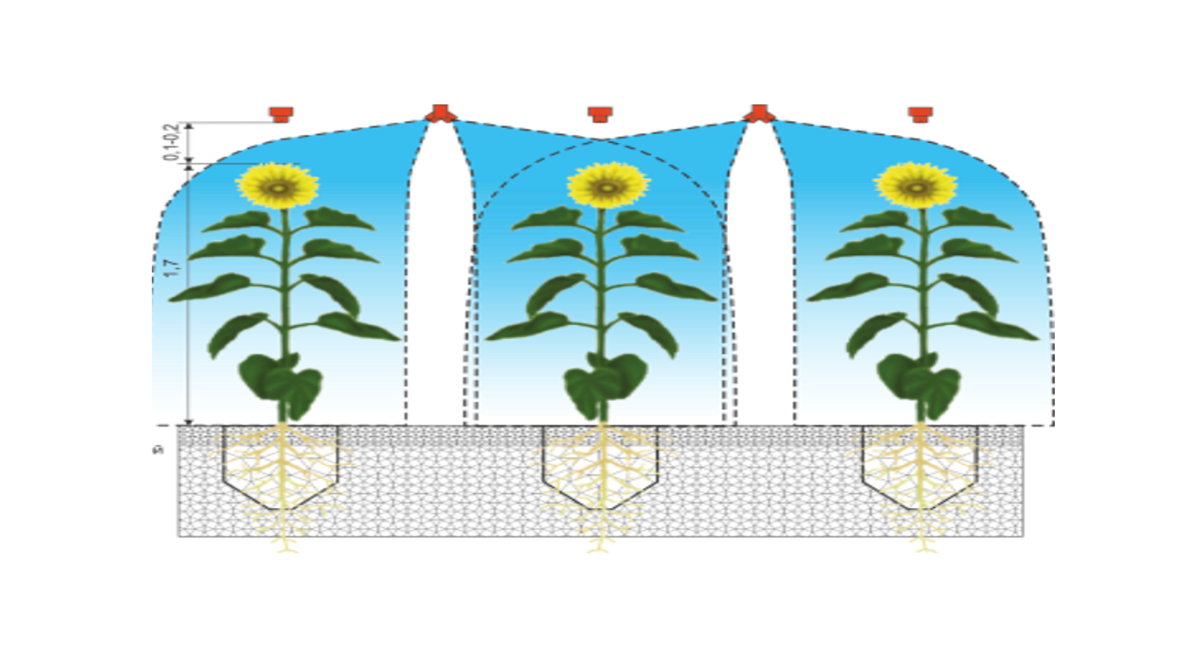
Figure 2: Scheme of mixing the working fluid flows during spraying according to the 3-D volumetric technological process as part of the implementation of the HZPR
Deep tillage contributes to the active development of a robust root system of cultivated plants within the treated strip and the use of soil moisture from deep layers [23]. This gives an excellent result in risky farming areas with low annual rainfall. The implementation of TIV in chemical protection and plant nutrition is carried out considering the developed innovative technological process of 3-D volumetric spraying [24]. This specialized process allows the application of the working solution of plant protection and/or nutrition products by the strip method strictly to the processing object. The effect of volumetric 3-D is expressed in the qualitative distribution of the working fluid over all surfaces of the cultivated plant (Figure 2).
This approach solves resource-saving problems by reducing the hectare application rate, and the competent redistribution of working solutions from the aisle to the processing object allows for achieving good economic and environmental indicators [25]. The new flow formed by the confluence of flows from two adjacent nozzles permits changing the new flow's geometric parameters and reducing the distance from the sprayers to the top of the plants up to 2 times. That is, a new method of applying the solution to the object of treatment reduces the drop's flight time to reach the target object. Due to this, the drift of the working solution outside the treated strip is diminished, and the CPP technology's environmental friendliness within the TIV framework is increased. At the same time, the possibility of carrying out continuous spraying is preserved.
|
Spraying method |
Tier |
Coverage, % |
Droplet size, µm |
|
solid |
Upper |
49 |
520 |
|
Average |
39 |
469 |
|
|
Lower |
12 |
424 |
|
|
Stem |
0 |
0 |
|
|
Turnover leaves |
0 |
0 |
|
|
Interband space |
36 |
497 |
|
|
strip |
Upper |
30 |
310 |
|
Average |
23 |
280 |
|
|
Lower |
19 |
282 |
|
|
Stem |
13 |
303 |
|
|
Turnover leaves |
15 |
225 |
|
|
Interband space |
17 |
312 |
Table 1: Drop of the solution on the object of processing from the method of application by tiers
As a result of assessing the quality indicators by the indicator method (using the example of sunflower in the phase of 3-4 pairs of leaves), the results were obtained, indicating the effectiveness of the new spraying method in terms of coverage and drop size (Table 1). The strip method processes the leaf's reverse part and the cultivated plant's stem with good quality indicators. In addition, the new spraying method format of droplets of a more regular size within the generated stream.
As seen in Table 1, the qualitative indicators have significant differences depending on the substance's application to the treatment object. The difference in coverage degree of the spraying solution depends on the leaves' tiers, the leaf's side, and the stem of the cultivated plant. With a continuous method of applying the drug to the object of treatment (for example, sunflower in the phase of 3-4 pairs of leaves), the distribution of the applied drug was as follows: 49% of settled drops were found on the upper tier, 39% on the middle tier, and 12% on the lower tier. At the same time, no drops of the solution were found on the reverse side of the leaves and the stem. The treatment localization is in the plant's upper part.
Furthermore, the leaves on the lower tier are processed in small quantities (Figure 3). When treating diseases and pests, it is crucial to apply the drug to the places of localization of the disease or pests. Quality indicators improve when analyzing data on the distribution of droplets on an object treated with an innovative method of strip chemical treatment with a 3-D spray effect. The distribution of the applied solution occurs more evenly over the tiers of the cultivated plant. 30% of all settled drops were found on the upper tier, 23% on the middle tier, and 19% on the lower tier. 15% of the drug was recorded on the reverse side of the leaves and 13% on the stem. The quality indicators for the strip spraying are higher in coverage than continuous.
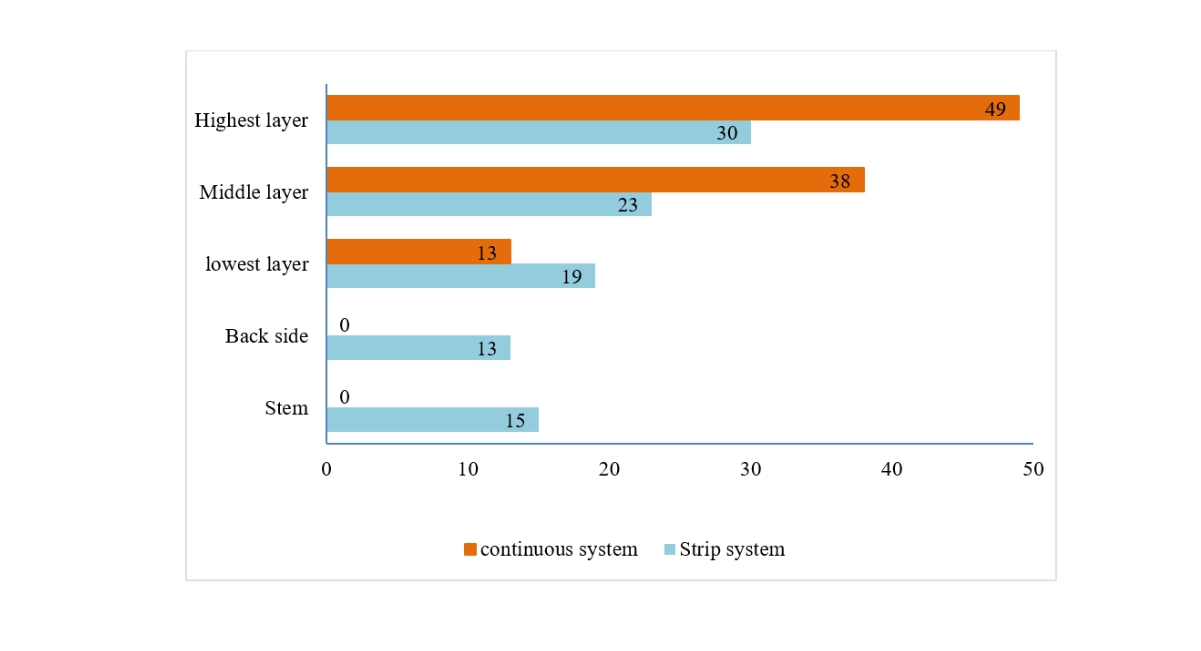
Figure 3: The distribution of the applied solution in both systems (continuous and strip)
It can be concluded that the droplet size is significantly changed in the new method of strip application of the working solution based on the merging of two streams, due to which the size and number of droplets formed change. Smaller drops can stay on the treated surface for a longer time. Also, the smaller droplet size improves the new strip spraying method's environmental friendliness by improving the inter-strip space's ecological performance. Let's take a beneficial effect in operations for chemical protection against diseases and pests - applying a drug to a crop, and consider the impact of pollution to be the ingress of drops of chemicals on the soil outside the treatment object, then due to the redistribution of the applied solutions from the aisle to the cultivated plant with an innovative method of chemical strip treatment. The effect of soil pollution can be significantly reduced.
This reduction depends on the ratio of row spacing and stripes with cultivated plants, which have a significant difference. For example, for row crops with a row spacing of 0.7 m, the ecological effect is +20%, and for crops with a row spacing of 0.9 m. (For example, vegetable crops and cotton) +39%. Studies on the possibility of introducing strip spraying technology using the Volgograd region (Russia) model show that considering crops intended for cultivation using strip technology within the framework of the TIV, the number of modernized sprayers can be 2.5 thousand or more. If this experience is extended to the entire territory of Russia, then their number is already more than 40 thousand.
CONCLUSION
The proposed TIV allows the implementation of an integrated approach to growing crop products using a strip technology process. Further development of TIV is expected to improve technological and technical solutions for adapting the sprayer to vegetable and melon crops, with the possibility of operational regulation of the width of the treated strip. Further adaptation of TIV for crops with a broader row spacing opens up vast opportunities for improving the environmental friendliness of the technology up to two times due to a more significant reduction in the hectare load when applying soil and plant protection substances and plant nutrition in liquid forms without reducing the rate of application.
AUTHOR CONTRIBUTIONS
Conceptualization, M.A. and M.Z.; methodology, M.A., M.Z. and E.P.; software, M.A.; validation, E.P., M.L. and M.A.; formal analysis, M.A.; investigation, M.Z. and M.L.; resources, E.P. and M.L.; data curation, M.A.; writing—original draft preparation, M.A. and M.Z.; writing—review and editing, M.A., M.Z. and E.P.; visualization, M.L. and Y.P.; supervision, S.V. and Y.P.; project administration, M.A.; funding acquisition, E.P. All authors have read and agreed to the published version of the manuscript.
FUNDING
This research received no external funding
DATA AVAILABILITY STATEMENT
The data presented in this work are available in this article
CONFLICTS OF INTEREST
The authors declare no conflict of interest
REFERENCES
- Kurbanbayev A, Zargar M, Yancheva H, Stybayev G, Serekpayev N, et al. Ameliorating Forage Crop Resilience in Dry Steppe Zone Using Millet Growth Dynamics. Agronomy. 2023;13(12):3053. [ Crossref] [ Google Scholar]
- Abdelkader M, Suliman AA, Salem SS, Assiya A, Voronina L,et al. Studying the combined impact of salinity and drought stress-simulated conditions on physio-biochemical characteristics of lettuce plant. Horticulturae. 2024;10(11):1186. [ Crossref] [ Google Scholar]
- Suliman AA, Elkhawaga FA, Zargar M, Bayat M, Pakina E, et al. Boosting resilience and efficiency of tomato fields to heat stress tolerance using cytokinin (6-benzylaminopurine). Horticulturae. 2024;10(2):170. [ Crossref] [ Google Scholar]
- Tsyliuryk OI, Tkalich YI, Kolesnykova KV, Rudakov YМ, Tkalich YY. Modern trends and development directions of soil tillage systems in the world and Ukraine. Agrology. 2025;8(1):48-54. [ Crossref] [ Google Scholar]
- Lee WS, Alchanatis V, Yang C, Hirafuji M, Moshou D, et al. Sensing technologies for precision specialty crop production. Computers and electronics in agriculture. 2010;74(1):2-33. [ Crossref] [ Google Scholar]
- Rockström J, Williams J, Daily G, Noble A, Matthews N, et al. Sustainable intensification of agriculture for human prosperity and global sustainability. Ambio. 2017;46(1):4-17. [ Crossref] [ Google Scholar] [ PubMed]
- Kopittke PM, Menzies NW, Wang P, McKenna BA, Lombi E. Soil and the intensification of agriculture for global food security. Environment international. 2019;132:105078. [ Crossref] [ Google Scholar] [ PubMed]
- Nesmiyan AY, Chernovolov VA, Semenihin AM, Zabrodin VP, Nikitchenko SL. A review of assessment of the machinery tillage tools’ performance for higher crop production efficiencies. Research on Crops. 2018;19(3):560-7. [ Crossref] [ Google Scholar]
- Bozhko IV, Parhomenko GG, Kambulov SI. Improving the design of the working body for layer-by-layer tillage. Tractors and Agricultural Machinery. 2018;85(5):26-31. [ Crossref] [ Google Scholar]
- Sher A, Li H, ullah A, Hamid Y, Nasir B, et al. Importance of regenerative agriculture: Climate, soil health, biodiversity and its socioecological impact. Discover Sustainability. 2024;5(1):462. [ Crossref] [ Google Scholar]
- Nair A, Delate K. Composting, crop rotation, and cover crop practices in organic vegetable production. InOrganic farming for sustainable agriculture 2016 (pp. 231-257). Cham: Springer International Publishing. [ Crossref] [ Google Scholar]
- Rhodes CJ. The imperative for regenerative agriculture. Science progress. 2017;100(1):80-129. [ Crossref] [ Google Scholar] [ PubMed]
- Abdelkader M, Zargar M, Murtazova KM, Nakhaev MR. Life Cycle Assessment of the Cultivation Processes for the Main Vegetable Crops in Southern Egypt. Agronomy. 2022;12(7):1527. [ Crossref] [ Google Scholar]
- Ebrahimi MA, Khoshtaghaza MH, Minaei S, Jamshidi B. Methods and applications of new technologies used for reducing of chemical usage and controlling of pests (a review). Agricultural Engineering International: CIGR Journal. 2018;20(2). [ Google Scholar]
- Haber W. Energy, food, and land—The ecological traps of humankind. Environmental Science and Pollution Research-International. 2007;14(6):359-65. [ Crossref] [ Google Scholar] [ PubMed]
- Sassenrath GF, Heilman P, Luschei E, Bennett GL, Fitzgerald G,et al. Technology, complexity and change in agricultural production systems. Renewable Agriculture and Food Systems. 2008;23(4):285-95. [ Crossref] [ Google Scholar]
- Jaskulska I, Gałęzewski L, Piekarczyk M, Jaskulski D. Strip-till technology-a method for uniformity in the emergence and plant growth of winter rapeseed (Brassica napus L.) in different environmental conditions of Northern Poland. Italian Journal of Agronomy. 2018;13(3):981. [ Crossref] [ Google Scholar]
- Mi GuoHua MG, Wu DaLi WD, Chen YanLing CY, Xia TingTing XT, Feng GuoZhong FG, et al. The ways to reduce chemical fertilizer input and increase fertilizer use efficiency in maize in Northeast China. [ Google Scholar]
- Khangura R, Ferris D, Wagg C, Bowyer J. Regenerative agriculture—A literature review on the practices and mechanisms used to improve soil health. Sustainability. 2023;15(3):2338. [ Crossref] [ Google Scholar]
- Jaskulska I, Romaneckas K, Jaskulski D, Gałęzewski L, Breza-Boruta B, et al. Soil properties after eight years of the use of strip-till one-pass technology. Agronomy. 2020;10(10):1596. [ Crossref] [ Google Scholar]
- Colley TA, Olsen SI, Birkved M, Hauschild MZ. Delta life cycle assessment of regenerative agriculture in a sheep farming system. Integrated environmental assessment and management. 2020;16(2):282-90. [ Crossref] [ Google Scholar] [ PubMed]
- Soto RL, Padilla MC, de Vente J. Participatory selection of soil quality indicators for monitoring the impacts of regenerative agriculture on ecosystem services. Ecosystem Services. 2020;45:101157. [ Crossref] [ Google Scholar]
- Sha Y, Liu Z, Hao Z, Huang Y, Shao H, et al. Root growth, root senescence and root system architecture in maize under conservative strip tillage system. Plant and Soil. 2024;495(1):253-69. [ Crossref] [ Google Scholar]
- Borisenko IB, Meznikova MV. Technology and tools for strip tillage in the energy-saving system of agriculture in Volgograd region. InIOP Conference Series: Earth and Environmental Science 2021;Vol. 843, No. 1, p. 012020. IOP Publishing. [ Crossref] [ Google Scholar]
- Tomchuk VV. Technological aspects of corn sowing. InColloquium-journal 2021 (No. 17 (104), pp. 27-37). Holoprystan City District Employment Center. [ Google Scholar]

Article Processing Timeline
| 2-5 Days | Initial Quality & Plagiarism Check |
| 15 Days |
Peer Review Feedback |
| 85% | Acceptance Rate (after peer review) |
| 30-45 Days | Total article processing time |
Journal Flyer