
Journal of Nanoscience and Nanomaterials
ISSN:
3108-2084 (Online)
DOI Prefix (Crossref): 10.67238
 Download PDF
ABSTRACT
Carbon materials are versatile. With the advent of analytical tools that can probe the nanoworld, new allotropic forms with unusual properties are being discovered. While fullerene, carbon nanotubes (CNTs) and graphene are nanoallotropic forms of carbon with hydrophobic nature as with any other known carbon materials, the newly found allotrope of carbon nanostructure, namely, Carbon Nano Dots (CNDs) are hydrophilic. Meaning their applications in real world and biological world are uncomprehendable. Recently, enormous funding is devoted to research into these carbon nanodots and their applications. This has motivated the researchers worldwide to conduct research at a rapid pace on this astounding material, namely, carbon nanodots as well as their off-springs, their synthesis, unusual properties and unconventional applications in the realms of catalysis, energy, environment, agriculture, biomedicine, diagnosis and therapy.
Keywords: Carbon Nanodots; CNDs; Heteroatom Doped Carbon Nanodots; B, N, S, P – CNDs, Intermediate Crystalline Phase
INTRODUCTION
A Web of Science search with the keywords, namely, carbon nanodots, yield 7424 results and the number shrinks by an order of magnitude to 482 when the keywords namely carbon nanodots and catalyst were used together as on 5th February 2026. This shows that the research area on the catalytic applications of carbon nanodots is at its infancy and that this novel material is underutilized. The intensity of the R & D activity in the field of carbon nanodots as evident from the number of publications as a function of time during the past decade (2016-2025) is pictorially represented in a bar diagram as shown in Figure 1. On an average, 636 papers were produced each year on Carbon nanodots.
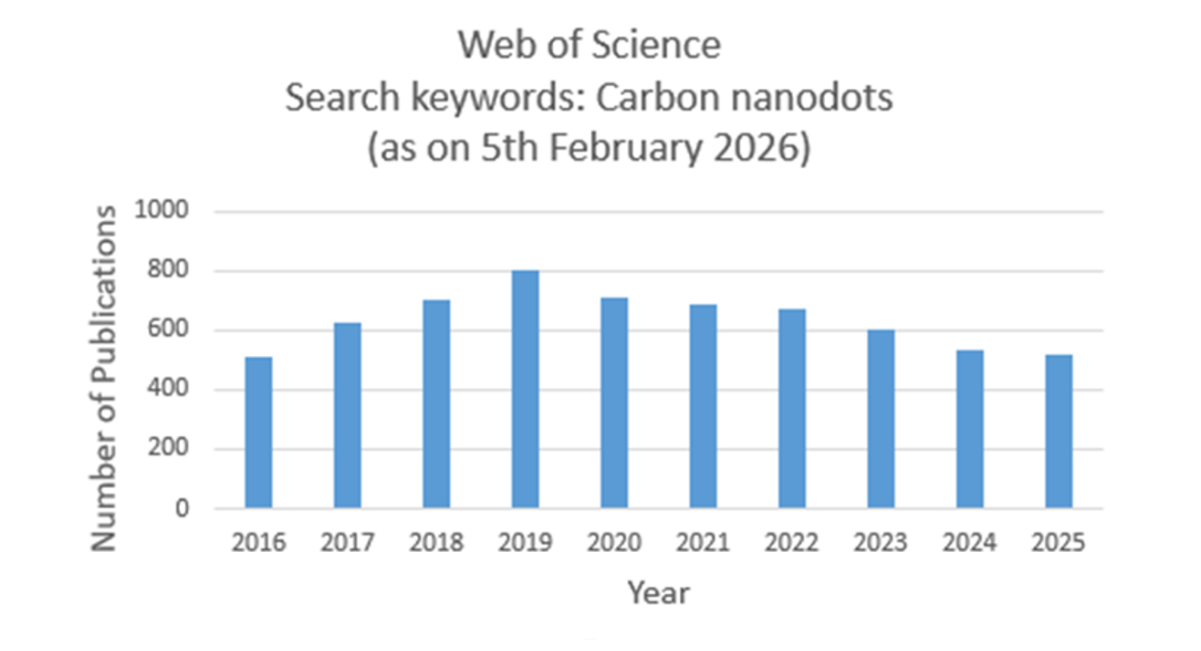
Figure 1: Recent advances in the R & D activity in the research hotspot “Carbon Nano-dots”.
MATERIALS & METHODS
Unique features of the newest allotrope of carbon materials
Carbon nanodots (CNDs) are a new class of carbon nanomaterials with astounding properties and applications [1-5]. The properties and applications of carbon nanodots (CNDs) were depicted in Figure 2a [6]. Likewise, the mechanism of carbonization of glucose (representative feedstock for carbon nanodots) into CNDs in activating fields like hydrothermal or microwave is represented in Figure 2b [7].
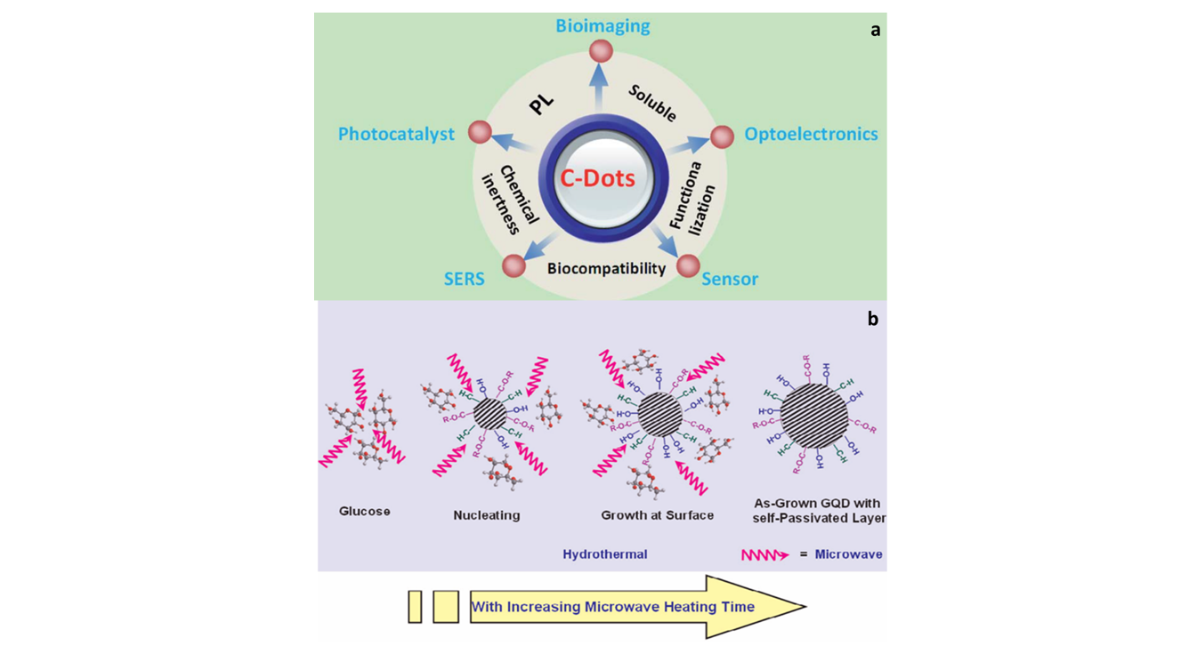
Figure 2 (a): Unique properties and applications of carbon nanodots; Adapted with permission from the Royal Society of Chemistry [6].
2 (b): Microwave assisted hydrothermal synthesis depicting the carbonization of glucose to graphitic quantum dots (GQDs); Adapted with permission from the American Chemical Society [7].
Usually the CNDs are extensively surface functionalized with oxygen functional groups like carbonyl, carboxyl, hydroxyl and several others. Reduced CNDs can be derived from CNDs with the use of reducing agents like borohydrides and such reduction of oxygen functionalities, rather optimization of oxygen surface functionalities, is known to increase the quantum yield of CNDs at least by an order of magnitude [8]. Thanks to the innovation in the characterization of nanomaterials with high resolution, the observation of these new materials, which have gone unnoticed thus far, has become a reality. Carbon dots, as the name implies, represent carbon nanomaterials of particle size less than 10 nm and with near-spherical shape. They have unusual properties, such as solubility in water, photostability, biocompatibility, environmental friendliness, sustainability of feedstock, fluorescence, photoluminescence, electrochemiluminescence, and many more. They are highly susceptible to functionalization and hybridization, resulting in multifunctionality [9]. These materials, namely functionalized CDs, can sense a variety of chemical and biological species, as evident from the list that follows: H2O2 [10], Sn (IV) [11], gas phase water [12], tetracycline homologs [13], nitrobenzene [14], Fe2+ and Hg2+ [15], Cu2+ and Fe3+ [16], intracellular iron, Fe2+/Fe3+ [17], Hg2+ [18], imidacloprid [19], dimethyl methyl phosphonate [20] and others (caffeine, dichromate, 4-nitrophenol, oxalate, Pb2+, hydrogen, Cr (VI), nitrite, sulfate, sulfadiazine, Cr3+).. There is no relevance in the order shown above; they were copy and pasted as they appear in the Web of Science in the interest of time. The variety and diversity of the sensing ability of these functionalized carbon materials is, thus evident.
Recent advances in the synthesis, properties and applications of carbon nanodots (CNDs) in a nutshell
Noteworthy developments in the field of CNDs pertaining to their synthesis, properties and applications were shown in Table 1.
|
Feedstock |
Synthesis |
Properties |
Applications |
Reference |
|
Citric acid |
Hydrothermal |
NIR - absorption |
Nanoheaters; biomedical |
|
|
Leaves of Solanum nigrum L, |
Hydrothermal |
long-lasting luminescence |
precision tumor resection; substitute to rare earths |
|
|
Arginine |
Microwave |
Nitrogen doped CNDs with 13C enrichment; narrow particle size distribution |
optoelectronics, biomedicine, and bioimaging |
|
|
Citric acid formamide |
Microwave mediated heating |
Excitation-dependent fluorescence emission |
multicolor bio-labeling reagent (full colour emission CDs) |
|
|
Citric acid |
Hydrothermal |
Near infra-red (NIR) chemiluminescence (CL) |
Bioimaging of Reactive Oxygen Species (ROS) |
|
|
Citric acid and L-glutathione |
Microwave |
Photoluminescence quantum yield (PLQY) of 46.9 % in S and N co-doped CNDs |
Sensing tetracycline hydrochloride (Tc) in milk |
|
|
Metronidazole |
Hydrothermal |
Presence of NO2 surface functional groups on CNDs key to DNA damage of obligate anaerobes |
Antibacterial activity against Porphyromonas gingivalis |
|
|
1,3-Dihydroxynaphthalene |
Hydrothermal |
Red emissive quantum yield – 53 % |
warm white light-emitting diode |
|
|
Citric acid |
Hydrothermal |
Nitrogen doped CNDs with excitation dependent emission; molecular fluorescence |
Biological and optoelectronic application |
|
|
Sodium citrate and sodium thiosulfate |
Hydrothermal |
S doped CNDs with PLQY – 67 % |
Fe3+ detection; detection limit: 0.1 mM |
Table 1: Advances in the synthesis, properties and applications of carbon nanodots (2005-2021).
Landmark papers on Carbon nanodots
So as to contribute to the advancement of the research hotspot, namely, Carbon nanodots, a special issue on “Catalytic methods for the synthesis of carbon nanodots and their applications” is launched by the authors of this review article on 29th August 2022. Within a duration of 20 months, i.e., by 30th September 2023, 12 landmark papers were published in the special issue. Ten research groups, namely, Syed Hadi Hasan and coworkers, Joydeep Das, Manish Srivastava and Nirmala Kumari Jangid and coworkers, Lerato L Mokoloko, Neil J Coville and coworkers, Jae Hong Kim and coworkers, Ahmad Umar and coworkers, Selvaraj Mohana Roopan and coworkers, Raji Atchudan, Yong Rok Lee and co-workers, Siti Kartoon Kamarudin and co-workers, Gabriela Rodriguez-Carballo and Ramon Moreno-Tost, from 10 nations across the globe, namely, India, South Africa, Republic of Korea, Japan, Saudi Arabia, USA, UAE, Greece, Malaysia and Spain have contributed to the 12 papers that constituted the special issue. The highlights of their work is summarized in Table 2.
|
S No |
Highlights |
Reference |
|
1 |
The review article of Hasan’s group provides new insight into the rapidly expanding research area, namely, “carbon dots: synthesis, properties, characterization and applications”. |
|
|
2 |
The key aspects of the review by Joydeep Das and coworkers is the application of carbon nano dots for electrochemical sensing and cancer therapy. Detailed account of the cytotoxicity of carbon nano dots is provided. It is encouraging to learn that carbon nano dots exhibit only low to negligible cytotoxicity and are indeed biocompatible. This gives hope to the scientific community to work on a war-footing to exploit these materials for therapeutic applications. The review article contained 3 figures, 10 tables and 75 references |
|
|
3 |
The unique properties of CNDs namely hydrophilicity, extensive surface functionalization, photoluminescence, fluorescence, biocompatibility, photostability, feedstock diversity, sustainability and the resulting advantages of these materials over the traditional semiconductors for application in biosensing, bioimaging, diagnosis, targeted drug delivery and therapy were highlighted. The need for improvement in the synthetic strategies as well as utility is emphasized. |
|
|
4 |
The application of these exotic hydrophilic carbon nanomateirals, of size less than 10 nm, based on their fluorescent property were highlighted. Moreover, the application of CNDs for classical applications like catalysts and catalyst support and the related challenges like the thermal stability, aggregation, separation and reuse were discussed. Poor thermal stability (< 250°C) limit their application at high temperatures. Thus both the advantages and disadvantages of these novel materials were discussed. |
|
|
5 |
The paper of Chau Thi Thanh Thuy et al., deals with the synthesis of heteroatom (N) doped carbon dots from L-histidine and their subsequent deposition on TiO2 (rutile) films. The produced material is thoroughly characterized and used as photoanode for the photo electrochemical water splitting reaction. A current density value of 2.51 mAcm-2 is reported with the optimized catalyst. |
|
|
6 |
Yadav and Umar’s paper deals with the development of N doped carbon quantum dot - eriochrome cyanine composite photocatalyst for the conversion of amine and for the regeneration of NADH. |
|
|
7 |
Photocatalytic activity of carbon nanodots/g-C3N4 nanocomposite for the O-Arylation of 2-chloroquinoline-3-carbaldehydes is demonstrated. Carbon nanodot-graphitic carbon nitride (g-C3N4) composite was synthesized using microwave irradiation. Product yield in the range of 65-90% within 12-24 h was reported. Moreover, the reusability of the catalyst for five reaction runs without loss in activity was shown. The C-O bond formation was found to be facilitated by the generation of phenoxy and quinolone-3-carboldehyde radicals upon irradiation with the blue LED. The study opened a new avenue with the development of organic photocatalyst as an alternative to the conventional metal based catalysts. |
|
|
8 |
The work of Atchudan, Edison and co-workers deals with the hydrothermal synthesis of functionalized carbon nanodots from the cashew nut (Anacardium occidentale) skin and exploiting them for the bioimaging of human colon cancer cells (HCT-116). |
|
|
9 |
The work of Yadav and Umar and coworkers deals with the design of Eriochrome cyanine R (EC-R) based activated carbon cloth (ACC) photocatalyst (EC-R@ACC) for the regeneration of NADH as well as for the photocatalytic reduction of 4-nitro benzyl alcohol. |
|
|
10 |
The work of Siti Kartom Kamarudin and coworkers deals with the development of graphene aerogel supported PtRu (20 wt.%) anode electrocatalyst for methanol oxidation for direct methanol fuel cell application. As expected, a three-fold enhancement in activity compared to commercial PtRu/C (20 wt.% loading) is obtained. The reasons for such enhancement and the advantage of the electrocatalyst designed were rightly and clearly highlighted. |
|
|
11 |
The work of Siti Kartom Kamarudin et al., deals with the design of methanol electrooxidation catalyst, namely, PtRu (20 wt.%) supported on TiO2-Graphene aerogel composite. A nearly 7.1 times higher activity is observed with the catalyst developed compared to the commercial PtRu (20 wt.%)/C electrocatalyst. Response surface methodology studies were carried out to gain insights into the reaction. |
|
|
12 |
The essential and unique features of CNDs, namely, water stability, water solubility and the low cytotoxicity were highlighted. The CNDs produced using Xylose as the feedstock and VOPO4 as the catalyst under hydrothermal reaction were rich in surface oxygen functionality and exhibited excellent photoluminescence. More over the photo-electronic and photocatalytic activity of the carbon dots were also demonstrated. |
Table 2: Highlights of the 12 published papers in the land mark special issue on “Catalytic methods for the synthesis of carbon nanodots and their applications”.
Owing to the increasing domain of usefulness of carbon nanodots and its off springs (doped analogues and variants) [43-45] rapid innovation is happening in this field with increasing number of patents being filed (Indra Neel Pulidindi, Haritha SR, Deepak Nallaswamy Veeraiyan, Ultra-small, highly fluorescent, nitrogen and boron co-doped carbon nanodots (N, B-CNDs) for catalytic application. Indian patent, File number, 202641011120 (Ultra-Small), filed on 03/02/2026) and Indra Neel Pulidindi, Haritha SR, Deepak Nallaswamy Veeraiyan, Nitrogen enriched highly fluorescent carbon nanodots (N-CNDs) as sensor in biorefinery. Indian patent, File number, 202641011119 (Nitrogen) filed on 02/03/2026. Indeed there is plenty of room at the bottom. For the most recent advances the readers are advised to consult the following papers [46-58].
CONCLUSION
The novel hydrophilic and highly polar nano allotropes of carbon material, namely, carbon nanodots have immense technological applications which are underutilized, especially, in the realms of catalysis, energy, environment, medicine, opto-electronics and material's science. To promote the advancement of research and development activity in “Carbon nanodots-Synthesis, characterization, properties and applications” a second edition of the special issue entitled “Catalytic methods for the synthesis of carbon dots and their applications” in the journal Catalysts, MDPI, is launched and the research fraternity is requested to richly contribute to the success of this issue too as in the past. One of the latest research trends in the field is to explore exotic feedstock like the cotton, cellulose, carboxy methyl cellulose, glucose, orange peel extract, banana peel extract and lignin for the production of ultrasmall highly fluorescent carbon nanodots and its doped analogues (B, N, S, P doped CNDs) for application in medicine, energy, environment and agriculture.
ACKNOWLEDGMENTS
Indebtedness is due to Dr. Deepak Nallaswamy Veeraiyan for generously providing opportunity to INP to conduct state of the art research at the SMCH and SIMATS. Thankfulness is due to Dr Anandamurugan, librarian and the staff of the central library, IIT Madras for providing access to the knowledge resources that enabled the successful compilation of this editorial. Special thanks are due to Mrs Saradhambal V, Superintendent, Central library, IIT Madras for exposing INP and keeping him abreat with the current news by providing uncensored access to Nalanda Light Reading Hall. Gratefulness is due to the Syed Hadi Hasan and coworkers, Joydeep Das, Manish Srivastava and Nirmala Kumari Jangid and coworkers, Lerato L Mokoloko, Neil J Coville and coworkers, Jae Hong Kim and coworkers, Ahmad Umar and coworkers, Selvaraj Mohana Roopan and coworkers, Raji Atchudan, Yong Rok Lee and co-workers, Siti Kartoon Kamarudin and co-workers, Gabriela Rodriguez-Carballo and Ramon Moreno-Tost for contributing 12 landmark papers to the special issue. The reprint of this special issue is dedicated to the LORD and Saviour Jesus Christ. Blessings and thankfulness are due to Miss Tabitha Victor Pulidindi the only daughter of INP for her prayers of faith and selfless love. Gratefulness is due to the House of prayer Church, Adyar for the fellowship and the Holy Communion.
CONFLICTS OF INTEREST
The authors declare no conflicts of interest.
REFERENCES
- Zaib M, Shabir K, Shahzadi T, Riaz T, Pulidindi IN. Biosynthesis of doped carbon dots-decorated MnO2 nanocomposites using eucalyptus extract: evaluation of catalytic activity. Arabian Journal for Science and Engineering. 2024;49(7):9425-9441. [Google Scholar] [Crossref]
- Banger A, Gautam S, Jadoun S, Jangid NK, Srivastava A, Pulidindi IN, et al. Synthetic methods and applications of carbon nanodots. Catalysts. 2023;13(5):858. [Google Scholar]
- Tangy A, Kumar VB, Pulidindi IN, Kinel-Tahan Y, Yehoshua Y, Gedanken A. In-situ transesterification of Chlorella vulgaris using carbon-dot functionalized strontium oxide as a heterogeneous catalyst under microwave irradiation. Energy & Fuels. 2016;30(12):10602-10610. [Google Scholar] [Crossref]
- Mishra RK, Pulidindi IN, Kabha E, Gedanken A. In situ formation of carbon dots aids ampicillin sensing. Anal. Methods. 2016;8(11):2441-2447. [Google Scholar] [Crossref]
- Pulidindi IN, Gedanken A. Carbon nanoparticles based non-enzymatic glucose sensor. International journal of environmental analytical chemistry. 2013;94(1):28-35. [Google Scholar] [Crossref]
- Li H, Kang Z, Liu Y, Lee ST. Carbon nanodots: synthesis, properties and applications. J. Mater. Chem. 2012;22(46):24230-24253. [Google Scholar] [Crossref]
- Tang L, Ji R, Cao X, Lin J, Jiang H, Li X, et al. Deep ultraviolet photoluminescence of water-soluble self-passivated graphene quantum dots. ACS Nano. 2012;6(6):5102-5110. [Google Scholar] [PubMed] [Crossref]
- Zheng H, Wang Q, Long Y, Zhang H, Huang X, Zhu R. Enhancing the luminescence of carbon dots with a reduction pathway. Chem. Commun. 2011;47(38):10650-10652. [Google Scholar] [PubMed] [Crossref]
- Liu J, Li R, Yang B. Carbon dots: a new type of carbon-based nanomaterial with wide applications. ACS Central Science. 2020;6(12):2179-2195. [Google Scholar] [PubMed] [Crossref]
- Martínez-Periñán E, Hernández-Gómez JM, Lorenzo E, Gutiérrez-Sánchez C. Sensitive Hydrogen Peroxide Sensor Based on Hexacyanoferrate Nickel–Carbon Nanodots. Chemosensors. 2025;13(6):195. [Google Scholar] [Crossref]
- Jiang Y, Zhao X, Zhou X, He X, Zhang Z, Xiao L, et al. Multifunctional carbon nanodots for antibacterial enhancement, pH change, and poisonous Tin (IV) specifical detection. ACS Omega. 2023;8(44):41469-41479. [Google Scholar] [PubMed] [Crossref]
- Qin JX, Shen CL, Zhang WY, Deng Y, Lai SL, Lv CF, et al. Surface Engineering Enabled Capacitive Gas‐Phase Water Molecule Sensors in Carbon Nanodots. Advanced Science. 2025;12(21):2414611. [Google Scholar] [PubMed] [Crossref]
- Li X, Yu H, Kuang F, Fang S, Luo L, He Y, et al. Simultaneous identification of three types of tetracycline homologs via a binary-fluorescent sensor array based on nitrogen-doped carbon nanodots. Separation and Purification Technology. 2025;372:133438. [Google Scholar] [Crossref]
- Bressi V, Chiarotto I, Ferlazzo A, Celesti C, Michenzi C, Len T, et al. Voltammetric Sensor Based on Waste‐Derived Carbon Nanodots for Enhanced Detection of Nitrobenzene. ChemElectroChem. 2023;10(13):e202300004. [Google Scholar] [Crossref]
- Mohammed LJ, Omer KM. Converting plastic waste into functional carbon nanodots for the selective detection of iron and mercury ions. Journal of Inorganic and Organometallic Polymers and Materials. 2025 May;35(5):3505-15. [Google Scholar] [Crossref]
- Zhao X, Han Y, Miao X, You X, Cao C. Coal-derived fluorescent carbon quantum dots for sensitive and selective detection of Cu2+ and Fe3+. Carbon Letters. 2024;34(9):2369-2376. [Google Scholar] [Crossref]
- Pachpatil PK, Kanojia SV, Raut V, Potnis A, Goswami D. N-rich carbon nanosphere as fluorescent nanoprobe for intracellular iron. Talanta. 2024;278:126454. [Google Scholar] [PubMed] [Crossref]
- Seesuea C, Sansenya S, Thangsunan P, Wechakorn K. Green synthesis of elephant manure-derived carbon dots and multifunctional applications: Metal sensing, antioxidant, and rice plant promotion. Sustainable Materials and Technologies. 2024;39:e00786. [Google Scholar] [Crossref]
- Feng D, Dai J, Yan Y, Li C. Co/Mo2C-Embedded N-Doped Carbon Nanotubes Combined with Molecularly Imprinted Membranes for Selective Electrocatalytic Determination of Imidacloprid. Catalysts. 2025;15(2):192. [Google Scholar] [Crossref]
- Xing Y, Zhi S, Zhao L, Zhang H, Yu C, Fei T, et al. Coupling single-atom Cu and N-enriched π-conjugated carbon nanodots on graphene enables room-temperature ppb-level DMMP detection. Sensors and Actuators B: Chemical. 2025;433:137563. [Google Scholar] [Crossref]
- Li D, Han D, Qu SN, Liu L, Jing PT, Zhou D, et al. Supra-(carbon nanodots) with a strong visible to near-infrared absorption band and efficient photothermal conversion. Light: Science & Applications. 2016;5(7):e16120. [Google Scholar] [PubMed] [Crossref]
- Zheng GS, Shen CL, Niu CY, Lou Q, Jiang TC, Li PF, et al. Photooxidation triggered ultralong afterglow in carbon nanodots. Nature Communications. 2024;15(1):2365. [Google Scholar] [PubMed] [Crossref]
- Arcudi F, Đorđević L, Prato M. Synthesis, separation, and characterization of small and highly fluorescent nitrogen‐doped carbon nanodots. Angewandte Chemie International Edition. 2016;55(6):2107-2112. [Google Scholar] [PubMed] [Crossref]
- Pan L, Sun S, Zhang A, Jiang K, Zhang L, Dong C, et al. Truly fluorescent excitation‐dependent carbon dots and their applications in multicolor cellular imaging and multidimensional sensing. Advanced materials. 2015;27(47):7782-7787. [Google Scholar] [PubMed] [Crossref]
- Shen CL, Lou Q, Zang JH, Liu KK, Qu SN, Dong L, et al. Near‐infrared chemiluminescent carbon nanodots and their application in reactive oxygen species bioimaging. Advanced Science. 2020;7(8):1903525. [Google Scholar] [PubMed] [Crossref]
- Lin M, Zou HY, Yang T, Liu ZX, Liu H, Huang CZ. An inner filter effect based sensor of tetracycline hydrochloride as developed by loading photoluminescent carbon nanodots in the electrospun nanofibers. Nanoscale. 2016;8(5):2999-3007. [Google Scholar] [PubMed] [Crossref]
- Liu J, Lu S, Tang Q, Zhang K, Yu W, Sun H, et al. One-step hydrothermal synthesis of photoluminescent carbon nanodots with selective antibacterial activity against Porphyromonas gingivalis. Nanoscale. 2017;9(21):7135-7142. [Google Scholar] [PubMed] [Crossref]
- Wang Z, Yuan F, Li X, Li Y, Zhong H, Fan L, et al. 53% efficient red emissive carbon quantum dots for high color rendering and stable warm white‐light‐emitting diodes. Advanced Materials. 2017;29(37):1702910. [Google Scholar] [PubMed] [Crossref]
- Schneider J, Reckmeier CJ, Xiong Y, von Seckendorff M, Susha AS, Kasák P, et al. Molecular fluorescence in citric acid-based carbon dots. The Journal of Physical Chemistry C. 2017;121(3):2014-2022. [Google Scholar] [Crossref]
- Xu Q, Pu P, Zhao J, Dong C, Gao C, Chen Y, et al. Preparation of highly photoluminescent sulfur-doped carbon dots for Fe (III) detection. Journal of Materials Chemistry A. 2015;3(2):542-546. [Google Scholar] [Crossref]
- Yadav PK, Chandra S, Kumar V, Kumar D, Hasan SH. Carbon quantum dots: synthesis, structure, properties, and catalytic applications for organic synthesis. Catalysts. 2023;13(2):422. [Google Scholar] [Crossref]
- Hatimuria M, Phukan P, Bag S, Ghosh J, Gavvala K, Pabbathi A, et al. Green carbon dots: applications in development of electrochemical sensors, assessment of toxicity as well as anticancer properties. Catalysts. 2023;13(3):537. [Google Scholar] [Crossref]
- Banger A, Gautam S, Jadoun S, Jangid NK, Srivastava A, Pulidindi IN, et al. Synthetic methods and applications of carbon nanodots. Catalysts. 2023;13(5):858. [Google Scholar] [Crossref]
- Mokoloko LL, Forbes RP, Coville NJ. The behavior of carbon dots in catalytic reactions. Catalysts. 2023;13(8):1201. [Google Scholar] [Crossref]
- Thanh Thuy CT, Shin G, Jieun L, Kim HD, Koyyada G, Kim JH. Self-doped carbon dots decorated TiO2 nanorods: A novel synthesis route for enhanced photoelectrochemical water splitting. Catalysts. 2022;12(10):1281. [Google Scholar] [Crossref]
- Singh R, Yadav RK, Shukla RK, Singh S, Singh AP, Dwivedi DK, et al. Highly selective nitrogen-doped graphene quantum dots/eriochrome cyanine composite photocatalyst for NADH regeneration and coupling of benzylamine in aerobic condition under solar light. Catalysts. 2023;13(1):199. [Google Scholar] [Crossref]
- Manjupriya R, Roopan SM. Unveiling the photocatalytic activity of carbon Dots/g-C3N4 nanocomposite for the O-Arylation of 2-Chloroquinoline-3-carbaldehydes. Catalysts. 2023;13(2):308. [Google Scholar] [Crossref]
- Kishore SC, Perumal S, Atchudan R, Edison TN, Sundramoorthy AK, Alagan M, et al. Eco-friendly synthesis of functionalized carbon nanodots from cashew nut skin waste for bioimaging. Catalysts. 2023;13(3):547. [Google Scholar] [Crossref]
- Gupta V, Yadav RK, Umar A, Ibrahim AA, Singh S, Shahin R, et al. Highly efficient self-assembled activated carbon cloth-templated photocatalyst for NADH regeneration and photocatalytic reduction of 4-nitro benzyl alcohol. Catalysts. 2023;13(4):666. [Google Scholar] [Crossref]
- Osman SH, Kamarudin SK, Basri S, A. Karim N. Three-dimensional graphene aerogel supported on efficient anode electrocatalyst for methanol electrooxidation in acid media. Catalysts. 2023;13(5):879. [Google Scholar] [PubMed] [Crossref]
- Osman SH, Kamarudin SK, Basri S, Karim NA. Anodic catalyst support via titanium dioxide-graphene aerogel (TiO2-GA) for A direct methanol fuel cell: response surface approach. Catalysts. 2023;13(6):1001. [Google Scholar] [Crossref]
- Rodríguez-Carballo G, García-Sancho C, Algarra M, Castro E, Moreno-Tost R. One-pot synthesis of green-emitting nitrogen-doped carbon dots from xylose. Catalysts. 2023;13(10):1358. [Google Scholar] [Crossref]
- Arul V, Sampathkumar N, Kotteeswaran S, Arul P, Aljuwayid AM, Habila MA, et al. Biomass derived nitrogen functionalized carbon nanodots for nanomolar determination of levofloxacin in pharmaceutical and water samples. Microchimica Acta. 2023;190(6):242. [Google Scholar] [PubMed] [Crossref]
- Nethaji P, Revathi P, Kumar PS, Logesh M, Rajabathar JR, Al-Lohedan HA, et al. Fluorescence enhancing and quenching signal based on new approach for selective detection of multiple organochlorine pesticides using blue emissive-carbon dot. Environmental Pollution. 2024;345:123418. [Google Scholar] [PubMed] [Crossref]
- Thangavel P, Hasan N, Raja G, Jawhari AH, Gopal J. Extraction of Carbon Nanodots from Benzoin Resin Soot for Multifaceted Antibacterial Applications. Processes. 2025;13(2):484. [Google Scholar] [Crossref]
- Jamiołkowska A, Kursa W, Rai M, Prokisch J, Skwaryło-Bednarz B, Patkowska E, et al. Enhancing tomato (Solanum lycopersicum Mill.) plant growth and rhizosphere microbiome with carbon nanodots and mycorrhizal fungi: Impact on root colonization, plant growth, chlorophyll, and nitrogen content. International Agrophysics. 2025;40(1):25-37. [Google Scholar] [Crossref]
- Zahid NM, Ahmad MA, Fahmi MZ, Mat NF. Design, characterization and stability studies of baicalein loaded carbon nanodots for enhanced drug deliveryug delivery. Jurnal Teknologi (Sciences & Engineering). 2026;88(1):191-202. [Google Scholar] [Crossref]
- Sakthivel R, Wang HY, Wu PC, Chen YL, Jagtap AA, Ramaraj SK, et al. Carboxymethyl Cellulose-assisted Synthesis of Carbon-confined Leaf-like Zeolite Imidazolate Framework-derived ZnS@ N/C Nanodots for Enhanced Multi-walled Carbon Nanotube Dispersion and Real-Time Neurotransmitter Monitoring in PC-12 Cells. Journal of Materials Chemistry B. 2026;Advance Article. [Google Scholar] [PubMed] [Crossref]
- Guye ME, Dabaro MD, Kim H. Efficient hydrogen generation via NaBH4 methanolysis: Synergistic role of Fe2+ ions and biomass-derived carbon nanodots in ZnO/Fe2O3@ C nanocomposites. International Journal of Hydrogen Energy. 2026;207:153463. [Google Scholar] [Crossref]
- Perveen S, Bhatti IA, Jamil S, Zia MA. Natural Sunlight Active Copper‐Doped Carbon‐Based Nanocomposites to Enhanced Photocatalytic Degradation of Methyl Orange. ChemistrySelect. 2026;11(2):e04402. [Google Scholar] [Crossref]
- Leharwani M, Singhai H, Hani U, Rani VI, Gupta G, Goh KW, et al. Herbal carbon dots for wound healing: Bridging traditional phytomedicine with advanced Nanotherapeutics. Inorganic Chemistry Communications. 2026;186:116162. [Google Scholar] [Crossref]
- Long Y, Zhao WB, Cao Q, Li XY, Li FK, Hu YW, et al. Phosphorescent carbon nanodot inks for scalable and high-resolution invisible printing. Acta Physico-Chimica Sinica. 2025;42(3):100198. [Google Scholar] [Crossref]
- Guldi DM, Zdražil L, Cadranel A. A reflection on ‘Using carbon nanodots as inexpensive and environmentally friendly sensitizers in mesoscopic solar cells’. Nanoscale Horizons. 2026;Advance Article. [Google Scholar] [Crossref]
- Wang T, Opoku H, Li M, Hedberg M, Wang J, Kou W. Enhancement of Antibacterial Activity of Carbon Dots via Lysozyme Coupling. ACS Applied Bio Materials. 2026;9(3):1499-1508. [Google Scholar] [PubMed] [Crossref]
- Long K, Han T, Hu W, Nie F, Yang M, Li J, et al. Biomass-derived carbon nanodots with pH-operated LAMP switching for ultrasensitive DNA detection. Microchemical Journal. 2025;220:116410. [Google Scholar] [Crossref]
- Khan A, Riahi Z, Kim JT, Rhim JW. Recent advances in food preservation through antimicrobial carbon dots-based food packaging: Environmental sustainability and future trends. Microbial Pathogenesis. 2025;211:108271. [Google Scholar] [PubMed] [Crossref]
- Mishra A, Basak HK, Chakraborty B, Bhattacharya S. Hydrogen Evolution Reaction Using a Sulfanilamide/Citric Acid Derived N, S-Doped Carbon Dot. ACS Applied Energy Materials. 2026. [Google Scholar] [Crossref]
- Li Y, Wang J, An W, Zhang Y, Wang M, Fan J. Intermolecular hydrogen bond-mediated fluorescence enhancement mechanism of nitrogen-doped carbon quantum dots in coexistence with bisphenolic compounds. Applied Surface Science. 2026;723:165659. [Google Scholar] [Crossref]

Article Processing Timeline
| 2-5 Days | Initial Quality & Plagiarism Check |
| 25-35 Days |
Peer Review Feedback |
| 45-60 Days | Total article processing time |
EDITORIAL & PUBLICATION INFORMATION
| English | Publication Language |
| Single-Blind | Peer-Review Model |
| 17% | Acceptance Rate |
| <18% | Similarity Screening Guideline |
| Open Access | Access Model |
All manuscripts undergo editorial assessment and originality screening as part of the journal's evaluation process. The acceptance rate shown is based on journal-level editorial data and may change over time. Similarity reports are assessed editorially and are not interpreted solely on the basis of a numerical similarity score.
Why Publish with us?
Ethics & Policies
Editorial & Management
Useful Links
Journal Highlights
Open Access Journals
Journal Flyer