


Journal of Nanoscience and Nanomaterials
ISSN:
3108-2084 (Online)
DOI Prefix (Crossref): 10.67238
 Download PDF
ABSTRACT
Biodiesel is an ideal substitute to fossil based fuels, namely, gasoline (32 MJ/L) and diesel (42-45 MJ/kg), owing to the closeness of the energy density values. Automobile industry and chemicals and petrochemicals industries are the key market for the product. Moreover, the feedstock used for the production of the fuel biodiesel is sustainable (lipids from freshwater micro algae and marine macro algae and waste cooking oil which is a zero value waste and many others). This makes the biodiesel product a commercial success and highly competitive in the market. Biodiesel has a huge market in the transportation sector. The fuel biodiesel will be used in the day-to-day life of common man, in the transportation sector. In layman terms the market potential of biodiesel is as great as the market potential of gasoline and diesel, the workhorses of the transportation industry. With rapidly changing geopolitical and trade relationships across the globe there is now a greater need for self-reliance in Energy for any of the developing nations. Recently, with nearly 50 % tariff from the US government on the Indian exports due to the oil imports from the Russia there is greater need for the development of processes for home-made generation of transportation fuels like biodiesel that would reduce the dependence on the crude oil imports. This is not only relevant to India but also for other developing nations in Asia and Africa, which are often called as the third-world nations.
Keywords: Automobile Industry; Biodiesel; Petrochemicals; UN Sustainable Development Goals; well-Being; Good Health; Climate Action
INTRODUCTION
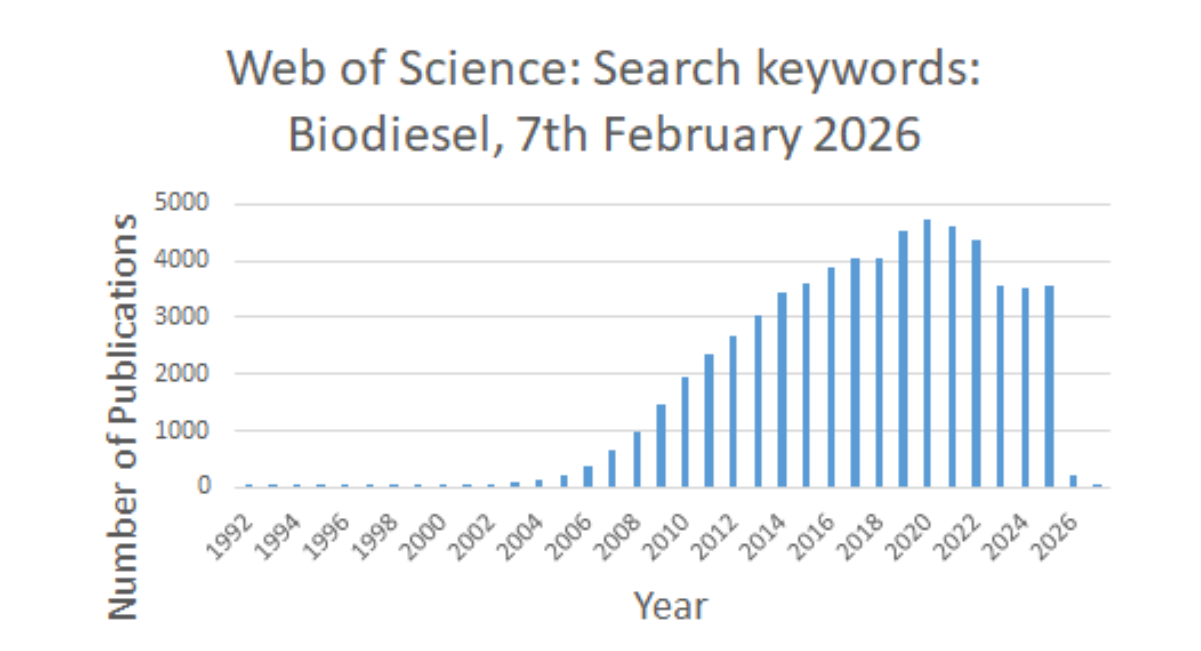
Ever since the disclosure of the first patent on biodiesel production by Koracs from Hungary in the year 1993 with biodiesel as an alternative to fossil based engine oil [1], a phenomenal growth in the R & D activity of biodiesel production is witnessed with over 62, 371 publications in the web of Science database with the search keyword, namely, “biodiesel” as on 7 th February 2026 as shown in Figure 1.
In particular, rapid progress has been made in the development of feedstock, catalysts, and technology for the large scale, demand based, and economically competitive production of biodiesel during the period, 2021-2027 as depicted in Table 1.
|
Feedstock |
Reference |
Catalyst |
Reference |
Technology |
Reference |
|
Citrullus vulgaris |
MOFs and COFs |
Machine learning technology |
|||
|
Xanthium strumarium and Mesua assamica |
Halloysite supported ZnO/SnO 2 heterojunction photocatalyst |
Microwave; Ultrasound; Supercritical transesterification; genetic engineering; Plasma discharge; microchannel reactor; machine learning |
|||
|
Handal |
ZIF-8 MOF-derived nanocatalyst |
Micro reactor; membrane reactor; microwave; reactive distillation; centrifugal contractor |
|||
|
Pennycress Oil |
Acid-base bifunctional ZnF 2 |
Machine learning-response surface optimization approach |
|||
|
Dunaliella salina microalgae |
TiO 2 nanoparticles |
Life cycle assessment and techno-economic analysis |
|||
|
Waste Cooking Olive Oil and Sunflower Oil |
SAPO-34 decorated with Mo and W oxides |
Ultrasonic treatment |
|||
|
Jatropha |
NaOH/ CoFe 2O 4 magnetic nano-catalyst |
Artificial intelligence and machine learning |
|||
|
Pongamia pinnata |
H 6PV 3MoW 8O 40 supported on magnetic Fe 3O 4/ZIF-8 composites |
Integrated 3D printed microreactors and microseparators |
|||
|
Fish waste |
Ni/Si/ MgO photocatalyst |
Enzymes with ionic liquid and ultrasound based process intensification |
Table 1: Advances in the development of feedstock, catalysts and technology for the production of biodiesel [2-28].
However, the synergetic use of microwave irradiation with the solid base catalyst, namely, SrO with waste cooking oil as feedstock stands out [29-33].
Latest technology for rapid production of biodiesel at industrial scale
To augment the rapidly increasing need for the commercially viable process for biodiesel production, a special issue has been launched with the title “Accelerated production of biodiesel” on 10 th January 2022 in the journal bioengineering. Within a short span of 20 months, enormous interest is aroused around the research groups working on this topic and 10 research groups from 9 nations have contributed 11 landmark papers to this special issue. The highlights of the 6 research articles and 5 review papers published as a reprint of the special issue were summarized in Table 2.
|
S No |
Highlights |
Reference |
|
1 |
Waste alkaline solution (WAS, pH = 13.3) is a by-product of the industrial Al production by Bayer’s process. The composition of the WAS (metal oxides, hydroxides, and silicates) is suitable for catalyzing the transesterification of waste cooking oil (WCO) and methanol to produce fatty acid methyl ester (FAME, biodiesel). The yield of biodiesel was > 99 % under modest reaction conditions (T = 60 °C; t = 30 min; WAS amount = 0.204 mol L- 1; WAS/WCO = 0.019 % (w/w); The process has positive environmental and economic implications at an industrial scale. |
|
|
2 |
The key to solving problems in any realm of human activity is to use the challenges as opportunities. It is more so in the chemical industry, namely, the upcoming biorefinery. Roncaglia et al., precisely addressed the challenges of the inevitable glycerol by-product formation in the biodiesel producing transesterification process and also the inevitable CO2 emission upon the combustion of the biodiesel. The smart strategy to solve the challenge was to convert the glycerol into the glycerol carbonate. A continuous flow process for the reaction of equimolar mixtures of CO 2 (ensured by the modest molar excess of urea) and glycerol to form glycerol carbonate is developed. Thus urea is effectively used as the CO 2 precursor altering the thermodynamic process parameters favourably. Issue of the high viscosity of the reaction medium was overcome successfully by dilution of the reaction constituents with water and also by maintaining a suitable low pressure (< 400 mm Hg). The yield of glycerol carbonate (GC) is ~ 42 %. The pressure constraint was the limiting factor pertaining to the product yield. For the first time multiple pass tubular reactor technology was used for such a process. |
|
|
3 |
Fahad Rehman et al., developed the microbubble interfacial technology (as a substitute to the stirred tank reactors) for the production of biodiesel using micro algae (Spirulina) as the feedstock. Microbubble mediated mass transfer technology is being exploited at an industrial scale. However, the current studies only dealt with the lab-scale experiments with a 100 mL batch. Para-toluene sulphonic acid (PTSA) is used a catalyst. A micro algal oil (MO) conversion into biodiesel as high as > 99 % is obtained under modest reaction conditions (MO:Methanol = 1:23.73; t = 60 min; T = 70 ± 5 °C; P = 1 bar; Catalyst: PTSA, 3.3 wt.% of MO; Pseudo first order reaction; Activation energy, Ea = 10.01 ± 0.3 kJ/mol). |
|
|
4 |
Anita Salic and coworkers developed deep eutectic solvents (DES) for the purification (extraction of the by-product glycerol) biodiesel in a micro-extractor. Among the 12 DESs tested the choline chloride, ChCl:Ethylene glycol, EG (1:3) showed high extraction efficiency and the least viscosity. Optical extraction process parameters include, T = 40 ⁰C; residence time, τ = 0.50 min; biodiesel:DES = 1:9 (v/v), glycerol removed = 52.99 ± 5.23 %. Use of different micro channel diameters and different residence times did not contribute to the process enhancement, while the integrated system with two microextractors in series was effective for glycerol removal. Using this method complete purification of biodiesel is achieved in 1 minute. |
|
|
5 |
Micro algal biomass (Desmodesmus sp. EJ8-10) was cultured in anaerobic digestion waste water improved the lipid content in the micro algae by 21.8 %. The lipid content is the fraction that is transesterified to FAME (biodiesel) upon reaction with methanol in the presence of the base catalyst. Greater lipid content means great biodiesel amount. Moreover, the environmental impact too was lower (388.9 mPET2000) in the case of micro algal biomass cultured in anaerobic digestate wastewater. |
|
|
6 |
Fahad Rehman and coworkers exploited the microbubble mediated mass transfer technology for intensifying the transesterification of the waste cooking oil (WCO) as well as the esterification of the free fatty acids in the oil (present as a contaminant) for the production of biodiesel using a bimetallic base catalyst (7 % Sr/ZrO 2) and an acid catalyst respectively. Conversion as high as 85 % us achieved in 20 minutes. The reaction was found to follow a pseudo-first order kinetics with an activation energy value of 7 kJ/mol. The catalyst was reused for 7 reaction runs. The interface of the microbubbles was found to play a complex role in the conversion of the WCO into the biodiesel. The microbubble interfaces act as a host for the bimetallic catalyst particles. The single step esterification (acid catalyzed) and the transesterification (base catalyzed) was found to be less energy consuming and more energy-efficient. |
|
|
7 |
Dhurba Neupane provided a review on the cultivation of bioenergy feedstock for the production of biofuels for reducing the reliance on fossil based resources and also for solving the problems like food vs fuel conflict, global warming, and the catastrophic consequences of climate change. Insights were provided on the possibilities of various biofuels from biomass, methods of production, key factors affecting the biodiesel production, nature of the catalysts, and the emission of possible greenhouse gases upon combusting the biodiesel. Emphasis was laid on the methods for the development of the third (algal biomass) and the fourth (genetically modified algal biomass with increased lipid/carbonhydrate content) generation feedstock. |
|
|
8 |
The review article of Qiuyun Zhang, Jialu Wang, Yutao Zhang and co-workers, by coincidence, deals with the use of Zr based metal organic frame works (MOFs) as catalysts for the transesterification reaction for the production of biodiesel. The discovery and the development of the MOF based materials is a Nobel winning contribution to the field of Chemistry by Susumu Kitagawa (Kyoto University, Japan), Richard Robson (University of Melbourne, Australia) and Omar M Yaghi (University of California, Berkeley, USA). The Royal Swedish Academy of Sciences that has decided the award of the Nobel prize to Chemistry 2025 commented that the molecular architecture of Metal Organic Frameworks (MOFs) contains rooms for Chemistry. The typical process parameter and outcomes as well as the reusability of the Zr-based MOFs as catalysts for the production of biodiesel were exemplified. MOFs and their derivatives were suggested to be the smart catalysts for the bright biorefinery facilities in near future. |
|
|
9 |
The review by Anoop Singh and coworkers is focused essentially on the new approaches, feedstock and technologies for the sustainable production of biodiesel at the upcoming biorefinery facility. Development of the genetically modified and bioengineered feedstock (plants, yeast, algae, and plant based wastes) is suggested as a promising and sustainable alternative feedstock for enhanced lipid content in cellulose based crops. Significance of life cycle assessment for adoption of biodiesel at the commercial scale is highlighted. |
|
|
10 |
Jose C S dos Santos and coworkers have conducted a comprehensive bibliometric analysis of the worldwide research (collaborations and output and feedstock) in the field of biodiesel by considering 4586 outputs for over a period of 12 years (2010-2021). The output indicated that China, Malaysia, and India were the prolific publishers with the highest output of scholarly works on biodiesel. The research conducted highlighted the challenge with the sustainability of the feedstock from the environmental and economic perspectives. The use of sewage is suggested to be a promising feedstock for biodiesel production with the least environmental damage. For some specific reasons, most of the researchers opted for the national collaborations and the research was mainly devoted to the feedstock for biodiesel production. |
|
|
11 |
The review of Omojola Awogbemi’s group is focused on the use of tubular reactor technologies for the accelerated production of biodiesel. Tubular reactor technologies were proposed as the most suitable systems to be adopted at the commercial sale for the process intensification. Emphasis was laid on the possible feedstock, catalysts and the conversion process in the tubular reactors. A comparison of various reactor designs like the packed bed, fluidized bed, trickle bed, oscillatory flow and micro-channel tubular reactor were discussed at length for the large scale, cost effective, ecofriendly, low cost and high quality biodiesel production. The tubular reactor technology is proposed for the transesterification process. Moreover, it was highlighted that novel technologies based on robotics, machine learning, artificial intelligence, smart metering should be integrated with the tubular reactor technology for the profitable biodiesel production process at the biorefinery facility. |
Table 2: Highlights of the 11 landmark papers published in the special issue on “Accelerated production of biodiesel” [34-44].
Recommended technology for the accelerated and large scale production of biodiesel
It is proposed that biodiesel could be produced at a rapid pace using microwave irradiation and a solid acid catalyst in a continuous flow process. Integration of Artificial intelligence (AI) with day to day life is the current trend in scientific research. AI is influencing almost all areas of human activity, namely, transportation, communication, health, climate, energy, education, communication, research and development and innovation in technology. The newness of the innovative use of AI based machine learning tools to optimize the biodiesel production process using waste cooking oil as the feedstock and microwave irradiation as the mode of activating the substrate and catalyst species should be recognized for the accelerated production of biodiesel that could cater to the demand. The biodiesel thus produced is a suitable and sustainable alternative to the fossil based fuels in the transportation sector. Moreover, the use of biodiesel contributes to lowering of CO2 footprint relative to the fossil based fuels owing to closed carbon-loop operation. Overall, the successful transformation of such new ideas into the product prototype means good health, green environment, advancement of human society and alleviation of suffering of man-kind. Microwave irradiation is known to accelerate the biodiesel production process. Among various technologies for the biodiesel production from various feedstock, the microwave based activation appears to be the most promising as it ensures sustainability. However, designing the microwave reactor for the large-scale production of biodiesel is a challenge that needs to be addressed.
Future directions
The idea of using artificial intelligence based methods for the optimal design of the microwave reactor for the large scale production of biodiesel using waste cooking oil as the feedstock and strontium oxide (SrO) as the solid base catalyst is at its infancy. A viable technology for the demand based supply of biodiesel results in the sustainability in the transportation sector and a great reduction in crude oil imports from Russia which has been an issue of concern between the India and US.
Use of biofuels, especially, biodiesel as fossil fuel substitute, alleviates the catastrophe of climate change [45-49]. Integrating biodiesel production technologies with microwave irradiation, zero waste feedstock like waste cooking oil and exotic solid base catalysts like the SrO and AI and ML holds the key to a breakthrough [50-54].
In brief, the state of the art catalysts developed for the accelerated production of biodiesel were shown in Fig. 2 [55].
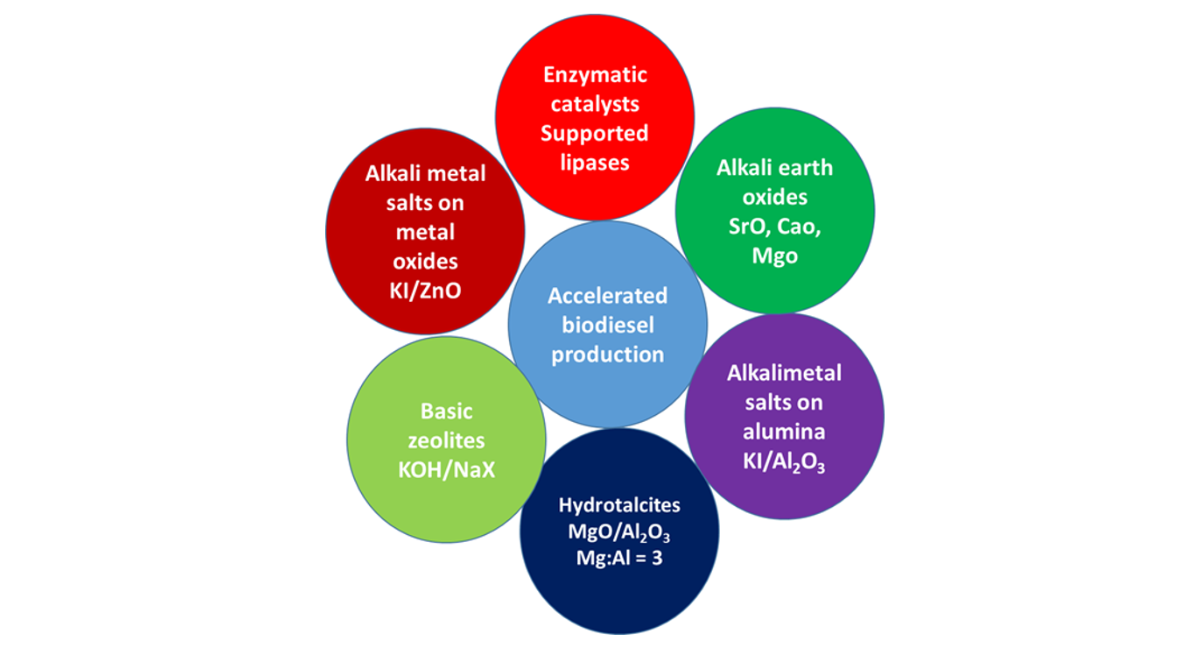
Figure 2: State of the art catalysts developed for the accelerated production of biodiesel via the transesterification reaction.
For further details on the advantages and disadvantages of various solid base catalysts and new insights the readers are recommended to consult the following references [56, 57]. Thus among various technologies the microwave based heating in synergy with the solid base catalyst SrO, supported on the millimetric silica beads, SiO2, namely, SrO/SiO2, is outstand for the rapid conversion of feedstock like waste cooking oil in to diesel. Any efforts should be in the direction of scaling up and also taking the process to the level of commercialization [30-32].
CONCLUSION
For attaining the UN sustainable development goals (UN SDGs), namely, good health and well-being (SDG 1), clean energy (SDG 13) and Climate action (SDG 17), it is surmised that there should be paradigm shift from fossil based to bio based resources including biofuels. In this context biodiesel appears to be the most suitable biofuel that could substitute either gasoline or diesel. Microwave irradiation of feedstock in the presence of catalyst is proven to be the best among various technologies for the production of biodiesel at the laboratory scale. Designing the microwave based biodiesel production process that could be adopted at an Industrial scale is the rate determining step in the commercialization of biodiesel. A new design for the microwave technology based biodiesel production from waste cooking oil feedstock using SrO nanoparticles coated on millimetric beads of silica is awaited for the large scale conversion of the feedstock to biodiesel. Any break-through leads to clean environment and good health and well-being of mankind.
ACKNOWLEDGMENTS
Indebtedness is due to Dr Deepak Nallaswamy for providing the opportunity to INP to conduct state of the art research at SIMATS. Thankfulness is due to Dr Anandamurugan, librarian and the staff of the central library IIT Madras for providing the knowledge resources for the successful completion of this compilation. Gratefulness is due to Mrs Saradhambal V, Superintendent, Central library IIT Madras for the counseling ad blessings. Thanks are due to Sandro L Barbosa, Fabrizio Roncaglia, Fahad Rehman, Anita Salic, Tao Lyu, Dhurba Neupane, Qiuyun Zhang, Jialu Wang, Yutao Zhang, Anoop Singh, Jose C S dos Santos, Omojola Awogbemi and their research groups for contributing 11 landmark papers for the special issue on “Accelerated production of biodiesel”. Blessings and thankfulness are due to Miss Tabitha Victor Pulidindi the only daughter of INP for her prayers of faith and selfless love. Gratefulness is due to the House of prayer Church, Adyar for the fellowship and the Holy Communion.
CONFLICTS OF INTEREST
The authors declare no conflicts of interest.
REFERENCES
- Koracs, A., Plant based diesel oil comprises rapeseed oil alcohol and acetone. HU62645-T, 28 May 1993, HU208994-B, 28 Feb 1994, Hungary.
- Nwufo OC, Nzebuka GC, Okonkwo BU, Okorafor OO, Onwuachu CC, Ononogbo C, et al. Watermelon (Citrullus vulgaris) seed oil as a potential feedstock for biodiesel production in Nigeria. Biofuels. 2023;14(7):713-720. [Google Scholar][Crossref]
- Chutia GP, Phukan K. Novel Xanthium strumarium and Mesua assamica biodiesel-diesel blends: Fuel properties, cost analysis and emission profile in variable compression ratio CI engine. Fuel. 2025;386:134277. [Google Scholar][Crossref]
- Al-Hwaiti M, Al-Rawashdeh H, Alhabahbeh NH, Gomaa MR. Effect of catalysts on performance and emission in a combustion diesel engine using biodiesel derived from non-edible plant" Handal": Case study in Jordan. Energy. 2025;321:135432. [Google Scholar][Crossref]
- Winfield DD, Dunn RO, Marks MD. Fuel Properties of High Oleic Pennycress Oil Derived Biodiesel and Its Blends With Ultra‐Low Sulfur Diesel. Journal of the American Oil Chemists' Society. 2025;102(8):1249-1255. [Google Scholar][Crossref]
- Sun H, Devanesan S, Aljawdah HM, Jhanani GK. Utilization of the Dunaliella salina microalgae by transesterification process with NaOH as catalyst in diesel combustion. Renewable Energy. 2025;250:123344. [Google Scholar][Crossref]
- Paschou V, Emmanouilidou E, Lazaridou A, Kokkinos NC, Mitkidou S. A comparative study of biodiesel production from waste cooking olive oil and sunflower oil. ChemistrySelect. 2025;10(4):e202404497. [Google Scholar][Crossref]
- Jaganathan S, Murugesan V, Periannan D, Manivannan JM, Singh S, Varshney D, et al. Oxidative degradation and performance of Jatropha biodiesel blends: implications for clean energy and sustainability. Global NEST Journal. 2025;27(3):1-12. [Google Scholar][Crossref]
- Mulla AA, Shah AP. Production and engine performance analysis of biodiesel from Pongamia pinnata using PTSA and CaO nanocatalysts. Biomass and Bioenergy. 2025;195:107714. [Google Scholar][Crossref]
- Ali M, Shakaib M, Zaidi AA, Javed MA, Khan SZ, Aly Hassan A. Performance and Environmental Sustainability of Fish Waste Biodiesel on Diesel Engines. Sustainability. 2025;17(12):5385. [Google Scholar][Crossref]
- Maleki B, Esmaeili H, Venkatesh YK, Yusuf M. A critical review on MOFs and COFs-based heterogeneous catalysts in biodiesel generation: synthesis methods, structural features, mechanisms, kinetic, economic/environmental evaluation, and their performance. Process Safety and Environmental Protection. 2024;187:903-925. [Google Scholar][Crossref]
- Yuan Z, Zhu J, Lu J, Li Y, Ding J. Preparation of biodiesel by transesterification of castor oil catalyzed by flaky halloysite supported ZnO/SnO2 heterojunction photocatalyst. Renewable Energy. 2024;227:120516. [Google Scholar][Crossref]
- Ruatpuia JV, Halder G, Mohan S, Gurunathan B, Li H, Chai F, et al. Microwave-assisted biodiesel production using ZIF-8 MOF-derived nanocatalyst: A process optimization, kinetics, thermodynamics and life cycle cost analysis. Energy Conversion and Management. 2023;292:117418. [Google Scholar][Crossref]
- Zheng B, Ban L, Nie Y, Chen L, Yang S, Zhang H. Sustainable production of biodiesel enabled by acid-base bifunctional ZnF2 via one-pot transformation of Koelreuteria integrifoliola oil: Process optimization, kinetics study and cost analysis. Journal of Cleaner Production. 2024;453:142263. [Google Scholar] [PubMed] [Crossref]
- Qamar OA, Jamil F, Hussain M, Bae S, Inayat A, Shah NS, et al. Advances in synthesis of TiO2 nanoparticles and their application to biodiesel production: A review. Chemical Engineering Journal. 2023;460:141734. [Google Scholar][Crossref]
- Zhang G, Xie W. Hierarchical porous SAPO-34 decorated with Mo and W oxides for concurrent transesterification-esterifications for efficient biodiesel production from acidic soybean oil. Renewable Energy. 2024;222:119927. [Google Scholar][Crossref]
- Bousba D, Sobhi C, Zouaoui E, Rouibah K, Boublia A, Ferkous H, et al. Efficient biodiesel production from recycled cooking oil using a NaOH/CoFe2O4 magnetic nano-catalyst: synthesis, characterization, and process enhancement for sustainability. Energy Conversion and Management. 2024;300:118021. [Google Scholar][Crossref]
- Xie W, Gao C, Li J. Sustainable biodiesel production from low-quantity oils utilizing H6PV3MoW8O40 supported on magnetic Fe3O4/ZIF-8 composites. Renewable Energy. 2021;168:927-937. [Google Scholar][Crossref]
- Islam A, Teo SH, Islam MT, Mondal AH, Mahmud H, Ahmed S, et al. Harnessing visible light for sustainable biodiesel production with Ni/Si/MgO photocatalyst. Renewable and Sustainable Energy Reviews. 2025;208:115033. [Google Scholar][Crossref]
- Aghbashlo M, Peng W, Tabatabaei M, Kalogirou SA, Soltanian S, Hosseinzadeh-Bandbafha H, et al. Machine learning technology in biodiesel research: A review. Progress in Energy and Combustion Science. 2021;85:100904. [Google Scholar]
- Pranta MH, Cho HM. A comprehensive review of the evolution of biodiesel production technologies. Energy Conversion and Management. 2025;328:119623. [Google Scholar][Crossref]
- Bhatia SK, Bhatia RK, Jeon JM, Pugazhendhi A, Awasthi MK, Kumar D, et al. An overview on advancements in biobased transesterification methods for biodiesel production: Oil resources, extraction, biocatalysts, and process intensification technologies. Fuel. 2021;285:119117. [Google Scholar][Crossref]
- Ahmad A, Yadav AK, Singh A, Singh DK. A machine learning-response surface optimization approach to enhance the performance of diesel engine using novel blends of Aloe vera biodiesel with MWCNT nanoparticles and hydrogen. Process Safety and Environmental Protection. 2024;186:738-755. [Google Scholar][Crossref]
- Osman AI, Fang B, Zhang Y, Liu Y, Yu J, Farghali M, et al. Life cycle assessment and techno-economic analysis of sustainable bioenergy production: a review. Environmental Chemistry Letters. 2024;22(3):1115-1154. [Google Scholar]
- Ni X, Chen C, Li R, Liu Q, Duan C, Wang X, et al. Effects of ultrasonic treatment on the structure and functional characteristics of myofibrillar proteins from black soldier fly. International Journal of Biological Macromolecules. 2024;278:135057. [Google Scholar] [PubMed] [Crossref]
- Oruganti RK, Biji AP, Lanuyanger T, Show PL, Sriariyanun M, Upadhyayula VK, et al. Artificial intelligence and machine learning tools for high-performance microalgal wastewater treatment and algal biorefinery: A critical review. Science of The Total Environment. 2023;876:162797. [Google Scholar][PubMed][Crossref]
- Cingesar IK, Marković MP, Vrsaljko D. Integrating 3D printed microreactors and microseparators for efficient biodiesel production. Chemical Engineering and Processing-Process Intensification. 2025;209:110165. [Google Scholar][Crossref]
- Liow MY, Chan ES, Ng WZ, Song CP. Enhancing Enzymatic Biodiesel Production Using Low-Cost CO2-Based Alkyl Carbamate Ionic Liquid and Ultrasound-Assisted Intensification. ACS Sustainable Chemistry & Engineering. 2025;13(1):68-79. [Google Scholar][Crossref]
- Tangy A, Pulidindi IN, Asmita Dutta, Arie Borenstein. Strontium-Oxide Nanoparticles for Biodiesel Production: Fundamental Insights and Recent Progress. Energy Fuels. 2021;35(1):187-200. [Google Scholar][Crossref]
- Tangy A, Pulidindi IN, Gedanken A. Continuous flow biodiesel production from waste cooked oil using microwave irradiation and supported SrO catalyst. Bioresource Technology. 2017;224, 333-341. [Google Scholar]
- Tangy A, Kumar VB, Pulidindi IN, Kinel-Tahan Y, Yehoshua Y, Gedanken A. In situ transesterification of Chlorella Vulgaris using carbon dot functionalized strontium oxide as heterogeneous catalyst under microwave irradiation. Energy Fuels. 2016; 30(12):10602-10610. [Google Scholar][Crossref]
- Tangy A, Pulidindi IN, Gedanken A. SiO2 beads decorated with SrO nanoparticles for biodiesel production from waste cooking oil using microwave irradiation. Energy Fuels. 2016;30(4):3151–3160. [Google Scholar][Crossref]
- Tangy A, New SrO based catalytic methods for biodiesel production from non-edible feedstock using microwave irradiation: Implementation and adaptation to large-scale systems. Ph D thesis. Bar Ilan University, 2016. [Google Scholar]
- Barbosa SL, Nelson DL, Paconio L, Pedro M, Dos Santos WT, Wentz AP, et al. Environmentally friendly new catalyst using waste alkaline solution from aluminum production for the synthesis of biodiesel in aqueous medium. Bioengineering. 2023;10(6):692. [Google Scholar] [PubMed] [Crossref]
- Anderlini B, Ughetti A, Cristoni E, Forti L, Rigamonti L, Roncaglia F. Upgrading of Biobased Glycerol to Glycerol Carbonate as a Tool to Reduce the CO2 Emissions of the Biodiesel Fuel Life Cycle. Bioengineering. 2022;9(12):778. [Google Scholar] [PubMed] [Crossref]
- Javed F, Saif-ul-Allah MW, Ahmed F, Rashid N, Hussain A, Zimmerman WB, et al. Kinetics of biodiesel production from microalgae using microbubble interfacial technology. Bioengineering. 2022;9(12):739. [Google Scholar] [PubMed] [Crossref]
- Anđelović S, Božinović M, Ćurić Ž, Šalić A, Jurinjak Tušek A, Kučan KZ, et al. Deep eutectic solvents for biodiesel purification in a microextractor: solvent preparation, selection and process optimization. Bioengineering. 2022;9(11):665. [Google Scholar] [PubMed] [Crossref]
- Li G, Hao Y, Yang T, Xiao W, Pan M, Huo S, et al. Enhancing bioenergy production from the raw and defatted microalgal biomass using wastewater as the cultivation medium. Bioengineering. 2022;9(11):637. [Google Scholar] [PubMed] [Crossref]
- Javed F, Rizwan M, Asif M, Ali S, Aslam R, Akram MS, et al. Intensification of biodiesel processing from waste cooking oil, exploiting cooperative microbubble and bifunctional metallic heterogeneous catalysis. Bioengineering. 2022;9(10):533. [Google Scholar] [PubMed] [Crossref]
- Neupane D. Biofuels from renewable sources, a potential option for biodiesel production. Bioengineering. 2022;10(1):29. [Google Scholar] [PubMed] [Crossref]
- Zhang Q, Wang J, Zhang S, Ma J, Cheng J, Zhang Y. Zr-based metal-organic frameworks for green biodiesel synthesis: minireview. Bioengineering. 2022;9(11):700. [Google Scholar] [PubMed] [Crossref]
- Rathore D, Sevda S, Prasad S, Venkatramanan V, Chandel AK, Kataki R, et al. Bioengineering to accelerate biodiesel production for a sustainable biorefinery. Bioengineering. 2022;9(11):618. [Google Scholar] [PubMed] [Crossref]
- Sales MB, Borges PT, Ribeiro Filho MN, Miranda da Silva LR, Castro AP, Sanders Lopes AA, et al. Sustainable feedstocks and challenges in biodiesel production: An advanced bibliometric analysis. Bioengineering. 2022;9(10):539. [Google Scholar] [PubMed] [Crossref]
- Awogbemi O, Kallon DV. Application of tubular reactor technologies for the acceleration of biodiesel production. Bioengineering. 2022;9(8):347. [Google Scholar] [PubMed] [Crossref]
- Pulidindi IN, Gedanken A. Can Biofuels Alleviate the Energy and Environmental Crisis? Book, Nova Science Publishers, Inc., New York, 2019;ISBN: 978-1-53615-050-6;1-298. [Google Scholar]
- Mishra AK, Meer MS, Nagaraju V. Exploring extreme flood events of a western state of India during monsoon season of 2019 from space. Mausam. 2024;75(1):245-248. [Google Scholar] [Crossref]
- Nagamani K, Meer MS, Mishra AK, Sheriff MR, Najar MA. Application of Satellite and Geospatial technology for flash flood mapping over Himalayan with reference to Dharamshala in Himachal Pradesh, India during July 2021. Journal of Applied & Natural Science. 2024;16(2):534-542. [Google Scholar] [Crossref]
- Nagamani K, Mishra AK, Meer MS, Anuradha B. Mapping severe tropical cyclone tauktae across the Arabian Sea and Western Coast of India using remote sensing and machine learning during May 2021. In 2023 International Conference on Data Science, Agents & Artificial Intelligence (ICDSAAI). 2023;1-5. [Google Scholar] [Crossref]
- Mishra AK, Nagaraju V, Meer MS. Examination of heavy flooding over the desert state of Rajasthan in India. Weather. 2020;75(8):256-258. [Google Scholar] [Crossref]
- Yahya I, Gassoumi M, Attia M, Ennetta R. Application of AI and machine learning techniques to improve microwave-assisted biodiesel yield prediction. Biomass and Bioenergy. 2025;202:108250. [Google Scholar] [Crossref]
- Rajagopal K, Kumari VS, Saraswathy S, Ponmaniraj S, Kumar VS, Deepa A. Improving the Detection of Kidney Tumours Using Firefly Algorithm Optimisation. In 2024 Second International Conference on Intelligent Cyber Physical Systems and Internet of Things (ICoICI). 2024;898-902. [Google Scholar] [Crossref]
- Rajagopal K, Kumari VS, Pillai NM, Rekha A, Gunasekaran M, Doss PL. Machine Learning for Multi-Class Kidney Tumour Segmentation: Advancing Classification Accuracy. In 2025 5th International Conference on Pervasive Computing and Social Networking (ICPCSN). 2025;601-607. [Google Scholar] [Crossref]
- Rajagopal K, Kumari VS, Saraswathy S, Kumar VS, Ponmaniraj S, Deepa A. Hybrid Deep Learning Models with Genetic Algorithm Optimization for Enhanced Kidney Tumor Detection. In 2024 5th International Conference on Electronics and Sustainable Communication Systems (ICESC). 2024;1525-1530. [Google Scholar] [Crossref]
- Khalid N, Zubair M, Mehmood MQ, Massoud Y. Emerging paradigms in microwave imaging technology for biomedical applications: unleashing the power of artificial intelligence. npj Imaging. 2024;2(1):13. [Google Scholar] [PubMed] [Crossref]
- Mukhtar A, Saqib S, Lin H, Shah MU, Ullah S, Younas M, et al. Current status and challenges in the heterogeneous catalysis for biodiesel production. Renewable and Sustainable Energy Reviews. 2022;157:112012. [Google Scholar] [Crossref]
- Tangy, A. New SrO based catalytic methods for biodiesel production from non-edible feedstock using microwave irradiation: Implementation and adaptation to large-scale systems. Ph.D. thesis, Bar Ilan University, 2016.
- Pulidindi IN, Gedanken A. Can Biofuels Alleviate the Energy and Environmental Crisis?, Book, Nova Science Publishers, Inc., New York, 2019;ISBN: 978-1-53615-050-6. [Google Scholar]

Article Processing Timeline
| 2-5 Days | Initial Quality & Plagiarism Check |
| 25-35 Days |
Peer Review Feedback |
| 45-60 Days | Total article processing time |
EDITORIAL & PUBLICATION INFORMATION
| English | Publication Language |
| Single-Blind | Peer-Review Model |
| 17% | Acceptance Rate |
| <18% | Similarity Screening Guideline |
| Open Access | Access Model |
All manuscripts undergo editorial assessment and originality screening as part of the journal's evaluation process. The acceptance rate shown is based on journal-level editorial data and may change over time. Similarity reports are assessed editorially and are not interpreted solely on the basis of a numerical similarity score.
Why Publish with us?
Ethics & Policies
Editorial & Management
Useful Links
Journal Highlights
Open Access Journals
Journal Flyer