


Journal of Nanoscience and Nanomaterials
ISSN:
3108-2084 (Online)
DOI Prefix (Crossref): 10.67238
 Download PDF
ABSTRACT
There is currently a paradigm shift from fossil based to biobased resources for the production of energy to attain the United Nations (UN) sustainability development goals related to good health, well-being, renewable and clean energy so as to overcome the catastrophic effects of climate change. Among various energy sources, the hydrogen energy stands out as the combustion of the fuel is free from CO 2 emissions. The hydrogen produced is indeed green if the energy used for the production of hydrogen from renewable sources like water electrolysis and the fermentation of carbonhydyrates, too comes from renewable sources like the solar energy, wind energy and the like rather than the electricity from the coal fired power plants. Efforts are ongoing in this direction and enormous advances have been made. Indeed, green hydrogen will be the energy source of the future provided, the currently set target by the United States (US) department of energy (DoE), namely, supplying hydrogen at the price of 1 USD/kg is realized by 2030. Fermentation process holds the key for green hydrogen production and supply at competitive prices. There are major obstacles towards the commercialization of green hydrogen as a substitute to the fossil fuels and the electric vehicles (EVs) that have been extensively used for transportation application. However, a transition to hydrogen economy can facilitate attaining the UN sustainable development goals, namely, the affordable and clean energy (goal 7) and climate action (goal 13). Thus the scope of the current status report is to highlight the latest advances made in green hydrogen production as well as distribution. We surmise that this report would serve as a standard protocol and user manual to the policy makers and investors dealing with the integration of green hydrogen with the transportation sector.
Keywords: Climate Change; Renewable Energy; Clean Energy; Green Hydrogen; Biohydrogen; Dark Fermentation; Photofermentation; Solar Fermentation
INTRODUCTION
In the words of the world’s richest man, Mr Elon Musk, the CEO of Tesla, “Hydrogen is the most dumb thing I could possibly imagine for energy storage.” No offense. The cost of 1 kg of hydrogen is currently prohibitively high (10 USD) for commercial scale utilization. However, the competing financial interests of the famous Mr Elon Musk could not be ruled out behind this statement, as hydrogen energy is the only competitor for the electric vehicles (EVs) promoted by Mr Elon Musk.
Energy crisis and environmental deterioration are the major challenges human societies are facing in the 21st century. The reasons behind the afore mentioned challenges are the indiscriminate use of fossil resources, rapid depletion of the extractable fossil based energy sources, including petrol, diesel and natural gas and the large amounts of greenhouse gases released into the atmosphere owing to the combustion of the fossil based energy sources. To alleviate the problems, it is surmised that carbon neutral fuels, especially, green hydrogen energy, should replace the currently used fossil based fuels both for industrial as well as transportation applications. Hydrogen (H2) fuel is regarded as a green energy source as the net emission from the burning of H2 is only water (H2O), which is environmentally benign. Moreover, the gravimetric energy density of H2 is the highest compared to any of the known materials (a lower heating value, LHV, of 120 MJ/kg and a higher heating value, HHV, of 143 MJ/kg). This means that the gravimetric energy density of hydrogen is nearly 2.6 - 3.1 times higher than the major fossil energy source, namely, gasoline (46 MJ/kg) [1].
Owing to the rapid advances made in the R and D on the three major aspects of green H2 fuel namely, its production, storage and utilization, there is currently a paradigm shift from the use of fossil based resources to green hydrogen as fuel. Intensity of the R and D activity in the fertile area of green hydrogen can be comprehended from a web of science search with the keywords, namely, green and hydrogen, that yielded 45, 687 results (as on 13th February 2026). The steady growth in this field during the past decade (2016-2025) is viewed from the bar diagram shown in Figure 1, wherein the number of publications as a function of year were plotted. Moreover, in the year, 2025, itself, 7319 papers were published indicating the fertility of the energy source, namely, green hydrogen.
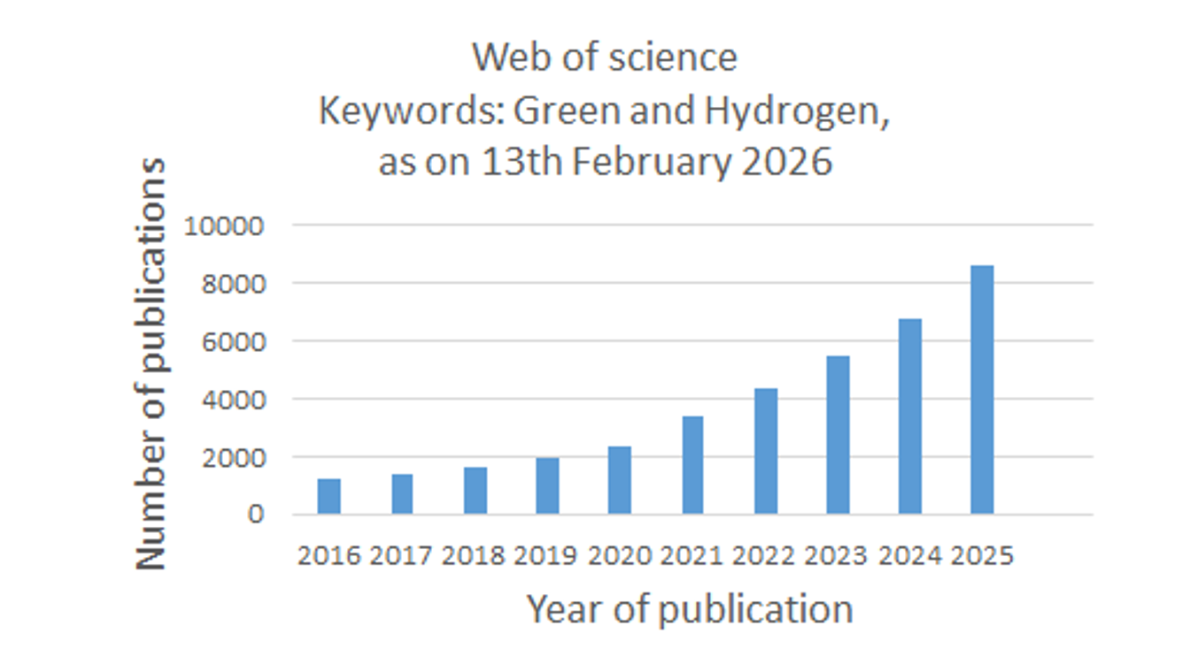
Figure 1: Rapid growth and intense R and D activity in the fertile area “Green hydrogen” during the past decade (2016-2025).
MATERIALS & METHODS
This status report used the literature from the scientific database, namely, Web of Science. As the quantum of research in the area of “Green hydrogen” is voluminous and exploding in nature, the scope of scanning the literature is limited only to the past five years (2021-2025) with the search keywords, namely, Green hydrogen. Moreover, only the topics, namely, Hydrogen production, storage, distribution and life cycle analysis, were considered and included in the report [1-42].
Goals for the Future Hydrogen Storage Materials
The goals set forth by the US department of energy (DoE) for the hydrogen storage materials with the corresponding gravimetric and volumetric energy density values were depicted pictorially in the work by Moller and co-workers. The ultimate goal of the US DoE pertaining to hydrogen energy storage is far far higher (gravimetric energy storage of 25 wt.% and volumetric energy storage of 180 kg H2/m3) which could be attained by possibly combining light elements with hydrogen in the solid state as in the case of NH4BH4 [1].
Possible Pathways for Reaching the set Goals towards Hydrogen Economy
This status report provides the possible pathways for reaching the far far higher targets. As voluminous data exists and many breakthroughs in the field have taken place, the authors have capsuled the content in the form of a table that systematically presents the developments that took place in the three major areas of green hydrogen, namely, Production of hydrogen from renewable sources, storage in sustainable and environmentally friendly solid state materials and applications leading to green environment and sustainability in energy [2-16]. Path breaking findings in the recent past are highlighted in the form of a table (Table 1).
|
S No |
Highlights of the Advances |
Reference |
|
1 |
Green hydrogen – Production, storage and applications: State of the art, new challenges and opportunities Green hydrogen – Production methods Strategies for storage Applications State of the art technologies |
|
|
2 |
Theory, modelling and simulation studies in Green hydrogen Modeling and simulations studies in catalysis and photocatalysis for green hydrogen production Theoretical studies for the design of catalysts, electrocatalysts and photoelectrocatalysts for green hydrogen production Role of Machine learning, artificial intelligence, theoretical studies in the storage and applications of green hydrogen |
|
|
3 |
Large scale introduction of green hydrogen for net-zero greenhouse gas (GHG) emissions Net zero greenhouse gas emissions with green hydrogen – challenges ahead Electrolyer technologies - GHG emissions Integration of renewable electricity sources with hydrogen production Well-chosen production configuration and distribution methods for green hydrogen Strategies for GHG emission reduction in the production and distribution of green hydrogen Life cycle analysis of GHG emissions in green hydrogen production, storage and transport |
|
|
4 |
Challenges in the scaling up of green hydrogen and achieving climate targets Green hydrogen for attaining climate targets Green hydrogen and derived fuels as substitute to fossil fuels; Green hydrogen critical for climate neutrality Short term scarcity and long term uncertainties in green hydrogen; Energy policies and incentives for boosting hydrogen production and availability |
|
|
5 |
Orange hydrogen as a new green hydrogen Orange hydrogen as a substitute to black and grey hydrogens Achieving Paris agreement climate targets with green hydrogen Steam reforming of coal and natural gas for hydrogen production Coupling of electrolysis of water with renewable energy – green hydrogen Expensive and energy intensive nature of green hydrogen Rock based hydrogen production and carbon sequestration – white and orange hydrogen |
|
|
6 |
Electroreforming of biomass for green hydrogen production; Coupling of organic electrooxidation with hydrogen production Coupling electroreforming of biomass with green hydrogen production Electroxidation of chitin acetate Solar energy driven electrooxidation of chitin and chitin derivatives and shrimp shells Scaling up studies on the electroreforming of biomass for green hydrogen |
|
|
7 |
Integrated Photo Electrochemical cells for harvesting solar energy for green hydrogen production Solar energy for sustainable economy in fuel and chemical industry; Photo Electrochemical and integrated photoelectrochemical cells for green hydrogen production Pilot plant scale demonstration of green hydrogen production in integrated photoelectrochemical cells |
|
|
8 |
Direct air electrolysis (DAE) for green hydrogen production Moisture captured from air as sustainable source of hydrogen Direct air electrolysis as a novel electrochemical method of green hydrogen production Solar and wind powered electrolysis of fresh water from air for green hydrogen production Challenges and opportunities for sustainability |
|
|
9 |
Electrochemical Green hydrogen storage – S, N doped carbon quantum nanodots modified CoFe2O4 on nanoclay Hydrogen storage options Adsorption based techniques Electrochemical hydrogen storage methods based on nanocomposites |
|
|
10 |
Accelerating the hydrogen based economy – Solutions for technoeconomic and geoscientific glitches Hydrogen – A green and sustainable energy source C – Suite issues in transition from fossil energy to green hydrogen; Green hydrogen – focal point of the green energy space Fundamental shift from fossil to hydrogen based economy – revenue generation State of the art green hydrogen technologies – Fuel cells, photo catalysis, electrocardiographs and hydrogen panels Green hydrogen landscape – Interplay between government policies, incentives, market dynamics and corporate strategies Green hydrogen as transformative energy |
|
|
11 |
Cost reductions in green hydrogen production in the middle east and north Africa (MENA) region with the use of wind turbines and solar panels Economic analysis of green hydrogen production in MENA region Integration of wind and solar energy in green hydrogen productions CO2 mitigation through green hydrogen; Investments, incentives and benefits: Green hydrogen projects |
|
|
12 |
Use of photovoltaic and battery storage system for green hydrogen production – A technoeconomic analysis Zero emission future with green hydrogen; Energy management (EM) in hydrogen production system (HPS) Connecting HPS to photovoltaic based battery grid Technoeconomic analysis of the operation of the electrolyzer for green hydrogen production Design of PV based battery grid for energy efficient and cost effective green hydrogen productions |
|
|
13 |
Green hydrogen target for 2050 – Electrolyzer capacity, water management, utilization of solar and wind powers Climate targets – decarbonization of energy systems Design of cost effective and energy efficient electrolyzers (50 GW) Utilization of solar energy (107 GW) and wind energy (43 GW) to power the electrolyzers (50 GW) Realizing 122 billion USD green hydrogen industry by 2050 |
|
|
14 |
Challenges in photovoltaic green hydrogen productions Integration of solar energy and battery to the electric grid for the electrolysis Techno-economic feasibility of green hydrogen |
|
|
15 |
Photocatalyst materials for green hydrogen production; Particulate photocatalyst for solar energy harvesting Solar-chemical energy systems Photocatalytic water splitting; Catalysts with one-step overall water splitting (OWS) activity – SrTiO3 Oxynitride-oxysulfide particulate photocatalysts Photoelectrodes for stable OWS |
|
|
16 |
Photocatalytic (B doped CuO/ZnO) for hydrogen production using Sulfur containing waste wasters Waste (sulfur containing) water streams for green hydrogen Designing non-noble metal based photocatalysts for photocatlytic hydrogen productions On the role of B doping in non-noble metal oxides Role of S as sacrificial agent for photocatalytic water splitting Renewable green hydrogen from contaminated water bodies Can nuclear energy be integrated with green hydrogen production? |
|
|
17 |
Solar and wind based green hydrogen production – Prospects and challenges in Africa Renewable energy sources – In African context Green hydrogen – Production storage and utilization technologies Cost analysis of green hydrogen productions Reduction of levelized cost of hydrogen (LCOH) via integration with solar and wind energies CO2 mitigation with green hydrogen |
|
|
18 |
Green hydrogen from bioethanol reforming; Bioethanol as a sustainable source for green hydrogen Advances in catalysis for bioethanol reforming Ru-Sn based supported catalysts for catalytic conversion of bioethanol to green hydrogen Non-noble metal based catalysts for green hydrogen from bioethanol |
|
|
19 |
Catalytic pathways for green hydrogen from Bioethanol Feedstock for bioethanol – first generation, second generation and third generation Methods for the pretreatment of biomass – isolation of cellulose Bioethanol production using solar energy Cellulosic bioethanol – sustainability Recent advances in bioethanol reforming to green hydrogen |
|
|
20 |
Solar energy driven glucose fermentation for green hydrogen production Biotechnology for green hydrogen Solar reactor for fermentative hydrogen productions Catalytic methods for glucose production from biomass Biocatalytic pathways for the atom efficient conversion of glucose to green hydrogen Green algae ( Chlamydomonas reinhardtii) for hydrogen production |
|
|
21 |
Co based electrocatalysts for green hydrogen production Electrochemical pathways for green hydrogen Nanomaterials as electrocatalysts Co based nanomaterials for green hydrogen production |
|
|
22 |
Large scale hydrogen production via nucleophilic oxidation reactions (NOR) of biomass Electrolytic water splitting for pure hydrogen production Nucleophilic oxidation reaction (NOR) as substitute to oxygen evolution reactions Coupling of NOR with hydrogen evolution reaction (HER) Mechanisms of NOR of biomass Role of electrolyzers in industrial hydrogen production |
|
|
23 |
Photocatalytic water splitting for green hydrogen production Renewable electricity for green hydrogen Promising photocatalysts Enhancing the efficiency of photocatalysts via chemical scavangers Role of semiconductors in hydrogen production |
|
|
24 |
Photocatalytic splitting of brine water Sea water as a sustainable source of green hydrogen Pt/TiO2 – a potential water splitting catalysts Production of Cl2 as biproduct – cost reduction in green hydrogen production Feasibility of solar to chemicals production |
|
|
25 |
Solar energy driven green hydrogen production – Advances in photocatalysis Green hydrogen Yb and N codoped TiO2 as a promising photocatalyst for hydrogen production Synthesis and characterization and mechanistic studies Challenges in enhancing the efficiency and life time of the photocatalysts |
|
|
26 |
Hetero (B, N) atom doped Carbon nanomaterials for hydrogen storage Carbon nanomaterials – recent advances Doping of carbon nanomaterials with heteroatoms Carbon nanomaterials for hydrogen storage – advantages Paradigm shift from fossil based to hydrogen based economy |
|
|
27 |
Green hydrogen production and distribution – Greenhouse gas emissions Net zero greenhouse gas emissions – green hydrogen Green hydrogen facilities – life cycle analysis (LCA) of greenhouse gas emissions Different electrolyzer technologies Different renewable electricity sources Modes of distribution of hydrogen – pipelines, ships Strategies for emission reductions in supply chain |
|
|
28 |
Commercial scale green hydrogen production Global leaders in green hydrogen production Integration of renewable energy sources with hydrogen production Transition from fossil fuel based to renewable energy based hydrogen production Energy independence and sustainable climate through green hydrogen |
|
|
29 |
Green algae for solar energy driven green hydrogen production Green algae and cyanobacteria for green hydrogen Role of FeFe hydrogenase for hydrogen production Photoproduction of hydrogen from S deficient C. reinhardtii |
|
|
30 |
Strategies for the integration of hydrogen supply chain with the power grid – Cost reductions in ammonia producing industries Advances in green hydrogen production technologies Power to ammonia (P2A) approach Strategies to overcome the gap between demand and supply chain Multi regional ammonia industrial system (MAIS) Integration of hydrogen supply chain (HSC) and power grid (PG) – HSC-PG-MAIS model Trucks and transport media for storing hydrogen NASH bargaining method – effective overall cost reductions |
|
|
31 |
Solar energy based hydrogen production – Selecting the appropriate sites Integration of solar energy with hydrogen production Density based clustering in geographical information systems (GIS) Best and worst method National clusters for hydrogen production Terrain suitability, energy capability and sustainability Application of green hydrogen – Internal combustion engine and Mixed cycle thermal power plants |
|
|
32 |
Electrocatalytic (Fe2O3/CuO) water splitting for hydrogen production Electrochemical water splitting Non-noble method electrocatalysts for green hydrogen production Nature of active sites of catalysts Fe2O3/CuO composites as electrocatalysts MoO3/graphene oxide composites for green hydrogen production Electrochemical methods as a substitute to fossil fuels |
|
|
33 |
Advances in the implementation of hydrogen filling stations in the Russian Federation Decarbonization with green hydrogen Production, transportation, and combustion of green hydrogen Challenges in the transportation and storage of hydrogen Hydrogen refueling infrastructure Fuel cell vehicles for hydrogen utilization |
|
|
34 |
State of the art electrochemical hydrogen storage methods and materials The technology of electrochemical hydrogen storage Electrochemical hydrogen storage materials – options Metal oxides and mixed metal oxides for electrochemical hydrogen storage MXenes – A novel material for electrochemical hydrogen storage Polymer materials for electrochemical hydrogen storage Applications of solid state hydrogen storage |
Table 1: Landmark papers on Hydrogen production, storage, distribution and life cycle analysis
New insights based on critical analysis of the latest innovation highlighted in Table 1 in the field of green hydrogen were shown in Scheme 1 with emphasis on the market trends and requirements.
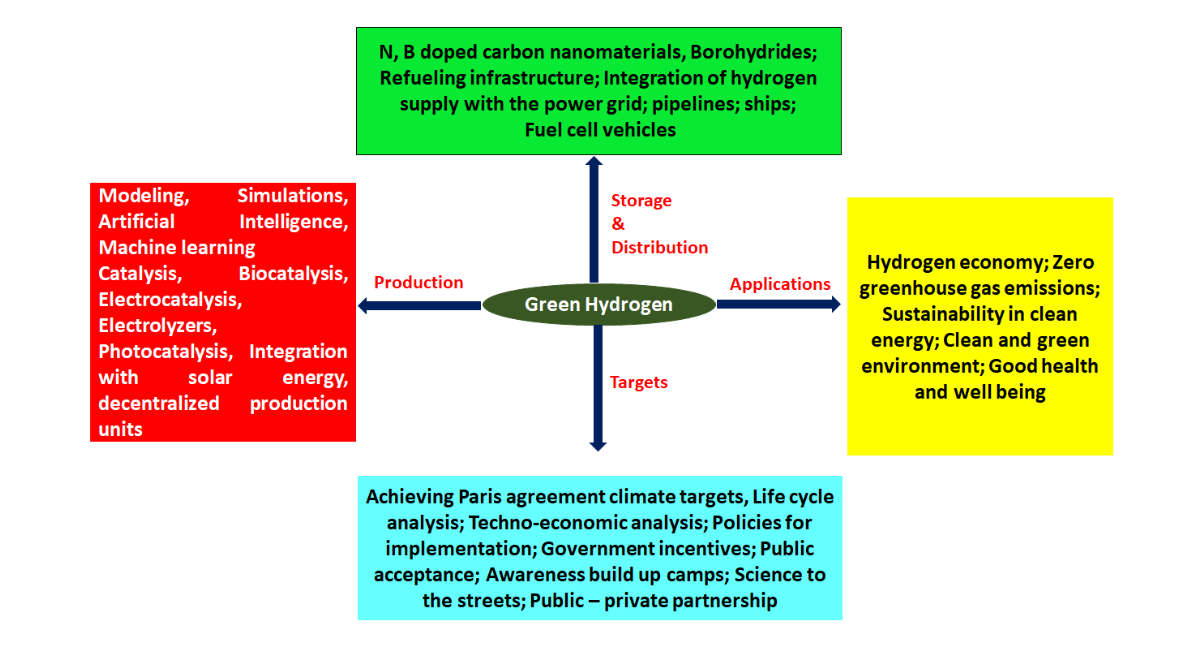
Scheme 1: New insight on the innovation and market trends in green hydrogen
DISCUSSION
Integration of solar energy with the biohydrogen production
Gedenken’s group pioneered in the use of solar energy for the accelerated production of bioethanol [43]. Glucose feedstock of concentration as high as 40 wt. % was converted to 19.5 wt. % bioethanol. Classical fermentation problems like the product ethanol poisoning of yeast could be surmounted as the formed bioethanol is separated from the fermentation broth soon after its formation by the unique evaporation-condensation process operating in the specially designed solar reactor. The solar reactor used for the fermentation of glucose and other biomass namely, cellulose, and marine macroalgae Ulva rigida was made up of Aluminum metal. Herein we propose the fabrication of the solar reactor of similar design using carbon fiber reinforced composite (CFRC) material. Use of such CFRC for solar reactor fabrication has several advantages including durability, light weight, enhanced solar energy harvesting, and acceleration of kinetics of fermentation of glucose to biohydrogen [44-46].
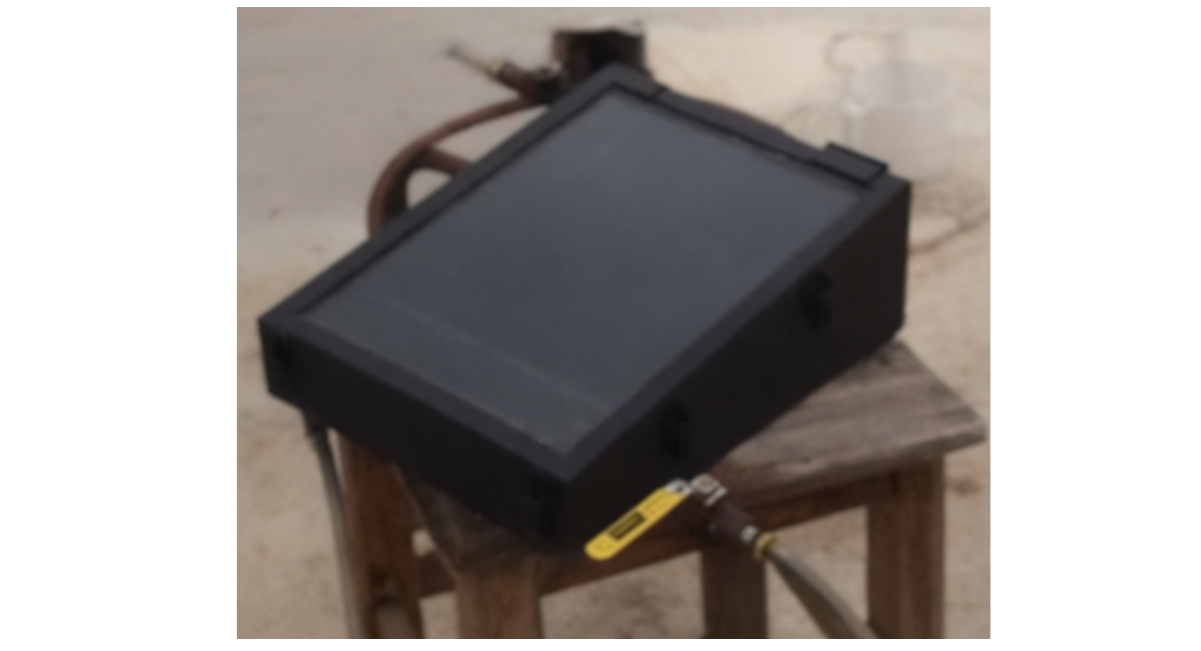
Figure 2: Solar reactor for the accelerated fermentation of Carbohydrates to hydrogen proposed to be fabricated using carbon fiber reinforced composite (CFRC)
CONCLUSION
To facilitate easy and ready contact between the investors and the inventors, the contacts of 34 pioneers in the field of green hydrogen were provided in the form of references and such a style of presentation is the first of its kind in scientific literature and is expected to be a trend setter to meet the demand. New insights on the design of special solar reactor made up of the carbon fiber reinforced composites for integrating the fermentation of carbohydrates with the solar energy for the accelerated production of green biohydrogen were provided.
Integrating solar energy with photo-fermentation in solar reactors accelerates the conversion of biomass to green hydrogen. Like-wise, the integration of electrolyzers with renewable energy sources leads to the sustainable production of green hydrogen. Doping of light elements (B, N, C) in carbon materials as well as the appropriate choice of compounds of light elements with high hydrogen content as in the case of NH4BH4-carbon nanodot composites leads to gravimetric hydrogen storage as high as 25 wt. %. With new insight on the green hydrogen production, storage, distribution, life-cycle analysis as well as the techno-economic analysis, this status report on green hydrogen is envisioned to serve as a user manual for the large body of the scientific community.
AUTHOR CONTRIBUTION
ST is the ideator and supervisor; MSS reviewed and edited the paper and provided new insights; INP wrote the original manuscript.
ACKNOWLEDGEMENTS
Thankfulness is due to Professor Deepak Nallaswamy Veeraiyan for providing the opportunity to INP to work at SIMATS. Gratefulness is due to Mr Anandamurugan, Librarian, and the staff of the central library for access to the knowledge resources. Indebtedness is due to Mrs Saradhambal V, Superintendent, for the facilities at the Nalanda Light Reading Hall, Central library, IIT Madras. Thanks are due to Professor Rajakumar Balla, Chairman, Central Library, IIT Madras for the facilities. Indebtedness is due to Professor S Elangovan, Head of the department, ENT, for the motivation and support.
CONFLICT OF INTEREST
The authors declare no conflicts of interest.
REFERENCES
- Møller KT, Jensen TR, Akiba E, Li HW. Hydrogen - A sustainable energy carrier. Progress in Natural Science: Materials International. 2017;27(1):34–40. [Google Scholar]
- de Kleijne K, Huijbregts MAJ, Knobloch F, van Zelm R, Hilbers JP, de Coninck H, et al. Worldwide greenhouse gas emissions of green hydrogen production and transport. Nature energy. 2024;9:1139–1152. [Google Scholar] [Crossref]
- Brandt J, Iversen T, Eckert C, Peterssen F, Bensmann B, Bensmann A, et al. Cost and competitiveness of green hydrogen and the effects of the European Union regulatory framework. Nature energy. 2024;9(6):703-713. [Google Scholar] [Crossref]
- Odenweller A, Ueckerdt F, Nemet G, Jensterle M, Luderer G. Probabilistic feasibility space of scaling up green hydrogen supply. Nature energy. 2022;7:854-865. [Google Scholar] [Crossref]
- Osselin F, Soulaine C, Fauguerolles C, Gaucher EC, Scaillet B, Pichavant M. Orange hydrogen is the new green. Nature geoscience. 2022;15:765-769. [Google Scholar] [Crossref]
- Liang QR, Huang YN, Guo YX, Zhang X, Hu XM, Zeng H, et al. Efficient osmosis-powered production of green hydrogen. Nature sustainability. 2024;7:628-639. [Google Scholar] [Crossref]
- Zhao H, Lu D, Wang JR, Tu WG, Wu D, Koh SW, et al. Raw biomass electroreforming coupled to green hydrogen generation. Nature communications. 2021;12:2008. [Google Scholar] [PubMed] [Crossref]
- Holmes-Gentle I, Tembhurne S, Suter C, Haussener S. Kilowatt-scale solar hydrogen production system using a concentrated integrated photoelectrochemical device. Nature Energy, 2023;8:586-596. [Google Scholar] [Crossref]
- Guo JI, Zhang YC, Zavabeti A, Chen KF, Guo YL, Hu GP, et al. Hydrogen production from the air. Nature communications. 2022;13:5046. [Google Scholar]
- Ghiyasiyan-Arani M, Salavati-Niasari M. Decoration of green synthesized S, N-GQDs and CoFe2O4 on halloysite nanoclay as natural substrate for electrochemical hydrogen storage application. Scientific Reports. 2022;12:8103. [Google Scholar] [PubMed] [Crossref]
- Shemyakina AA, Levina AI, Korablev VV, Lepekhin, AA. Architecture of the management system for hydrogen production at hydro applications. International Journal of Hydrogen Energy. 2024;69:1227-1235. [Google Scholar] [Crossref]
- Afanasev P, Askarova A, Alekhina T, Popov E, Markovic S, Mukhametdinova A, et al. An overview of hydrogen production methods: Focus on hydrocarbon feedstock. International Journal of Hydrogen Energy. 2024;78:805-828. [Google Scholar] [Crossref]
- Amjad F, Agyekum EB, Wassan N. Identification of appropriate sites for solar-based green hydrogen production using a combination of density-based clustering, Best-Worst Method, and Spatial GIS. International Journal of Hydrogen Energy. 2024;68:1281-1296. [Google Scholar] [Crossref]
- Alothman AA, Shah JH, Aljadoa KA, Soykan G, Yalçin S, Abid AG, et al. Fabrication of heterojunction electrode based on Fe2O3@CuO-400 nanocomposite constructed for hydrogen production. International Journal of Hydrogen Energy. 2024;61:1004-1014. [Google Scholar] [Crossref]
- Marin GE, Titov AV, Akhmetshin AR. Prospects for implementation of hydrogen filling stations in the Russian Federation. International Journal of Hydrogen Energy. 2024;78:901-906. [Google Scholar] [Crossref]
- Kalusulingam R, Ravi K, Mathi S, Yadhav N, Mikheykin AS, Biradar AV et al. Bimetallic Ni-Fe nanoparticles encapsulated with biomass-derived N-doped graphitic carbon core-shell nanostructures an efficient bifunctional electrocatalyst for enhanced overall seawater splitting and human urine electrolysis. Materials Ttoday Sustainability. 2024;27:100864. [Google Scholar] [Crossref]
- Agrawal K, Sharma S, Kumar B, Verma P. Hydrogen an environmental revolution toward clean energy transition: a green concept for current and future perspectives. Clean Technologies and Environmental Policy. 2025;27(2):607-648. [Google Scholar] [Crossref]
- Li Y, Bahamon D, Sinnokrot M, Al-Ali K, Palmisano G, Vega LF. Computational modeling of green hydrogen generation from photocatalytic H2S splitting: Overview and perspectives. Journal of Photochemistry and Photobiology C: Photochemistry Reviews. 2021;49:100456. [Google Scholar] [Crossref]
- Odenweller A, Ueckerdt F. The green hydrogen ambition and implementation gap. Nature Energy. 2025;10(1):110-23. [Google Scholar] [Crossref]
- Islam A, Islam MT, Teo SH, Mahmud H, Swaraz AM, Rehan AI, et al. Progress in silicon-based materials for emerging solar-powered green hydrogen (H2) production. Advances in Colloid and Interface Science. 2025;343:103558. [Google Scholar] [PubMed] [Crossref]
- Nasser M, Hassan H. Green hydrogen production mapping via large scale water electrolysis using hybrid solar, wind, and biomass energies systems: 4E evaluation. Fuel. 2024;371(A):131929. [Google Scholar] [Crossref]
- Bukar AL, Chaitusaney S, Kawabe K. Optimal energy management and techno-economic assessment of hydrogen energy production system incorporated with photovoltaic and battery storage. International Journal of Hydrogen Energy. 2024;62:1139-1153. [Google Scholar] [Crossref]
- Pradhan BB, Limmeechokchai B, Chaichaloempreecha A, Rajbhandari S. Role of green hydrogen in the decarbonization of the energy system in Thailand. Energy Strategy Reviews. 2024;51:101311. [Google Scholar] [Crossref]
- Jiménez‐Calvo P, Savateev O, Villa K, Muñoz‐Batista MJ, Domen K. Toward Renewable Solar Energy Systems: Advances in Photocatalytic Green Hydrogen Production. Global Challenges. 2024;8(6):2400122. [Google Scholar] [PubMed] [Crossref]
- Higashi T, Domen K. Interfacial design of particulate photocatalyst materials for green hydrogen production. ChemSusChem. 2024;17(21):e202400663. [Google Scholar] [PubMed] [Crossref]
- Tateishi I, Furukawa M, Katsumata H, Kaneco S. Effective Utilization of Sulfur Wastewater by Photocatalytic System Using B/CuO/ZnO. Separations. 2024;11(1):19. [Google Scholar] [Crossref]
- Hassan AA, Awad MM, Nasser M. Towards clean energy independence: Assessing MENA region hybrid PV-wind solutions for green hydrogen generation and storage and 24/7 power production. Sustainable Energy Technologies and Assessments. 2025;73:104158. [Google Scholar] [Crossref]
- Nomura T, Zhao Y, Minami E, Kawamoto H. Reaction Mechanisms and Production of Hydrogen and Acetic Acid from Aqueous Ethanol Using a Rn-Sn/TiO2 Catalyst in a Continuous Flow Reactor. Catalysts. 2024;14(4):249. [Google Scholar] [Crossref]
- Tabah B, Pulidindi IN, Chitturi VR, Arava LM, Varvak A, Foran E, et al. Solar-energy-driven conversion of biomass to bioethanol: A sustainable approach. Journal of Materials Chemistry A. 2017;5(30):15486-506. [Google Scholar] [Crossref]
- Tabah B, Pulidindi IN, Chitturi VR, Arava LM, Gedanken A. Utilization of solar energy for continuous bioethanol production for energy applications. RSC Advances. 2016;6(29):24203-24209. [Google Scholar] [Crossref]
- Samanta A, Dutta B, Halder S. Cobalt‐Based Nanoscale Material: An Emerging Electrocatalyst for Hydrogen Production. Chemistry–An Asian Journal. 2024;19(16):e202400209. [Google Scholar] [PubMed] [Crossref]
- Wang P, Zheng J, Xu X, Zhang YQ, Shi QF, Wan Y, et al. Unlocking efficient hydrogen production: nucleophilic oxidation reactions coupled with water splitting. Advanced Materials. 2024;36(35):2404806. [Google Scholar] [PubMed] [Crossref]
- Augustin A, Ganguly P, Shenoy S, Chuaicham C, Pillai SC, Sasaki K, et al. Impact of hole scavengers on efficient photocatalytic hydrogen production. Advanced Sustainable Systems. 2024;8(12):2400321. [Google Scholar] [Crossref]
- Okada T, Kodera M, Miseki Y, Gunji T, Sayama K. Superior photocatalytic activity of Pt-loaded rutile-type TiO2 particles in brine splitting reaction. Journal of Catalysis. 2025;443:115969. [Google Scholar] [Crossref]
- Gupta S, Kwak Y, Raj RP, Selvam P. Ytterbium–nitrogen co-doped ordered mesoporous TiO2: an innovative hetero-phase photocatalyst for harnessing solar energy in green hydrogen production. Journal of Materials Chemistry A. 2024;12(12):6906-6927. [Google Scholar] [Crossref]
- Ariharan A, Viswanathan B, Nandhakumar V. Hydrogen storage on boron substituted carbon materials. International Journal of Hydrogen Energy. 2016;41(5):3527-3536. [Google Scholar] [Crossref]
- de Kleijne K, de Coninck H, van Zelm R, Huijbregts MA, Hanssen SV. The many greenhouse gas footprints of green hydrogen. Sustainable Energy Fuels. 2022;6:4383–4387. [Google Scholar] [PubMed] [Crossref]
- Klokov AV, Loktionov EY, Loktionov YV, Panchenko VA, Sharaborova ES. A mini-review of current activities and future trends in agrivoltaics. Energies. 2023;16(7):3009. [Google Scholar] [Crossref]
- Antal TK, Kukarskikh GP, Volgusheva AA, Krendeleva TE, Tyystjärvi E, Rubin AB. Hydrogen photoproduction by immobilized S-deprived Chlamydomonas reinhardtii: Effect of light intensity and spectrum, and initial medium pH. Algal Research. 2016;17:38-45. [Google Scholar] [Crossref]
- Qiu Y, Zhou S, Chen J, Wu Z, Hong Q. Hydrogen-enriched compressed natural gas network simulation for consuming green hydrogen considering the hydrogen diffusion process. Processes. 2022;10(9):1757. [Google Scholar] [Crossref]
- Odoi-Yorke F, Agyekum EB, Adegboye OR, Sekyere CK. Exploring the potential of solar photovoltaic and wind-based green hydrogen projects in ECOWAS region: Production, cost, and environmental maps. Energy Exploration & Exploitation. 2025; 43(5):01445987251355300. [Google Scholar] [Crossref]
- Xu X, Dong Y, Hu Q, Si N, Zhang C. Electrochemical hydrogen storage materials: state-of-the-art and future perspectives. Energy & Fuels. 2024;38(9):7579-7613. [Google Scholar] [Crossref]
- Tabah B, Pulidindi IN, Chitturi VR, Arava LM, Gedanken A. Solar‐energy driven simultaneous saccharification and fermentation of starch to bioethanol for fuel‐cell applications. ChemSusChem. 2015;8(20):3497-3503. [Google Scholar] [PubMed] [Crossref]
- Yang C, Zhu D, Sun C, Chen B, Li Y, Pulidindi IN, et al. Electrothermally responsive self-healing for carbon fiber/epoxy interphase based on Diels-Alder adducts. Composites Science and Technology. 2021;208:108767. [Google Scholar] [Crossref]
- Pulidindi IN, Gedanken A. Surface Modification of Carbon Fibers. Preprints.2023.v1. [Crossref]
- Dev Patel, Meetkumar Joshi, Yashraj Joshi, Indra Neel Pulidindi, Suresh Selvaraj. Direct synthetic routes of MXenes and their application in carbon fiber reinforced plastics (CFRPs) as supplementary sizing layer. International Journal of Crystalline Materials. 2024;1(1):7-13.

Article Processing Timeline
| 2-5 Days | Initial Quality & Plagiarism Check |
| 25-35 Days |
Peer Review Feedback |
| 45-60 Days | Total article processing time |
EDITORIAL & PUBLICATION INFORMATION
| English | Publication Language |
| Single-Blind | Peer-Review Model |
| 17% | Acceptance Rate |
| <18% | Similarity Screening Guideline |
| Open Access | Access Model |
All manuscripts undergo editorial assessment and originality screening as part of the journal's evaluation process. The acceptance rate shown is based on journal-level editorial data and may change over time. Similarity reports are assessed editorially and are not interpreted solely on the basis of a numerical similarity score.
Why Publish with us?
Ethics & Policies
Editorial & Management
Useful Links
Journal Highlights
Open Access Journals
Journal Flyer