

Journal of Plant Science and Biotechnology
 Download PDF
ABSTRACT
Efficient planting systems are critical for improving seed multiplication efficiency and sustainability in potato seed production. This study evaluated the performance of dual-row transplantation on bed without hardening (DRTB) and hardened single-row transplantation (HSRT) across three potato cultivars (Diamant, Valencia, and Asterix) under net house conditions during two consecutive growing seasons (2023–24 and 2024–25). Significant differences were observed between planting systems, cultivars, and seasons for growth, yield attributes, tuber size distribution, and seed use efficiency. The DRTB system consistently required less seed for next-generation pre-foundation seed production (372–378 kg acre⁻¹) than HSRT (523–549 kg acre⁻¹). Although HSRT produced a higher total tuber yield per acre (5,000 ± 0.24 kg) compared with DRTB (4,000 ± 0.22 kg), DRTB generated a significantly greater number of small-to-medium sized mini-tubers (5–30 g) and a higher tuber number per plant, which are physiologically superior for seed purposes. Consequently, despite its lower total yield, the DRTB method enabled greater land coverage in the subsequent generation owing to its higher tuber number per kilogram and superior seed multiplication efficiency enhanced stem proliferation, higher stem density, and early stolon initiation under DRTB promoted increased tuber numbers and improved seed multiplication efficiency. In contrast, HSRT favored larger tubers (>30 g), which may increase the risk of latent pathogen transmission and seed degeneration. Among the cultivars, Diamant consistently outperformed Valencia and Asterix in terms of yield attributes and seed multiplication potential. Overall, DRTB enabled seed harvested from one acre to plant up to 10 acres in the subsequent generation, compared with only 8–9 acres under HSRT. The results demonstrate that DRTB is a more resource-efficient, seed-oriented, and economically viable planting strategy than the conventional HSRT system, offering strong potential for improving the sustainability of pre-foundation seed potato production.
Keywords: Transplanting Method; Dual-Row Planting; Mini-Tuber Production; Planting Geometry; Tuber Size Distribution; Seed Multiplication Efficiency.
INTRODUCTION
Potato (Solanum tuberosum L .) is the fourth most important food crop worldwide after rice, wheat, and maize, and plays a pivotal role in global food security, human nutrition and income generation. In Bangladesh, potato cultivation has expanded rapidly over recent decades owing to its short growth duration, high caloric value, adaptability to diverse agro-ecological conditions, and suitability for multiple cropping systems. Consequently, the demand for high-quality, disease-free seed tubers has increased substantially, particularly for processing industries, export markets, and table consumption.
According to reporting by The Business Standard, based on Bangladesh Bureau of Statistics (BBS) data, potatoes were grown on approximately 4.57 lakh hectares (≈ 457,000 ha) in 2024, representing a notable increase from the previous year, with national average yields around 23.9 t ha⁻¹. These production levels were well above the country’s annual domestic requirement of about 9 million tonnes (including seed use) [1]. However, despite surplus production, limitations in cold storage capacity, processing infrastructure, and export channels have created challenges in managing market supply and stabilizing prices.
Conventional seed potato production systems are often constrained by low multiplication rates, the accumulation of viral and bacterial diseases and inconsistent tuber quality. Tissue culture technology offers a viable alternative by enabling the rapid production of genetically uniform, virus-free plantlets that can serve as high-quality seed material [2,3,4]. However, tissue-cultured plantlets are highly sensitive during the transition from in vitro to field conditions. Exposure to fluctuating temperatures, variable light intensity, soil moisture stress and non-sterile environments can result in high mortality, poor establishment and reduced yield if acclimatization is inadequate [5].
To overcome these constraints, several establishment and acclimatization techniques have been developed to enhance the survival and field performance of tissue-cultured potato plantlets. Direct bed planting with semi-hardening involves transplanting plantlets directly into nursery or field beds with gradual exposure to ambient environmental conditions, thereby reducing transplant shock and encouraging early vegetative growth [6,7]. Alternatively, bed-to-field transfer with hardening incorporates an intermediate acclimatization phase, during which plantlets are maintained in seedling beds for 12–15 days prior to final field planting. This approach allows for gradual adaptation of root and shoots systems to non-sterile conditions, potentially improving establishment and subsequent productivity. The effectiveness of acclimatization and planting methods can vary with climatic conditions, varietal characteristics, and production objectives. However, comparative data under the agro-climatic conditions of northern Bangladesh remain limited. Therefore, systematic evaluation is necessary to optimize plant survival, growth, yield, tuber quality and economic performance. This study aimed to assess the effects of direct bed planting and hardening-based field transfer of three potato varieties.
MATERIALS AND METHODS
Experimental Site and Growing Conditions
The experiment was conducted during the 2023–24 and 2024–25 growing seasons at the experimental field of Dolua, Birganj, Dinajpur, Bangladesh (25.7997° N, 88.4622° E; elevation 33 m above sea level). The experimental site was located above flood level and characterized by good drainage, making it suitable for potato cultivation.
The soil was classified as non-calcareous dark grey floodplain soil with a sandy loam texture (60% sand, 25% silt, and 15% clay). The soil contained 1.15% organic matter and had a slightly acidic pH of 5.8. To ensure protection from insect vectors while maintaining adequate light penetration and ventilation, the entire experimental area was covered with a nylon net house. The structure was supported by bamboo poles (6.5 ft height) with crosswise supports tied using burlap. Nylon netting was extended downwards and buried into the soil along the base to prevent insect entry, thereby creating a protected environment suitable for seed potato production.
Plant Materials
Three potato ( Solanum tuberosum L.) varieties were used in this study:
- V₁: Diamant (BARI Alu-7)
- V₂: Asterix (BARI Alu-25)
- V₃: Valencia (ACI Alu-10)
Tissue-cultured potato plantlets of all varieties were obtained from the Advanced Seed Research and Biotech Centre Laboratory (ASRBCL) House: 18/B, Road: 126, Gulshan, Dhaka, Bangladesh.
Land Preparation and Fertilization
The experimental field was prepared using a power tiller followed by five successive cross-ploughings and laddering to obtain a fine tilth. All weeds, crop residues, and stubbles were removed before planting. To control soil-borne insect pests, Goolee 3GR (Fipronil 3%) was applied at a rate of 8 kg acre⁻¹ during final land preparation.
Organic fertilizers consisting of decomposed cow dung (3 ton acre⁻¹) and wood ash (2 ton acre⁻¹) were incorporated into the soil before final land preparation. An additional 1 ton acre⁻¹ cow dung and 1 ton acre⁻¹ wood ash were applied during the second earthing-up.
Chemical fertilizers were applied at the rates of 120 kg TSP, 120 kg MOP, 80 kg urea, 40 kg gypsum, 5 kg zinc, 5 kg boron, and 5 kg sulfur acre -1 prior to final land preparation. The remaining 60 kg TSP, 60 kg MOP, and 40 kg urea acre -1 were top-dressed at 30 days after transplanting (DAT) during the second earthing-up.
Experimental Design and Treatments
The experiment was laid out following a factorial arrangement with two planting methods and three potato cultivars, replicated five times. Each variety occupied an equal land area (0.065 acre) per planting method across five replications.
The treatments consisted of two transplantation methods:
- Dual-row transplantation on bed without hardening (DRTB)
- Hardened single-row transplantation (HSRT)
Transplantation Methods
Dual-Row Transplantation on Bed without Hardening (DRTB):
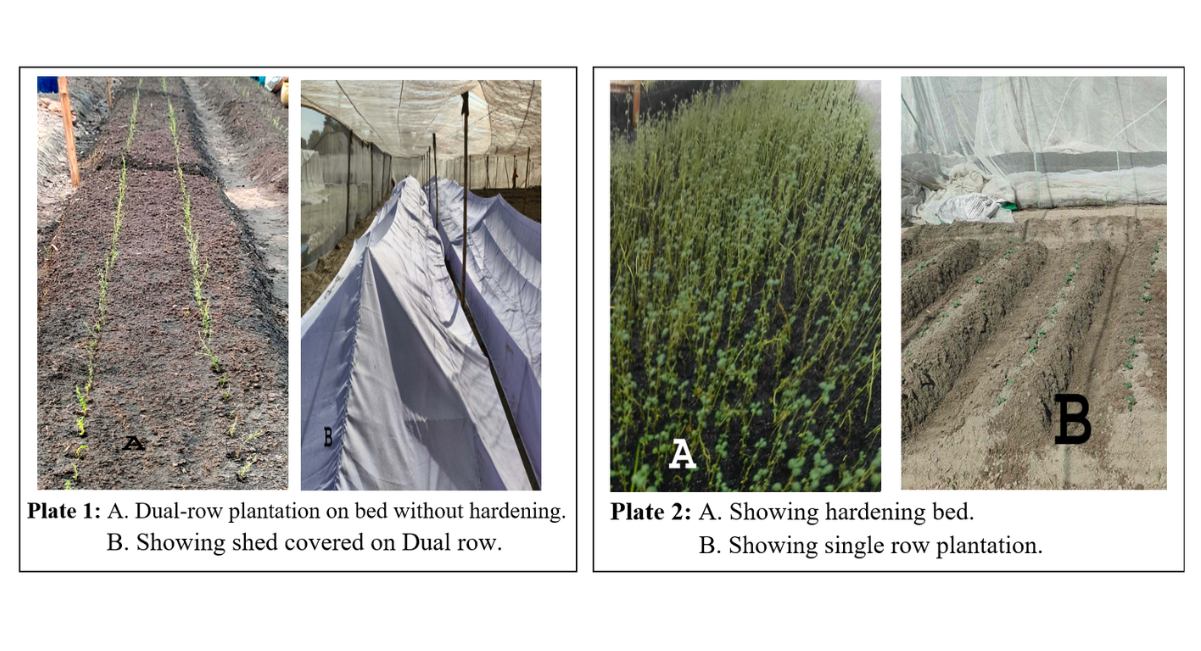
In the dual-row bed system, tissue-cultured potato plantlets were directly transplanted into nursery beds inside the net house without prior hardening. Each replication consisted of five beds, and each bed contained two rows, resulting in a total of 25 beds and 50 rows across five replications.
Each bed measured 1000 cm in length and 60 cm in width. Row-to-row spacing within beds was maintained at 30 cm, while plant-to-plant spacing was fixed at 12 cm. A 30 cm space was maintained around each bed to facilitate irrigation, earthing-up, and the addition of soil and fertilizer mixtures.
Hardened Single-Row Transplantation (HSRT):
For the hardened transplantation method, tissue-cultured plantlets were first transplanted into hardening beds on 15 November and irrigated daily using a fine spray. The beds were initially covered with polyethylene sheets to maintain high humidity. After seven days, the polyethylene covers were removed, and seedlings were exposed to open conditions for an additional three days to complete the hardening process. Hardened seedlings were subsequently transplanted into the net house in single rows, each measuring 1000 cm in length. Row-to-row spacing was maintained at 60 cm, and plant-to-plant spacing was kept at 12 cm.
The total land coverage per variety across five replications was 0.065 acre which was subsequently converted to one acre for ease of analysis.
Climatic Conditions of the Experimental Area
The experimental area is characterized by a subtropical climate with three distinct seasons: monsoon (May–October), post-monsoon (November–February), and pre-monsoon (March–April). Weather data were obtained from the Bangladesh Meteorological Department for the period from November 2024 to March 2025. The field experiment was conducted from November 2023 to March 2024 and November 2024 to March 2025 respectively while data collection continued at different growth stages until April 2025. During the study period (November–March), maximum daytime temperatures were recorded in November and March. The highest maximum temperature (32.7 °C) was observed on 11 March 2025, followed by 30.7 °C on 21 November 2024. The lowest daytime temperature (15.6 °C) was recorded on 24 January 2025. Night temperatures during the same period showed considerable variation, with the lowest minimum temperature (8.9 °C) recorded on 11 January 2025, followed by 9.1 °C on 28 February 2025. The highest night temperature (18.9 °C) occurred on 15 March 2025, while temperatures of 16.5 °C and 17.7 °C were recorded on 22 January and 21 December 2024, respectively. Relative humidity during nighttime conditions also fluctuated markedly. The highest relative humidity (91%) was recorded on 11 December 2024 and 22 January 2025 whereas the lowest nighttime relative humidity (38%) was observed on 3 March 2025. Photoperiod varied throughout the experimental period, with the longest day length (11 h 59 min 28 s) recorded on 15 February 2025 and the shortest day length (10 h 32 min 25 s) observed on 21 December 2024. These climatic conditions are generally favorable for potato growth and tuberization, although fluctuations in temperature and humidity during plant establishment may influence the survival and performance of tissue-cultured plantlets.
Pest and Disease Management
Fungicidal applications were initiated one month after transplanting and continued at 7-day intervals until haulm pulling. Disease incidence was recorded one day prior to each fungicide application.
Nemispore 80 WP (Mancozeb) was applied at a concentration of 4.5 g L⁻¹ to prevent late blight and other fungal diseases. Under cold and humid conditions conducive to disease development, Cemamix 750 WP (Carbendazim 12% + Mancozeb 63%) was applied alternately to control blackleg and associated fungal infections. Fungicide concentrations were adjusted carefully to ensure effective disease suppression under varying environmental conditions.
Harvesting and Post-Harvest Management
Haulm pulling was performed at 80 days after planting (DAP). After haulm removal, tubers were left in the field for 12–15 days to allow curing, skin thickening, and wound healing. Final harvesting was carried out at 100 DAP. Collected seeds then preserved in cold storage for next year multiplication.
Data Collection
Growth parameters, including plant height, number of leaves per plant, and number of shoots per plant, were recorded along with yield attributes such as tuber number and tuber weight. Observations were collected from ten randomly selected plants per treatment at 20, 40, 60, and 80 DAP. Mean values were calculated for each treatment. To allow comparison between Dual-Row on Bed and Hardened Single-Row planting systems across space and time, tuber number and yield data were expressed on a per square meter basis. Tuber number and yield obtained from successive plantings under the dual-row on bed system were summed to estimate total productivity per square meter and compared with the hardened single-row system.
Statistical Analysis
Mean values were calculated using the formula:
Where, x̄ = mean value,
∑Xi = sum of observations,
N = number of observations.
Standard deviation (SD) and standard error (SE) were calculated as:
Percentage distribution was calculated as:
RESULTS AND DISCUSSIONS
Overall Effects of Planting System, Geometry, and Cultivar
Analysis of variance revealed highly significant effects (P≤ 0.05) of planting system, planting geometry, and cultivar on major growth and yield attributes, including plant height, number of stems per plant, number of tubers per plant, yield per plant, tuber weight, and tuber size distribution. Significant interactions were also observed between planting method and cultivar across seasons. Differences in tuber size classes (<10 g, 10–20 g, 20–30 g, and >30 g) further demonstrated that planting strategy strongly influenced tuberization pattern and size heterogeneity.
Effects of Dual-Row on Bed and Hardened Single-Row Transplantation on Survival, Growth, and Tuber Size Distribution of Potato Varieties (Diamant, Valencia and Asterix) during 2023–24 and 2024–25.
Plant Establishment and Survival Percentage
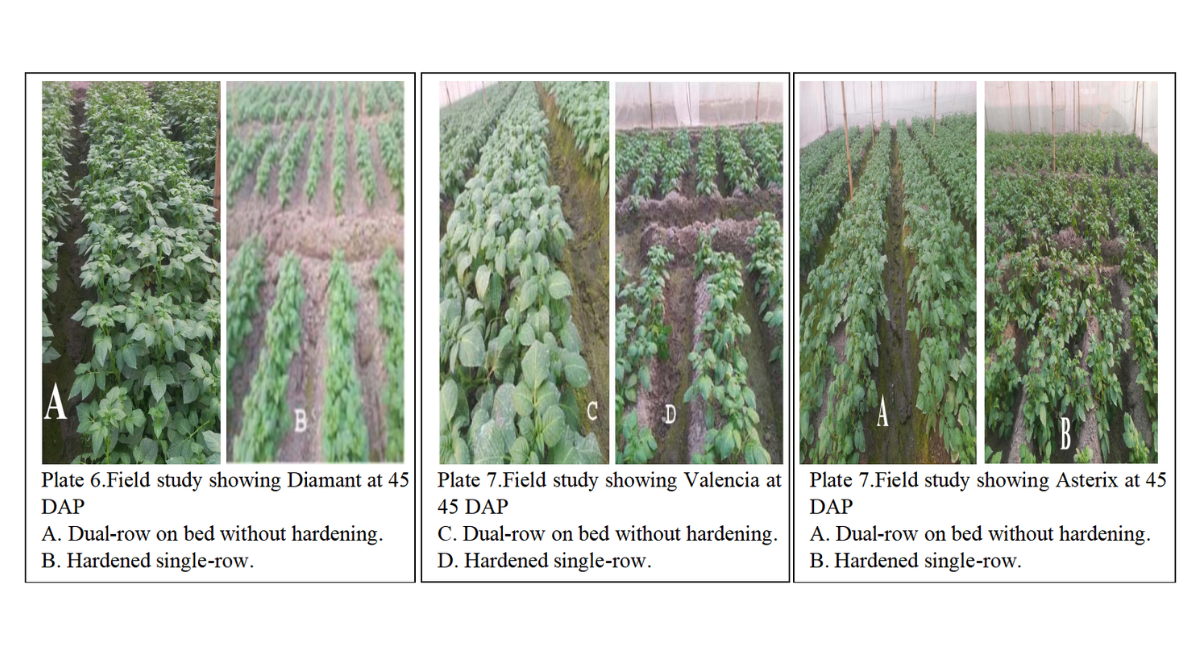
Establishment percentage was assessed 10 days after transplantation for both DRTB and HSRT across all varieties. Survival was comparable between planting methods but varied among varieties. In 2023–24, Diamant recorded the highest survival (98.0%) under both methods, followed by Valencia (96.0%), while Asterix showed the lowest survival (94.0%) under DRTB. A similar pattern was observed in 2024–25, with Diamant again exhibiting the highest survival (99.0%), followed by Valencia (97.0%); the lowest survival (95.0%) occurred in Asterix under HSRT (Table-1). These results corroborate earlier findings that proper hardening enhances field establishment and post-transplant survival by improving plant adaptability and vigor [8].
Mean Plant Height
Morphological parameters were evaluated to compare growth patterns of potato plantlets under two different planting methods: single-row transplantation after hardening (HSRT) and dual-row transplantation on bed (DRTB). Across varieties and seasons, the DRTB method consistently produced taller plants than HSRT. During the 2023–24 season, the highest mean plant height under DRTB was recorded in Diamant (79 ± 0.13 cm), followed by Valencia (68 ± 0.14 cm), while Asterix exhibited the lowest height (65 ± 0.12 cm). Under HSRT, Diamant again achieved the greatest height (70 ± 0.13 cm), followed by Valencia (67 ± 0.14 cm), with Asterix remaining the shortest (63 ± 0.12 cm). A similar trend was observed in the 2024–25 season, with DRTB resulting in Diamant reaching 80 ± 0.23 cm, Valencia 70 ± 0.14 cm and Asterix 63 ± 0.12 cm. Under the HSRT method, plant heights were slightly lower with Diamant at 73 ± 0.23 cm Valencia at 69 ± 0.14 cm and Asterix at 66 ± 0.12 cm. (Table 1).
The superior plant height under DRTB may be attributed to reduced transplant shock and minimal root disturbance, as seedlings are directly established on beds without subsequent re-transplantation. In contrast, although hardening prior to field transfer enhances root anchorage and initial shoot vigor, the additional acclimatization phase can impose physiological stress, temporarily limiting vegetative growth.
Mean Number of Stems per Plant
The maximum number of stems per plant was consistently recorded in both seasons. During 2023–24, Diamant produced the highest mean stem number under DRTB (10±0.13), followed by Valencia (8 ± 0.14) while Asterix recorded the lowest value (6 ± 0.12). Under HSRT, Diamant again showed the highest stem number (7±0.13), followed by Valencia (5 ±0.14) and Asterix (3± 0.12). A similar trend was observed in 2024–25. Under DRTB, Diamant recorded the maximum stem number (11±0.13) followed by Valencia (9± 0.14) and Asterix (7± 0.12).
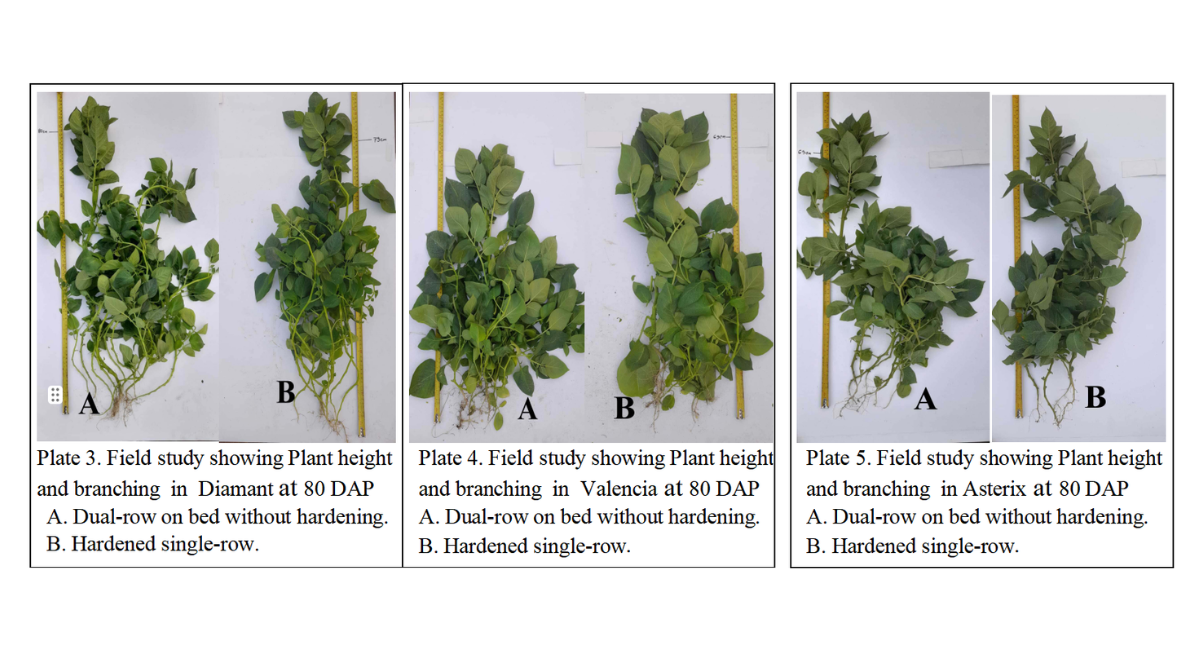
Under HSRT, Diamant maintained the highest stem count (8±0.13), followed by Valencia (6 ± 0.14), while Asterix produced the fewest stems per plant (4±0.22) (Table-1). Overall, these results clearly indicate that the DRTB planting method promotes enhanced stem proliferation compared to HSRT. However, an excessive number of stems may intensify intra-plant competition for assimilates, potentially leading to reduced tuber size [9]. Haverkort AJ and Kooman PL(1997) reported that stem number is a critical determinant of tuber set and size distribution in potato, where increased stem density generally enhances tuber number and total yield [21].
Mean Number of Tubers per Plant
For yield evaluation, harvested tubers were classified based on individual tuber weight into 5–10 g, 10–20 g, and 20-30g, >30g classes. In the present investigation, the maximum number of tubers per plant was consistently recorded under the dual-row transplantation on bed by non-hardening (DRTB) method across all varieties and seasons. During the 2023–24 growing season, the highest mean number of tubers per plant under DRTB was observed in the Diamant variety (18 ± 0.23) followed by Valencia (15 ± 0.15) whereas Asterix produced the lowest number of tubers per plant (14 ± 0.25). In contrast, under the single-row transplantation after hardening (HSRT) method, Diamant recorded the highest mean tuber number (10 ±0.23) followed by Valencia (9±0.15), while Asterix exhibited the minimum tuber count (8 ± 0.24). A similar varietal trend was observed during the 2024–25 season. Under the DRTB method, Diamant again produced the highest mean number of tubers per plant (18±0.13) followed by Valencia (17 ± 0.15) with Asterix recording the lowest value (15±0.24). Under HSRT, the highest mean tuber number was recorded in Diamant (11±.23) followed by Valencia (10±0.15) whereas Asterix produced the fewest tubers per plant (9 ± 0.24) (Table 1).
Mean number of tubers per plant (5–10 g)
The DRTB planting method was more effective in producing a higher mean number of 5–10 g tubers per plant across all varieties. During the 2023–24 season, Diamant exhibited the highest mean number of tubers in this size category (6 ± 0.12) followed by Valencia (5±0.24) whereas Asterix recorded the lowest mean number (4±0.23).
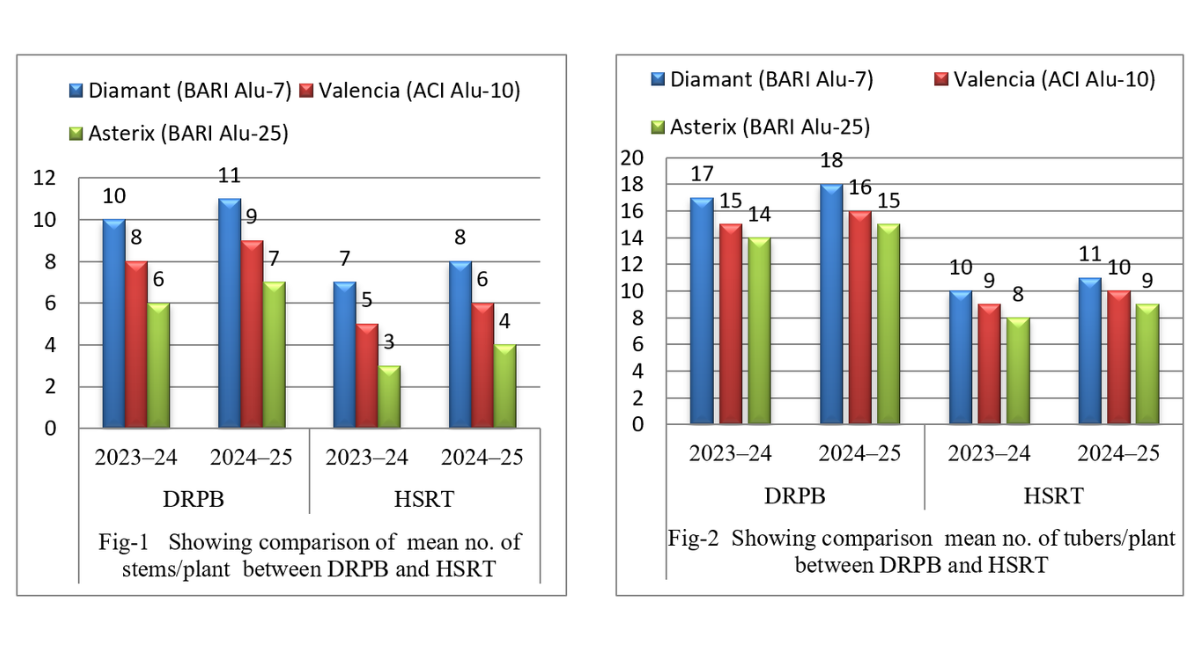
Similarly, in 2024–25, Diamant maintained the highest mean number of tuber was 6±0.15 followed by Valencia which was 5±0.24, with Asterix again showing the lowest value (4±0.23). The HSRT planting method was more effective in producing a lower mean number of 5–10 g tubers per plant across all varieties. During the 2023–24 season, Diamant exhibited the highest mean number of tubers in this size category (2 ± 0.22), followed by Valencia (1±0.24) and Asterix respectively (1±0.23). Similarly, in 2024–25, Diamant maintained the highest mean no of tuber was 3±0.15, followed by Valencia (1±0.24) and Asterix (1±0.23) (Table 1).
Mean number of tubers per plant (10–20 g)
The mean number of 10–20 g tubers per plant varied with planting method, variety, and season. During the 2023–24 season under the DRTB planting method, Diamant recorded the highest mean number of tubers in this size category (8±0.22) followed by Valencia (7±0.23) and Asterix (7±0.21) respectively. In contrast, the HSRT method in the same season resulted in 3±0.23 tubers per plant for Diamant, 4±0.24 for Valencia and for Asterix 3±0.21. In the 2024–25 seasons, a similar trend was observed. Under DRTB, Diamant recorded 9±0.21 tubers per plant, followed by Valencia (8±0.19), with Asterix again showing the lowest value (6 ±0.22). Under HSRT, the mean number of 10–20 g tubers per plant 4±0.22 for Diamant, 4±0.23 for Valencia, and 3±0.22 for Asterix were recorded (Table-1).
Mean number of tubers per plant (20-30 g)
The number of tubers per plant in the 20-30 g category varied with planting method, variety, and season. During the 2023–24 season under the DRTB planting method, Diamant recorded the highest mean number of tubers (4±0.24) followed by Valencia (3±0.23) and Asterix (3±0.21). In comparison, the HSRT method produced higher counts of medium-to-large tubers, with Diamant recording 3±0.12, Valencia 2±0.21 and Asterix 2±0.23. A similar trend was observed in the 2024–25 season. Under DRTB, Diamant produced 5± 0.22 tubers per plant, Valencia 4±0.25, and Asterix 4±0.23. Whereas HSRT, the corresponding values were for Diamant (3±0.12), similar for Valencia (3±0.23), and Asterix (3±0.21), indicating that HSRT favored the production of medium-to-large tubers (Table-1). The lower proportion of large tubers under DRTB can be explained by increased tuber number and physiological adjustments associated with direct transplantation.
Root establishment in transplanted plants reduces nutrient and water uptake, and assimilates are distributed among a larger number of developing tubers, resulting in numerous but smaller tubers. Furthermore, direct transplantation causes lower gibberellin (GA) and higher abscisic acid (ABA) and cytokinin levels, which favor stolon formation and tuber initiation but limit tuber enlargement [10,11].
Mean number of tubers per plant (>30 g)
The mean number of tubers per plant in the >30 g category was significantly influenced by planting method and variety. Under the DRTB method, tubers exceeding 30 g were not observed in any variety during either season. In contrast, the HSRT method produced a higher number of medium-to-large tubers. During the 2023–24 season, Diamant recorded 2.0 ± 0.12 tubers per plant, Valencia 2.0 ± 0.20 and Asterix 2.0 ± 0.22. A similar trend was observed in the 2024–25 season, with Diamant recording 2.0 ± 0.22, Valencia 2.0 ± 0.21, and Asterix 2.0 ± 0.23 tubers per plant (Table 1).
% of tubers per plant (>30 g)
The % tubers per plant in the >30 g category was significantly influenced by planting method and variety. Under the DRTB method, tubers exceeding 30 g were not observed in any variety during either season. In contrast, the HSRT method produced a higher number of medium-to-large tubers. During the 2023–24 season, Diamant recorded 20 tubers per plant, Valencia 17 and Asterix 22 similar trend was observed in the 2024–25 season, with Diamant recording 22 Valencia 25 and Asterix 22 tubers per plant (Table 1).
Overall, these findings indicate that while DRTB promotes a higher number of tubers, HSRT favors the production of larger (>30 g) tubers, reflecting a trade-off between tuber number and size. In the present investigation, mini-tubers within the 5–30 g size range were considered superior for establishment, as they develop stronger root systems and produce more vigorous plants with higher yield potential due to greater physiological efficiency and the ability to generate multiple tubers in the subsequent generation. Conversely, larger tubers (>30 g) may harbor latent pathogens or viruses, thereby increasing the risk of disease transmission to subsequent generation and resulting in fewer seed tubers in later generations. Consequently, overall yield may decline in advanced seed classes such as pre-foundation, foundation, and certified seed. Therefore, reliance on the HSRT method may expose farmers and seed-producing companies to considerable economic loss, as previously reported by Struik and Wiersema [8].
Mean number of tubers per kilogram
The number of tubers produced per kilogram was significantly influenced by planting method, cultivar, and growing season. Across both years and all varieties, the dual-row transplantation on bed (DRTB) method consistently produced a significantly higher number of tubers per kilogram than the hardened single row transplantation (HSRT) method.
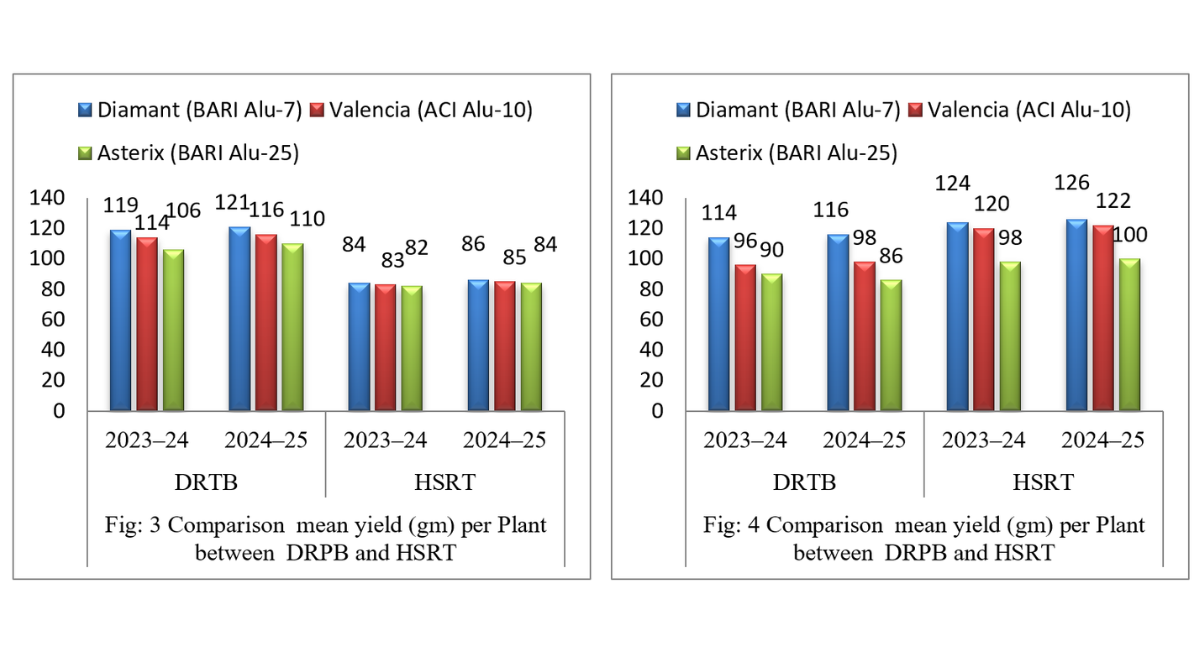
The DRTB transplanting method consistently produced a significantly higher number of tubers per kilogram compared with the HSRT method across varieties and years. During the 2023–24 season, the highest number of tubers per kilogram was recorded under DRTB in Diamant (119 ± 0.21), followed by Valencia (114 ± 0.24) while the lowest value was observed in Asterix (106 ± 0.23). In contrast, under the HSRT transplanting method in the same year, Diamant produced 84± 0.21 tubers per kilogram, followed by Valencia (83 ± 0.23), with Asterix again recording the lowest number (82 ± 0.19). A similar trend was observed during the 2024–25 season. Under the DRTB method, Diamant recorded the maximum number of tubers per kilogram (121 ± 0.22), followed by Valencia (116 ± 0.25) whereas Asterix produced the minimum (110 ± 0.23). Conversely, the HSRT method resulted in comparatively fewer tubers per kilogram, with values of 86 ± 0.22 in Diamant, 85 ± 0.23 in Valencia, and 84 ± 0.21 in Asterix.
The higher tuber number per kilogram observed under the DRTB method can be attributed to early tuber initiation and restricted tuber bulking, which favor the production of a greater proportion of small-sized mini-tubers. This explanation is consistent with the findings of Firman who reported that restricted canopy development and bulking lead to higher tuber numbers with smaller individual size [12].
Mean Yield (g) per Plant
The average yield of mini-tubers per plant was significantly influenced by the method of planting (Table 1). Overall, the dual-row transplantation on bed by non-hardening (DRTB) method produced significantly higher mini-tuber yields compared to hardened single row transplantation (HSRT) method.
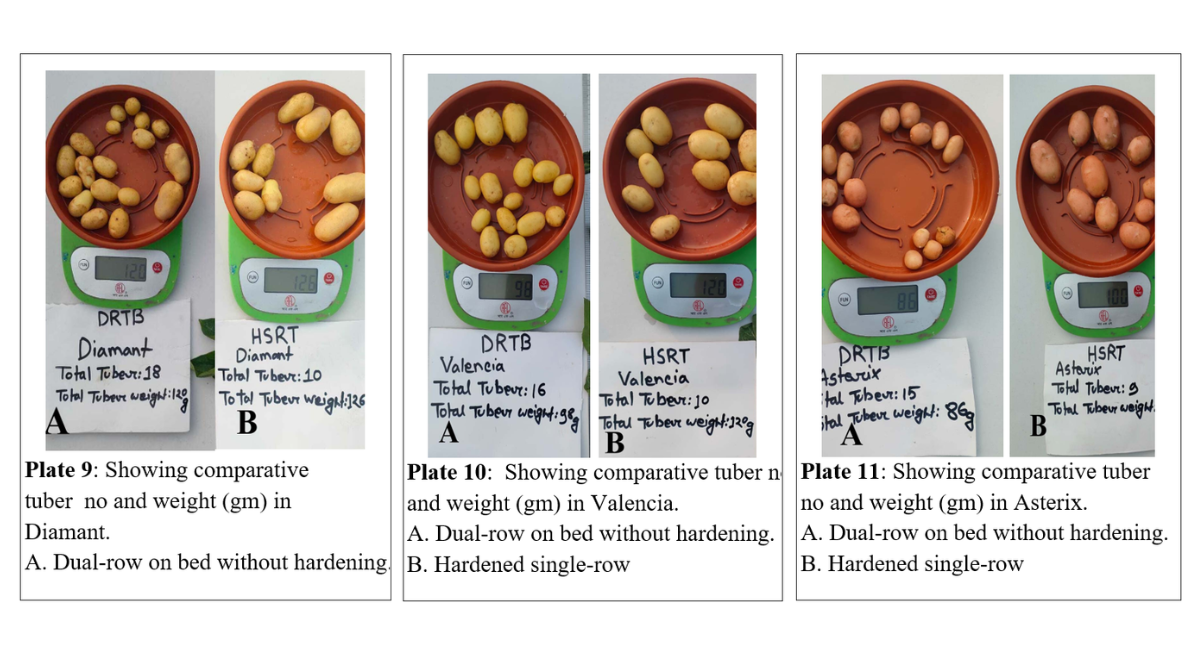
During the 2023–24 season, Diamant recorded the highest mean yield under DRTB at 114 ± 0.21 g per plant, followed by Valencia (96 ± 0.22 g) and Asterix with the lowest yield (90 ± 0.12 g).
In contrast, under HSRT, the highest yield was also in Diamant (124 ± 0.18 g), followed by Valencia (120 ± 0.14 g), with Asterix again producing the lowest (98 ± 0.12 g). During 2024–25, similar trends were observed. DRTB yielded 116 ± 0.18 g per plant in Diamant, 73 ± 0.24 g in Valencia, and 86 ± 0.23 g in Asterix. Under HSRT, Diamant produced 124± 0.18 g, Valencia 120 ± 0.14 g, and Asterix the lowest at 100 ± 0.22 g per plant. The superior performance of the DRTB method can be attributed to the greater intra-row space, allowing better development of underground plant parts, particularly stolons and tuber-forming sites, aided by the addition of extra fertile soil over the row. Dawinder reported that plant spacing significantly influences vegetative growth and yield of potato plants, with wider spacing generally promoting better vegetative growth and higher yield per plant [10].
Mean Seed Requirement (kg acre⁻¹) for the Next Generation (Pre-foundation Seed Production) (x̄ ± SE)
Seed requirement for next-generation pre-foundation potato production under net house conditions was significantly influenced by planting method, cultivar, and production year. Estimation of seed requirement per acre is a critical parameter for assessing seed multiplication efficiency and economic feasibility in seed potato production systems. Across both seasons, the dual-row transplantation on bed (DRTB) method required a substantially lower quantity of seed per acre compared with the hardened single-row transplantation (HSRT) method. The reduced seed requirement under DRTB was primarily attributed to the higher number of mini-tubers per kilogram resulting from a greater proportion of smaller-sized tubers. During the 2023–24 season, seed produced under the DRTB method required the highest seed rate in Asterix (424 ± 0.24 kg acre⁻¹), followed by Valencia (395 ± 0.26 kg acre⁻¹) while the lowest requirement was observed in Diamant (378 ± 0.25 kg acre⁻¹). A similar trend was recorded in the 2024–25 season, where seed requirement under DRTB was highest in Asterix (409 ± 0.29 kg acre⁻¹) followed by Valencia (388 ± 0.25 kg acre⁻¹), and lowest in Diamant (372 ± 0.28 kg acre⁻¹). In contrast, seed collected from the HSRT method required significantly higher quantities per acre due to the predominance of larger tuber sizes. In the 2023–24 season, the highest seed requirement was recorded in Asterix (549 ± 0.29 kg acre⁻¹), followed by Valencia (542 ± 0.27 kg acre⁻¹) with Diamant (536 ± 0.28 kg acre⁻¹) requiring the least amount. A comparable pattern was observed in the 2024–25 season where Asterix (536 ± 0.24 kg acre⁻¹) required the highest seed rate, followed by Valencia (529 ± 0.26 kg acre⁻¹) and Diamant (523 ± 0.23 kg acre⁻¹). Overall, these findings demonstrate that the DRTB method significantly reduces seed requirement per unit area, thereby improving seed use efficiency and lowering production costs for seed potato enterprises.
Recorded in Asterix (549 ± 0.29 kg acre⁻¹), followed by Valencia (542 ± 0.27 kg acre⁻¹) with Diamant (536 ± 0.28 kg acre⁻¹) requiring the least amount. A comparable pattern was observed in the 2024–25 season where Asterix (536 ± 0.24 kg acre⁻¹) required the highest seed rate, followed by Valencia (529 ± 0.26 kg acre⁻¹) and Diamant (523 ± 0.23 kg acre⁻¹). Overall, these findings demonstrate that the DRTB method significantly reduces seed requirement per unit area, thereby improving seed use efficiency and lowering production costs for seed potato enterprises.
|
Factors |
Dual-row transplantation on bed without hardening (DRTB) |
Hardened Single-Row Transplantation (HSRT) |
||||||||||
|
Diamant (ACI ALU-7) |
Valencia (ACI ALU-10) |
Asterix (ACI ALU-25) |
Diamant (ACI ALU-7) |
Valencia (ACI ALU-10) |
Asterix (ACI ALU-25) |
|||||||
|
Year |
2023-24 |
2024-25 |
2023-24 |
2024-25 |
2023-24 |
2024-25 |
2023-24 |
2024-25 |
2023-24 |
2024-25 |
2023-24 |
2024-25 |
|
% of Survival rate |
98 |
99 |
96 |
97 |
94 |
95 |
98 |
99 |
96 |
97 |
94 |
95 |
|
Mean Height (cm)/ Plant (x̄±SE) |
79±0.13 |
80±0.23 |
68±014 |
70±0.14 |
65±12 |
63±0.12 |
70±0.13 |
73±0.23 |
67±0.14 |
63±0.14 |
63±0.12 |
66±0.12 |
|
Mean no of stem/Plant (x̄±SE) |
10± 013 |
11±0.13 |
8±0.14 |
9±0.14 |
6±0.12 |
7±0.12 |
7±0.13 |
8±0.13 |
5±0.14 |
6±0.14 |
3±0.12 |
4±0.22 |
|
Mean no of Tuber /Plant (x̄±SE) |
17±0.23 |
18±0.13 |
15±0.15 |
16±0.15 |
14±0.25 |
15±0.24 |
10±0.23 |
11±0.23 |
9±0.15 |
10±0.15 |
8±0.24 |
9±0.24 |
|
Mean no of tuber between 5gm-10gm/ plant (x̄±SE) |
6±0.12 |
6±0.15 |
5±0.24 |
5±0.24 |
4±0.23 |
3±0.23 |
2 ± 0.22 |
3±0.15 |
1±0.24 |
1±0.24 |
1±0.23 |
1±0.23 |
|
Mean no of tuber between 10gm-20gm/ plant (x̄±SE) |
8±0.22 |
9±0.21 |
7±0.23 |
8±0.19 |
7±0.21 |
6±0.22 |
3±0.23 |
4±0.22 |
4±0.24 |
4±0.23 |
3±0.21 |
3±0.22 |
|
Mean no of tuber between 20 gm-30gm/ plant (x̄±SE) |
4±0.24 |
5±0.22 |
3±0.23 |
4±0.23 |
3±0.21 |
4±0.23 |
3±0.12 |
3±0.12 |
2±0.21 |
3±0.23 |
2±0.23 |
3±0.21 |
|
Mean no of tuber above 30gm / plant (x̄±SE) |
- |
- |
- |
- |
- |
- |
2±0.21 |
2±0.22 |
2±0.20 |
2±0.21 |
2±0.22 |
2±0.23 |
|
% of tuber above 30gm / plant |
20 |
17 |
22 |
22 |
25 |
22 |
||||||
|
Mean no of tuber/kg (x̄±SE) |
119±0.21 |
121±0.22 |
114±0.24 |
116±0.25 |
106±0.23 |
110±0.19 |
84±0.21 |
86±0.22 |
83±0.23 |
85±0.23 |
82±19 |
84±0.21 |
|
Mean yield (gm)/plant (x̄±SE) |
114±0.21 |
116±0.20 |
96±0.22 |
98±0.24 |
90±0.12 |
86±0.23 |
124±0.18 |
126±0.18 |
120±0.14 |
122±0.14 |
98±0.12 |
100±0.22 |
|
Mean Seed require (kg) per acre for next generation (x̄±SE) |
378±0.25 |
372±0.28 |
395±0.26 |
388±0.25 |
424±0.24 |
409±0.29 |
536±0.28 |
523±0.23 |
542±0.27 |
529±0.26 |
549±0.29 |
536±0.24 |
|
Mean Land coverage for next generation (ac)(x̄±SE) |
10±0.27 |
10±0.28 |
10±0.25 |
10±0.29 |
9±0.24 |
9±0.28 |
8±0.26 |
8±0.24 |
8±0.27 |
8±0.27 |
8±0.29 |
8±0.28 |
Table 1: Effects of Dual-Row Bed and Hardened Single-Row Transplantation on Survival, Growth, and Tuber Size Distribution of Potato Varieties (Diamant, Asterix, and Valencia) During 2023–24 and 2024–25
Mean Land Coverage (ac) for the Next Generation (Pre-foundation Seed Production)
Mean land coverage potential for next-generation (pre-foundation) seed production (x̄ ± SE) was significantly influenced by planting method across both growing seasons and all cultivars. Overall, the dual-row transplantation on bed (DRTB) method consistently resulted in greater land coverage compared with the hardened single-row transplantation (HSRT) method. Seed harvested during the 2023–24 and 2024–25 seasons under the DRTB system enabled the highest land coverage in the cultivars Diamant and Valencia, each covering up to 10 acres, followed by Asterix with approximately 9 acres. In contrast, seed obtained from the HSRT method resulted in the lowest land coverage potential, limited to about 8 acres for all varieties across both seasons.
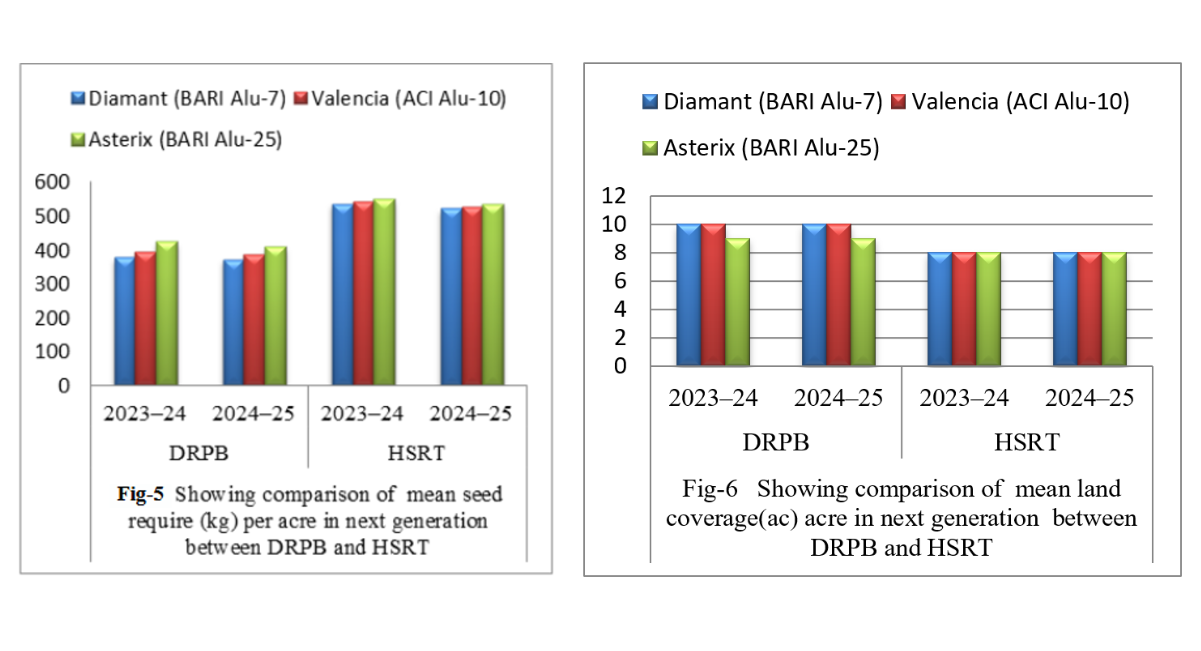
The superior land coverage achieved under the DRTB method can be attributed to its higher seed multiplication rate, primarily due to the production of a greater number of small-sized mini-tubers. These smaller tubers reduce seed requirement per unit area, thereby allowing a larger planting area to be covered with the same quantity of seed. Similar relationships between tuber size distribution and seed multiplication efficiency have been reported by Struik and Wiersema and Haverkort and Struik and Lommen [8,14-15].
Overall, the DRTB method proved to be the most efficient planting strategy for pre-foundation seed potato production. By enhancing the proportion of small-sized tubers and improving multiplication efficiency, this method optimizes resource use, increases land coverage for subsequent generations, and offers greater economic benefits to seed-producing enterprises compared with the conventional HSRT method. These findings are consistent with earlier reports emphasizing the importance of planting geometry and tuber size in seed potato systems provided by Kumar [16].
Comparative Productivity and System Efficiency
The present study revealed significant differences in seed requirement, tuber yield, and mini-tuber production between the Dual-Row Transplantation on Bed (DRTB) and Hardened Single-Row Transplantation (HSRT) systems across cultivars and seasons. Seed requirement for next-generation pre-foundation seed production was consistently lower under DRTB compared to HSRT. Among the cultivars, Diamant required the least seed under DRTB (372–378 kg acre⁻¹), whereas Asterix required the highest. In contrast, HSRT necessitated substantially higher seed rates (523–549 kg acre⁻¹), primarily due to the predominance of larger tubers. Although HSRT produced a higher yield per acre, DRTB excelled in generating a greater number of physiologically superior mini-tubers suitable for seed purposes. When averaged across both growing seasons, the DRTB system accommodated 115 rows per acre, compared with 104 rows acre-1 in the HSRT system, representing an 11-row reduction in the single-row system. Plant-to-plant spacing was maintained at 5 inches in both systems. Despite the higher row density, the total tuber yield under DRTB was 4,000 ± 0.22 kg per acre, whereas the HSRT system produced a higher yield of 5,000 ± 0.24 kg per acre. However, tuber number per plant was comparatively higher under DRTB, reflecting the system’s efficiency in promoting mini-tuber formation.
The increased number of mini-tubers observed under DRTB can be attributed to a higher number of stems regenerated per plant, enhancing the number of potential stolon initiation sites. Reduced physiological stress during tuber initiation is known to promote higher tuber numbers, supporting the superior performance of DRTB. Previous studies have documented that increased stem density per unit area leads to higher tuber numbers in conventionally grown potato [6,17].
Furthermore, transplanting stress in DRTB plants—induced by sudden transfer from in vitro conditions (high humidity, low light, sugar-fed) to ex vitro conditions—promotes early stolon initiation, resulting in increased tuber formation [18,19,20]. The 2024–25 cropping season proved more favorable for potato production than 2023–24, based on most yield attributes, further highlighting the adaptability and efficiency of the DRTB system.
CONCLUSION
The present study demonstrates that planting system, geometry, and cultivar significantly affect growth, tuberization, yield, and seed multiplication efficiency in potato under net house conditions. Dual-row transplantation on bed without hardening (DRTB) consistently outperformed hardened single-row transplantation (HSRT) by promoting higher stem density, early tuber initiation, greater tuber number per plant, and efficient production of small-to-medium sized mini-tubers suitable for pre-foundation and foundation seed production. While HSRT favored larger tubers and higher total yield, it required more seed per unit area and exhibited lower seed multiplication efficiency, with increased risk of disease transmission through larger tubers. Among the cultivars studied, Diamant showed superior performance, followed by Valencia, whereas Asterix was comparatively less efficient. Overall, DRTB emerged as a resource-efficient, economically viable, and seed-oriented planting strategy, enabling seed harvested from one acre to cover up to 10 acres in the subsequent generation, compared with only 8–9 acres under the hardened single-row transplantation (HSRT) system. Adoption of DRTB can enhance seed multiplication, optimize land use, reduce production costs, and improve the sustainability of seed potato production systems. These results provide strong empirical support for recommending DRTB as an improved planting technology for seed potato enterprises.
COMPETING INTERESTS DISCLAIMER
Authors have declared that they have no known competing financial interests or non-financial interests or personal relationships that could have appeared to influence the work reported in this paper.
REFERENCES
- Bangladesh Bureau of Statistics (BBS). Yearbook of agricultural statistics 2024 (or Annual crop production survey. 2024. Ministry of Planning, Government of the People’s Republic of Bangladesh.
- Hernández F, Martínez RT. In vitro techniques for seed potato (Solanum tuberosum L.) tuber production: a systematic review. Plants. 2025;14(17):2777. [Crossref] [Google Scholar] [PubMed]
- Jácome Sarchi GA, Coronel Montesdeoca NT, Hernández F, Martínez RT. In vitro techniques for seed potato (Solanum tuberosum L.) tuber production: a systematic review. Plants. 2025;14(17):2777.[Crossref] [Google Scholar] [PubMed]
- Sadawarti MJ, Singh SP, Singh RK, Buckseth T, Katare S, Chakrabarti SK, et al. In vivo performance of hi-tech planting materials for seed potato production: A review. IJCS. 2020;8(5):1151-7. [Crossref] [Google Scholar]
- Chandra S, Bandopadhyay R, Kumar V, Chandra R. Acclimatization of tissue cultured plantlets: from laboratory to land. Biotechnol Lett. 2010;32(9):1199-205. [Crossref] [Google Scholar] [PubMed]
- Kumar P, Pandey SK, Singh SV, Singh BP, Singh K, Kumar D, et al. Effect of growth duration, N application and row spacing on productivity, profitability and processing quality of potato. Potato journal. 2011;38(2):137-42. [Google Scholar]
- Razak SDA, Sani DO, Nassourou LM, Mouhamadou MB, Illiassa SS, Moussa B. (2022). Effect of planting bed materials on plantlet acclimatization and mini-tubers production in four varieties of potatoes (Solanum tuberosum) cultivated in Niger. American Journal of Plant Biology, 7(2), 109–115.
- Struik PC, Wiersema SG. Seed potato technology. BRILL; 2023. [Google Scholar]
- Dawinder GS, Singh A, Singh J. Effect of tuber size and intra-row spacing on yield and quality of potato (Solanum tuberosum L.). Biotechnology Journal International. 2020;24(2):30-4. [Crossref] [Google Scholar]
- Chen P, Yang R, Bartels D, Dong T, Duan H. Roles of abscisic acid and gibberellins in stem/root tuber development. Int J Mol Sci. 2022; 23(9):4955. [Crossref] [Google Scholar] [PubMed]
- Xu X, van Lammeren AA, Vermeer E, Vreugdenhil D. The role of gibberellin, abscisic acid, and sucrose in the regulation of potato tuber formation in vitro. Plant Physiol.1998;117(2):575-84. [Crossref] [Google Scholar] [PubMed]
- Firman DM, Allen EJ. Relationship between light interception, ground cover and leaf area index in potatoes. The Journal of Agricultural Science. 1989;113(3):355-9. [Crossref] [Google Scholar]
- Bussan AJ, Mitchell PD, Copas ME, Drilias MJ. Evaluation of the effect of density on potato yield and tuber size distribution. Crop science. 2007;47(6):2462-72.[Crossref] [Google Scholar]
- Haverkort AJ, Struik PC. Yield levels of potato crops: recent achievements and future prospects. Field Crops Research. 2015;182:76-85. [Crossref] [Google Scholar]
- Lommen WJ. Causes for low tuber yields of transplants from in vitro potato plantlets of early cultivars after field planting. The Journal of Agricultural Science. 1999;133(3):275-84. [Crossref] [Google Scholar]
- Kumar R, Kumar P, Shah MA, Singh RK, Sharma AK, Sharma J. Influence of planting geometries on tuber yield and profitability of seed potatoes (Solanum tuberosum) in north-western plains of India. Indian J. Agric. Sci. 2023;93(6):596-601. [Crossref] [Google Scholar]
- Kushwah VS, Singh SP. Effect of intra-row spacing and date of haulm cutting on production of small size tubers. [Google Scholar]
- Lommen WJ. Effects of age of in vitro-derived potato plantlets on early above-and below-ground development after planting in different cultivars. Potato Research. 2024;67(1):93-115.[Crossref] [Google Scholar]
- Haisel D, Semorádová S, Pospísilová J, Synková H. Acclimation of plantlets to ex vitro conditions: effects of air humidity, irradiance, CO2 concentration and abscisic acid (a review). InII International Symposium on Acclimatization and Establishment of Micropropagated Plants 748 2004 (pp. 29-38). [Crossref] [Google Scholar]
- Sathi MA, Robbani M, Ali M, Mehedi MN. Acclimatization, field performance and minituberization of tissue cultured potato cultivars. [Google Scholar]
- Haverkort AJ, Kooman PL. The use of systems analysis and modelling of growth and development in potato ideotyping under conditions affecting yields. Euphytica. 1997;94(2):191-200. [Crossref] [Google Scholar]

Article Processing Timeline
| 2-5 Days | Initial Quality & Plagiarism Check |
| 25-35 Days |
Peer Review Feedback |
| 45-60 Days | Total article processing time |
Journal Flyer